Listen through the publisher, then discuss the episode here or arrange an in-person Roundtable. Your city determines where to meet.
Roundtables are designed for groups of four, with a shared subject and room for everyone to speak. Come for discussion, with no dating expectation.
In the late 1950s the scientist and novelist C.P. Snow declared that there’s a deep divide between the world of the arts and the world of science, as he famously said they are two cultures. He argued that, oftentimes, those involved in the arts have little knowledge or interest in science and the same vice versa. Even at the time this was a controversial opinion, but it’s an idea that has never truly gone away. In this episode, we’re joined by Prof Anne Osbourn, a biologist based at the John Innes Centre and founder of the Science, Art and Writing (SAW) Trust to talk about the crossover between art and science and to share some poems from her collection Rockall. She talks to us about her lifelong love of both science and the arts, how creative thinking is essential in both disciplines, and shares the work the SAW Trust does on encouraging us all to explore every aspect of the way we view the world.
Episode information is provided by the publisher. Listening takes place on the publisher’s service.
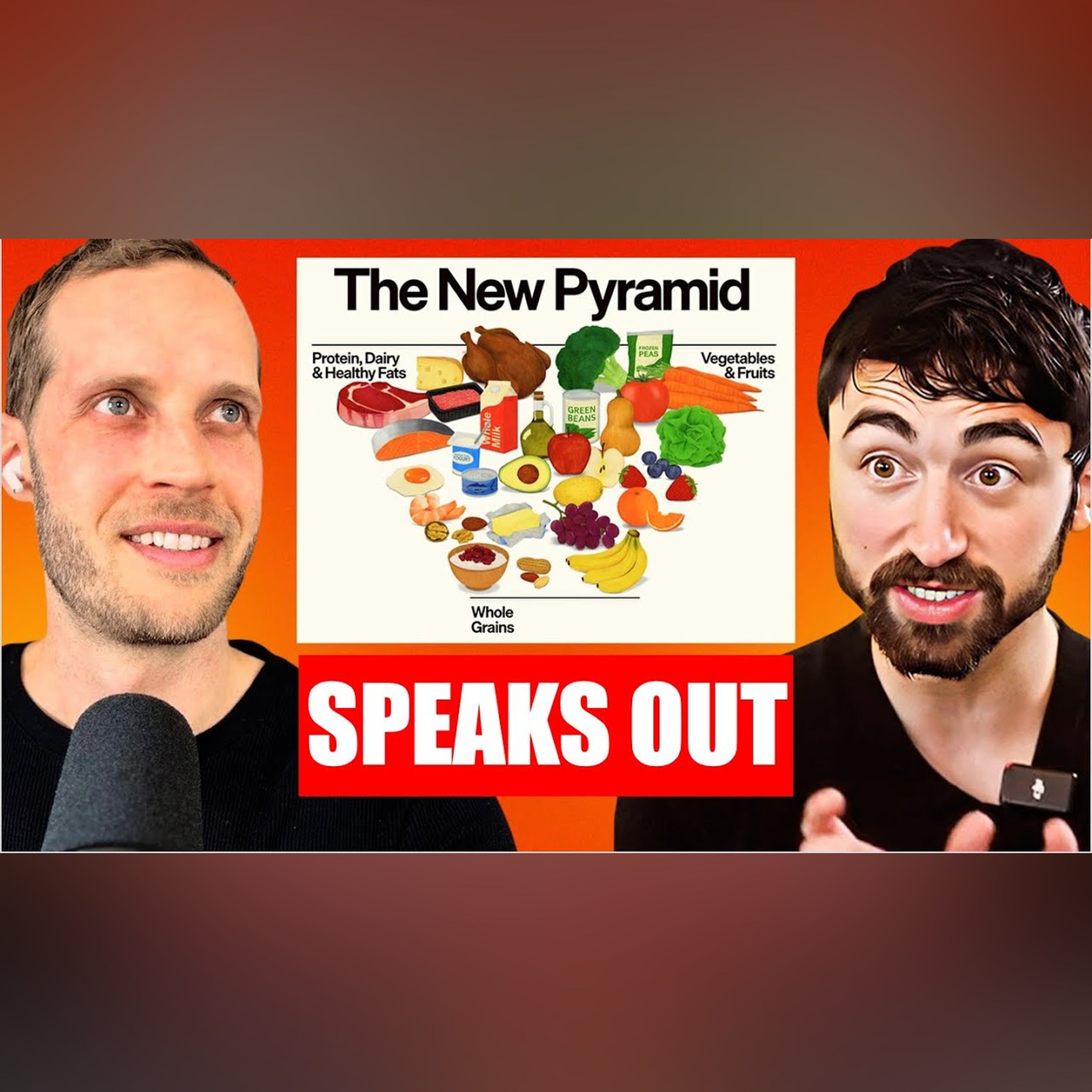
For a written digest on the guidelines, see the StayCurious Metabolism Letter: https://staycuriousmetabolism.substack.com/p/the-new-dietary-guidelines-actually?r=40ekz2 The 2025–2030 Dietary Guidelines are being marketed as a major reset with a simple message: put “real food” back at the center of the American diet. And in a lot of ways, they do represent progress. But when you actually read what’s written, some of the most important details raise real questions. For example, the document still states that saturated fat should not exceed 10% of total daily calories. To separate signal from spin, I’m joined by Dr. Ty Beal PhD, who worked on the evidence review side of the Guidelines process, to explain what the scientific background documents actually say, what happens after scientists submit reviews, and why the final public-facing document can end up with compromises, inconsistencies, or imprecise terminology. If you want a clear, good-faith breakdown—what’s genuinely better, what sti
A kiss can be wonderful. It can create an instant connection, spark romance, or make you feel closer to someone. But a kiss can also have the opposite effect — and sometimes ruin everything. So what makes kissing so powerful, and why can one kiss make such a difference? There's some fascinating science behind it. https://www.scientificamerican.com/article/why-we-kiss/ We spend an enormous amount of time worrying about what's going to change. What's next? What's coming? How do we prepare? But what if we're paying attention to the wrong things? Some of the most important forces shaping our lives never change, and understanding them may be far more valuable than trying to predict the future — something humans are notoriously bad at. Morgan Housel, partner at The Collaborative Fund and author of Same as Ever: A Guide to What Never Changes (https://amzn.to/3SwWn6u) (https://amzn.to/3SwWn6u)), joins me to explain why the things that stay the same may be the most important things to understan
In Brought to You By: How Corporations Warped the Truth, Conned the Public, and Broke Democracy (https://bookshop.org/a/12343/9781639736331), Amy Westervelt exposes the plot hidden within the familiar story of science denial. Over the last century, Big Industry has built a vast apparatus of think tanks, lobbyists, sponsored university labs, and obliging news networks to con the public and fool decision-makers, poisoning the informational ecosystem and warping the nature of truth along the way. With her signature wit and incisiveness, Westervelt introduces the masterminds of corporate misinformation: Herb Schmertz, the public relations pioneer who made Mobil “the thinking man's oil company;” Richard Edelman, the PR guy who helped the dairy industry vilify oat milk; David Petraeus, the disgraced spy chief using counter-insurgency tactics to discredit climate science; and many more. She shows how these company men have worked to usher in an era of unprecedented corporate control. Only by
Explore how the Hubble Space Telescope reveals the Universe, from iconic images to major discoveries, and how it complements the James Webb Space Telescope. "ASTROMAN: the Dark Sky Guardian" is a podcast channel that aims to explore popular science in multiple disciplines and research on interdisciplinary approaches, such as sustainability, dark-sky protection, astrophotography, space exploration, astronomy innovation, inclusive science communication, and STEAM Education by integrating science and arts. Exodus Chun-Long Sit, also known as the ASTROMAN, is a transmedia astronomy educator, popular science author, STEAM educator, and science communicator in Hong Kong. He is recently the National Astronomy Education Coordinator (Chair of Hong Kong, China) of the International Astronomical Union and President of Starrix. He was also an International Committee Member of the Dark Sky International, regularly organizing public lectures at the Hong Kong Space Museum and the Hong Kong Science Mu
Microsoft Announces Majorana 1 - Quantum Revolution is Coming! Deep Dive and 2050 Predictions Episode release date: 21 Feb 2025 Core Ideas: Metamodernism: Narratives and emergence view of reality - Reduce suffering - Increase prosperity - Increase understanding mantra: Seek knowledge. DISCLAIMER: This is a community-driven show. --------------------
☀️ HARNESSING THE POWER OF THE SUN — THE SCIENCE BEHIND C60 EVO! What happens when scientists recreate extraordinary, sun-like temperatures inside a laboratory to produce one of the most fascinating carbon molecules ever studied? Michael Jaco welcomes Patty Greer and Chris Burres back to Unleashing Intuition for a fascinating behind-the-scenes look at C60 Evo, the technology used to produce ESS60, and the science behind this unique carbon molecule. Chris takes us inside the laboratory to explain the intense temperatures, specialized production methods, and purification processes involved in creating ESS60 — C60 Evo's proprietary form of Carbon 60. The conversation explores the relationship between antioxidants, mitochondria, cellular energy, and oxidative stress, along with why C60 Evo combines ESS60 with carefully selected extra virgin olive oil. Patty and Chris also share their perspectives on wellness, personal experiences, and the growing interest in carbon-based technology. Inside
Throughout history, either accidentally or through deliberate action, non-native species of animals and plants have found their way into an environment in which they didn’t naturally evolve to live in. In some cases, these species thrive in such a way that they significantly affect the balance of the ecosystem they find themselves in. These are termed invasive species. But how profound is the effect they have on other animals and plants, is it always a bad thing, and what can we do once an invasive species has taken hold in a new environment? In this episode, we’re joined by science writer and author Amy Crawford to talk about her latest book, Undesirable – Invasive Species, Humans, and Where We All Belong. She tells us about some of the most common examples of invasive species, explains how non-native species can embed themselves in new environments, and shares some ideas about how we could be managing invasive species more effectively.
Every night when we fall asleep, our brains and bodies switch into a mode of functioning that’s entirely different from that of our waking lives. During sleep, our bodies become essentially paralysed, and our brains conjure up bizarre scenarios through dreams or even nightmares. But what exactly is happening during this period of our daily lives, why do we do it in the first place, and what can we learn about ourselves from it? In this episode, we’re joined by Dr Baland Jalal to talk about his latest book, The Phantom Mind – Insights from the Borderlands of Sleep. He tells us how our brain functions alter when we fall asleep, why the emotional content of our dreams feels so real despite often being so bizarre, and why some of us remember our dreams more than others after waking.
Evolution by natural selection has given rise to a fascinating tapestry of living organisms, each occupying their own individual niche. The result is a world filled with a dizzying array of weird and wonderful creatures that won the battle for survival in bizarre and fascinating ways. In this episode, we’re joined by evolutionary biologist and author Prof Richard Dawkins to talk about his latest book, 42 Tales from Life – A Modern Bestiary. He tells us how the driving forces of natural selection have shaped the vast variety of the living things that populate the Earth, how different organisms cooperate in strange, unusual ways to win the race for survival, and the many things we can learn from investigating every branch of the tree of life.
People should receive clear risk information before buying property in hard-to-insure areas.
Share your view, then see how readers voted. No sign-in required. This poll is shared across stories.
Do you agree or disagree?
Common Quandary
A Common Quandary to discuss
Another conversation to explore, separate from this news story.
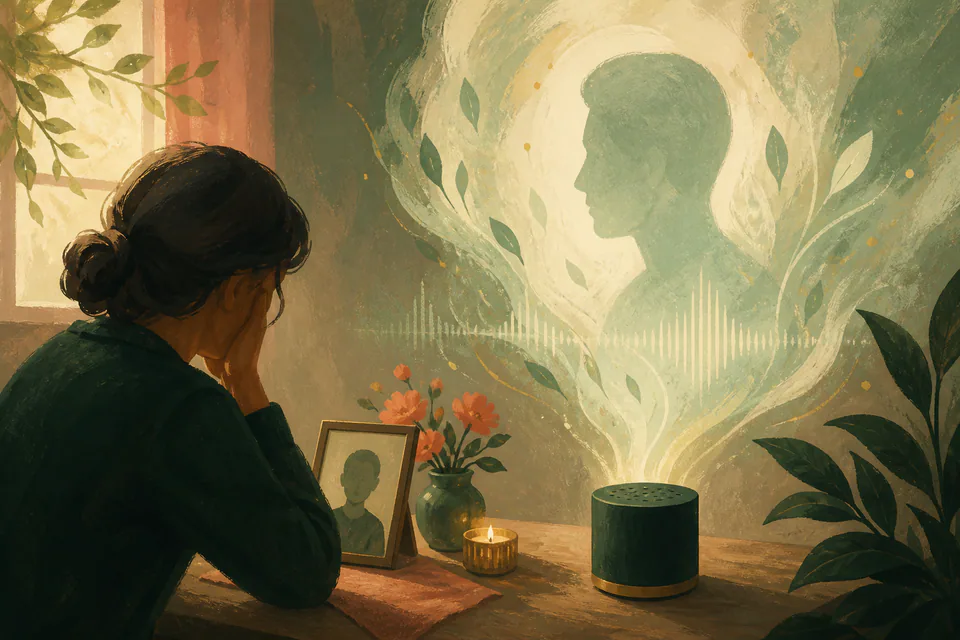
An app can text exactly like someone you lost. Would you keep talking to it?
A service can create a conversational likeness from a deceased person's messages and recordings. A grieving family member finds it comforting, although the deceased never consented to this use of their data.
Can comfort justify creating a voice the dead never authorized?