The Ghost Stories Program: Children Raised Inside the World of Espionage
13 min
Listen through the publisher, then discuss the episode here or arrange an in-person Roundtable. Your city determines where to meet.
Roundtables are designed for groups of four, with a shared subject and room for everyone to speak. Come for discussion, with no dating expectation.
In 2010, the FBI’s Operation Ghost Stories exposed a ring of Russian deep-cover agents living quiet, all-American lives in U.S. suburbs, some with children who had no idea their parents were spies. In this episode, we step into the psychology of growing up inside an intelligence operation, where family history, names and even memories can be manufactured. We explore how secrecy shapes attachment and identity, and what kind of trauma comes with discovering that the people you trusted most were living a lie. It’s a gripping look at the hidden human cost of espionage, told through the eyes of the children left to rebuild who they are.
Episode information is provided by the publisher. Listening takes place on the publisher’s service.
In 1956, a teenage girl in Battersea, London, received a mysterious package containing a small silver key. Nobody knew who had sent it or what it was supposed to unlock. But shortly afterward, strange things began happening in her family's home. At first, there were unexplained knocks and scratching sounds. Then objects reportedly began moving, furniture shifted, and the disturbances became increasingly difficult to ignore. As the activity continued, journalists and paranormal investigators took an interest in the family, and what they encountered raised even more questions. Eventually, the family began receiving what appeared to be messages from an unseen presence that claimed to have a name, a personality, and a particular interest in their teenage daughter. The experiences reportedly continued for twelve years. Was the family dealing with an unusually persistent poltergeist—or was there another explanation for one of Britain's most extensively investigated hauntings? #RealGhostStori
When's the last time you asked yourself, who am I? Not the roles. Not the labels. Not the voice that says I'm not good enough or I don't even know who I am anymore. The real you. In this powerful opening from the She's Unstoppable Summit, Sage Robbins leads a deeply moving closed-eye experience, first naming the thoughts so many of us carry silently inside (I'm too much. I'm not enough. I'm all alone in this.) and then doing something extraordinary: reminding you of the truth of who you actually are. Uploaded 05-04-26 You are love. You are fierce. You are wild, wise, and a co-creator of this life. Sage shares vulnerably from her own journey, growing up in a blended family, navigating loss, miscarriage after miscarriage, and a moment where she feared losing Tony and how all of it, every painful and beautiful thread, shaped who she is today. This is not a motivational speech. This is a remembering. In this video: - A guided closed-eye practice to reconnect to your true identity - Why the
In this Thanksgiving-weekend edition of the New England Morning Buzz, Greg and the crew take on a complicated “Who’s the Douchebag?” family dilemma: a 36-year-old discovers through DNA testing that the man who raised them may not be their biological father. The results suggest a different ancestry and raise questions about a half-sister, a possible biological father, and whether the listener’s mother has concealed the truth—or may not know it herself. Greg, Laura, Scotty, and callers debate the right to know your biological origins, the limits of consumer DNA tests, family medical history, adoption, honesty, and the potential fallout of revealing a long-held secret. Should the listener confront their mother, speak privately with their parents, or avoid disrupting the family? Opinions are divided, but one piece of advice recurs: seek answers honestly and thoughtfully, without turning a painful conversation into a public family blowup. A candid New England radio discussion about DNA ance
One of the finest actors of his generation - Michael Sheen - breathes new life into one of Wales’s most defining stories. He stars as Owain Glyndŵrin in Owain & Henry, an epic new play by Gary Owen about a lord of a small northern land in the 15th century who rises in rebellion against King Henry IV. The production, at the Welsh Millennium Centre in Cardiff, is the second production by the new Welsh National Theatre, and Sheen co-directs as well as appears on stage. He talks to us about bringing one of Wales's most defining stories to the stage. From tombstones and altar pieces to rusty nails, battle masks, the remains of a horse and leather shoes worn by children, a new exhibition at the National Museum of Scotland in Edinburgh explores repeated attempts by the Romans to conquer Scotland. Writer and presenter Alistair Heather and writer, comedian and history fanatic Susan Morrison discuss what the artefacts they left behind reveal about that story. And how can musicians collaborate wi
Instant Access to your FREE training course: https://nci.university (https://nci.university/) Uploaded 27-07-25 This is the simulation you already live inside of—and you’ve been breathing it like oxygen since the day you were born. In this video, we expose the invisible machinery beneath modern life—how symbols have replaced truth, how marketing has replaced meaning, and how our desires are manufactured by the very system that feeds on them. Drawing from the work of Jean Baudrillard and the hidden mechanisms of simulacra, we walk you through 10 real-life “glitches” that reveal the truth: • Why your food is rendered, not real • How social media replaced memory • Why you take photos of things you never actually see • And why even your “rebellion” is likely pre-approved This isn’t a conspiracy. It’s a mirror. And once you see it, you can’t unsee it. simulation theory, simulated reality, Baudrillard simulation, are we in a simulation, hyperreality explained, social media illusion, digital
You've spent more hours inside the imaginary version of your life than you'd care to admit. You've rehearsed the conversation. You've rehearsed the business. You've rehearsed the apology, the resignation, the leap. Over and over. And somewhere along the way, the rehearsing started to feel like living. Uploaded 03-09-26 But it isn't living. It's the opposite of living. It's the quiet, respectable, invisible way a person wastes a whole life — by rehearsing it instead of living it. Most people don't fail loudly. Most people just rehearse, and mistake all that motion inside their head for movement in the world. Here is the truth: the very act of vividly imagining your success may be the thing that guarantees you never achieve it. The rehearsal doesn't prepare you for the performance. For most people, the rehearsal replaces the performance entirely. This seminar walks through the four disguises the rehearsing mind wears — and the one test that tells you instantly whether you're planning or
How do you negotiate with someone who has already decided to die and wants to take others with them? In this episode, an FBI agent takes us inside one of the most high-pressure situations in law enforcement: trying to talk down a suicide bomber. We explore how negotiators build rapport under extreme stress, read a subject’s mindset and look for even the smallest opening to save lives. It’s a gripping look at the psychology, strategy and nerve it takes when every word could make the difference between life and death.
Before the first shots of World War II were fired, the FBI was already fighting a hidden war against Nazi spies on American soil. At the center was Guenther Rumrich, whose German handlers wanted to steal U.S. military secrets and even kidnap a high-ranking American colonel. The plot came apart after a string of blunders, including an attempt to get passport blanks delivered to him in Manhattan by describing himself over the telephone as the Under-Secretary of State. In this episode, we trace how the case broke the illusion of American neutrality and pushed J. Edgar Hoover’s Bureau to become a modern counterintelligence force.
In the 1990s, Cuban intelligence officers posed as exiles in South Florida and quietly infiltrated anti-Castro groups. Two of them got inside Brothers to the Rescue, and on February 24, 1996, the Wasp Network launched a fatal mission, Operation Scorpion, which ended with Cuban MiGs shooting down two U.S. search and rescue aircraft in international waters. The FBI had been monitoring the network since 1995, and in September 1998 it moved to dismantle the group, arresting ten suspected spies in early-morning raids. In this episode, we follow the case of the men who became known as the Cuban Five, from their secret operations to a trial that still divides opinion today. https://www.miaminewtimes.com/?p=40373802
An adaptation should be free to depart substantially from the original work.
Share your view, then see how readers voted. No sign-in required. This poll is shared across stories.
Do you agree or disagree?
Common Quandary
A Common Quandary to discuss
Another conversation to explore, separate from this news story.
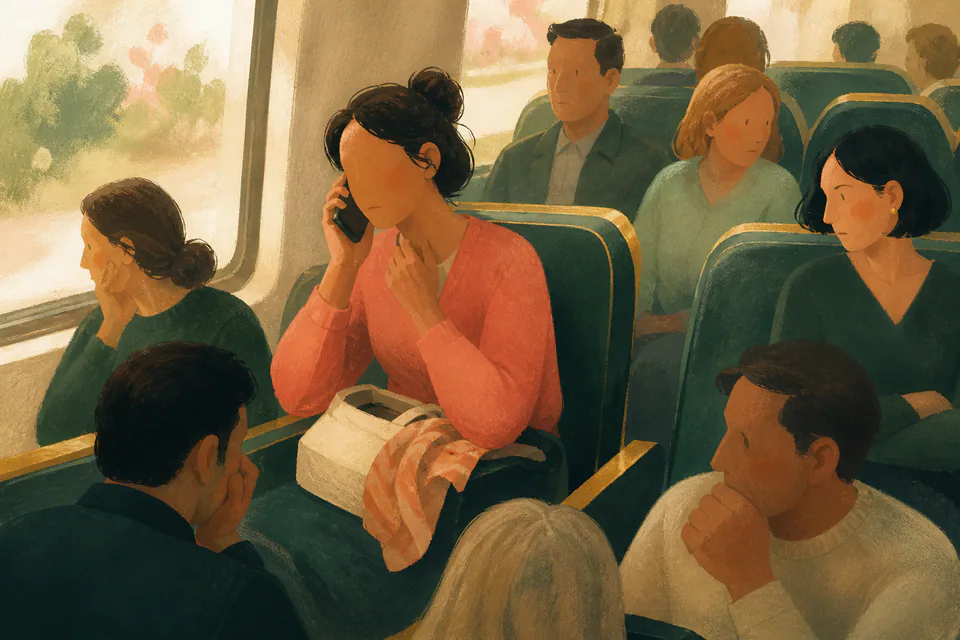
A stranger takes an emotional call in the quiet car. Do you shush them?
On a crowded train's designated quiet car, a passenger answers a call and begins discussing an apparent family emergency. They are speaking softly but continuously, and everyone nearby is listening despite trying not to.
Do public rules make room for private emergencies?