Listen through the publisher, then discuss the episode here or arrange an in-person Roundtable. Your city determines where to meet.
Roundtables are designed for groups of four, with a shared subject and room for everyone to speak. Come for discussion, with no dating expectation.
Before the first shots of World War II were fired, the FBI was already fighting a hidden war against Nazi spies on American soil. At the center was Guenther Rumrich, whose German handlers wanted to steal U.S. military secrets and even kidnap a high-ranking American colonel. The plot came apart after a string of blunders, including an attempt to get passport blanks delivered to him in Manhattan by describing himself over the telephone as the Under-Secretary of State. In this episode, we trace how the case broke the illusion of American neutrality and pushed J. Edgar Hoover’s Bureau to become a modern counterintelligence force.
Episode information is provided by the publisher. Listening takes place on the publisher’s service.
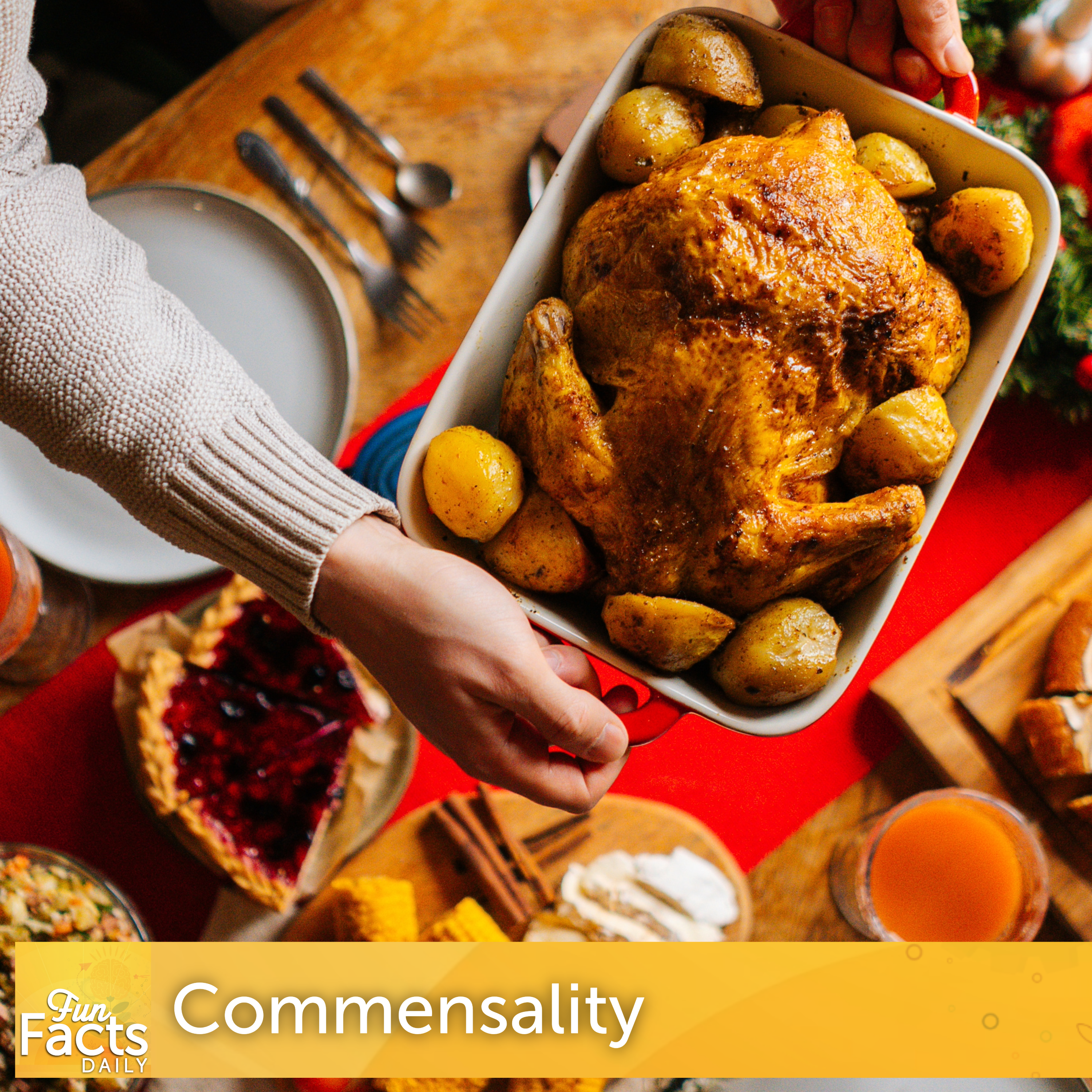
Sharing a meal at the same table, a practice known as commensality, helps families and communities build trust and connect across generations. While many people believe the 1621 harvest feast shared by the Pilgrims and the Wampanoag people started an unbroken annual tradition, American Thanksgiving history actually followed a much more uneven path. Indigenous peoples held seasonal harvest and gratitude ceremonies for generations before 1621, and the Plymouth meal was largely forgotten for about 200 years. George Washington issued the first national Thanksgiving proclamation for Thursday, November 26, 1789, and magazine editor Sarah Josepha Hale later persuaded Abraham Lincoln to set a regular November date in 1863. The holiday did not become federal law until 1941, after public confusion over a date change. When gathering for a holiday dinner, Harvard research shows that asking open-ended follow-up questions makes conversations more engaging and boosts likability. Keeping a few neutral
Imagine chasing what you want more than anything in life with laser focus... Uploaded 29-07-21 With sky-high confidence... Without limits... And achieving massive results beyond what you ever dreamed. This is the short list of the results a world-class coach can help you achieve. The most successful people in the world have launched to the top with coaches by their side – it doesn’t matter if you want to be the next great business mogul, artist, musician, teacher, athlete, or something else... A coach is the powerful secret that will help you get to the next level. Here, three of the world’s greatest athletes reveal how their coaches pushed them to achieve record-breaking greatness, including: The most decorated Olympian of all time, swimmer Michael Phelps World champion boxer Mike Tyson Olympics and X-Games gold medal record-holder Shaun White Plus, Tony Robbins explains why you need a coach to help you completely transform your mindset, unleash massive success and ensure you perform
Instant Access to your FREE training course: https://nci.university (https://nci.university/) Uploaded 27-07-25 This is the simulation you already live inside of—and you’ve been breathing it like oxygen since the day you were born. In this video, we expose the invisible machinery beneath modern life—how symbols have replaced truth, how marketing has replaced meaning, and how our desires are manufactured by the very system that feeds on them. Drawing from the work of Jean Baudrillard and the hidden mechanisms of simulacra, we walk you through 10 real-life “glitches” that reveal the truth: • Why your food is rendered, not real • How social media replaced memory • Why you take photos of things you never actually see • And why even your “rebellion” is likely pre-approved This isn’t a conspiracy. It’s a mirror. And once you see it, you can’t unsee it. simulation theory, simulated reality, Baudrillard simulation, are we in a simulation, hyperreality explained, social media illusion, digital
Core PCE inflation — that’s without gas or groceries included — hit a three-year high in October. That’s … not great for consumers. It also means another Fed rate hike is all but a done deal. In this episode, what’s driving inflation and how consumers are coping. Plus: The American Dream was shaped by fossil fuels, utility board elections grow fraught in the age of AI data centers, and a test kitchen chef perfects tariff-proof holiday meals. Every story has an economic angle. Want some in your inbox? Marketplace is more than a radio show. Read the stories in today’s episode: Rising inflation strengthens case for Fed rate hikes (https://www.marketplace.org/story/2026/11/25/core-pce-inflation-hit-a-3year-high-last-month) Why consumers are being more patient and putting off purchases (https://www.marketplace.org/story/2026/11/25/why-this-holiday-season-consumers-are-delaying-purchases) The American Dream, brought to you by fossil fuels (https://www.marketplace.org/story/2026/11/25/the-fos
Fresh questions surround Meghan Markle's As Ever lifestyle business after third-party sales estimates suggest some of its premium products may be struggling to attract customers. The figures, drawn from Shopify-related data, reportedly indicate modest daily sales for some of Meghan's most popular products. However, the estimates provide an incomplete picture, and As Ever has not publicly disclosed its revenue or profitability. Meanwhile, Prince Harry and Meghan enjoy a pizza date in the Cotswolds, while an unnamed television source claims Harry's recent appearance on ITV's This Morning came with restrictions on what presenters could ask him. The New York Times examines the increasingly complicated status of Harry and Meghan in Britain. Despite officially being treated as private citizens, the couple continue to attract royal-style welcomes, including members of the public curtsying during their Nottingham food bank visit. Could the Sussexes eventually complement the working Royal Famil
Rahab hid the spies on her roof beneath stalks of flax and told the king's men that the visitors had already left. After the men departed, Rahab spoke privately with the spies. She explained that the people of Jericho had heard what God had done for Israel, including the parting of the Red Sea and the victories over other kings. Rahab's story is remarkable because she recognized God's authority even though she was not part of Israel. Her faith was more than an opinion; it influenced a dangerous decision and changed the direction of her actions Every contribution counts. Thank you for being part of our journey!
In 2010, the FBI’s Operation Ghost Stories exposed a ring of Russian deep-cover agents living quiet, all-American lives in U.S. suburbs, some with children who had no idea their parents were spies. In this episode, we step into the psychology of growing up inside an intelligence operation, where family history, names and even memories can be manufactured. We explore how secrecy shapes attachment and identity, and what kind of trauma comes with discovering that the people you trusted most were living a lie. It’s a gripping look at the hidden human cost of espionage, told through the eyes of the children left to rebuild who they are.
How do you negotiate with someone who has already decided to die and wants to take others with them? In this episode, an FBI agent takes us inside one of the most high-pressure situations in law enforcement: trying to talk down a suicide bomber. We explore how negotiators build rapport under extreme stress, read a subject’s mindset and look for even the smallest opening to save lives. It’s a gripping look at the psychology, strategy and nerve it takes when every word could make the difference between life and death.
In the 1990s, Cuban intelligence officers posed as exiles in South Florida and quietly infiltrated anti-Castro groups. Two of them got inside Brothers to the Rescue, and on February 24, 1996, the Wasp Network launched a fatal mission, Operation Scorpion, which ended with Cuban MiGs shooting down two U.S. search and rescue aircraft in international waters. The FBI had been monitoring the network since 1995, and in September 1998 it moved to dismantle the group, arresting ten suspected spies in early-morning raids. In this episode, we follow the case of the men who became known as the Cuban Five, from their secret operations to a trial that still divides opinion today. https://www.miaminewtimes.com/?p=40373802
Communities should help financially sustain independent local reporting.
Share your view, then see how readers voted. No sign-in required. This poll is shared across stories.
Do you agree or disagree?
Common Quandary
A Common Quandary to discuss
Another conversation to explore, separate from this news story.
A patient records every doctor visit for their followers. Can the doctor refuse to be filmed?
A patient with a large social-media following livestreams their health journey and wants to record every appointment. They say the videos help others and keep doctors accountable. Their physician finds the camera distracting and worries that casual remarks will be edited out of context.
Whose comfort should control a conversation about one person's body and another person's work?