English-language podcasts

Fun Facts Daily

Fun Facts to Share at the Thanksgiving Table
18 min

Listen through the publisher, then discuss the episode here or arrange an in-person Roundtable. Your city determines where to meet.

Roundtables are designed for groups of four, with a shared subject and room for everyone to speak. Come for discussion, with no dating expectation.

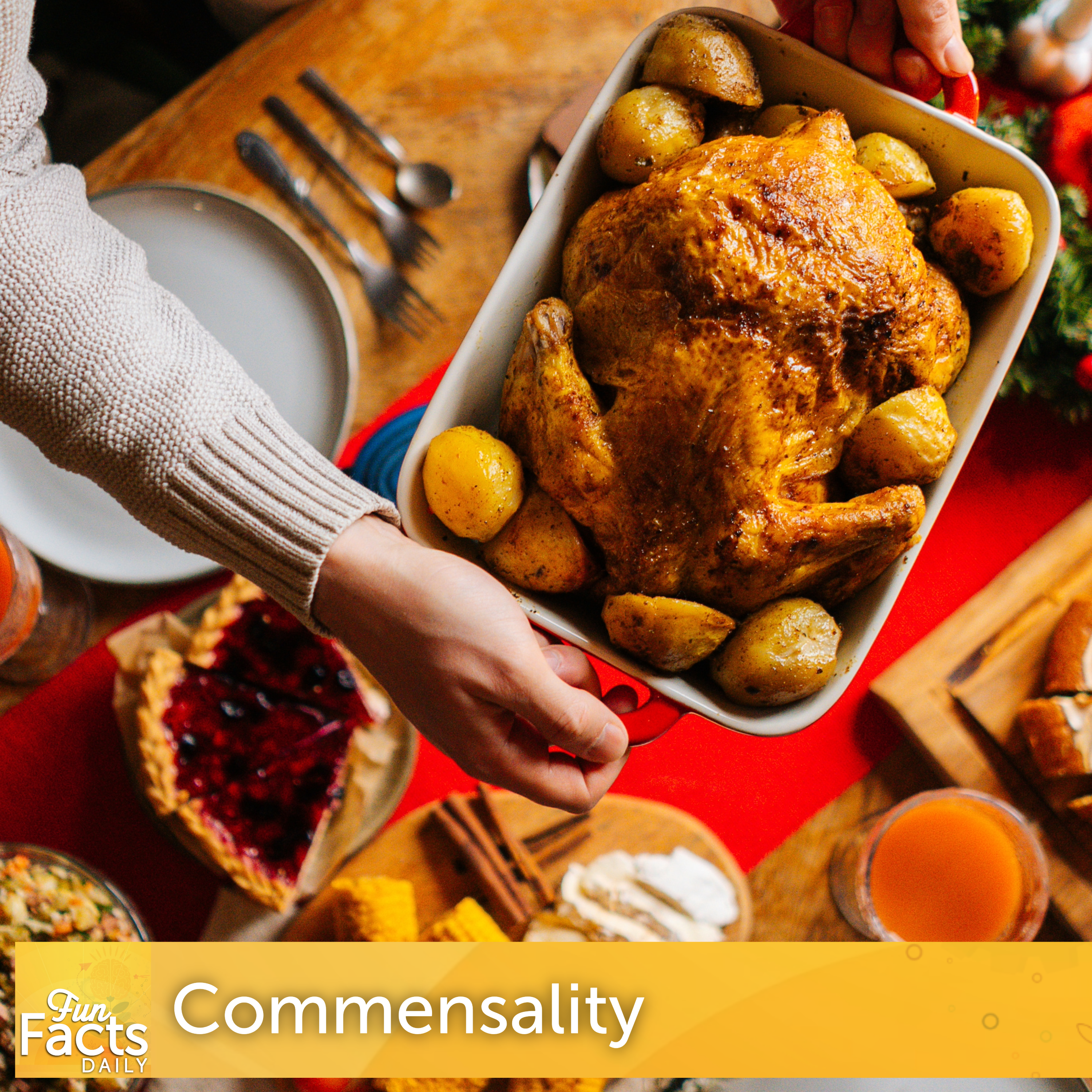
Sharing a meal at the same table, a practice known as commensality, helps families and communities build trust and connect across generations. While many people believe the 1621 harvest feast shared by the Pilgrims and the Wampanoag people started an unbroken annual tradition, American Thanksgiving history actually followed a much more uneven path. Indigenous peoples held seasonal harvest and gratitude ceremonies for generations before 1621, and the Plymouth meal was largely forgotten for about 200 years. George Washington issued the first national Thanksgiving proclamation for Thursday, November 26, 1789, and magazine editor Sarah Josepha Hale later persuaded Abraham Lincoln to set a regular November date in 1863. The holiday did not become federal law until 1941, after public confusion over a date change. When gathering for a holiday dinner, Harvard research shows that asking open-ended follow-up questions makes conversations more engaging and boosts likability. Keeping a few neutral topics ready and pivoting calmly to common ground can also help prevent tense arguments at the table. Quirky facts from food history, science, and nature make great conversation starters for any shared meal. In October 2026, Rhode Island gardener Ron Wallace broke the world record with a giant pumpkin weighing 3,156 pounds, beating a record set just one week earlier by nearly 300 pounds. Even the everyday dinner fork has a surprising backstory, since early European critics mocked forks as silly or insulting to God before four-tined forks became common in the early 1800s. Food breakthroughs also connect modern kitchens to outer space. In 1995, NASA and University of Wisconsin-Madison researchers grew mini potatoes aboard the Space Shuttle Columbia, paving the way for gardens on the International Space Station. Back on Earth, engineer Percy Spencer accidentally invented the microwave oven in 1945 after radar equipment melted a candy bar in his pocket. Nature offers an easy way to lighten the mood as well. Sea otters nap together in floating groups called rafts, holding paws or wrapping themselves in kelp so they do not drift apart. They even tuck a favorite rock into a built-in pocket of loose skin to crack open shellfish. Related Episodes: Fun Facts About Dishes and Utensils (https://open.spotify.com/episode/2QEuyNJKfLyea8xQSUHmPK?si=_WcBc7X7RoK0rL9grwQ9rg) Fun Facts About Microwaves (https://open.spotify.com/episode/5Lh5Oqb55M0UThQbQ9HcAR?si=sBi9xUndQyypZsp0w-qcqQ) Fun Facts About Pumpkins (https://open.spotify.com/episode/0yaBdA8o0toPdt1PY3DumF?si=kavsAkb3Q2GBPhDS0HYaEQ) Fun Facts About the Mayflower (https://open.spotify.com/episode/2u3m9GTAR6l9REoEizQtZk?si=gz20-wZrQkmviH320KL_lQ) Fun Facts About the Wampanoag People (https://open.spotify.com/episode/7EGM2HpUPFqNH9FIIBqyLl?si=Tn4siqv7Q4it5sCxpr0chw) Fun Facts About Turkeys (https://open.spotify.com/episode/6ZsLKFhEijaeqXxQaHcOrG?si=SL8RxVAmS42JBQXJnt-Qyw) Fun Facts About Parade Floats (https://open.spotify.com/episode/17NVVvqcnPEkNEyKobaKC3?si=M4M14bR8SryEHrFkvgYrhA) Want to learn more? Fun Facts Daily is an Airwave Media Podcast.

Episode information is provided by the publisher. Listening takes place on the publisher’s service.

Listen at the source ↗

Featured places to meet in Palo Alto, CA

Explore these places and arrange a conversation through ThinkMatch.

City guide for Palo Alto, CA

More from Fun Facts Daily

Fun Facts Daily

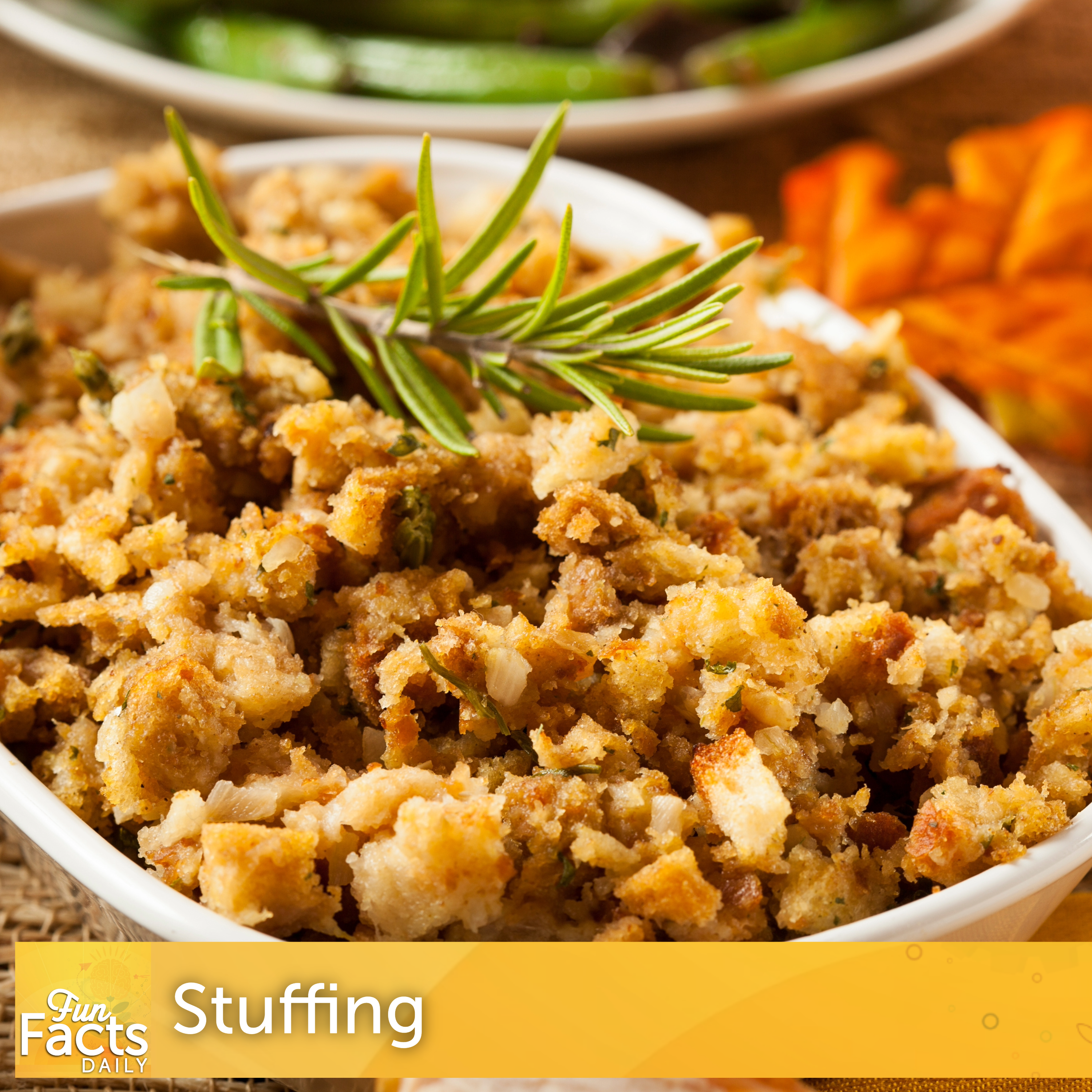
Fun Facts About Stuffing

15 min

Whether you call it stuffing or dressing, this favorite holiday side dish has a surprisingly rich history. In the 1880s, Victorian etiquette guides encouraged Americans to use the word dressing because stuffing sounded too impolite for the dinner table. Today, the USDA officially defines stuffing as cooked inside the bird and dressing as baked in a separate pan. Even so, most cooks stick to their regional habits, with people in the South preferring dressing and folks in the Northeast and Midwest choosing stuffing. The culinary tradition even gave us the word farce, which comes from the Latin verb farcire, meaning to stuff or cram. Long before Thanksgiving turkeys took center stage, the oldest surviving Roman cookbook, De Re Coquinaria, included recipes for stuffed chicken, pig, and even edible dormice served as a status symbol at wealthy banquets. Centuries later, in 1807, a French food writer took the idea to the extreme by publishing a recipe that packed 17 different birds inside one

Discuss this episode

Fun Facts Daily

Fun Facts About the Wampanoag People

15 min

The Wampanoag, whose name means "People of the First Light," have lived in southeastern Massachusetts, Cape Cod, Martha's Vineyard, Nantucket, and eastern Rhode Island for more than 12,000 years. Historically, Wampanoag communities were led by councils and consensus-based leaders called sachems, including female leaders known as sunksquas. In 1621, the Wampanoag leader Ousamequin, often called by his title Massasoit, meaning Great Sachem, built a strategic alliance with Plymouth colonists, and around 90 Wampanoag men joined 53 surviving Mayflower settlers for the three-day harvest feast later known as the First Thanksgiving. Skilled builders and stewards of the land, Wampanoag families adapted to the New England seasons by building dome-shaped cedar homes called wetus, hollowing out dugout canoes called mishoons with controlled fire, and harvesting wild cranberries paired with maple. Wampanoag history also includes a remarkable story of language survival and revival. In 1663, a printin

Discuss this episode

Fun Facts Daily

Fun Facts About the Mayflower

17 min

Sailing from England to New England in 1620, the Mayflower carried 102 passengers across the Atlantic Ocean on a cramped 66-day voyage aboard a merchant cargo vessel. Originally planned as a two-ship journey alongside the Speedwell, repeated leaks forced the group to abandon the Speedwell, consolidate onto the Mayflower, and endure autumn storms that cracked a main midship beam, repaired at sea using a large iron screw brought from Holland and a wooden brace. Although the passengers held a land patent for northern Virginia near the Hudson River, rough seas and dwindling supplies brought the ship to anchor in Provincetown Harbor on Cape Cod on November 11, 1620, where 41 adult men signed the Mayflower Compact to form a civil body politic and selected John Carver as governor. While later generations popularized the label "Pilgrims," the passengers themselves were divided into Separatists or Saints and Strangers, and the Plymouth Rock landing story did not surface until 1741, 121 years af

Discuss this episode

Community Poll

Profitable companies should give workers extra support when reducing their workforce.

Share your view, then see how readers voted. No sign-in required. This poll is shared across stories.

Do you agree or disagree?

Choose one answer

Common Quandary

A Common Quandary to discuss

Another conversation to explore, separate from this news story.

Your adorable child could pay for college by becoming an influencer. Do you start filming?

Parents post cheerful videos of their young child and earn enough to fund the child's education. The child enjoys filming now but cannot understand what it means for strangers to watch those moments years later.

Can parents consent to a permanent public identity on a child's behalf?

Explore this quandary