Listen through the publisher, then discuss the episode here or arrange an in-person Roundtable. Your city determines where to meet.
Roundtables are designed for groups of four, with a shared subject and room for everyone to speak. Come for discussion, with no dating expectation.
This fall, uranium prices set a record high — $96.50 per pound. But even though the radioactive metal is critical to the nuclear power buildout, rising prices haven’t triggered panic among uranium buyers. So how are buyers continuing to rely on the supply chain to keep delivering? In this episode, Shayle speaks with Mike Alkin, founder and chief investment officer at Sachem Cove Partners, to unpack the full nuclear fuel cycle: from mining and yellowcake to conversion, enrichment, and fabrication. Mike explains why uranium mining, specifically, is the ultimate bottleneck in the supply chain. He also makes the case that murky contracting masks the market reality, and breaks down what could happen when America’s 2028 ban on Russian enriched uranium goes into full effect. Shayle and Mike also discuss: - Uranium’s global supply/demand mismatch - Why buyers have been replacing fuel at just above 50% of its burn rate - Why production costs at the world's lowest-cost producer, Kazatomprom, have skyrocketed and triggered global production curtailments. - Why shifting toward overfeeding will create massive new demand for uranium yellowcake - The challenges America faces finding new uranium suppliers - Catalyst (https://www.latitudemedia.com/news/catalyst-building-a-domestic-nuclear-fuel-supply-chain/): Building a domestic nuclear fuel supply chain - Catalyst (https://www.latitudemedia.com/news/catalyst-the-state-and-future-of-nuclear-waste/): The state and future of nuclear waste - Catalyst (https://www.latitudemedia.com/news/the-path-to-market-for-new-nuclear-reactors/): The path to market for new nuclear reactors - Open Circuit (https://www.latitudemedia.com/news/open-circuit-inside-metas-massive-nuclear-push/): Inside Meta’s massive nuclear push - Latitude Media (https://www.latitudemedia.com/news/the-department-of-energys-2026-playbook/): The Department of Energy's 2026 playbook Credits: Hosted by Shayle Kann. Produced and edited by Max Savage Levenson. Original music and engineering by Sean Marquand. Stephen Lacey is our executive editor. Learn more atantennagroup.com (http://antennagroup.com/). Catalyst is brought to you by EnergyHub. Catalyst is brought to you by GridBeyond. Learn more by visiting GridBeyond.com (http://gridbeyond.com/).
Episode information is provided by the publisher. Listening takes place on the publisher’s service.
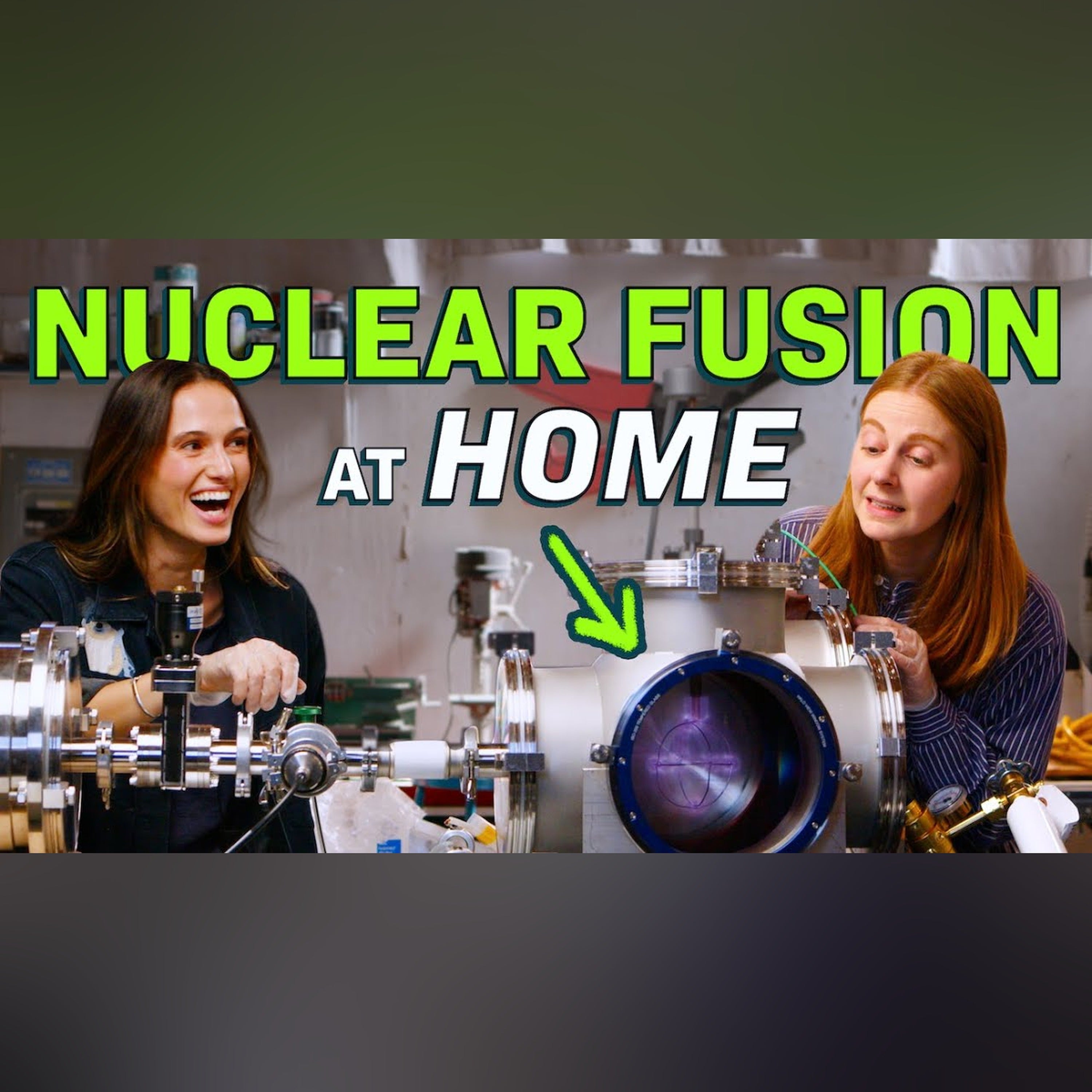
We attempted nuclear fusion. In Simone’s workshop. Disclaimer: This build was supervised by experts at Helion. Do not try this at home. I still can’t believe this video really happened. Back in May, I interviewed Helion CEO David Kirtley. I was trying to understand nuclear fusion: Is nuclear fusion possible now? How does fusion actually work? And most importantly, is nuclear fusion the future? Then, at the end of the interview, I asked David about headlines I’d seen about people building nuclear fusion devices in their backyards - what were they doing? “Oh,” David replied, “you can build one.” What followed is the biggest adventure yet on Huge If True. Together with the team at Helion and my friend fellow YouTuber Simone Giertz, we BUILT A NUCLEAR FUSION DEVICE to show how nuclear fusion works, what the big remaining challenges are, and how it might help us all in the future. Then, the last step was to try to turn it on… WATCH "FUSION, EXPLAINED: PART 1" HERE: https://youtu.be/piPbnKdv
In this Jim Rohn Motivation speech, you'll learn the ultimate key to lasting success: consistency. From the illusion of motivation to the power of discipline, habits, systems, energy, and purpose—this masterclass unveils how to stay on track long after inspiration fades. Key Topics From This Motivational speech: Why motivation fades and discipline must lead The power of small habits and the compound effect How to build systems that make success automatic The role of energy, purpose, and accountability in consistency The life-changing power of keeping promises to yourself This Jim Rohn motivational speech explores the truth behind why people fall short of their goals—not from a lack of ambition, but a lack of systems, discipline, and consistency. It walks you through the phases of starting strong, sustaining momentum, and overcoming setbacks by anchoring your actions in habits and purpose. When motivation vanishes, this is the video that reminds you how to keep going. This Jim Rohn Moti
Physicists have developed a new theoretical framework that challenges conventional understanding of radioactive decay. Their research explores an unusual quantum process involving the simultaneous emission of different particles, potentially resolving a decades-old mystery in nuclear physics. The findings could reveal new insights into the complex interplay of fundamental forces inside unstable atomic nuclei. This episode includes AI-generated content.
This episode is brought to you by Sarmaya Partners. Learn more about Sarmaya’s LENS ETF, their full data and comparison, including performance here: https://sarmayaetf.com/ In this episode of Other People's Money, Max Wiethe sits down with Muddy Waters Capital founder Carson Block to discuss his firm's explosive new short thesis on Nvidia. Block breaks down the alarming connections between a former Nvidia executive and a former SMCI executive recently implicated in a major chip smuggling scandal. The conversation dives deep into the national security implications of dual-use technology and how the ongoing geopolitical tug-of-war between the US and China is reshaping the semiconductor sector. Tune in to hear why Block believes this scandal goes far beyond CEO indiscretions and could trigger a massive regulatory reckoning for Silicon Valley's biggest players. Follow Muddy Waters on X: https://x.com/muddywatersre Follow Max on X: https://x.com/maxwiethe Follow Other People’s Money on: App
A wave of major technology outages is raising troubling questions about America's cybersecurity, aging infrastructure, and readiness for a new era of artificial intelligence. Are these isolated technical failures, or warning signs of a much larger national security problem? John Solomon and Amanda Head welcome Ohio Congressman and former Army Ranger Warren Davidson, who discusses recent disruptions involving the FAA, Microsoft, and other critical systems. Davidson calls for greater transparency from government agencies and technology companies, questions whether America's infrastructure is adequately protected against emerging cyber threats, and examines how artificial intelligence could be used both to strengthen defenses and exploit vulnerabilities. The conversation also turns to immigration and national security, with Davidson raising concerns about individuals who entered the country illegally, potential gaps in government screening systems, and the surveillance powers used to moni
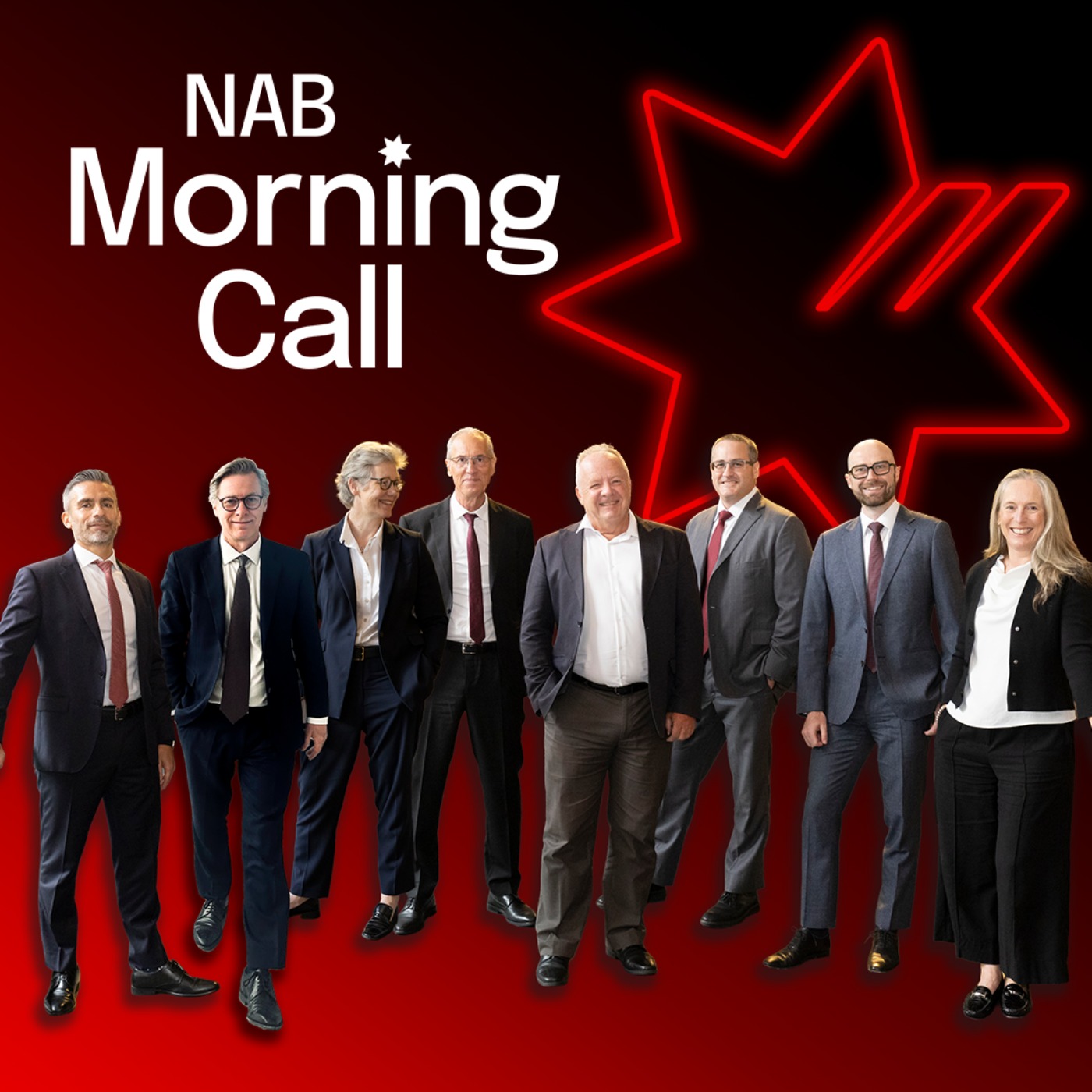
Monday 23rd November 2026 Phil and NAB’s Taylor Nugent unpack Friday’s sharp, AI-driven sell-off on Wall Street—where the VIX spiked past 29 and the Nasdaq plunged 5.3% to log a sixth straight loss. Nvidia tumbled 14% following Reuters reports of an SEC accounting probe, while Anthropic fell 8.5% to close near 88.90, after surging past111 following its IPO debut. The risk-off wave sparked a rally in safe-haven bonds—pushing 10-year US Treasury yields down 10 basis points below 5%—and lifted the yen and Swiss franc, while weighing heavily on the Australian dollar. Curiously, precious metals bucked the safe-haven trend—with Comex gold sliding 4.6% and copper falling another 3%—as markets digested stronger UK retail sales, slightly softer Japanese inflation, and a holiday-shortened week ahead, with global PMIs today’s highlight. Hosted on Acast.
Since industry record-keeping began in 1976, global solar capacity has grown every single year. That streak, however, could end in 2026. Every year since 2017, Jenny Chase, a solar and clean power analyst at BloombergNEF, has published an annual thread on social media outlining her most significant — and sometimes controversial — takes on the state of the global solar industry. In this year’s thread (https://solarchase.substack.com/p/2026-thread-of-solar-and-storage), she makes the case that this will be the global industry’s first down year for new builds. In this episode, Shayle unpacks the highlights from Jenny’s solar "State of the Union." They discuss her marquee prediction, and dig deeper to make sense of what this saturation point means for the global energy transition. Shayle and Jenny also discuss: - How China’s 2025 shift to spot-market pricing and widespread curtailment are dampening global growth - Why batteries aren’t always a boon to the solar industry - Why wind or nucle
As the nuclear renaissance comes into focus in the U.S., the sector’s true bottleneck might not be advanced reactors, but its lack of heavy-lifting project developers. These are the companies who secure and permit sites, navigate the interconnection queue, line up offtakers, and assemble a team of both savvy EPCs and experienced plant operators. In this episode of Catalyst, Shayle Kann sits down with David Faherty, co-founder of Elementl Power, to walk through the soup-to-nuts playbook for delivering new nuclear projects in the United States. David explains everything from how his team approaches greenfield site screening, why early-stage development capital remains the hardest money to raise, and how portfolio-level structuring could unlock nuclear's elusive learning curve. Shayle and David also discuss: - What makes a viable nuclear site, from seismic and geotechnical screenings to community engagement and interconnection dynamics - Why 20- to 25-year investment-grade offtakes from h
Sporting rivals should be able to enjoy competition without hostility between supporters.
Share your view, then see how readers voted. No sign-in required. This poll is shared across stories.
Do you agree or disagree?
Common Quandary
A Common Quandary to discuss
Another conversation to explore, separate from this news story.
A patient records every doctor visit for their followers. Can the doctor refuse to be filmed?
A patient with a large social-media following livestreams their health journey and wants to record every appointment. They say the videos help others and keep doctors accountable. Their physician finds the camera distracting and worries that casual remarks will be edited out of context.
Whose comfort should control a conversation about one person's body and another person's work?