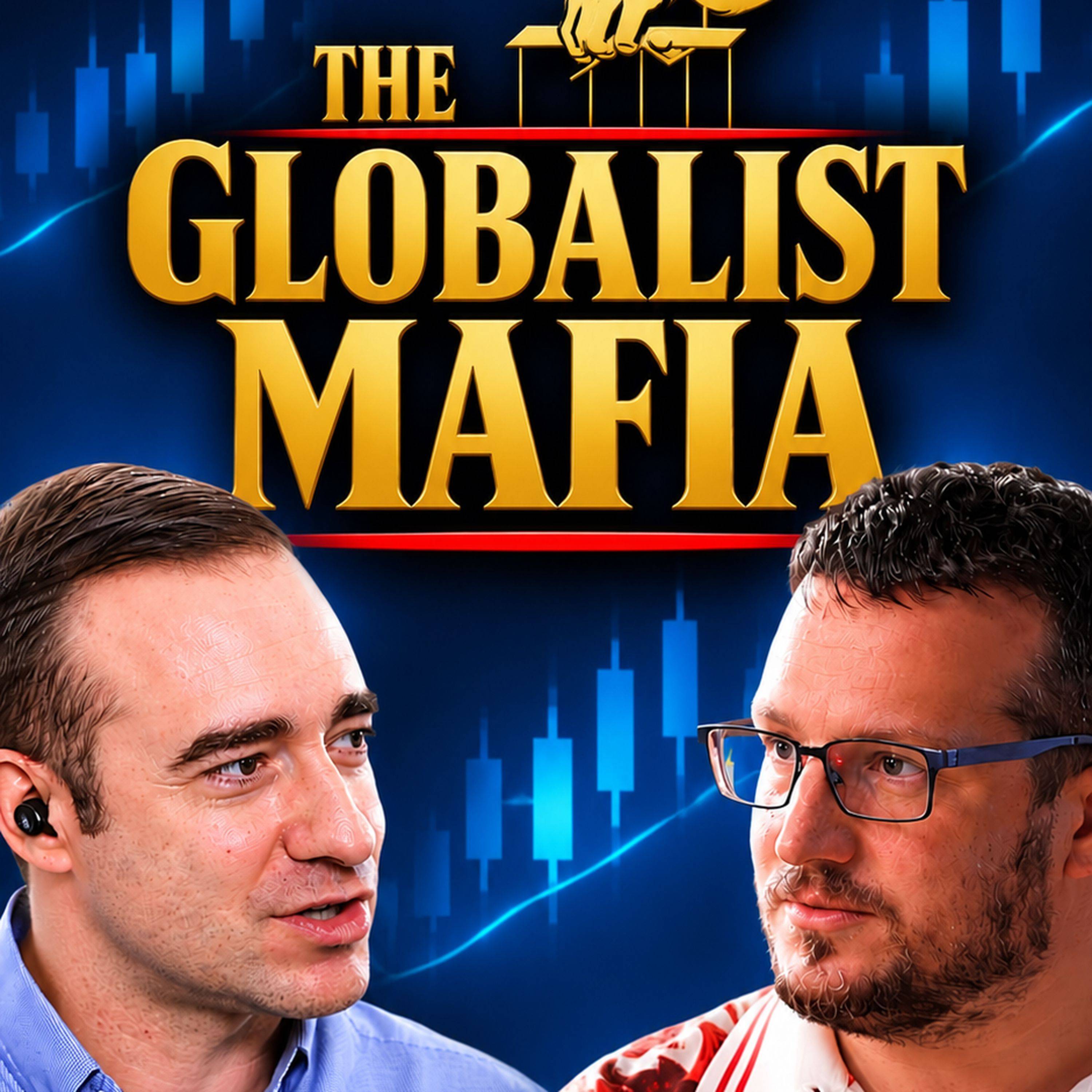
"The Global Mafia Running the World and Why They Need Forever Wars"
48 min
Listen through the publisher, then discuss the episode here or arrange an in-person Roundtable. Your city determines where to meet.
Roundtables are designed for groups of four, with a shared subject and room for everyone to speak. Come for discussion, with no dating expectation.
Date of recording: 2 November 2026 Host: Jesse Day Channel: Commodity Culture Guest: Simon Dixon Title: "The Global Mafia Running the World and Why They Need Forever Wars" | Simon Dixon on Commodity Culture w/ Jesse Day I recently sat down with Jesse Day on Commodity Culture for an in-depth conversation titled “The Global Mafia Running the World and Why They Need Forever Wars.” In this 47-minute interview, we step past mainstream narratives to examine how global power actually operates. In my view, geopolitical events are not dictated by politicians, but by a complex structure made up of three interlocking forces: the Financial Industrial Complex (FIC), the Military Industrial Complex (MIC), and the Technical Industrial Complex (TIC). Here is a preview of what we discussed: The Business Model of Forever Wars: How conflicts are managed to optimize revenue through defense contracts, government debt, and post-war reconstruction. Manufactured Crises & Control: Why I believe civil unrest, energy crises, and de-industrialization are weaponized to concentrate wealth upward and expand a surveillance state. The Multipolar Shift & Sovereign Strategy: Why central bank debt structures are reaching their limit, and why my analysis suggests self-custodial hard assets are critical for navigating the shift to multipolarity. Watch on YouTube (https://www.youtube.com/watch?v=MBdHejHsgoA) Read the blog (https://www.simondixon.com/blog/the-global-mafia-running-the-world-simon-dixon)
Episode information is provided by the publisher. Listening takes place on the publisher’s service.
What’s the key to building a truly great life? Tony Robbins shares how leadership starts with influence and serving others. In this video, he explores how mastering your emotions and influencing yourself first can change everything. Are you ready to shift your mindset, change your state, rewire your patterns and lead with greater impact? Uploaded 22-09-24 Watch more videos like this Shift Your Identity and Master Your State: https://youtu.be/B8Jb3qmCEAc 2 Key Skills To Master If You Want An Extraordinary Life: https://youtu.be/CMF7H9OX5NQ NOW I AM THE VOICE! Change Your State and Raise Your Standards: https://youtu.be/ceYtAEpSoGk Tony Robbins Life Advice Playlist: https://www.youtube.com/playlist?list=PLYTXvUDQT5pXYvh-ry7E6_XV23-9mObG1 Follow Tony Robbins: Facebook: https://www.facebook.com/TonyRobbins Instagram: https://instagram.com/tonyrobbins/ TikTok: https://www.tiktok.com/@UC-12kRMQjK1LiQKRrT2zXcQ Twitter: https://twitter.com/tonyrobbins LinkedIn: https://www.linkedin.com/in/offi
When is sports gear so good it’s actually cheating? There is a ton of cool sports gear that’s banned from sports for making athletes too good. Swimsuits that make a swimmer too streamlined, gloves that make a receiver’s hands too grippy, bats that let a player hit the ball too hard, and shoes that help a runner go too freaking fast… They call it “TECH DOPING,” using physical gear to gain an unfair advantage. In this video, I’ll show you the banned gear you won’t see at the Paris Olympics, and the cutting edge tech you will see that’s on the very limit of what’s allowed. You might be thinking, hold on, no gear should give athletes an advantage! But… we don’t run barefoot anymore. We don’t swim naked. We use tech to play sports. And that tech is always improving, pushing forward what humans can do. So… where’s the line? This is about way more than sports. In every part of our lives, technology pushes forward what we can do! And it’s up to us to decide what we want from it. This video is
Get the 200+ Page Optimal Living Daily Workbook (PDF) - Free. Want to turn today's episode into an actionable plan? Episode 3779: Joshua Fields Millburn and Ryan Nicodemus of The Minimalists explain the first steps they took to regain control of their money after years of six-figure debt. It starts with a written monthly budget that sorts every expense into essentials, nonessentials and junk, plus a small safety net for emergencies, and then reframes investing as simply paying your future self, automated so you never miss the money. Read along with the original article(s) here: https://www.theminimalists.com/freedom/ Quotes to ponder: "Most of us have no idea where our money is going. We think we know, but we don't really know." "The stricter you are, the sooner you'll be free." "Right now is the best time to start planning for your future." Airwallex is a financial technology company, not a bank. Services in the US are provided by Airwallex US, LLC, a licensed money transmitter (NMLS
November 20, 2026 On November 19, Trump met with Xi Jinping and Vladimir Putin in Shenzhen, China, The fact that the president of the US would meet with leaders of China and Russia was bizarre since both China and Russia have been helping Iran in its current fight against the US, Trump appeared to want the fanfare and President Xi played that up, Putin wanted the meeting because it would suggest that Russia was a great power, although it is far from being so and Putin’s war on Ukraine is going poorly, The meeting’s purpose seemed to be to produce propaganda for each of the three leaders, Beyond the propaganda is the larger story of the destruction of the post-World War II rules-based international order, In its place is the idea of dividing the world into spheres of influence, The three leaders met for 90 minutes and issued only a vague "joint declaration toward peace," which vowed to reform the UN and weaken the International Criminal Court, where Putin is already under indictment for
The longest ever UN climate conference, COP, which began in Turkey two weeks ago, has ended in failure. Delegates from around the world could not reach an agreement on what further measures need to be taken to halt global warming. The future of fossil fuels proved a major point of contention. Also: the head of the energy firm, Centrica -- which owns British Gas -- has told the BBC he's "hugely concerned" about rising energy costs this winter. And, a nightmare start for Mauricio Pochettino as Manchester United's head coach, as the team were thrashed 4-0 by Liverpool.
Having been jailed for 10 years and six months, disgraced entertainer Russell Brand remains very much in the headlines. Since his conviction, six more women have come forward with allegations of misconduct. Meanwhile, Brand's voice and image continue to be broadcast around the world, and not just in the form of news stories and documentaries. Brand's X account remains open, and his popular YouTube channel recently uploaded a pre-recorded episode of his Sunday Service programme that also featured a post-sentencing letter penned by Brand and read aloud by his wife, Laura Gallacher. In addition, the UK government is under pressure to change laws related to the age of sexual consent in the wake of Brand’s imprisonment. Fionnán Sheahan is joined by Daily Mail feature writer Fred Kelly and Irish Independent features journalist Kirsty Blake Knox to look at the impact that the jailing of Russell Brand has had on the disgraced comedian’s brand. Hosted on Acast.
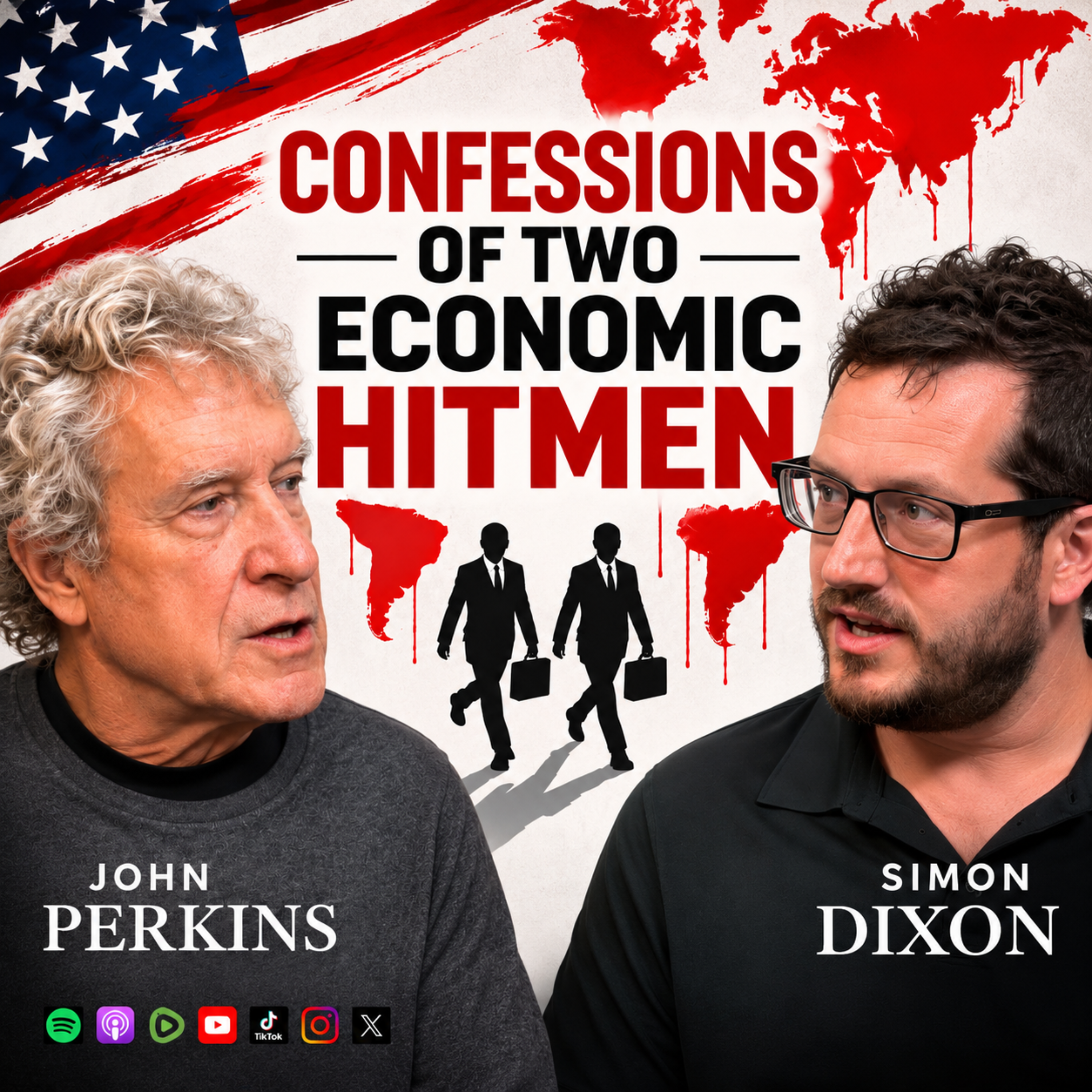
Recorded on 9 November 2026. Hosted by Nathan of BTC Sessions, I sat down for an electric dialogue with John Perkins, author of the seminal 2004 book Confessions of an Economic Hitman. Reading John’s book 20 years ago was one of the defining catalysts that led me to walk away from my career in investment banking in 2006. In this interview, John and I explore how the historical playbook of economic hitmen—using debt leverage, structural adjustment, and currency subordination against developing nations—has evolved and migrated directly into Western technological infrastructure, AI capital allocation, and corporate boardrooms. For the first time publicly, I also share my personal encounter with economic hitmen during my work in El Salvador advising on sovereign geothermal volcano-powered Bitcoin bonds and non-fractional banking models independent of the IMF. We also examine whether modern algorithmic division and civil polarisation are deliberately steering society toward an all-encompass
A conversation on the BTC Sessions YouTube channel, where host Nathan Fitzsimmons welcomes guests John Perkins, author of Confessions of an Economic Hitman, and Simon Dixon, an investor and author. The discussion centers on the evolution of global financial manipulation, detailing how traditional debt-trap diplomacy has expanded into corporate and technological domains. The speakers examine the financial industrial complex, the role of transnational capital in shifting geopolitical power, and how major entities leverage debt and resources to maintain control. Furthermore, the dialogue explores the intersection of geopolitics and modern conflicts, noting parallels between past interventions and recent events in regions like the Middle East and Latin America. Finally, the conversation highlights the rise of digital sovereignty, emphasizing the importance of personal autonomy, decentralized technologies like Bitcoin, and grassroots awareness as tools to resist an increasingly technocratic
Full title: NVIDIA: 48 Hours That Changed the Story | Jensen Huang & What Comes Next Simon Dixon, Mario Nawfal and Brendon Weichert analyzes the recent resignation of Nvidia CEO Jensen Huang on Mario Nawfal's YouTube channel, framing it as a calculated corporate regime change orchestrated by the military-industrial complex and intelligence agencies. Dixon argues that Huang's departure was precipitated by weaponised scandals regarding alleged affairs with a suspected Chinese intelligence operative and a company executive, providing the board with the necessary governance leverage to oust him. T his power struggle allegedly pits institutional financial shareholders and technology sectors—who favour lucrative chip sales to China through intermediaries like Singapore and Malaysia—against military factions seeking to maintain a strategic artificial intelligence advantage for the United States. Dixon further suggests that while major tech leaders like Elon Musk and Mark Zuckerberg possess su
Developing young players can be more important than winning in the current season.
Share your view, then see how readers voted. No sign-in required. This poll is shared across stories.
Do you agree or disagree?
Common Quandary
A Common Quandary to discuss
Another conversation to explore, separate from this news story.
The company printer sits idle all day. Can you print two hundred wedding invitations?
Your office has a fast color printer that is rarely used, and supplies are ordered automatically. Printing your wedding invitations after hours would save substantial money. Personal use is technically prohibited but routinely ignored for small jobs.
When does an insignificant workplace perk become taking?