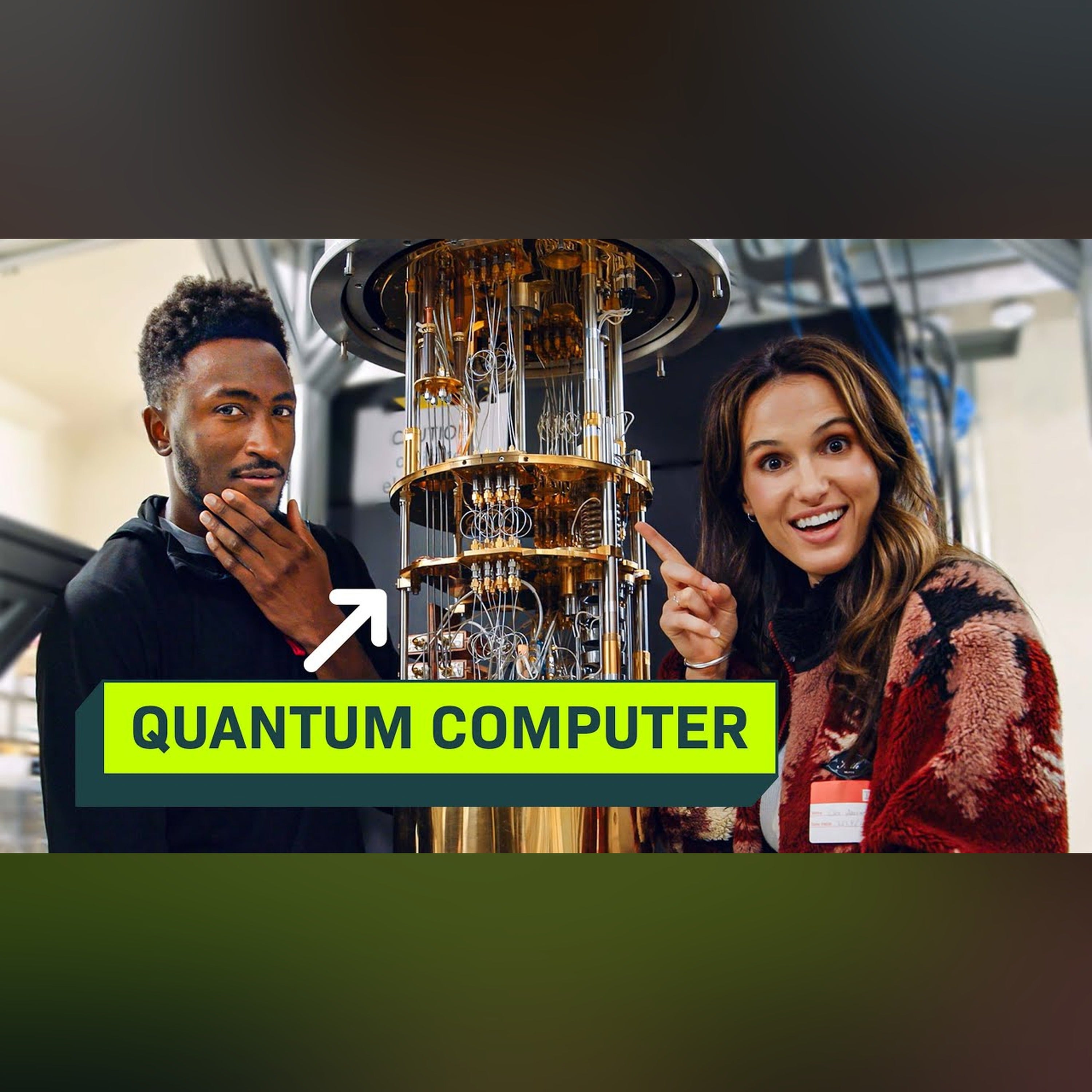
The History of AI Explained: Crash Course Futures of AI #1

Listen through the publisher, then discuss the episode here or arrange an in-person Roundtable. Your city determines where to meet.
Roundtables are designed for groups of four, with a shared subject and room for everyone to speak. Come for discussion, with no dating expectation.
In 1965, Moore’s Law predicted how computers would become smaller, faster, and more powerful than ever before. But here in 2025, we’re on the brink of an even bigger revolution. In this episode, we explore where AI's been, what it can do, and where it might be going. AI benchmarks and scaling laws help us understand what AI is, and could be, capable of. Introduction 00:00 How did AI get here? 2:21 How do we measure AI progress? 7:47 How can we predict the future of AI? 9:10 Conclusion 11:29 About This Series: AI is changing FAST so rather than doing a full Crash Course series of 12+ episodes, we’ve prepared a mini-series of just the basics. Crash Course will never tell you what to think and we’re not the type of organization that responds to breaking news in real time. Instead, we’re here to offer a zoomed-out foundation upon which to base your own opinions as you continue to learn from other outlets about the world that’s changing around us. Crash Course: Futures of AI will cover: -What even is AI? What’s the history of this thing and how quickly has it evolved to what exists today? -How could AI transform society? Will AI cause the next Industrial Revolution, and what might that mean for workers and the environment? -How powerful could AI become? How do we measure the progression of AI? What are the consequences we’re already seeing, and what might be the future consequences of unchecked AI development? -How might powerful AI cause harm? We’ll touch on copyright infringement, misinformation, surveillance, authoritarianism, and (unfortunately,) more. -How could AI be governed? What are the potential approaches for controlling AI both nationally and internationally? P.S. Wondering if we used AI to create this series? Nope! Every Complexly video is lovingly, painstakingly human-made. Sources: https://docs.google.com/document/d/16br0e73KFVD5qu-VEBV40yQTpBiX0l65EgWQ6Q7Fz-k/edit?usp=sharing *** Support us for $5/month on Patreon to keep Crash Course free for everyone forever! https://www.patreon.com/crashcourse Or support us directly: https://complexly.com/support Join our Crash Course email list to get the latest news and highlights: https://mailchi.mp/crashcourse/email Get our special Crash Course Educators newsletter: http://eepurl.com/iBgMhY Thanks to the following patrons for their generous monthly contributions that help keep Crash Course free for everyone forever: DexcilaDou, Martin G. Diller, Johnathan Williams, Allison Wood, EllenBryn, Katrix , Jason Terpstra, Evan Nelson, Jennifer Wiggins-Lyndall, Dalton Williams, SpaceRangerWes, Chelsea S, Thomas Sully, Matthew Fredericksen, AThirstyPhilosopher ., Michael Maher, Mitch Gresko, Gina Mancuso, Roger Harms, Shruti S, Quinn Harden, Brandon Thomas, Emily Beazley, Rie Ohta, oranjeez, UwU, Elizabeth LaBelle, Leah H., David Fanska, Andrew Woods, Katie Hoban, Kevin Knupp, Barbara Pettersen, Ken Davidian, Stephen Akuffo, Toni Miles, Steve Segreto, Kyle & Katherine Callahan, Laurel Stevens, Tanner Hedrick, Kristina D Knight, Samantha, Krystle Young, Perry Joyce, Scott Harrison, Alan Bridgeman, Breanna Bosso, Matt Curls, Liz Wdow, Jennifer Killen, Duncan W Moore IV, Sarah & Nathan Catchings, Bernardo Garza, team dorsey, Trevin Beattie, Pietro Gagliardi, John Lee, Eric Koslow, Indija-ka Siriwardena, Jason Rostoker, Siobhán, Ken Penttinen, Nathan Taylor, Barrett, Les Aker, ClareG, Rizwan Kassim, Constance Urist, Alex Hackman, Triad Terrace, Katie Dean, Jason Buster, Emily T, Stephen McCandless, Thomas, Joseph Ruf, Wai Jack Sin, Ian Dundore, Erminio Di Lodovico, Evol Hong, Tandy Ratliff, Caleb Weeks, Luke Sluder __ Want to find Crash Course elsewhere on the internet? Instagram - https://www.instagram.com/thecrashcourse/ Facebook - http://www.facebook.com/YouTubeCrashCourse Bluesky - https://bsky.app/profile/thecrashcourse.bsky.social CC Kids: http://www.youtube.com/crashcourse
Episode information is provided by the publisher. Listening takes place on the publisher’s service.
Listen at the source ↗