The Hunting Ground: When Colleges Protect Their Own (Part 1)
65 min
Listen through the publisher, then discuss the episode here or arrange an in-person Roundtable. Your city determines where to meet.
Roundtables are designed for groups of four, with a shared subject and room for everyone to speak. Come for discussion, with no dating expectation.
College is supposed to be a place where young people discover who they are, build friendships, and prepare for their futures. But what happens when the institution they trusted to protect them becomes another obstacle to getting justice? In Part 1 of our two-part examination of the documentary The Hunting Ground, Tyrella and Nikita explore the experiences of students who reported sexual assault on college campuses—and what happened when they asked their universities for help. From Annie Clark and Andrea Pino at the University of North Carolina to survivors at some of the country's most prestigious universities, we examine allegations of victim-blaming, institutional indifference, retaliation, and the pressure to protect a school's reputation. We also look at the culture surrounding fraternities, campus sexual assault, and the students who began using Title IX to demand accountability. But there's a bigger question underneath these stories: When a university's reputation, money, and influence are on the line, whose interests come first? And what happens when the students who were supposed to be protected decide to fight back? In Part 2, we examine what happened after the documentary, including federal investigations, legal battles, and the case involving Florida State quarterback Jameis Winston.
Episode information is provided by the publisher. Listening takes place on the publisher’s service.
We brought together two people who have constantly fought each other online. Both of them are on the right…and we brought them together to ask one fundamental question. Is there any pathway through the right-wing civil war that doesn’t end with us destroying each other, only to be ruled by the left? WATCH THE FULL DISCUSSION HERE: https://www.youtube.com/watch?v=xHsn_fAeB78 Nick's Ugly Mug Coffee You can join now at https://Get.BlazeTV.com/Nick to get $50 OFF your first year during our Black Friday Sale! ----- GhostBed mattresses are engineered for cooling, comfort, and support, with 101 nights to try one at home, subject to their trial terms. ----- WORLD Watch is a daily, 10-minute video news program that helps Christian teens understand what's happening in the world through trustworthy reporting and a biblical worldview. It helps families have meaningful conversations about current events and build the critical-thinking skills kids need as they grow up. Try WORLD Watch free for 30 da
Alex Murdaugh's murder retrial has a new question hanging over it, and it starts with a shirt. The defense says SLED's lead agent, David Owen, described blood spatter to the grand jury even though the agency's own lab had found no human blood in tested stains. It also challenges his claim that shotguns at Moselle were loaded like the weapon used to kill Paul. At the November 13 hearing, Judge Debra McCaslin heard the arguments and did not toss the charges. She said she would try to issue a written decision by November 20. Before adjourning, she asked whether prosecutors could return to a grand jury and keep the April 5, 2027 retrial date. That's a practical question, not a verdict about anyone's honesty. Creighton Waters argued that Owen's statements were not intentionally deceptive and that the spatter expert continued to stand by his interpretation. The State also points to the kennel video and other evidence it says supports the indictment. The defense counters that the grand jury s
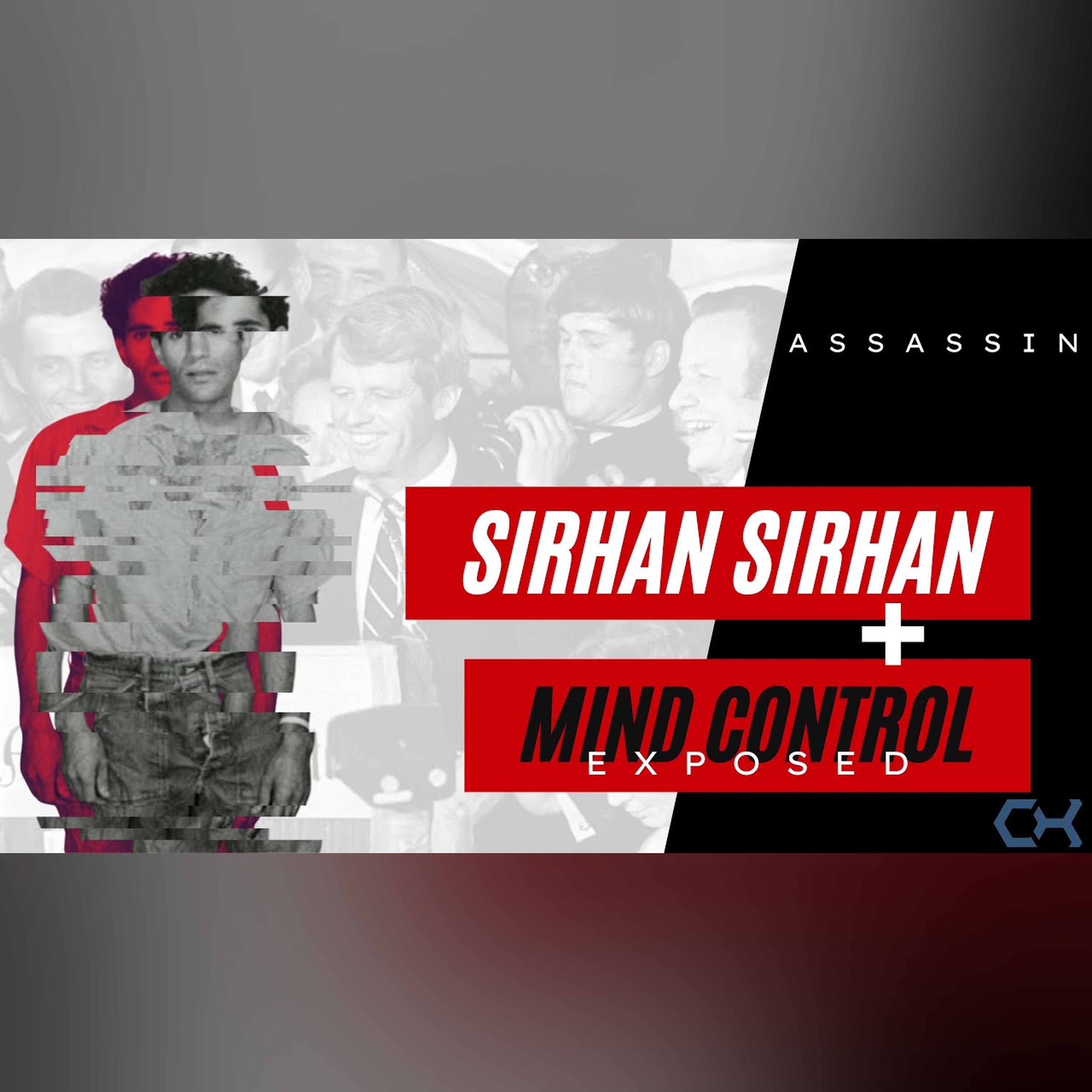
Join NCI University today to master human behavior and influence: Uploaded 05-11-21 This is a dive to discover the possibilities, not the case itself. Sirhan Sirhan, in full Sirhan Bishara Sirhan, (born March 19, 1944, Jerusalem), Palestinian-born Jordanian citizen who was convicted (1969) of fatally shooting U.S. Sen. Robert F. Kennedy on June 5, 1968. He received the death penalty, but the sentence was later commuted to life. Sirhan, a Christian Palestinian, was born in Jerusalem. In 1948 Jordan took control of East Jerusalem and what is now the West Bank, and the following year it granted citizenship to people living in those areas. It is believed that this is how Sirhan became a Jordanian citizen. In the 1950s, he and his family moved to the United States and eventually settled in Pasadena, California. There he attended Pasadena City College and later held odd jobs, notably working at a horse stable and later at a health food store. During this time, Sirhan became vocal in his oppo
Iowa State football heads to Orlando to face UCF, while the Iowa Hawkeyes prepare for a big road matchup against Illinois with their College Football Playoff hopes still alive. Keith Murphy and Andy Fales cover the biggest Iowa sports stories and MORE! on a Murph & Andy fun Friday The guys discuss the historic rainfall in central Florida and what it could mean for Iowa State's offense, Aiden Flora and the Cyclones' push for bowl eligibility. They also preview Iowa-Illinois, including the possibility of Illinois starting its third-string quarterback, and debate the Hawkeyes' playoff chances after the latest CFP rankings. Plus, the latest on the Bill Fennelly situation, including Sienna Harvey's comments and Fennelly's first interview since it happened. The guys review the new John Madden movie, deliver another edition of Iowa Unnecessary Censorship, and MORE! 00:00:00 Sports Memorabilia: What Would You Spend Big Money On? 00:12:00 Iowa State Heads to Orlando to Face UCF 00:21:30 Iowa vs
My special guest tonight is author and cryptozoologist Lyle Blackburn who's here to discuss an upright walking creature that resembles a lizard terrorizing a town in South Carolina. From the swamplands near Bishopville, South Carolina, come reports of a seven-foot-tall, scaly humanoid creature the locals call the "Lizard Man." Over the years, the creature has been seen by numerous witnesses, including a teenager who claimed it attacked him one night near a remote area called Scape Ore Swamp. The young man's testimony and physical evidence was so compelling, it not only launched a serious investigation by the local sheriff's office but an all-out monster hunt that drew hundreds of people to the small town. This real-life "creature from the black lagoon" has inspired major national news coverage, even a call from the famous CBS news anchor, Dan Rather, as he and the rest of the world clamored to know more about Bishopville's elusive monster. The case is often mentioned in books, websites
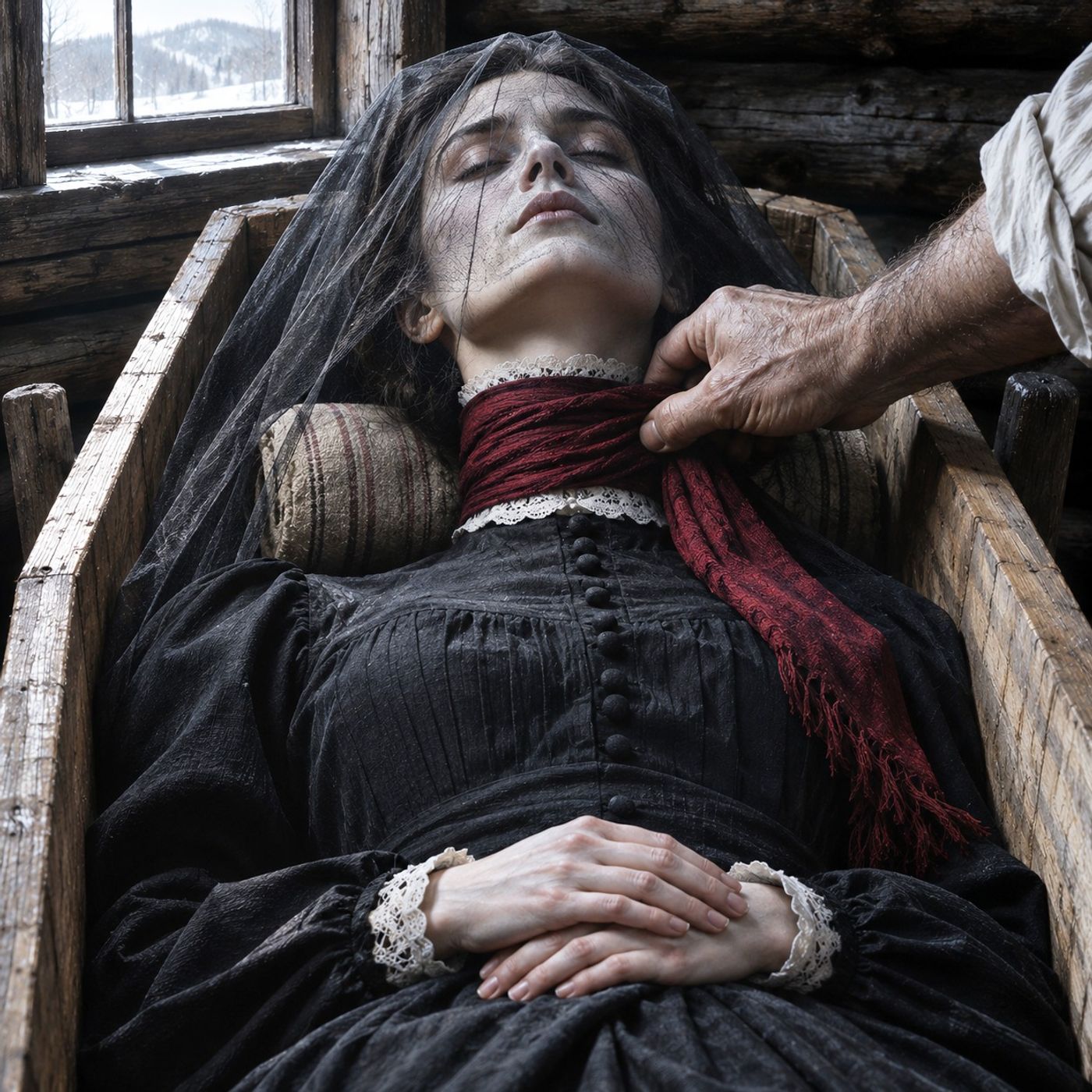
In January 1897, blacksmith Edward Shue washed and dressed his bride of three months for burial before the coroner ever reached their log house in Greenbrier County, West Virginia, and at her funeral he kept fussing with her head and neck, propping it on a pillow and wrapping a scarf around her high collar. Her mother, Mary Jane Heaster, had never liked him, and for weeks afterward she prayed every evening for her daughter to come back and tell her what had really happened. FEATURED STORIES IN THIS EPISODE: This Weird Darkness episode runs from the Greenbrier Ghost, the 1897 West Virginia murder victim whose mother said she came back to name her killer, to a bottomless pit in Washington, a wave of Mothman sightings over Chicago, and a London tomb rumored to be a time machine. Elva Heaster was dead – but that didn’t stop her ghost from solving the murder. *** In Stephen King’s “Pet Semetery”, beloved family pets could come back from the dead. *** In Washington there is a hole that some
"I can say with 100% confidence I was raped." Those were Jane Doe's words to Cornell University Police. But when the district attorney explained why no criminal charges had been filed, he characterized her signed statement as describing sexual activity that was voluntary, conscious, and consensual. Then a much longer police interview became public. The prosecutor said he'd never seen it. In Part 2, Tyrella and Nikita examine the six-page statement at the center of the controversy, the evidence behind the decision not to prosecute, and why Cornell's own investigation reached very different disciplinary outcomes. What does New York law actually require to establish a sexual offense? How does that differ from a university's consent policy? And what happens when two institutions examine the same night but answer fundamentally different questions? With the case reopened and institutional decisions under renewed scrutiny, the Cornell 7 story raises a question much bigger than one fraternity
At 1:42 a.m., a message appeared in a fraternity group chat at Cornell University. What was happening inside that house—and how many people knew? In October 2024, a Cornell student known as Jane Doe went to the Chi Phi fraternity house to spend time with someone she trusted. What followed would become the subject of a sexual assault investigation, university disciplinary proceedings, and a lawsuit naming seven fraternity members. But the story is far more complicated than a single allegation. There are conflicting accounts of consent, messages sent while the night was still unfolding, people who entered and left the room, and questions about who witnessed what—and whether anyone should have intervened. In Part 1, Tyrella and Nikita reconstruct the night through Jane Doe's statements, the men's accounts, text messages, and investigative records. Because this case isn't just about what allegedly happened inside one room. It's about how many people can be present—and how differently they
Erica Kinsman accused Florida State quarterback Jameis Winston of rape. As she fought to have her allegation taken seriously, Winston became one of the biggest stars in college football—and won the Heisman Trophy. Winston maintained that their encounter was consensual. Prosecutors declined to bring criminal charges. But the questions surrounding the investigation, the university's response, and the treatment of Kinsman didn't disappear. In Part 2 of our examination of The Hunting Ground, Tyrella and Nikita revisit Erica's account and explore what happens when a sexual-assault allegation involves a celebrated college athlete. Then we go beyond the documentary. What did federal investigators actually find at UNC? What happened at Baylor? How do universities balance the rights of complainants and accused students? And have changes to Title IX made campuses safer—or simply changed the way these cases are handled? We also examine the difference between an allegation, a criminal charge, a un
Public bodies should publish the evidence behind important decisions.
Share your view, then see how readers voted. No sign-in required. This poll is shared across stories.
Do you agree or disagree?
Common Quandary
A Common Quandary to discuss
Another conversation to explore, separate from this news story.
One friend is rich, one is broke, and everyone ordered differently. How do you split dinner?
A group of longtime friends traditionally divides restaurant bills equally. Their incomes have grown increasingly unequal, and one friend now declines gatherings because even their share is difficult to afford while others order without thinking about price.
When should friendship adjust for differences in wealth?