The incredible history of China's terracotta warriors - Megan Campisi and Pen-Pen Chen
7 min
Listen through the publisher, then discuss the episode here or arrange an in-person Roundtable. Your city determines where to meet.
Roundtables are designed for groups of four, with a shared subject and room for everyone to speak. Come for discussion, with no dating expectation.
View full lesson: http://ed.ted.com/lessons/the-incredible-history-of-china-s-terracotta-warriors-megan-campisi-and-pen-pen-chen Uploaded 30-06-15 In 1974, farmers digging a well near their small village stumbled upon one of the most important finds in archaeological history – vast underground chambers surrounding a Chinese emperor’s tomb that contained more than 8,000 life-size clay soldiers ready for battle. Megan Campisi and Pen-Pen Chen shares the fascinating history of Emperor Qin Shi Huang. Lesson by Megan Campisi and Pen-Pen Chen, animation by Zedem Media.
Episode information is provided by the publisher. Listening takes place on the publisher’s service.
Charlie Kirk’s assassination will dominate the headlines—but before the truth is even clear, the disinformation machine is already spinning. This video exposes how suppression, radicalization, and division are weaponized—not by ideology, but by systems designed to keep you outraged, divided, and distracted. Uploaded 11-09-25 We’ll reveal: • Why suppression is the biggest red flag in history—and why it always signals weakness, not strength. • How highly suggestible people are radicalized—not by one side or the other, but through media outrage loops, algorithmic echo chambers, and deliberate manipulation. • The illusion of “left vs. right”—a distraction designed to pit neighbors against each other while corruption, corporate power, and elites escape untouched. • The common ground we all share: freedom, safety, stability, fairness—and what none of us want: corruption, endless wars for profit, elites with different rules, surveillance states, and justice systems that bend for the powerful
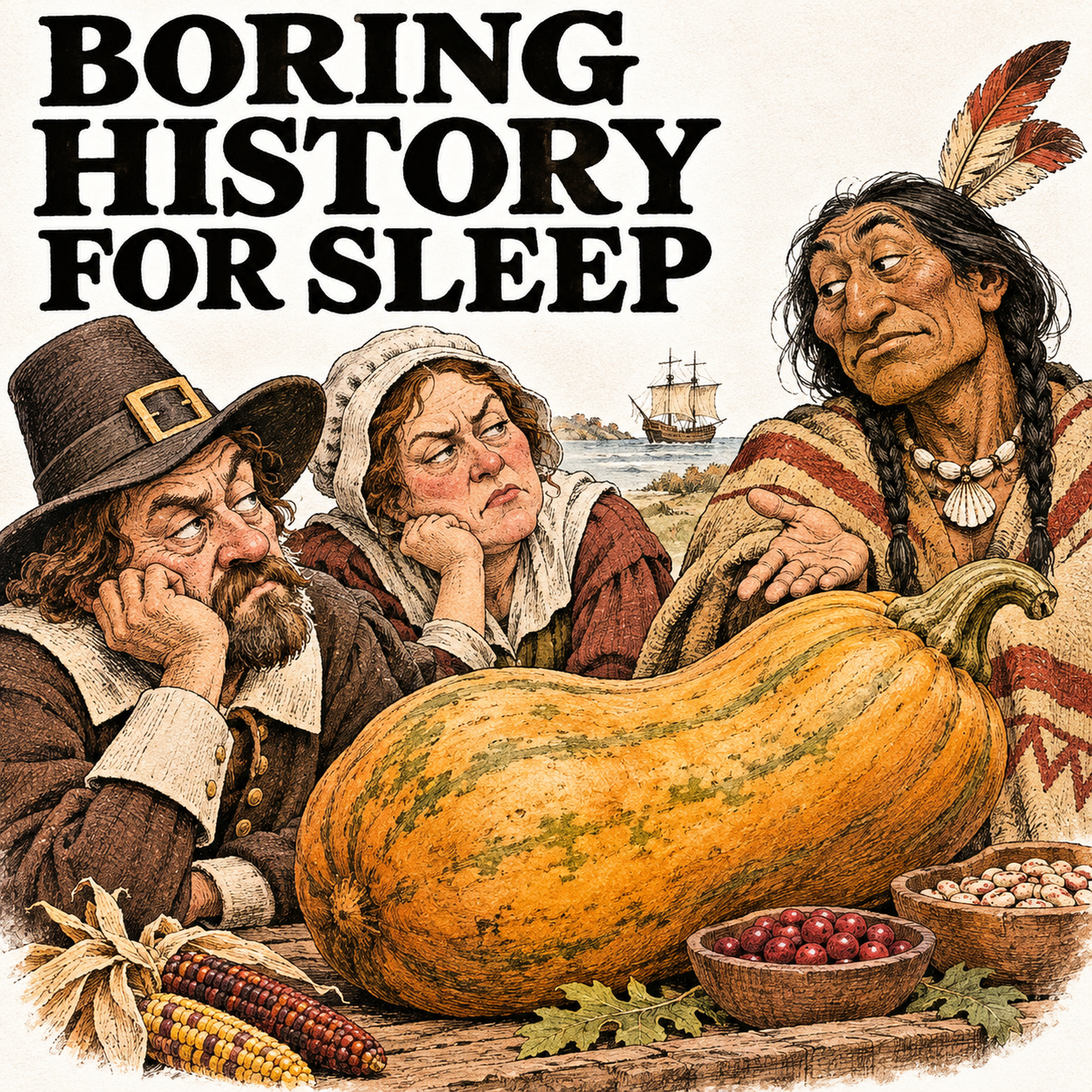
In 1620, a small ship called the Mayflower crossed the Atlantic carrying English settlers in search of a new life. Their arrival in North America became one of the most familiar stories in American history, but the reality behind the legend was far more complicated than the traditional Thanksgiving tale suggests. Discover why the Pilgrims left England, what their dangerous voyage was really like, and how they survived their first winter in an unfamiliar land. Explore their encounters with the Wampanoag people, the role of Tisquantum, also known as Squanto, and the assistance that helped the struggling settlers establish their colony. Uncover what happened at the harvest gathering of 1621, who actually attended, what was served, and how this event became connected to the modern Thanksgiving holiday. Follow the history beyond the familiar celebration and discover the people, cultural encounters, and historical realities behind the Mayflower story. Boring History for Sleep — Soft stories
This week on The Necessary Conversation, it's Chad, Haley, and Mary Lou. Bob is still recovering but sent in a video message about Trump calling Putin his friend that we watch together. 🇷🇺 Trump held the first-ever three-way talks with Putin and Xi, called it a "12 out of 10," and produced nothing. Then at a press conference he called Putin his friend — and when asked if Putin is a friend to America, the president of the United States said, "I can't speak to America." That same day, Trump's friend Putin launched massive strikes into Ukraine, hit Poland with two missiles — an act of war against a NATO ally — then struck near a Ukrainian restaurant and drone-bombed the first responders, killing a 7-year-old child and a 20-year-old paramedic. We watch Bob's video and ask Mary Lou: is Russia our friend? 🇨🇳 The House Foreign Affairs Committee revealed Trump's Commerce Department approved nearly 880,000 advanced AI chips for Chinese military-linked companies including Alibaba, Tencent, a
Here is something that has always fascinated me. The easiest people to lead are almost always other people. You can fire an employee who won't perform. You can end a partnership. You can walk away from anyone who consistently lets you down. Uploaded 15-09-26 But there is one person you can never fire, never replace, never walk away from — and that person is the one you have to depend on for every single thing you will ever accomplish. You are stuck with yourself. The one who resists you most, who makes promises and breaks them, who knows every excuse before you finish making it, is the one wearing your clothes. Here is the truth: we keep the promises we make to strangers and break the ones we make to ourselves, and until we fix that, nothing else holds. This seminar walks through the things you must understand about leading the hardest person you will ever command — you. CHAPTERS 0:00 Intro — the one person you can never fire 1:31 The way you'd never lead anyone else 2:54 What self-lea
This is a Grave Talks CLASSIC EPISODE! PART TWO Built in 1901 in the small railroad town of Wymore, Nebraska, the Haunted Stephenson Building has carried more than a century of stories within its walls. Located in the heart of downtown near the railroad line that built the town, the structure was part of the early business district and reportedly served over the years as a dance hall, saloon, gambling space, and possibly even a brothel — the kind of place where money flowed, tempers flared, and secrets were buried. Today, it operates as a paranormal investigation site and oddities museum, attracting those who want to see if the rumors are true. Visitors consistently report footsteps pacing on empty upper floors, whispers captured in silent rooms, cold air that moves against logic, and shadow figures that vanish the moment you focus on them. Owner Christie Ayers joins us to discuss the building’s layered past and the unsettling question at the center of it all: are these simply echoes o
Have you ever seen pictures of giant stone heads sitting in the grass and wondered how they got there? Get ready for a mind-blowing adventure to one of the most remote places on Earth: Rapa Nui, also known as Easter Island! About 800 years ago, expert Polynesian sailors found this tiny island in the middle of the Pacific Ocean using only the stars and ocean currents to guide them. Once there, they carved nearly a thousand massive stone statues called moai! But here is the biggest surprise: these statues aren't just heads—they have full bodies buried underground! Some weigh as much as 40 cars, and the islanders moved them without wheels, cranes, or metal tools. How did they do it? The local legends say the statues literally walked to their places, waddling side to side with the help of ropes and incredibly smart human engineering! Join Mira and Finn as they uncover the secrets of the moai, find out how the island got its English name from a Dutch captain, and learn all about the giganti
View full lesson: http://ed.ted.com/lessons/surviving-a-nuclear-attack-irwin-redlener The face of nuclear terror has changed since the Cold War, but disaster-medicine expert Irwin Redlener reminds us the threat is still real. He looks at some of history's farcical countermeasures and offers practical advice on how to survive an attack. Talk by Irwin Redlener.
Explore what makes polio so dangerous, what is causing the 21st century resurgence of cases, and how we can eradicate the disease. -- In 1952, polio was everywhere: killing or paralyzing roughly half a million people annually. Yet just 10 years later, paralytic polio cases in the US dropped by 96% and we were on track to get rid of polio for good. But in recent years, the virus started striking back. So, what’s behind these recent spikes? Explore the dangers of poliovirus and the possibility of eradicating this deadly disease. Directed by Anton Bogaty. This video made possible in collaboration with Gates Ventures Learn more about how TED-Ed partnerships work: https://bit.ly/TEDEdPartner A special thanks to Ananda Bandyopadhyay, Amber Zeddies, and Kathleen O'Reilly who provided information and insights for the development of this video. Support Our Non-Profit Mission ---------------------------------------------- Support us on Patreon: http://bit.ly/TEDEdPatreon Check out our merch: htt
Todd Humphreys forecasts the near-future of geolocation when millimeter-accurate GPS "dots" will enable you to find pin-point locations, index-search your physical possessions ... or to track people without their knowledge. And the response to the sinister side of this technology may have unintended consequences of its own. (Filmed at TEDxAustin.) Uploaded 26-06-13 Talk by Todd Humphreys.
Keeping food affordable should not require producers to work for an unsustainable income.
Share your view, then see how readers voted. No sign-in required. This poll is shared across stories.
Do you agree or disagree?
Common Quandary
A Common Quandary to discuss
Another conversation to explore, separate from this news story.
If a good deed is filmed for likes, is it still a good deed?
A local creator films themselves buying groceries for strangers. The videos generate substantial income, but they also inspire donations and allow the creator to help more people.
Do mixed motives diminish a genuinely helpful act?