The Link Between Stress and the Microbiome: New Research Explained
16 min
Listen through the publisher, then discuss the episode here or arrange an in-person Roundtable. Your city determines where to meet.
Roundtables are designed for groups of four, with a shared subject and room for everyone to speak. Come for discussion, with no dating expectation.
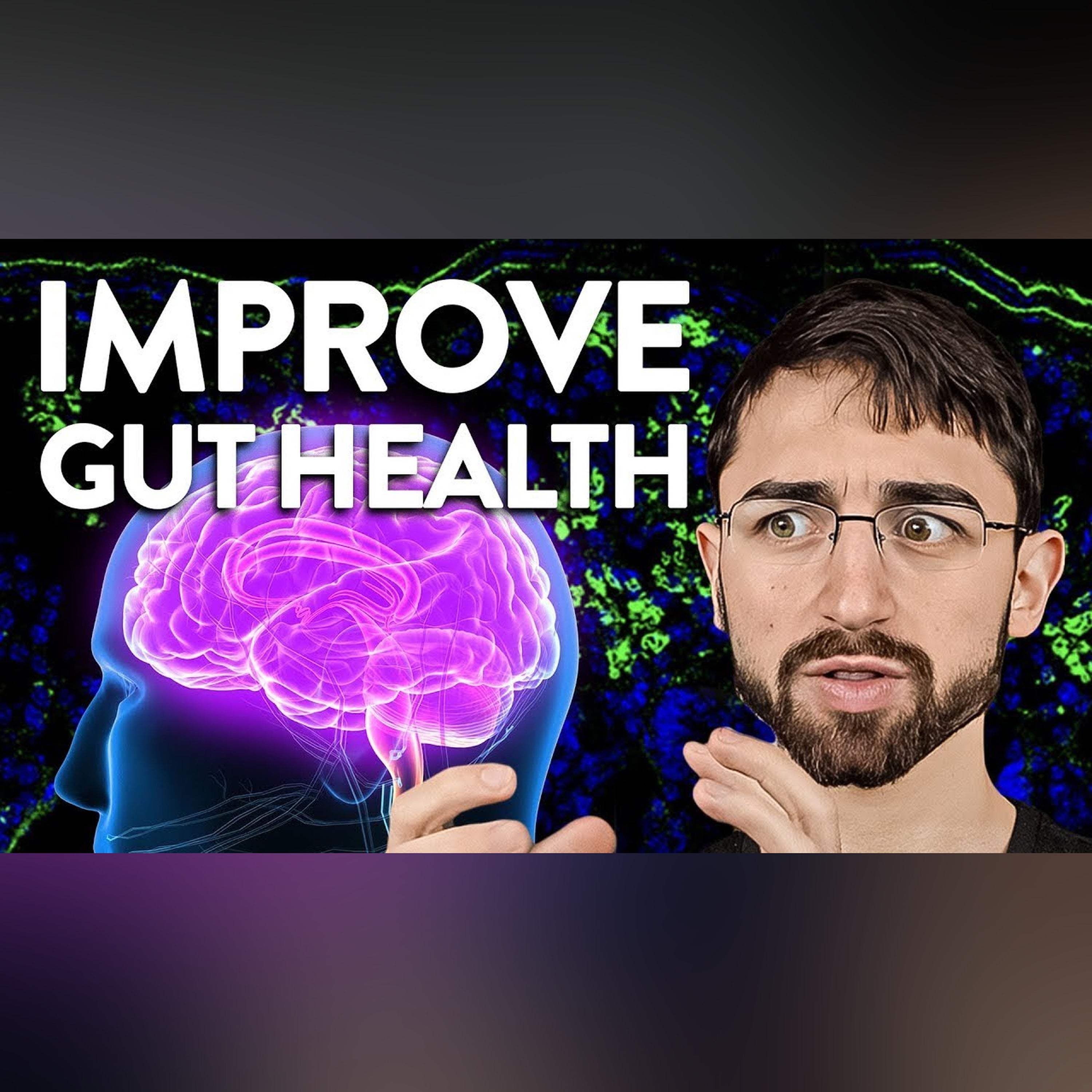
Paper: https://www.cell.com/cell/fulltext/S0092-8674(24)00779-7 How does stress impact gut health? New science reveals a pathway whereby an emotion regulation center in the brain, the amygdala, signals to intestinal glands in the gut that feed particular good gut bacteria to improve gut health. Stress inhibits this pathway, leading to changes in the microbiome and “tummy troubles.” These new data provide mechanistic insights into how certain stress reduction practices, including those reviewed in this video, may help to improve gut health and reduce unpleasant symptoms – bloating, diarrhea, and constipation – plagues many of us. What’s good for the mind is good for the gut, and what good for the gut is good for the brain. #guthealth #mentalhealth #anxietyrelief Chapters 0:00 – How Does Stress Impact Gut Health? 0:57 – New Paper in Cell 2:40 – Lactobacillus are Fed by Brunner’s Glands 3:29 – Vagus Nerve Controls Brunner’s Glands 4:35 – Bloating. Yikes! 5:04 – The Amygdala controls the Microbiome 6:10 – Relevance to Humans 7:40 – Summary of the Mechanism 8:22 – A Nuance Note 8:58 – Actionable Takeaways
Episode information is provided by the publisher. Listening takes place on the publisher’s service.
In this video I discuss Circadian Rhythm and its relation to Intermittent Fasting. It's important to understand Circadian Rhythm when Intermittent Fasting. You must understand how your body works to fully understand how to accomplish Autophagy through Intermittent Fasting and in order to do so you must first understand Circadian Rhythm. To learn more about fasting read my blog here: https://bozmd.com/ketogenic-diet-and-intermittent-fasting/ This is an excerpt from Keto Consults with Dr. Boz: https://bit.ly/2GzctYm --------------------- Thanks for checking out the Dr Boz Channel. See LINKS below resources and recommendations Tune in Tuesday nights, 6PM Eastern/5PM Central to watch me Live! We improve health - One ketone at a time. --------------------- FREE STUFF eBook: 50 Keto Fat-Facts: http://on.bozmd.com/50fat DrBozRatio SPREADSHEET http://on.bozmd.com/DBR DOCUMENTARY Play List: https://on.bozmd.com/AT 5 Toxic Traditions https://bozmd.com/toxic/ --------------------- Dr Boz’s ONLINE
Explore how pulling an all-nighter can impact your cognitive function, and find out what happens to your brain when you don't sleep. -- You’re just one history final away from a relaxing spring break. But you still have so much to study! You decide to follow in the footsteps of many students before you, and pull an all-nighter. So, what happens to your brain when you stay up all night? And does cramming like this actually help you prepare for a test? Anna Rothschild explores how a sleepless night impacts your cognitive function. Lesson by Anna Rothschild, directed by Biljana Labović. Animation by Noam Sussman & Ali Kellner, Homework Studio. This video made possible in collaboration with the Bezos Family Foundation Learn more about how TED-Ed partnerships work: https://bit.ly/TEDEdPartner A special thanks to Dr. Mathias Basner, Andrew Fuligni, Adriana Galván, and UCLA Center for the Developing Adolescent who provided information and insights for the development of this video. Support Ou
Big News! Clicking Here (https://meditationsounds.supercast.com/) Email List (https://bit.ly/3T010m4) Calm Your Nervous System Naturally — 528 Hz Healing Frequency + Brown Noise | Reduce Anxiety, Palpitations, and Stress is designed to help your body and mind settle into a deep state of relaxation. The 528 Hz frequency is often associated with emotional balance and inner harmony, while brown noise provides a grounding, low-frequency sound that helps calm the nervous system. Together, they create a soothing soundscape that may help ease anxiety, reduce stress, and support relaxation during rest, sleep, meditation, or quiet focus. This audio is ideal for unwinding after a long day, calming racing thoughts, or creating a peaceful background for deep rest. Simply listen, breathe slowly, and allow your body to relax. #528Hz #BrownNoise #HealingFrequencies #ReduceAnxiety #StressRelief #CalmMind #NervousSystem #DeepRelaxation #SleepSounds #SoundTherapy 528 hz healing frequency brown noise, re
Is your body weight stable, but you're still not eating enough to properly fuel your training, recovery, and overall health? Introducing Why Stable Weight Doesn't Always Mean You're Eating Enough from Jeff Hoehn of the Mind Muscle Connection Podcast (https://www.buzzsprout.com/1508401). Just because your weight isn't changing doesn't necessarily mean you're adequately fueled. In this episode, Jeff breaks down why maintaining a stable body weight doesn't always mean you're meeting your body's energy needs, especially if you're training hard, staying lean, or spending long periods dieting. You'll learn: Why stable body weight doesn't automatically mean adequate energy availability Who is most at risk of underfueling, even when their weight isn't changing How high training output, staying too lean, and chronic dieting can contribute to low energy availability The potential signs of underfueling, including changes in performance, recovery, hormones, and menstrual health Why spending too lo
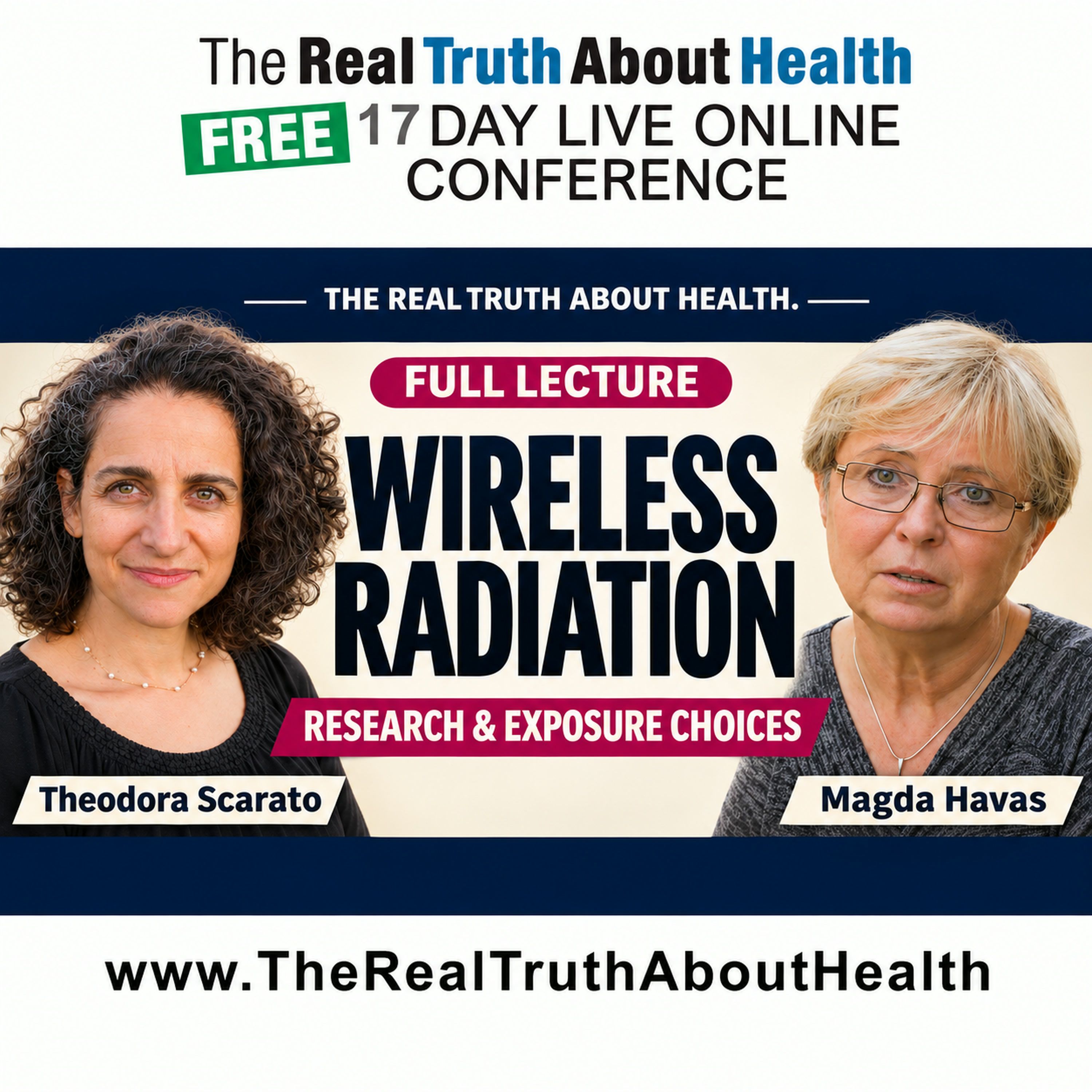
Wireless Radiation: What the Research Says—and How to Reduce Exposure if You Choose Theodora Scarato, MSW, and Magda Havas, PhD, examine what research says about wireless radiation and potential health effects. Learn about everyday exposure sources, scientific concerns, and practical steps people can choose to reduce EMF exposure at home, work, and school. #WirelessRadiation #EMF #PublicHealth
My most dangerous ideaSpreading awareness about the works of some of the leading educators in the AI revolution."Helping humanity shepherd through this transition as we embrace the final invention of mankind: advanced artificial intelligence." David Shapiro aims to provide a pragmatic and optimistic view of the future.Core Ideas:Metamodernism: Narratives and emergence view of realityPostnihilism: The demand for meaning is false, there is only the Great MysteryHeuristic Imperatives: An ethical, moral, and decision framework.- Reduce suffering- Increase prosperity- Increase understandingPost-Labor Economics: Replace humans with machines (better, faster, cheaper, safer)mantra:EXPLORE: Delve into the unknown, driven by curiosity and a quest for discovery. Seek knowledge.ELUCIDATE: Make complex ideas clear, communicating them in an accessible and comprehensible manner.ENUMERATE: Ground insights in concrete data, providing measurable and quantitative evidence.ELABORATE: Add depth and detail
Robb Wolf Interview Part 1: https://youtu.be/Wi-6KttZ54g LMNT “Scandal” Video: https://youtu.be/uI2ewgimH3g Salt, Leptin and Blood Pressure: https://staycuriousmetabolism.substack.com/p/salt-vs-fat-rethinking-the-root-causes?r=40ekz2 Oleuropein and Calcium Signaling: https://youtu.be/ljuimrT2a1s In Part 2 of my conversation with Robb Wolf, we dig into one of the most misunderstood aspects of nutrition and metabolic health: electrolytes. Most people think electrolytes simply matter for athletes or hot summer workouts, but the reality is far more complex. We also get into the science behind sodium, why the old fear of salt never made sense mechanistically, and how obesity and leptin signaling influence salt sensitivity, and more. Chapters 0:00 – Why Electrolytes Matter More Than You Think 3:12 – Low-Carb, Insulin and Hidden Electrolyte Loss 7:38 – How to Know If You’re Sodium Deficient 11:25 – The Truth About Sodium, Obesity and Blood Pressure 21:59 – How Much Sodium You Really Need 29:1
For a written breakdown, more nuances and early access to content, see the associated newsletter: https://open.substack.com/pub/staycuriousmetabolism/p/im-finally-lowering-my-cholesterol?r=40ekz2&utm_campaign=post&utm_medium=web&showWelcomeOnShare=true (https://open.substack.com/pub/staycuriousmetabolism/p/im-finally-lowering-my-cholesterol?r=40ekz2&showWelcomeOnShare=true) Statin RCT Video: https://youtu.be/d9LeDSoYOVc Ezetimibe Video: https://youtu.be/5idzP5ghT7A Bempedoic Acid Letter: https://staycuriousmetabolism.substack.com/p/beyond-cholesterol-the-unfolding?r=40ekz2 Description For the last seven years, despite extremely high cholesterol, I refused cholesterol-lowering medications. But I’ve just changed my mind…sort of. In this video, I walk through the full decision-making process: the risks, the uncertainty, the medical context, and the nuances that made this case unusually complicated. There are three plot twists. This is not medical advice. It’s a detailed look at an unusual
StayCurious Newsletter on Snyder’s Fiber Randomized Controlled Trial: https://staycuriousmetabolism.substack.com/p/fiber-is-good-for-you-is-lazy-science?r=40ekz2 StayCurious Newsletter on Inulin and Fructose Resistance: https://staycuriousmetabolism.substack.com/p/the-fiber-that-fights-fat-how-inulin?r=40ekz2 Snyder Interview 1, Four Types of Diabetes: https://youtu.be/mCrc4gfbK2o Snyder Interview 2, Most Viral Aging Study: https://youtu.be/kMpGkg4zMOU Snyder Interview 3, Most Beautiful Exercise Study: https://youtu.be/_9ywulQF2Ho Why does the same food spike one person’s blood sugar while barely affecting another? In this fourth conversation with Stanford’s Professor Michael Snyder, we explore new research on individualized glycemic responses, insulin resistance subtypes, and why one-size-fits-all nutrition advice keeps failing. From rice spiking glucose more than ice cream, to the power of the grape-to-potato ratio, and beyond, this discussion reveals how metabolism, microbiome, immu
Schools should explain the purpose of a rule before punishing students for breaking it.
Share your view, then see how readers voted. No sign-in required. This poll is shared across stories.
Do you agree or disagree?
Common Quandary
A Common Quandary to discuss
Another conversation to explore, separate from this news story.
You cannot stand your friend's partner. Do they still get a wedding invitation?
You are planning a small wedding and strongly dislike the person your longtime friend has been dating. Inviting them would make you uncomfortable, but excluding only that partner would embarrass your friend.
Whose comfort should govern a celebration centered on you?