The Liver Problem Hiding Behind a Normal Waistline | Dr Hirsh Trivedi
103 min
Listen through the publisher, then discuss the episode here or arrange an in-person Roundtable. Your city determines where to meet.
Roundtables are designed for groups of four, with a shared subject and room for everyone to speak. Come for discussion, with no dating expectation.
This week I'm joined by Dr Hirsh Trivedi, a transplant hepatologist and Director of the Metabolic Liver Program at Dell Medical School, UT Austin. He is board certified in internal medicine, gastroenterology, transplant hepatology, and obesity medicine. You can have a normal waistline and still be quietly storing harmful amounts of fat in your liver. Hirsh explains how fatty liver progresses, which tests are worth asking for, and how exercise, meal timing, sleep and food quality can change the trajectory. What we cover What lean MASLD is and why a normal BMI is not enough How fat leads to inflammation, scarring and cirrhosis, and why it can be reversed Fasting insulin, HOMA-IR, ApoB and the FIB-4 score Why exercise helps your liver independent of weight loss Why breakfast and lunch should be bigger than dinner Sleep, stress and sleep apnoea GLP-1 medications, muscle loss and grey market peptides If you want to understand what is happening in the organ at the centre of your metabolic health, this one is for you. If you enjoy the show, a rating or review on Apple Podcasts goes a long way. To connect with Dr Hirsh Trivedi, subscribe to his newsletter at Inherited Risk on Substack (https://inheritedrisk.substack.com/), visit inheritedrisk.org (https://inheritedrisk.org/) for updates on his book, and follow him on Instagram (https://www.instagram.com/thelivermd). Disclosure: Dr Hirsh Trivedi is an advisor to Madrigal Pharmaceuticals and a consultant for Novo Nordisk. Want to support the show? This episode is brought to you by: 38TERA Use code THEPROOF for a discount at checkout. 38Tera ships to the United States, Australia, and New Zealand. IM8 Shokz Function Health Make knowing your health part of your holiday plans. WHOOP Simon Hill, MSc, BSc (Hons) Creator of theproof.com (http://theproof.com/) Instagram: @simonhill (https://www.instagram.com/theproof/) Twitter: @theproof (https://mobile.twitter.com/theproof)
Episode information is provided by the publisher. Listening takes place on the publisher’s service.
Today’s guest is David Ludwig, MD, PhD, an endocrinologist, pediatrician, and international thought leader in obesity medicine and metabolic health. He’s also a treasured mentor of mine from my time at Harvard Medical School. In this episode, we discuss his new paper in the New England Journal of Medicine on ultra-processed foods and why “simple” is the enemy of metabolic health. We explore the science of nutrition, weight loss, and food quality, challenging conventional wisdom about diet and metabolism. If you’re courageous enough to listen all the way through, this conversation will expand your perspective, change the way you think about food, and inspire a healthier relationship with eating. New England Journal of Medicine Article: https://www.nejm.org/doi/full/10.1056/NEJMp2508694 David Ludwig MD PhD’s Medium Blog (No Paywall): https://davidludwigmd.medium.com/ultra-processed-food-retold-by-hc-andersen-7a3d2ae60f39 Chapters 0:00 – Meet Harvard Endocrinologist David Ludwig MD PhD 1:
You've gotten very good at pretending you don't feel it. Uploaded 21-08-26 Maybe it's a conversation with someone you love. Someone you work for. A partner, a parent, a friend who's been quietly taking more than they give. Or the hardest one of all — a conversation with yourself, the one where you finally admit something you've refused to say out loud for years. You know exactly which one I'm talking about. You felt it the moment I said the word. A name came up, or a face, and your stomach did something small and unpleasant, and you pushed it back down where it's been living. That flinch is the most honest thing that's happened to you all day. Here is the truth: the life you say you want — the freedom, the peace, the relationship, the income, the respect — there's a very good chance it's on the other side of one conversation you keep refusing to have. Not ten. One. This seminar unpacks the single mechanic behind a stuck life: the necessary conversation you keep treating like a locked d
Text me what you thought of the show (https://www.buzzsprout.com/1959372/fan_mail/new) Can working night shifts affect your fertility, ovulation or IVF success? After speaking with numerous women trying to fall pregnant while working shifts, including those undergoing expensive IVF treatment, I wanted to explore what the research actually tells us. In this episode of A Healthy Shift, we discuss how night shifts, disrupted sleep and circadian misalignment may affect reproductive health. We cover: Why the fertile window is so short. Shift work, reproductive hormones and menstrual irregularities. What research says about night shifts, fertility and IVF outcomes. The roles of sleep, stress, nutrition, weight and exercise. Practical steps for women trying to conceive while working shifts. Research links shift work with menstrual irregularities, but evidence that night shifts directly cause infertility or reduce IVF success remains uncertain. If you're trying to get pregnant while working ni
This truck is going to the moon. So we put it to the test… Get an exclusive 15% discount on Saily data plans. Use code CLEO at checkout. Download Saily app or go to https://saily.com/cleo This is the world’s first “space truck.” It’s going to the moon to help us go farther, faster, and discover places we’ve never been… Because humans are about to go back to the moon for the first time in 50 years! And no one but its builders have ever driven it… until today. In this video I'm going to put this brand new space truck to the test in a series of 5 challenges. And I've invited someone who knows a thing or two about challenges: YouTube daredevil and host of Challenge Accepted… Michelle Khare! Let’s go. Chapters: 0:00 This is the world’s first space truck 0:38 Introducing Michelle Khare! 01:04 What is a space truck? 01:52 How do astronauts drive? 02:21 First impressions! 02:47 Moon truck v normal truck 04:47 How fast can you drive on the moon? 05:18 Will we crash? 08:36 Can we break the lunar
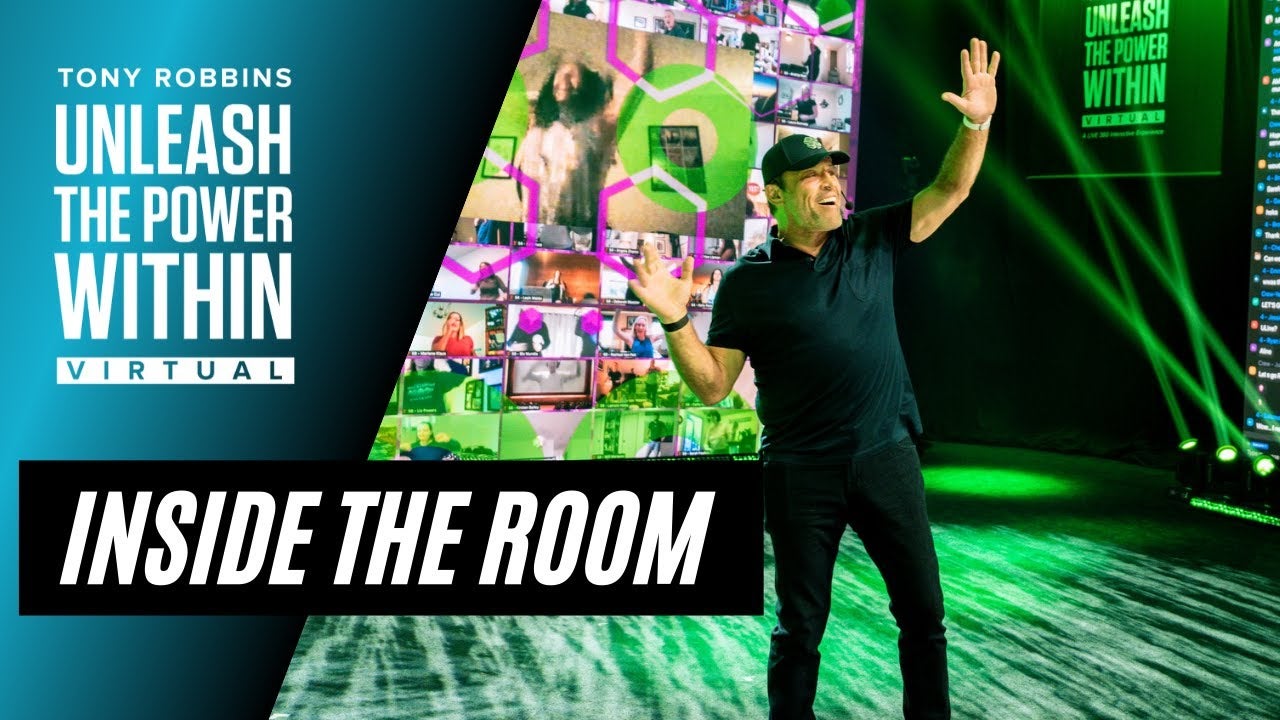
The FIRST Unleash the Power Within of 2022 just wrapped and we had 26,000 households from 151 countries around the world STEP UP and JOIN TOGETHER for one of our largest events in history! Uploaded 23-03-22 Here are some highlights from the week. Enjoy this video for a peek inside our virtual stadium It’s such a privilege to spend time with such DRIVEN, COMMITTED, LOVING SOULS all coming here with a hunger to GROW. For me, getting to hear your goals and witness each of you creating a unique life for yourselves, your loved ones, and your communities is deeply moving. We grow so we have MORE to GIVE, and the truth is, the world is a better, more beautiful and kind place because of people like YOU. If you’ve never experienced an Unleash the Power Within, it can be hard to imagine the HUMAN POTENTIAL and the RAW ENERGY⚡️ that converge over these four days and nights. It's electrifying to feel people from every walk of life, every background, every stage of life UNITE to find a deeper meani
A.I. for Starting to Exercise: Building a Routine That Actually Sticks, a practical, beginner-friendly look at how artificial intelligence can help you build a routine that actually sticks this time. Starting to Exercise? Press play on Episode 429 of A.I. for Beginners and learn exactly how artificial intelligence, especially ChatGPT, alongside Nike Training Club, can help you build a routine that actually sticks this time. WHAT YOU WILL LEARN IN THIS EPISODE - Why starting to exercise is so hard to handle alone, and what is actually going on underneath it - A specific way to use Nike Training Club to work through it, step by step - An example prompt you can copy word for word: "Here is my current fitness level and schedule, help me build a realistic beginner routine" - A second practical technique, with another ready-to-use prompt: "Give me a simple way to track my progress that doesn't rely on willpower alone" WHO THIS EPISODE IS FOR - Anyone currently working on starting to exercise
This week I'm joined by Dr Eric Helms, a sports scientist, coach, and WNBF pro natural bodybuilder with more than 20 years of drug-free training behind him. He co-founded MASS Research Review and co-directs the Sports Research Institute New Zealand at the Auckland University of Technology. Most lifters who stall assume they have hit their genetic limit. Eric explains why that is rarely the case, why gains diminish the longer you train, and how to decide what progress is actually worth to you. What we cover Why a genetic ceiling is not a single fixed number How much progress is realistic after the beginner years Why women and men gain muscle at similar relative rates What steroid use does and does not leave behind How many sets, reps, and how close to failure suit busy lifters in their 40s and 50s Supersets, drop sets, and tracking your own training If you want a more honest framework for your training, this one is for you. If you enjoy the show, a rating or review on Apple Podcasts goe
Elizabeth Kazarian is a physician double board-certified in Family Medicine and Obesity Medicine, practising in Washington DC. She treats obesity for a living, which means she spends as much time on insurance appeals as she does on clinical decisions. Roughly one in ten American adults now reports using a GLP-1 medication, and the public conversation has split between people calling them a shortcut and people calling them a miracle. Elizabeth occupies the far more useful middle ground, and she is candid about where the evidence is strong, where it is thin, and where the real obstacles lie. What We Cover Why treating obesity means treating the brain, and what that does to the willpower argument Why she stopped asking patients to earn medication through failed dieting What happens when people come off these drugs, including the part of the data nobody quotes The insurance and rebate machinery that decides which GLP-1 you are offered BMI, body composition, and working with a tool whose se
News organizations should disclose major financial relationships that could influence their coverage.
Share your view, then see how readers voted. No sign-in required. This poll is shared across stories.
Do you agree or disagree?
Common Quandary
A Common Quandary to discuss
Another conversation to explore, separate from this news story.
Everyone exaggerates on dating apps. Are two imaginary inches harmless?
A friend adds two inches to their listed height because they believe filters exclude them before personality has a chance. They plan to be charming enough that a date will not care once they meet in person.
Can deception be a fair response to superficial gatekeeping?