Listen through the publisher, then discuss the episode here or arrange an in-person Roundtable. Your city determines where to meet.
Roundtables are designed for groups of four, with a shared subject and room for everyone to speak. Come for discussion, with no dating expectation.
Our interview with Michael Hill is mythological. Michael—the creative director of Drake's—joined us at The Standard, London while we were in town for a long time coming conversation on wear testing your own products, full circle moments, Drake's getting mixed up for Drake (which, while a silly joke, actually happens), staying true to your heritage in a volatile landscape, iterating vs. sticking to the vision, the pressure he felt when he took the reigns over 15 years ago, assisting and learning from founder Michael Drake, following in his father Charles Hill's footsteps, why Drake's has resonated with a younger generation of menswear fans, how collabing with ALD was a game changer, gearing up for the brand's 50th anniversary, responding to pricing criticisms, how his job has changed since Mark Cho sold his stake in the brand and how it's going with his new partners, moving to Saville Row, and much more on Michael Hill's interview with The Only Podcast That Matters™.
Episode information is provided by the publisher. Listening takes place on the publisher’s service.
For years, Jack knows one story that nobody outside his old high school seems to have heard. His social studies teacher told it on Halloween, and Jack remembers the detail that made a classroom full of teenagers go quiet. Somewhere under a building in Nebraska, a lightbulb came on, and Mr. Mays could see the children. Years later, Jack buys his old teacher a drink. He’s hoping to hear the story again. This time, Mr. Mays lets slip the name of a town. On a road trip with a friend, Jack finally has the chance to see how much his teacher made up for the benefit of a few high school kids. Finding an old building outside Broken Bow would settle part of it. To settle the rest, one of them will have to go downstairs.
Summer break can disappear into mindless scrolling, but what if three days could spark real confidence, creative skill, and even a future career? We sit down with Amy Kummer, a Houston-based interior designer and founder of Interior Design Camp, to talk about how she built a thriving business and then used that momentum to create an immersive design camp for students entering 6th through 12th grade. We get into the practical side of entrepreneurship and the interior design business: how Amy teaches herself the trade without a traditional design degree, why she believes in investing in education and vendor relationships, and how she thinks about pricing, consultations, and choosing a flat-fee structure that supports a sustainable workflow. Amy also shares how taking on high-pressure projects like show houses can accelerate growth by forcing you to do hard things and trust your own taste. Then we dig into the camp itself, including what students actually do: measuring a real room, taking
Michael Symon discovers he might actually be a food snob, Carla Hall says one stuffing tastes like the box it came in, and Clinton Kelly tries to give everyone a fair chance. It's a Thanksgiving stuffing blind taste test with very little restraint and a surprise at the reveal. Then Michael shares a late-night kitchen invention: a stuffing-inspired sausage melt with Swiss cheese, mustard, and mayo on buttery toasted bread. Clinton's ready to open a bar just to serve it. Along the way, the three debate guests who arrive too early or won't leave, whether to tell a stranger there's something in their teeth, and Clinton's deeply unfortunate encounter with a talkative chef. Tell us in the comments: What's your must-have Thanksgiving stuffing, and what do you make with the leftovers? Special Thanks to Our Sponsors: Visit butcherbox.com/chewed (https://butcherbox.com/chewed) to get $20 off across your first two boxes, plus new subscribers get their choice of filet mignon, New York strip, or ri
My mom was staying with me when I taped this episode last week, and when I came downstairs, she said: "that was a lot of laughing." It's true: when I get together with two of the smartest people writing about television today — people I've known since grad school, when we were just naïfs getting up in the replies of established critics — I'm going to laugh a lot. This episode entertains, but it also allows us to explore the craggy, often crappy depths of the current TV landscape with two critics who spend much more time watching what's available than I do. Have the streamers totally disinvested in writing? Why doesn't Apple TV advertise? Is Netflix just basic cable? Why is the pacing so bad in so many otherwise great shows? And what good stuff are we missing? You're gonna love this one. Thanks to the sponsors of today's episode: Starting November 19, visit AuraFrames.com (https://auraframes.com/) and get up to $50 off select frames, plus an additional $5 off your order with the promo c
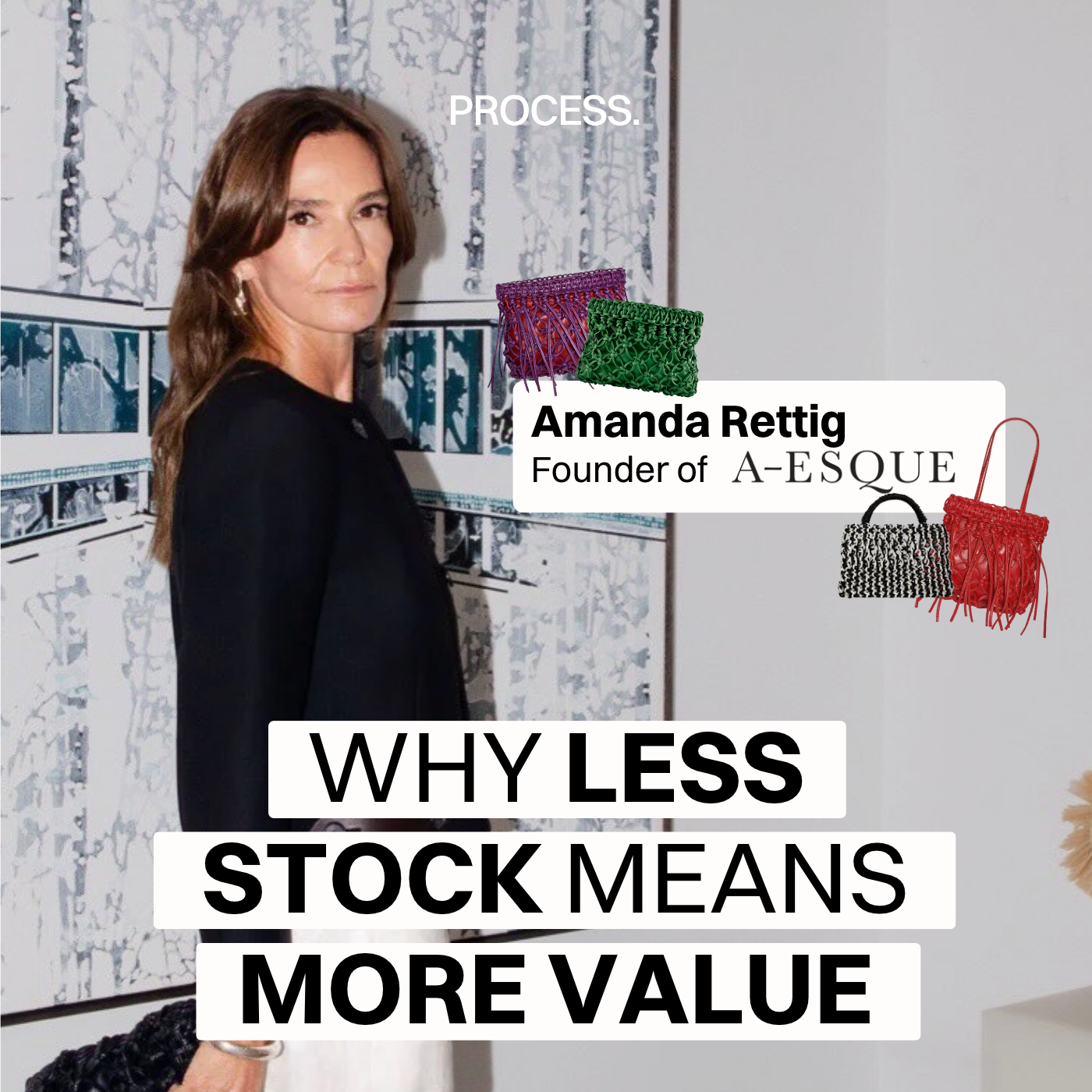
“The only time I would get scared is if I didn’t really believe in something.” - Amanda Rettig Australian designer and founder Amanda Briskin-Rettig has spent 30 years building fashion brands. She founded Mimco in 1996, sold it in 2007, and 13 years ago started A-esque, a self-funded leather goods brand handmade in small batches in Melbourne. Its philosophy is simple: build slowly, create intentionally, and make things that last. In this episode, Amanda shares how to start a fashion brand and grow it sustainably. She covers product development and product architecture, small-batch manufacturing inspired by Toyota’s lean model, and how to avoid excess inventory, deadstock and discounting. She also talks about local manufacturing, building a direct-to-consumer business, brand storytelling, collaborations, and what she learned from building and selling a business. If you want to start a handbag or accessories brand, build a sustainable fashion business, or grow a brand without compromisin
He was Noma's first employee, helped Sat Bains build his Michelin-starred restaurant, became part of London's revolutionary Young Turks movement and was personally recruited by David Chang to open Momofuku in Australia. This week, we're joined by the brilliant Ben Greeno. Over an incredible lunch in London, Ben takes us behind the scenes of some of the most influential kitchens of the past 25 years. He reveals what René Redzepi and Noma were really like before the international acclaim, the chaos and creativity of those early Copenhagen years, the extraordinary chefs who passed through the kitchen and the night René completely lost his temper. We also hear how he nearly joined Marcus Wareing, why David Chang recruited him to move to Australia, the dish Chang absolutely hated, the birth of the Young Turks alongside Isaac McHale and James Lowe, and why opening a takeaway chicken shop proved harder than opening Noma. A wonderfully entertaining conversation about ambition, brilliant chefs,
On our weekly mini ep, the boyz are diving deep on this week's guest and touching on a variety of things we might have missed or simply must know more about, including but not limited to: We finally have the definitive proof that women are not looking at men's clothing, good boy fits, and being neighbors with the legendary NYC photographer Richard Kern.
Our interview with Morgan Maher is a big ticket. Morgan—photographer and filmmaker whose new book Everybody Loved Her, Everybody Wanted Her is available on November 19th—hit the stu while in town to talk flying with 10 coats, being a Hedi girl, photographing rappers in bed, the tension that exists between girlhood and womanhood informing her new book, putting her director hat on, building characters and worlds this time around, her many famous friends, never have your location on and say you're out of town just in case, she loves to relax with a beer, always ending up on the side of the road covered in dirt, getting comfortable in front of the camera herself, her Japanese shopping addiction, her many quirks like her love of yellow foods and obsession with Mount Rushmore, she's a real hooper, what actually makes an it girl, boys need to stop vaping, stop cheating, stop doing drugs and talk to their mothers, her worst first date might be the worst we've ever heard, confusing men when she
Got 'em with the ol' honeystick. This week, Jimmy and Larry are making the most out of a shitty day to chat about depressed dogs, chelsea boots, immediately and mysteriously ruining your new jeans, Nvidia's Jensen Huang lost his job because he cheated on his wife and is giving a bad name to leather jacket wearers everywhere, buying the dip in anticipation of the affair rally, Elon Musk's groupie bots are fighting with each other, is The New York Times buying Letterboxd the best possible outcome at this point because what's the worst that could happen, Supreme x Elliott Smith has Gen Xer gatekeepers mad as hell (and also looks like shit), late checkout at the Four Seasons in Naples, Florida just reinvented true hospitality, how many fancy chicken nuggets could they possibly be moving at the US Open, and much more.
Health technologies should demonstrate better patient outcomes before widespread adoption.
Share your view, then see how readers voted. No sign-in required. This poll is shared across stories.
Do you agree or disagree?
Common Quandary
A Common Quandary to discuss
Another conversation to explore, separate from this news story.
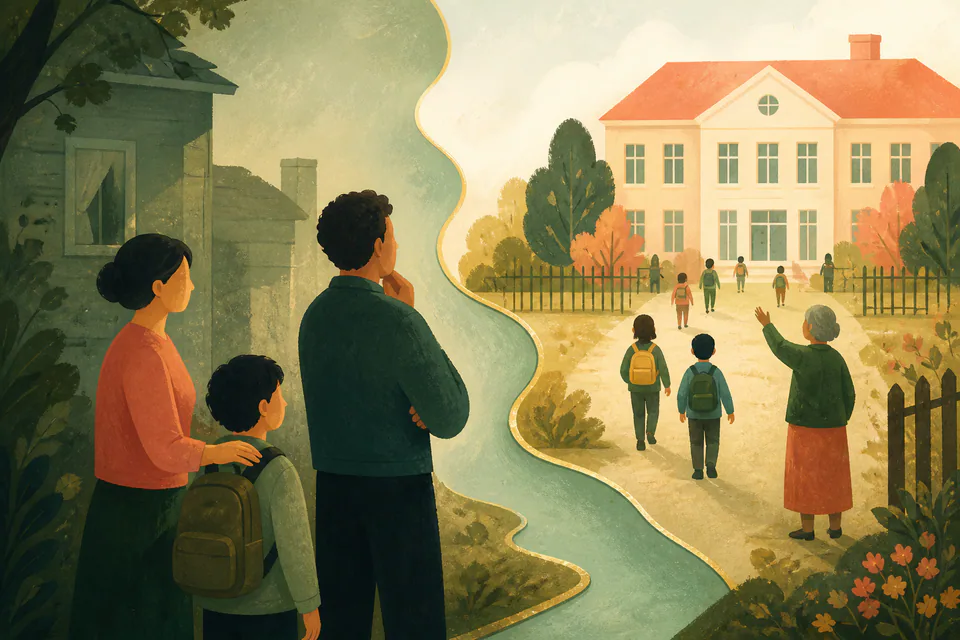
A better public school is one borrowed address away. Would you use it?
Your child is struggling at the assigned school. A grandparent lives inside the boundary of a much stronger public school and offers to let you use their address. The desired school has limited places and verifies residency unevenly.
Can a parent's duty justify taking an opportunity allocated by an unfair boundary?