The peculiarities of the English – with David Edgerton
35 min
Listen through the publisher, then discuss the episode here or arrange an in-person Roundtable. Your city determines where to meet.
Roundtables are designed for groups of four, with a shared subject and room for everyone to speak. Come for discussion, with no dating expectation.
By the 1860 Britain was an outlier in the world. Since when foreigners visited the country they were, in the words of Eric Hobsbawm, “presented a unique and amazing spectacle: the country had no peasants”. The lack of any peasantry is one of the key explanations for the ways we eat and why in England, although not the only one. It is one of Britain’s peculiar features that I pick up with the eminent historian David Edgerton. David is a Professor of Modern British History at King’s College London, and a Fellow of the British Academy. His books (https://www.davidedgerton.org/books), including The Shock of the Old, Warfare State, Britain’s War Machine and The Rise and Fall of the British Nation, challenge the stories we tell about technology, war, the state and national decline. In this episode, we get into three key themes: First, Britain’s dependence on food imports, second, the persistence of aristocratic power in Britain and third the issue of nationalism. You might notice that David rejects the framework of empire when considering food imports, as indeed wheat continued to be imported from Canada after North America gained independence, while products like butter and bacon for a long time came from Denmark. Where perhaps David and I somewhat differ is the extent to which Britain’s empire established these patterns of trade and the dominant and highly dependent position that Britain played in global food markets thereafter. David refers to the pursuit of free trade in Britain as distinct from the politics of imperialism, but I think the idea that this trade was “free” is a misnomer. This is a debate I hope to revisit another time. The conversation here is brief and to the point. And so if you find it interesting then you’ll no doubt enjoy a deeper account of these themes in my book. The Full English: The Ways We Eat and Why (https://www.versobooks.com/en-gb/products/3312-the-full-english) is out now with Verso. The Full English is produced by me, Lewis Bassett. The music for this show is produced by the wonderful, one and only Forest DLG. This is a public episode. If you would like to discuss this with other subscribers or get access to bonus episodes, visit lewisbassett.substack.com (https://lewisbassett.substack.com/)
Episode information is provided by the publisher. Listening takes place on the publisher’s service.
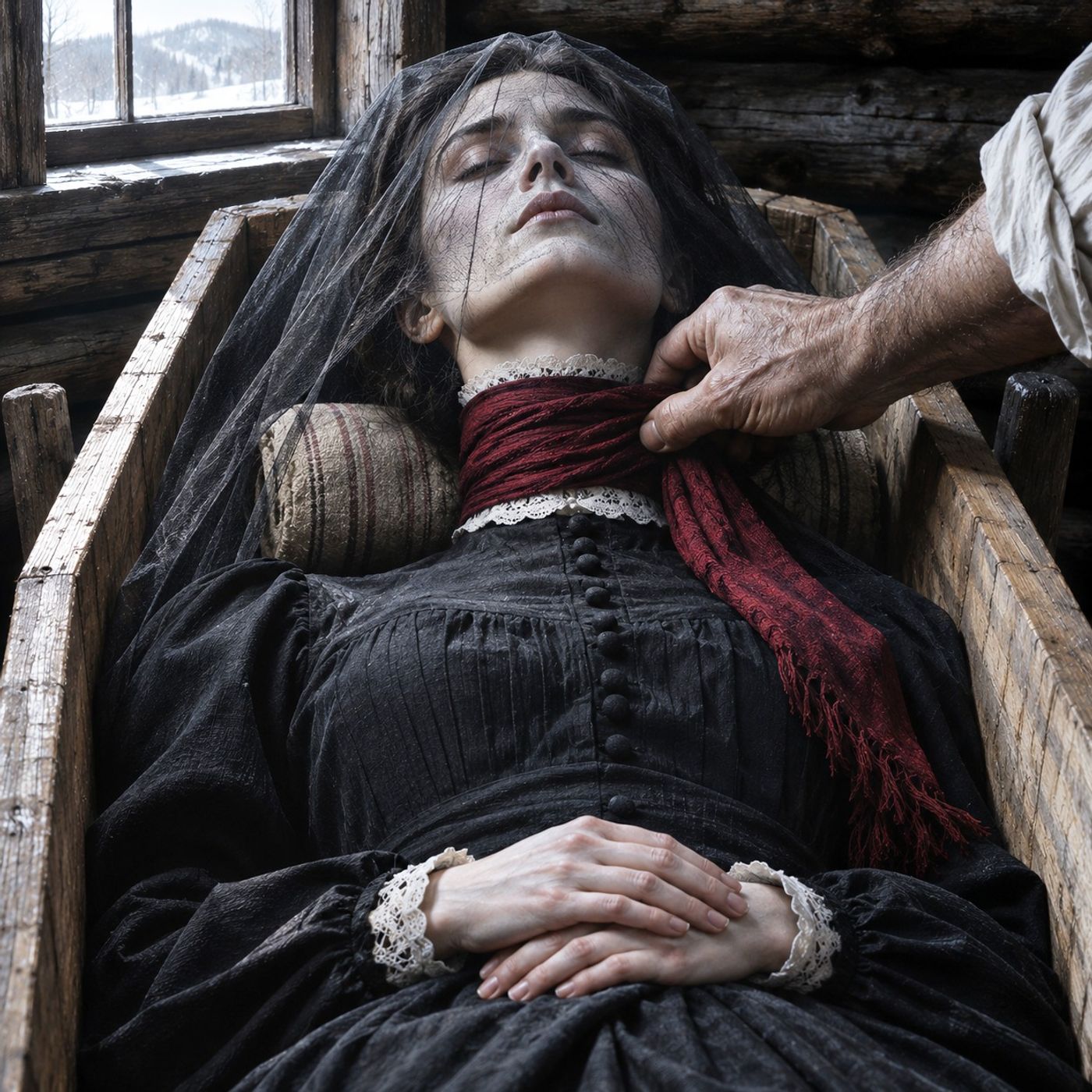
In January 1897, blacksmith Edward Shue washed and dressed his bride of three months for burial before the coroner ever reached their log house in Greenbrier County, West Virginia, and at her funeral he kept fussing with her head and neck, propping it on a pillow and wrapping a scarf around her high collar. Her mother, Mary Jane Heaster, had never liked him, and for weeks afterward she prayed every evening for her daughter to come back and tell her what had really happened. FEATURED STORIES IN THIS EPISODE: This Weird Darkness episode runs from the Greenbrier Ghost, the 1897 West Virginia murder victim whose mother said she came back to name her killer, to a bottomless pit in Washington, a wave of Mothman sightings over Chicago, and a London tomb rumored to be a time machine. Elva Heaster was dead – but that didn’t stop her ghost from solving the murder. *** In Stephen King’s “Pet Semetery”, beloved family pets could come back from the dead. *** In Washington there is a hole that some
Algorithms are fundamental to the story of mathematics – they’ve been around for over four thousand years. A theorem may prove that a solution to a problem exists, but an algorithm gives you the directions to actually find it. This lecture explores four key algorithms that have not just shaped pure mathematics, but have found unexpected applications in areas as diverse as nuclear physics, film-making, medicine, and music. This lecture was recorded by Sarah Hart on October 15th 2026 at Binks Hall, St John's College, Durham University, Durham. Sarah Hart was the first woman Professor of Geometry at Gresham College, and Acting Provost between March and October 2025. She is also Professor Emerita of Mathematics at Birkbeck, University of London. Professor Hart studied at Oxford and Manchester, gaining her PhD in 2000. Postdoctoral research and teaching followed, including a prestigious Engineering and Physical Sciences Research Council Fellowship, before she was appointed to a lectureship
Europe's Little Anarchy: The Rise and Fall of Neutral Moresnet (https://bookshop.org/a/12343/9781501788147)(Cornell UP, 2026) uncovers the history of Neutral Moresnet: a once-forgotten space without borders, nationalism, or a recognized government. Between 1815 and 1919, this square mile of land wedged between Belgium, the Netherlands, and Germany was home to thousands of people living off the grid, free of taxation and oversight. But they also had no political status, police, legal currency, proper law courts, or government presence in sectors like public health, infrastructure maintenance, or education. Meanwhile, practical control over Neutral Moresnet lay in the hands of the local industry: a for-profit, multinational mining company that, because it owned rights to the land, also held a near monopoly on the supply of high-quality zinc to the rest of the world. Dr. Steven Press explores how the residents of Neutral Moresnet sought to improve their quality of life, appealing to Germa
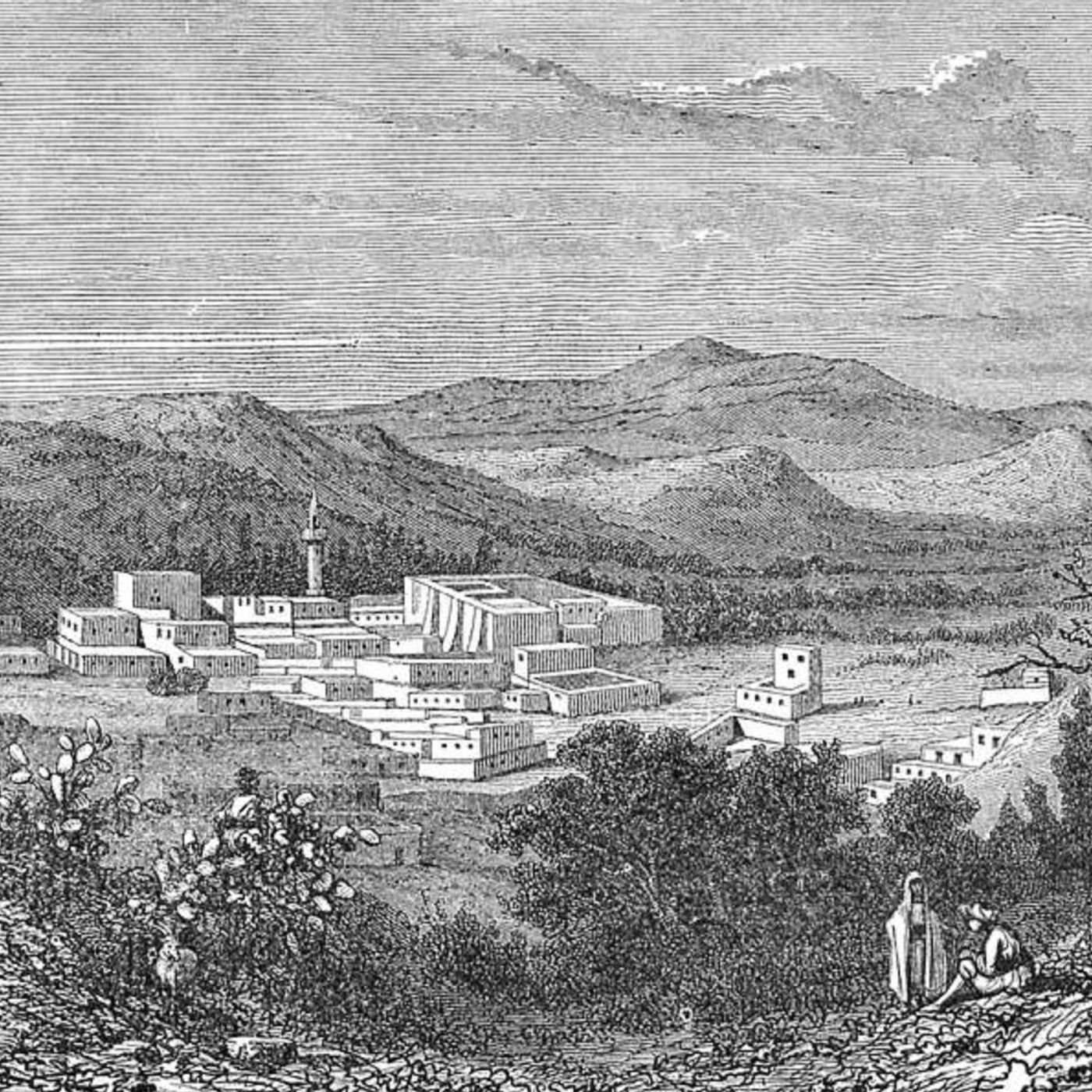
1868 NAZARETH Josephus, the Defense of Jotapata, and the Roman Siege and Destruction of Second Temple Jerusalem — Part One Professor Barry Strauss, author of Jews Versus Rome: Two Centuries of Rebellion Against the World’s Mightiest Empire, tells John Batchelor about the Great Jewish Revolt that began in 66 AD. Centered on the commander and historian Josephus, the narrative covers the defense of Jotapata, Vespasian’s rise to emperor, devastating Jewish factional warfare, and Titus’s destruction of the Temple in Jerusalem. (1)
November 20, 2026 On November 19, Trump met with Xi Jinping and Vladimir Putin in Shenzhen, China, The fact that the president of the US would meet with leaders of China and Russia was bizarre since both China and Russia have been helping Iran in its current fight against the US, Trump appeared to want the fanfare and President Xi played that up, Putin wanted the meeting because it would suggest that Russia was a great power, although it is far from being so and Putin’s war on Ukraine is going poorly, The meeting’s purpose seemed to be to produce propaganda for each of the three leaders, Beyond the propaganda is the larger story of the destruction of the post-World War II rules-based international order, In its place is the idea of dividing the world into spheres of influence, The three leaders met for 90 minutes and issued only a vague "joint declaration toward peace," which vowed to reform the UN and weaken the International Criminal Court, where Putin is already under indictment for
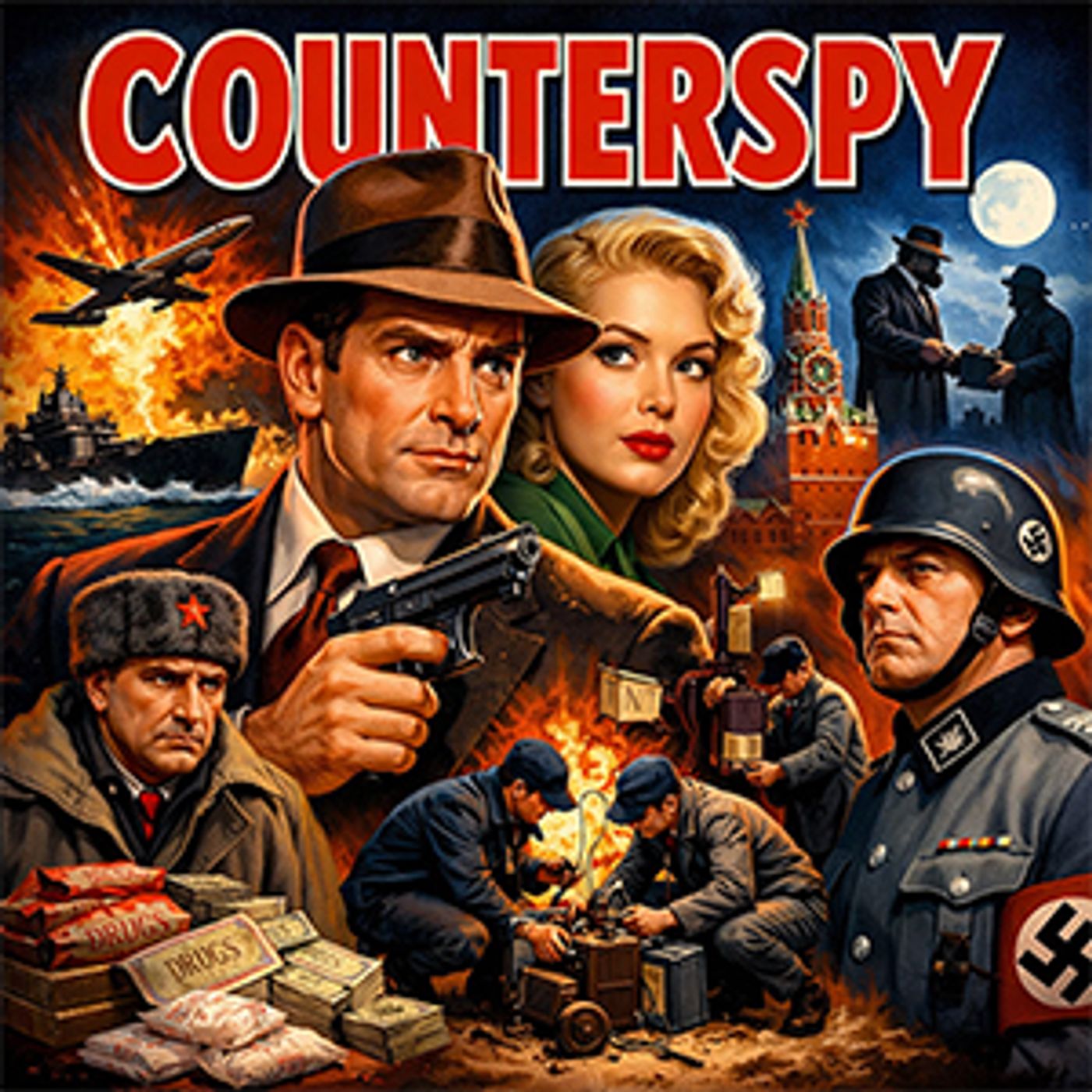
Today's Adventure: When scientist Dr. Frederick Ziegler develops a revolutionary synthetic substitute for mica, his discovery promises to strengthen America's national defense. But his trusted assistant steals the formula and murders him in a laboratory explosion, setting off a dangerous chain of betrayals among foreign agents determined to profit from the secret. David Harding and Harry Peters investigate the scientist's death and uncover an espionage conspiracy involving a ruthless operative with a talent for disguise. Original Radio Broadcast Date: April 18, 1950 Originating in New York Cast: Don McLaughlin as David Harding Mandel Kramer as Harry Peters Jay Jackson — announcer To subscribe to this podcast and, go to https://greatadventures.info/ Become one of our ongoing Patreon supporters at https://patreon.greatdetectives.net (https://patreon.greatdetectives.net/) Patreon Supporter of the Day: Lawrence, Patreon supporter since January 2025 Take the listener survey at http://survey
Schools should evaluate new teaching approaches by actual improvements in learning.
Share your view, then see how readers voted. No sign-in required. This poll is shared across stories.
Do you agree or disagree?
Common Quandary
A Common Quandary to discuss
Another conversation to explore, separate from this news story.
A better public school is one borrowed address away. Would you use it?
Your child is struggling at the assigned school. A grandparent lives inside the boundary of a much stronger public school and offers to let you use their address. The desired school has limited places and verifies residency unevenly.
Can a parent's duty justify taking an opportunity allocated by an unfair boundary?