English-language podcasts

Simon Dixon Hard Talk

The Petrodollar, Tech Giants & Debt: Who Really Benefits from the Iran War? | Simon Dixon & Mario Nawfal

38 min

Listen through the publisher, then discuss the episode here or arrange an in-person Roundtable. Your city determines where to meet.

Roundtables are designed for groups of four, with a shared subject and room for everyone to speak. Come for discussion, with no dating expectation.

Full Title: The Petrodollar, Tech Giants & Debt: Who Really Benefits from the Iran War? | Simon Dixon & Mario Nawfal Original title: THE IRAN WAR WAS PLANNED BY TRUMP TO BENEFIT HIS DONORS – w/ Simon Dixon Host: Mario Nawfal Channel: ‪@MarioNawfal‬ Date of recording: 9 November 2026 Watch on YouTube: https://www.youtube.com/watch?v=mg6LuX0D3XA During a podcast interview, host Mario Nawfal and guest Simon Dixon examine the underlying geopolitical and financial forces driving global conflicts, specifically arguing that the recent Iran war was strategically orchestrated to serve the interests of corporate elites, technology conglomerates, and financial backers rather than the American public. The discussion highlights how the traditional petrodollar system is collapsing as the United States transitions from a global hegemony into a multipolar world order characterized by regional trade networks and alternative payment systems. Furthermore, the speakers analyze how Gulf nations like Saudi Arabia and the United Arab Emirates are facing severe economic pressures and changing their international alignments toward China while simultaneously investing heavily in American private equity. Finally, Dixon contends that political figures like Donald Trump function primarily as public relations mouthpieces for powerful corporate lobbies, utilizing manufactured instability to enrich their primary donors and restructure global energy markets.

Episode information is provided by the publisher. Listening takes place on the publisher’s service.

Listen at the source ↗

Featured places to meet in Palo Alto, CA

Explore these places and arrange a conversation through ThinkMatch.

City guide for Palo Alto, CA

More from Simon Dixon Hard Talk

Simon Dixon Hard Talk

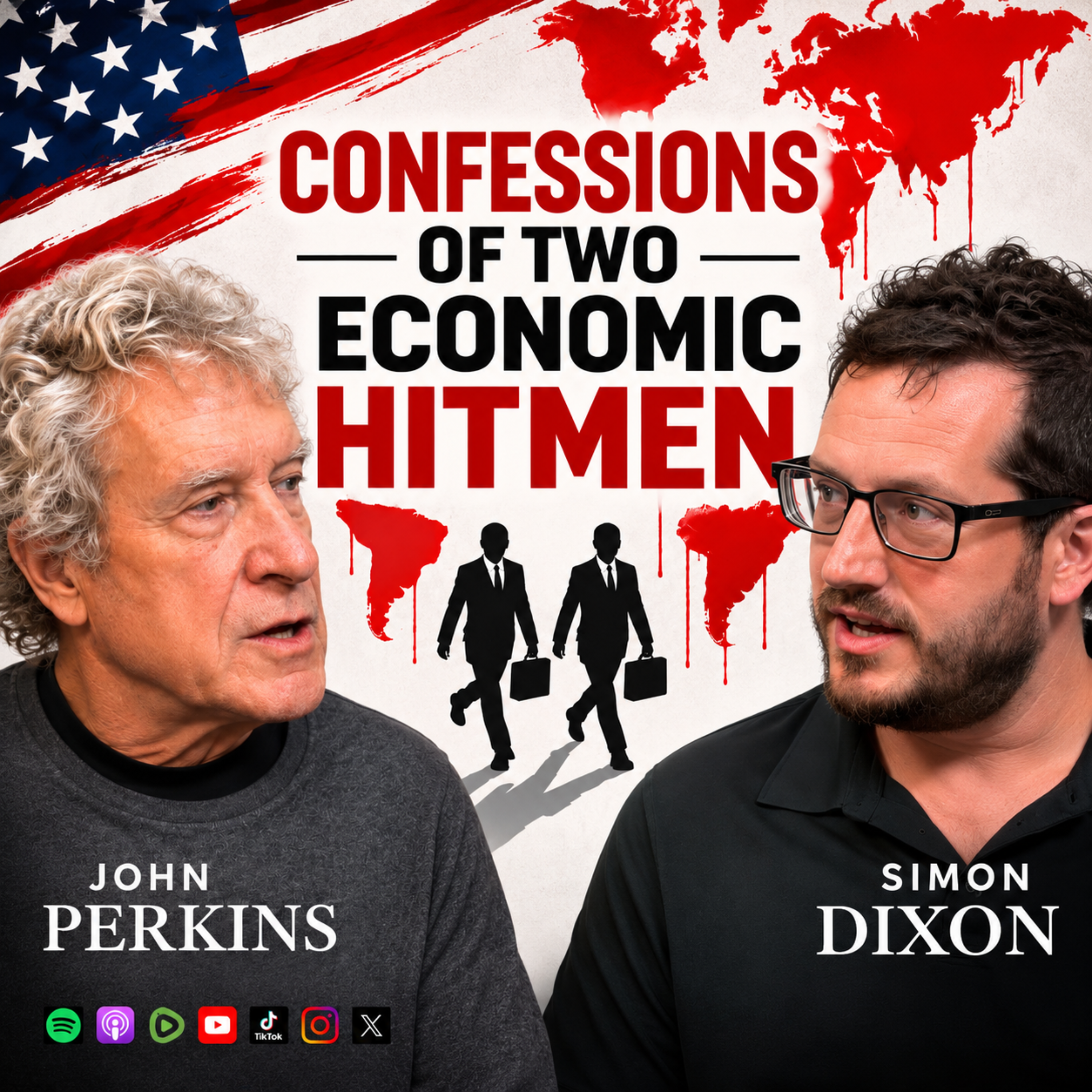
CONFESSIONS OF TWO ECONOMIC HITMEN | Simon Dixon & John Perkins

70 min

Recorded on 9 November 2026. Hosted by Nathan of BTC Sessions, I sat down for an electric dialogue with John Perkins, author of the seminal 2004 book Confessions of an Economic Hitman. Reading John’s book 20 years ago was one of the defining catalysts that led me to walk away from my career in investment banking in 2006. In this interview, John and I explore how the historical playbook of economic hitmen—using debt leverage, structural adjustment, and currency subordination against developing nations—has evolved and migrated directly into Western technological infrastructure, AI capital allocation, and corporate boardrooms. For the first time publicly, I also share my personal encounter with economic hitmen during my work in El Salvador advising on sovereign geothermal volcano-powered Bitcoin bonds and non-fractional banking models independent of the IMF. We also examine whether modern algorithmic division and civil polarisation are deliberately steering society toward an all-encompass

Discuss this episode

Simon Dixon Hard Talk

CONFESSIONS OF TWO ECONOMIC HITMEN | Simon Dixon & John Perkins

70 min

A conversation on the BTC Sessions YouTube channel, where host Nathan Fitzsimmons welcomes guests John Perkins, author of Confessions of an Economic Hitman, and Simon Dixon, an investor and author. The discussion centers on the evolution of global financial manipulation, detailing how traditional debt-trap diplomacy has expanded into corporate and technological domains. The speakers examine the financial industrial complex, the role of transnational capital in shifting geopolitical power, and how major entities leverage debt and resources to maintain control. Furthermore, the dialogue explores the intersection of geopolitics and modern conflicts, noting parallels between past interventions and recent events in regions like the Middle East and Latin America. Finally, the conversation highlights the rise of digital sovereignty, emphasizing the importance of personal autonomy, decentralized technologies like Bitcoin, and grassroots awareness as tools to resist an increasingly technocratic

Discuss this episode

Simon Dixon Hard Talk

NVIDIA: 48 Hours That Changed the Story | Jensen Huang & What Comes Next

71 min

Full title: NVIDIA: 48 Hours That Changed the Story | Jensen Huang & What Comes Next Simon Dixon, Mario Nawfal and Brendon Weichert analyzes the recent resignation of Nvidia CEO Jensen Huang on Mario Nawfal's YouTube channel, framing it as a calculated corporate regime change orchestrated by the military-industrial complex and intelligence agencies. Dixon argues that Huang's departure was precipitated by weaponised scandals regarding alleged affairs with a suspected Chinese intelligence operative and a company executive, providing the board with the necessary governance leverage to oust him. T his power struggle allegedly pits institutional financial shareholders and technology sectors—who favour lucrative chip sales to China through intermediaries like Singapore and Malaysia—against military factions seeking to maintain a strategic artificial intelligence advantage for the United States. Dixon further suggests that while major tech leaders like Elon Musk and Mark Zuckerberg possess su

Discuss this episode

Community Poll

Giving a player another chance should depend on their effect on the whole team.

Share your view, then see how readers voted. No sign-in required. This poll is shared across stories.

Do you agree or disagree?

Choose one answer

Common Quandary

A Common Quandary to discuss

Another conversation to explore, separate from this news story.

Your anonymous gift could inspire millions more if you reveal your name. Do you?

A donor wants to make a transformative gift without recognition. The charity believes announcing the gift and the donor's identity would encourage matching contributions and help far more people.

Can the opportunity to create more good outweigh a preference for privacy?

Explore this quandary