The pioneering coding tricks that built Doom and Quake
40 min
Listen through the publisher, then discuss the episode here or arrange an in-person Roundtable. Your city determines where to meet.
Roundtables are designed for groups of four, with a shared subject and room for everyone to speak. Come for discussion, with no dating expectation.
Ryan chats with John Romero, creator of the WAD file and the video game Doom, about the self-modifying code and blitting techniques that made Wolfenstein run so fast on early PCs, the mod-friendly architecture that turned Doom into a cultural phenomenon, and why the raw creative problem-solving of Quake proves that human ideas will always beat AI coding agents. Episode notes: This episode was recorded at the WeAreDevelopers 2026 North American World Congress (https://www.wearedevelopers.com/world-congress-north-america) as part of their global event series for software engineers, tech leaders, and AI builders. Romero Games (https://romero.com/home) is an independent game development studio based in Galway, Ireland, where John Romero serves as game director. Learn more about John’s legendary game work at his website rome.ro (http://rome.ro/).
Episode information is provided by the publisher. Listening takes place on the publisher’s service.
In this episode, Dr. K analyzes candid feedback from over a hundred software engineers facing burnout, loss of joy in coding, and existential dread in an AI-driven tech landscape. He breaks down the friction between developer reality and executive expectations, where corporate pressure to rapidly increase output with AI tools often results in code instability, production incidents, and tedious code-review assembly lines. Drawing on engineering benchmarks like the DORA report, Dr. K outlines tactical communication strategies for developers to manage upward by matching leadership enthusiasm while proactively documenting technical risks. Ultimately, he emphasizes that cultivating emotional resilience, social proficiency, and clear communication provides engineers with their strongest competitive edge during periods of industry disruption. Mental health resources designed by Dr. K and made with love: https://bit.ly/3ZOopgQ Talk to a HG Coach 1-on-1: https://bit.ly/46bIkdo Dr. Dr. K's Guide
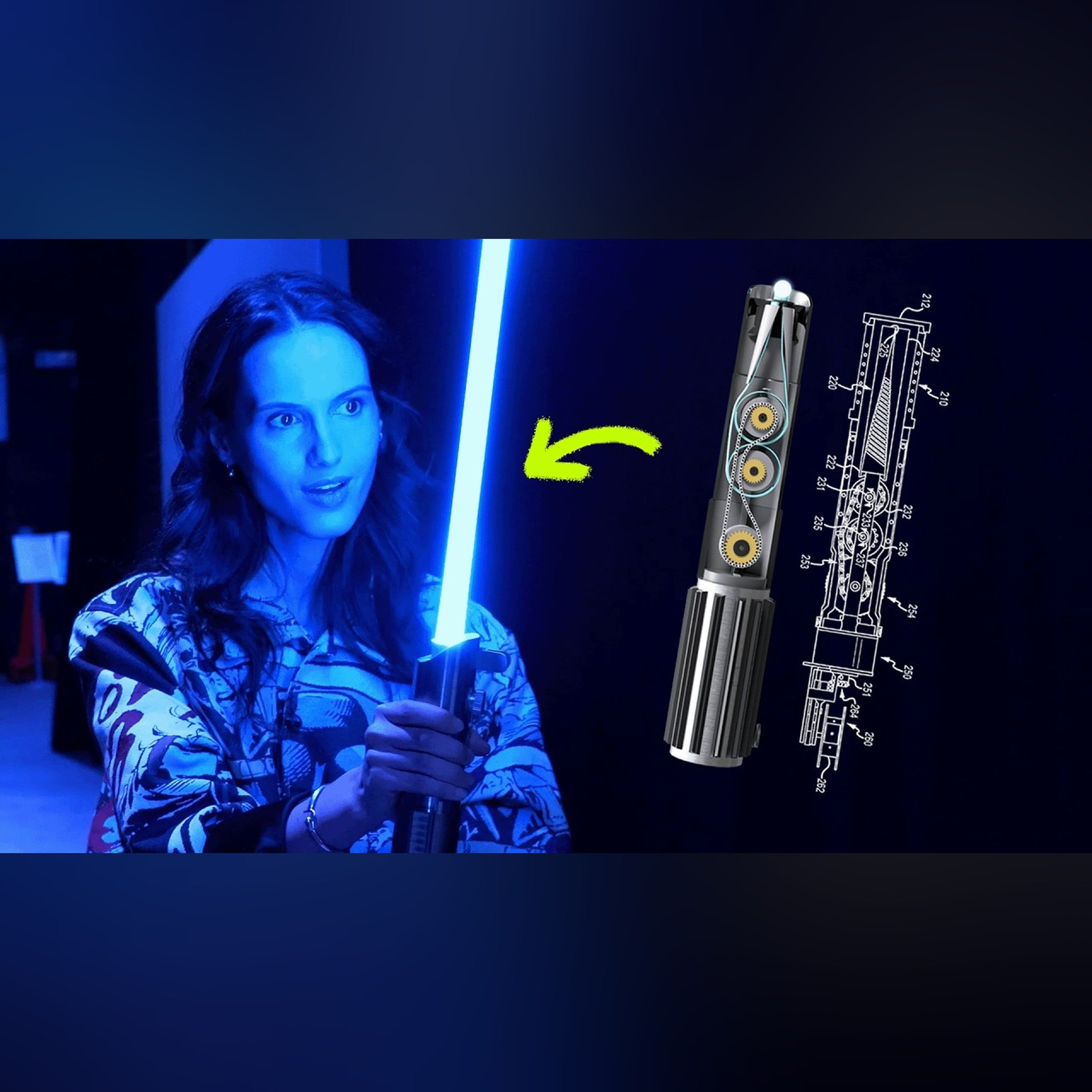
I tested Disney’s coolest new tech… Go to https://surfshark.com/cleo for 4 extra months of Surfshark Today I’ve been invited behind the scenes at Walt Disney Imagineering, the place where Disney brings their craziest ideas to life - from STUNT ROBOTS to a real life version of The Force, to adorable little droids! On this show Huge If True, we explore how tech can improve people’s lives - by living longer, going farther, doing more. But the reason I’ve loved Disney since I was a kid is they use tech to improve lives another way… by making people happy. And that means they end up pushing forward tech in some crazy, unexpected ways. So let me take you inside the magic, to show you the cutting edge tech they’re building… how it works… and what happens when we put it to the test! Chapters: 0:00 What is Disney building next? 1:11 What does Walt Disney Imagineering do? 1:52 What are Disney’s new droids really like? 2:47 How do Disney’s new droids work? 5:08 What’s the world’s most realistic l
DISCOVER GRAD SCHOOL: https://nci.university/home-v2?utm_source=chase_youtube&utm_medium=social_video&utm_campaign=nci4_promo (https://nci.university/home-v2) Uploaded 02-05-26 LEARN ABOUT NCI LEVEL 2: https://nci.university/nci-2?utm_source=chase_youtube&utm_medium=social_video&utm_campaign=nci2_promo (https://nci.university/nci-2) There’s a moment in every conversation where everything gets decided. It happens before logic. Before persuasion. Before anyone thinks they’re “in control.” And most people miss it completely. That’s why conversations feel unpredictable… Why people react in ways that don’t make sense… Why you can say the right thing — and still lose the room. Because the outcome was already set. This video breaks down the hidden structure behind human interaction: * how conversations organize themselves before words matter * how frames control behavior without force * how categories decide what’s allowed (and what isn’t) * how identity and metaphor quietly shape every respo
#JimRohnMotivation #JimRohn #JimRohnSpeech In this Jim Rohn Motivation video, discover why self-discipline is the cornerstone of success. Learn how small, consistent commitments build lasting habits, and uncover techniques to embrace discomfort, prioritize effectively, and turn your goals into achievements.Master Self-Discipline: 6 Techniques to Transform Your Life (BLOG POST): https://jimrohnmotivation.blog/master-self-discipline-jim-rohn-motivation/ Key Topics From This Motivational Video: - The power of small commitments in building discipline - Why consistency is more important than perfection - The role of prioritization in aligning with your goals - How habits automate your path to success - The art of delaying gratification for long-term growth Self-discipline is the bridge between intention and accomplishment. Jim Rohn emphasizes that success doesn't rely on fleeting motivation but on habits built through daily discipline. Starting with small, manageable steps creates momentum
A.I. for Building Self-esteem: Seeing Yourself More Clearly and Kindly, a practical, beginner-friendly look at how artificial intelligence can help you see yourself a little more clearly and kindly. Building Self-esteem? Press play on Episode 427 of A.I. for Beginners and learn exactly how artificial intelligence, especially ChatGPT, alongside a journaling app, can help you see yourself a little more clearly and kindly. WHAT YOU WILL LEARN IN THIS EPISODE - Why building self-esteem is so hard to handle alone, and what is actually going on underneath it - A specific way to use a journaling app to work through it, step by step - An example prompt you can copy word for word: "Help me notice when I'm judging myself far harsher than I'd judge a friend" - A second practical technique, with another ready-to-use prompt: "Help me write down three qualities I actually like about myself, beyond achievements" WHO THIS EPISODE IS FOR - Anyone currently working on building self-esteem - Anyone curio
Nowadays, we will all have hundreds of apps on our phones, but we want to separate the wheat from the chaff when it comes to the software that can help us Parkies. This week, we're joined by the creator of the Parkinson’s UK Tech Guide, John Pettigrew, to help us make the most of what the app store has to offer. Find the PUK tech guide here (https://techguide.parkinsons.org.uk/). Produced and edited by Nick Hilton for Podot. Associate Producers: Ewan Cameron & Lulu Goad Music by Alex Stobbs Hosted on Acast.
Ryan sits down with Jeff Wang, co-founder at EXA, to talk about the huge scale required to support trillions of agentic searches, the technical complexities of building custom embeddings and performant vector databases from scratch, and the need to dedupe the massive amounts of redundant content on the web to deliver high-trust answers. Episode notes: EXA (https://exa.ai/) is a full search engine built specifically for AI agents, featuring custom extraction models and vector databases designed to handle complex, trillion-scale queries without the AI slop. Connect with Jeff (through his triage agents) by emailing him [email protected] (https://www.google.com/search?q=mailto%3Ajeff%40exa.ai). Congrats to Populist badge winnerhttps://www.google.com/search?q=https%3A%2F%2Fstackoverflow.com%2Fusers%2F9346618%2Fsanthoopa-jayawardhanaSanthoopa Jayawardhana (https://stackoverflow.com/users/santhoopa-jayawardhana) for earning the badge on their answer toKeycloak client vs user (https://stackoverflo
Ryan chats with Ahmad Al-Dahle, CTO at Airbnb, about deploying multi-party AI agents to tackle the uniquely gnarly problem of customer support, how a moving target of rigorous evaluations helps engineers balance latency against accuracy, and the ways in which AI coding tools demand an even higher level of judgment from software engineering teams. Episode notes: Learn more about how Airbnb is evolving its engineering organization to implement generative AI across the platform on their tech blog (https://airbnb.tech/). Connect with Ahmad onTwitter (https://x.com/Ahmad_Al_Dahle) andLinkedIn (https://www.linkedin.com/in/ahmad-al-dahle/). Congrats to Famous Question badge winnerhttps://stackoverflow.com/users/techguytechGuy (https://stackoverflow.com/users/15173931/techguy) for winning the badge on their answer tois WebView2 supported in the Citrix server? (https://stackoverflow.com/questions/66114188/is-webview2-supported-in-the-citrix-server).
Ryan sits down with Rakesh Kumar, professor of computer engineering at the University of Illinois Urbana-Champaign, about the astounding complexity of manufacturing modern semiconductors, the massive environmental and geopolitical footprint of AI data centers, and how AI models are rapidly shifting the future of chip design. Episode notes: Dive deeper into the history and future of semiconductors by checking out Rakesh's book,The Chip Age (https://www.simonandschuster.com/books/Chip-Age/Rakesh-Kumar/9781493096145). Learn more about Rakesh’s work at University of Illinois Urbana-Champaign. (https://illinois.edu/) Congrats to Necromancer badge winner Faisal Khan (https://stackoverflow.com/users/1550633/faisal-khan) for winning the badge on their answer to Difference between SWIFT Interact & Fileact transmissions (https://stackoverflow.com/questions/18141670/difference-between-swift-interact-fileact-transmissions).
Changing a public decision in response to new evidence is a sign of responsible leadership.
Share your view, then see how readers voted. No sign-in required. This poll is shared across stories.
Do you agree or disagree?
Common Quandary
A Common Quandary to discuss
Another conversation to explore, separate from this news story.
You scratched a borrowed heirloom and repaired it perfectly. Do you confess?
You borrow a family heirloom for an event and accidentally leave a small scratch. A careful repair makes it almost invisible, and its owner happily accepts it back without noticing anything.
What is confession for when the harm has already been repaired?