Saturday Daily Rosary - SPOKEN MALE VOICE with AMBIENT MUSIC by artist: Alan Ellis - Song Title: A Rising Sun Bonus Track - by artist: Trevor Kowalski - Song Title: Lost Again This rosary contains the joyful mysteries, recited on Saturdays and Mondays. These mysteries focus on the Incarnation and Jesus' early life, with fruits including humility and love of neighbor. Join in the communion of saints in praying the rosary, as it connects you with the communal prayer of the universal Church and the saints throughout history, fostering a profound sense of spiritual solidarity. The spoken daily prayer is about 2 minutes, while the recited rosary is about 17 minutes, with extended music for additional meditation. Additional prayer tools at www.rosarywristband.com 30 MINUTE TRADITIONAL ROSARY - JOYFUL SATURDAY - SPOKEN ONLY https://youtu.be/8NCv89Qk4Zw ROSARY - SPOKEN ONLY VERSION: Saturday - SPOKEN ONLY https://youtu.be/vv8l7xMAOmM MOST VIEWED SATURDAY ROSARY: Calm Music https://youtu.be/ryT
For nearly a year, a group of friends regularly explored the abandoned buildings of Taunton State Hospital in Massachusetts. They'd been through nearly every part of the property, but one basement remained a mystery, sealed behind a chained and padlocked door. Eventually, curiosity got the better of them. Armed with bolt cutters and flashlights, six friends made their way into the dark basement. At the far end, they discovered disturbing markings and what appeared to be bloodstains. Then one of them claimed something had touched her—and things quickly became terrifying. A piercing screech, flashlights suddenly going dark, and a frightening encounter with shadowy figures sent the group scrambling for the exit. They had spent months exploring the hospital without experiencing anything like it. Had they finally encountered something paranormal, or was there a reason that basement had been locked away? #RealGhostStoriesOnline #TauntonStateHospital #HauntedAsylum #AbandonedHospital #ShadowF
Meet Venerable Francis Xavier Nguyễn Văn Thuận, the Vietnamese bishop who celebrated Mass in prison with three drops of wine in his hand. For thirteen years, he was held in prison, much of it alone. Yet he found a way to keep Jesus close in the Holy Eucharist every day. On this Feast of the Presentation of Mary, the very day he was set free, your children will hear his story of love for the Eucharist and trust in Our Lady. His witness of hope still inspires Catholics around the world. "Jesus comes to us in the Eucharist, and when we have Him, we have everything we need." Today's challenge is just the start. Grab our free Family Pack, with a saint calendar, activity pages, and discussion questions for the whole family, plus more surprises along the way: https://shop.catholicsprouts.com/pages/every-days-a-feast-day-follow-along
It's one thing to believe God can move. It’s harder to keep believing when He hasn’t yet. If you’re wondering why your miracle hasn’t come, watch this message. NEXT STEPS Have you made the decision to follow Jesus? You might be wondering what’s next for you. We want to help! ABOUT THIS MESSAGE Curious about demons in the Bible? ABOUT LIFE.CHURCH Wherever you are in life, you have a purpose. Life.Church wants to help you find your next step. Our hope is that your journey will include joining us at a Life.Church location throughout the United States or globally online at https://www.live.life.church (https://www.live.life.church/) Find locations, videos, and more info about us at https://www.life.church (https://www.life.church/) or download the Life.Church app at https://www.life.church/app/download FIND US ON SOCIAL MEDIA Facebook: https://www.facebook.com/life.church (https://www.youtube.com/redirect?event=video_description&q=http%3A%2F%2Fwww.facebook.com%2Flife.church&redir_token=QUF
Read Online (https://catholic-daily-reflections.com/2026/11/21/christ-the-universal-king/) Christ the Universal King “Then he will say to those on his left, ‘Depart from me, you accursed, into the eternal fire prepared for the devil and his angels. For I was hungry and you gave me no food, I was thirsty and you gave me no drink, a stranger and you gave me no welcome, naked and you gave me no clothing, ill and in prison, and you did not care for me.’” Matthew 25:41–43 On June 11, 1899, Pope Leo XIII solemnly consecrated the entire human race to the Sacred Heart of Jesus, a moment he regarded as the “great act” of his pontificate. This consecration was rooted in the sacred truth that, “[Christ’s] empire includes not only Catholic nations, not only baptized persons… but also all those who are outside the Christian faith; so that truly the whole of mankind is subject to the power of Jesus Christ” (Annum Sacrum, 3). This prophetic act of entrustment was followed by decades of growing unrest
What are the behaviors that are to characterize the lives of Christians? What actions, thoughts, and type of speech should be avoided? In this sermon on Ephesians 5:3–5 titled “Evils not…Among Saints,” Dr. Martyn Lloyd-Jones teaches on Paul’s exhortation to live according to God’s word. In this passage, Paul provides a list of things that are generally characteristic of those who do not follow Christ— sexual immorality, uncleanness, covetousness, and other vices. His point is that Christians are to make every effort to avoid them. But in a world that actively engages in and encourages such sins, how can believers avoid them? First, Dr. Lloyd-Jones says, Christians must kill temptation at the first hint of it— they must not allow it even a small foothold in their lives. They are to run at the sight of it. Paul states that such things are to “not even be named among you.” Many read these verses and conclude that Christians are to be dull people. Yet that is not at all what these instruct
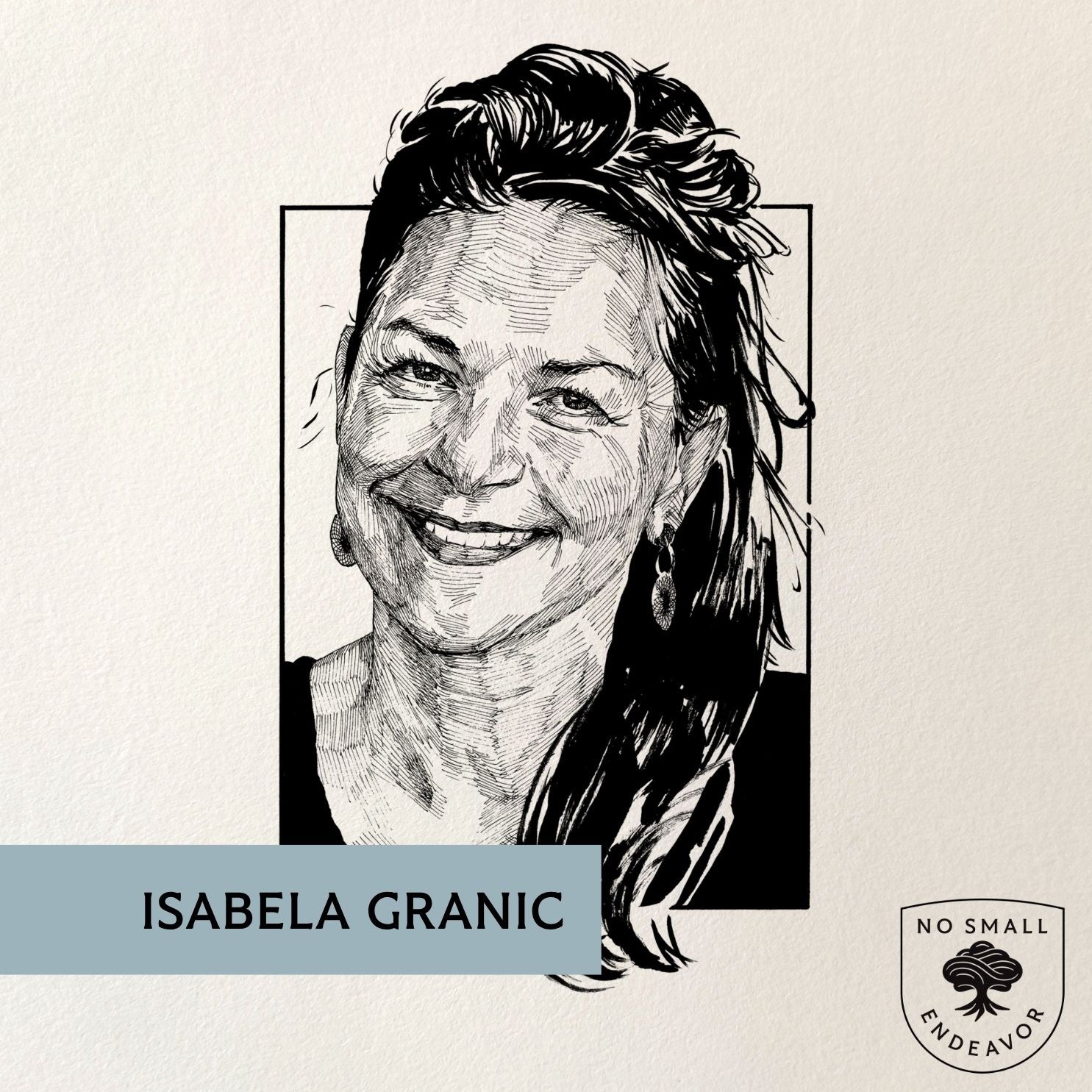
This is our unabridged interview with Isabela Granic. Developmental psychologist Isabela Granic is no technophobe. In the middle of a moral panic over kids and video games, she helped pioneer MindLight (https://playmindlight.com/), a biofeedback video game shown in clinical trials to significantly reduce anxiety symptoms in children ages 8 to 12. But as technology continues to evolve, and AI moves into every corner of childhood development, she’s worried. Isabela joins Lee C. Camp to explore what children need to grow into resilient, flourishing adults, and why a “frictionless” future may take away the very struggles that form us. This is part 2 of our 2-part series: The Cost of Outsourcing Your Humanity to Tech. This project was made possible through the support of a grant from Templeton World Charity Foundation, Inc funder DOI 501100011730) through grant https://doi.org/10.54224/35684https://doi.org/10.54224/35684. (https://doi.org/10.54224/35684%E2%81%A0%E2%81%A0%E2%81%A0.) The opin
You CAN see everything, but CAN you? This week on The Subtext, Lee and Savannah dive into You Can See Everything, the new documentary from Nathan Fielder and Lance Oppenheim about Elizabeth Holmes. From Silicon Valley fraud to Augustine’s warnings about dangerous curiosity and Immanuel Kant’s uncompromising case against lying, Lee and Savannah unpack Elizabeth Holmes’s complicated relationship with the truth and the unsettling dynamics between her and her husband, Billy Evans. How do we know when someone is telling the truth? Can we ever really see the whole story? And what happens when the performance of authenticity becomes just another form of deception? Because sometimes, seeing everything doesn't mean knowing anything. Things we mentioned in this episode: See Lee on stage with Ira Glass and Emmylou Harris on November 22nd in Nashville! (https://www.nashvillesymphony.org/nosmallendeavor) The One About Matthew Perry on Netflix (https://www.netflix.com/title/81970498) Taken: Natalee
Developmental psychologist Isabela Granic is no technophobe. In the middle of a moral panic over kids and video games, she helped pioneer MindLight (https://playmindlight.com/), a biofeedback video game shown in clinical trials to significantly reduce anxiety symptoms in children ages 8 to 12. But as technology continues to evolve, and AI moves into every corner of childhood development, she’s worried. Isabela, the CEO of Liminal Learning (https://liminal-learning.com/), joins Lee C. Camp to explore what children need to grow into resilient, flourishing adults, and why a “frictionless” future may take away the very struggles that form us. This is part 2 of our 2-part series: The Cost of Outsourcing Your Humanity to Tech. This project was made possible through the support of a grant from Templeton World Charity Foundation, Inc funder DOI 501100011730) through grant https://doi.org/10.54224/35684https://doi.org/10.54224/35684. (https://doi.org/10.54224/35684%E2%81%A0%E2%81%A0%E2%81%A0.)
Teams owe supporters honest explanations during long periods of poor results.
Share your view, then see how readers voted. No sign-in required. This poll is shared across stories.
Do you agree or disagree?
Common Quandary
A Common Quandary to discuss
Another conversation to explore, separate from this news story.
You inherit a fortune made in ways you despise. Can you keep it?
You inherit a substantial sum from a relative who accumulated it through practices you consider exploitative. Keeping it would improve your family's security; donating it could support people harmed by similar practices.
Can ownership be morally clean when its history is not?