English-language podcasts

Democracy Works

The Supreme Court's political past
43 min

Listen through the publisher, then discuss the episode here or arrange an in-person Roundtable. Your city determines where to meet.

Roundtables are designed for groups of four, with a shared subject and room for everyone to speak. Come for discussion, with no dating expectation.

For America's first 100 years, Supreme Court justices were an integral part of political life. They ran for office from the bench, met with constituents, wrote newspaper op-eds about their work, and more. Today, of course, they do their work mostly in secret and rarely speak to the public aside from a few appearances each year. How did things get this way, and what would happen if the justices went back to having a closer relationship with the people? Our guest today answers those questions and sheds light on what life was like for justices in the 19th century. Rachel A. Shelden is an associate professor of history and director of the George and Ann Richards Civil War Era Center at Penn State. She is the author of The Political Supreme Court: A Forgotten History (https://uncpress.org/9781469697130/the-political-supreme-court/), which explores the court's role as an "unmistakably a political institution." The book also follows the shifts at the turn of the twentieth century, when members of the Court and the legal community refashioned the judiciary as the self-described apolitical institution we know today. Shelden previously appeared on Democracy Works (https://democracyworks.simplecast.com/episodes/supreme-court) to discuss a version of this work before the 2020 election. Hosted by Simplecast, an AdsWizz company. See pcm.adswizz.com (https://pcm.adswizz.com/) for information about our collection and use of personal data for advertising.

Episode information is provided by the publisher. Listening takes place on the publisher’s service.

Listen at the source ↗

Featured places to meet in Palo Alto, CA

Explore these places and arrange a conversation through ThinkMatch.

City guide for Palo Alto, CA

More from Democracy Works

Democracy Works

A playbook for increasing trust in news

46 min

At a time when trust in the media among Americans is at an all-time low, what can journalists and news organizations do to restore that trust? Our guests are working on innovative solutions with newsrooms and content creators across the country. Joy Mayer is the executive director of Trusting News (http://trustingnews.org/) and Mollie Muchna is the organization's project manager. They, along with colleague Lynn Walsh, received the McCourtney Institute for Democracy's 2026 Brown Democracy Medal. They wrote the book The Transparency Imperative: Journalism, Trust, and the Future of an Informed Democracy (https://cornellpress.cornell.edu/book/9781501794377/the-transparency-imperative/) as part of receiving the award. We discuss the experiments in rebuilding trust that Trusting News is conducting alongside news organizations and academic researchers, including letting members of the public sit in on newsroom editorial meetings and creating a code of ethics for independent news content creat

Discuss this episode

Community Poll

Officials should publicly explain serious mistakes that affect a competition's outcome.

Share your view, then see how readers voted. No sign-in required. This poll is shared across stories.

Do you agree or disagree?

Choose one answer

Common Quandary

A Common Quandary to discuss

Another conversation to explore, separate from this news story.

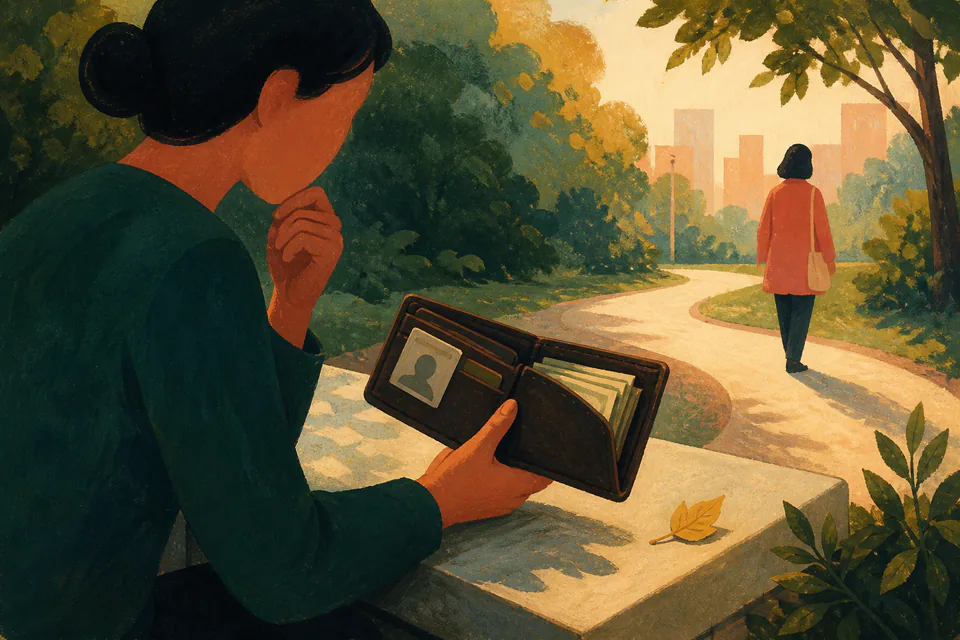
You find a wallet full of cash. Can you take a finder’s fee before returning it?

You find a wallet containing identification and several hundred dollars. Returning it will require a detour and some effort. The owner would probably never know if a small amount were missing.

Can an unrequested good deed entitle someone to compensation?

Explore this quandary