The Surprising Business Advantage of Being an Outsider | Jennifer Lapoint | E22
52 min
Listen through the publisher, then discuss the episode here or arrange an in-person Roundtable. Your city determines where to meet.
Roundtables are designed for groups of four, with a shared subject and room for everyone to speak. Come for discussion, with no dating expectation.
What do you do when the career you've spent decades building suddenly loses its audience, sponsors, and financial support? For today's guest, the answer was to create opportunities where none existed. From breaking world records to building businesses around overlooked opportunities in sports, she's spent her career proving that setbacks can become the starting point for something bigger. In this episode, water skiing legend and entrepreneur Jennifer Lapoint joins Sammy to share how she turned her competitive mindset into a business career. She explains how she launched a women's professional water skiing tour after the original tour dropped women, how a career-threatening injury forced her to reinvent herself, and why solving problems has driven her entrepreneurial journey. Jennifer also breaks down the costly mistakes she made building her sports technology platform, Compete, and why she believes the best businesses create opportunities for others. In this episode, Sammy and Jennifer discuss: (02:02) From "Jennifer Who?" to World Record Holder (06:24) The Competitive Mindset Behind Business Success (08:33) Learning to Fail Your Way Forward (15:31) Turning Problems Into Business Opportunities (19:47) Building Compete: Taking Niche Sports Global (24:52) The Costly Mistakes Behind Building an App (28:25) Overcoming Fear After a Career-Threatening Injury (39:09) Why Failure Is Just Another Pivot (49:59) Building a Business for Impact, Not Just Profit Jennifer Lapoint is a Water Ski Hall of Famer, three-time world record holder, and entrepreneur with more than 30 professional victories. After playing Division I basketball at Georgia Tech, she went on to build a professional water skiing career spanning three decades. Beyond competition, Jennifer founded Women of Water Skiing, helped establish a women's professional tour, and built businesses across sports training, media, and real estate. She is also the co-founder of Lapoint Ski Park and the founder of Compete, a sports technology platform designed to make competition more accessible to athletes across different sports. Connect with Jennifer: LinkedIn (https://www.linkedin.com/in/jenniferlapoint) Connect With Sammy: Instagram (https://www.instagram.com/thesammypeterson/) LinkedIn (https://www.linkedin.com/in/samantha-peterson-0442586/) YouTube (https://www.youtube.com/@businessmvppodcast) Become a Business MVP: Ready to level up the way you lead, build, and grow?
Episode information is provided by the publisher. Listening takes place on the publisher’s service.
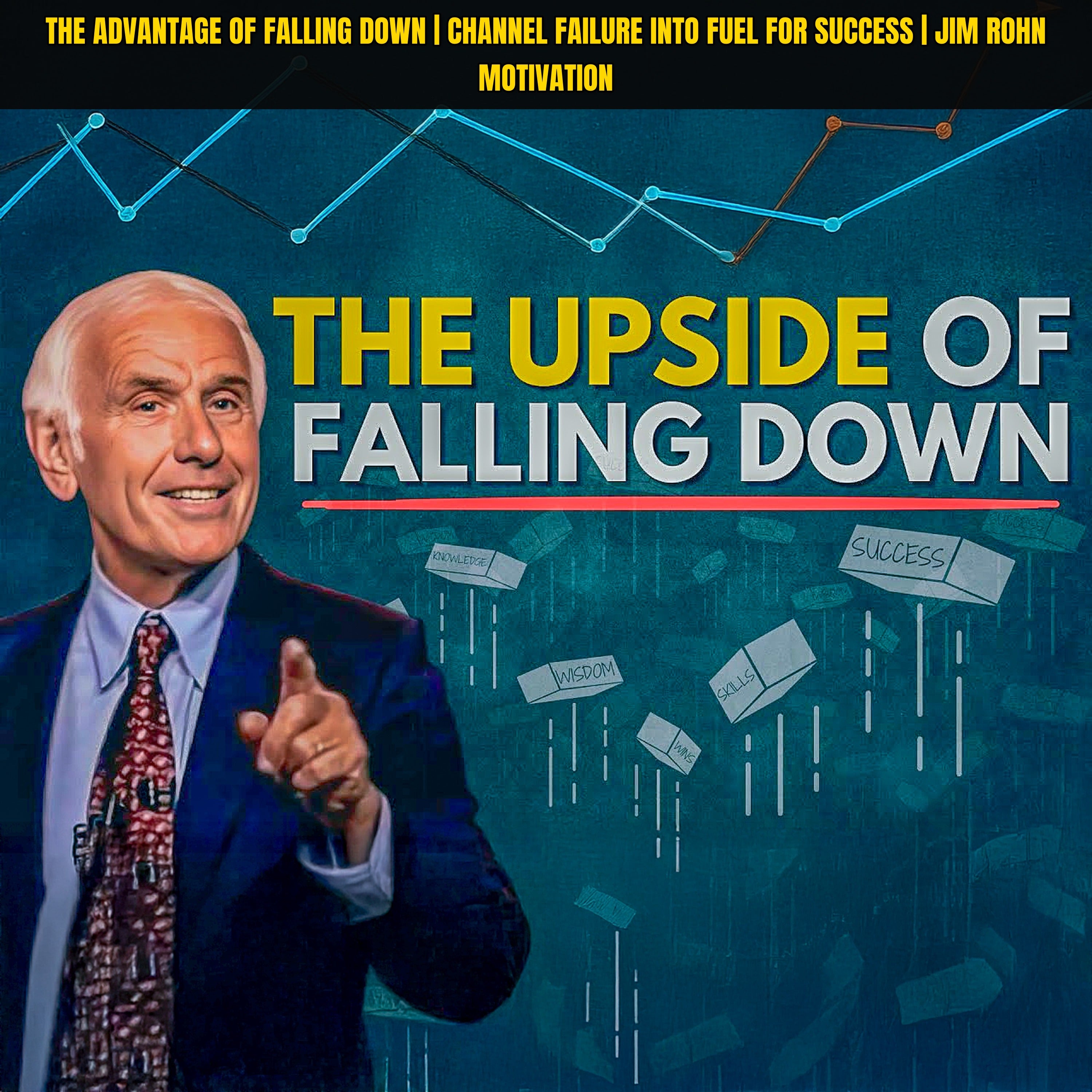
In this Jim Rohn Motivation video, learn how to turn failure into your most powerful fuel for growth. Discover the mindset that high achievers use to transform setbacks into stepping stones—and how to build the habits, resilience, and perspective that make success inevitable. Key Topics From This Motivational Video: Why failure is an essential ingredient of long-term success How to analyze, learn from, and leverage setbacks The mindset shift that separates achievers from quitters How to cultivate resilience through challenges Why continuous improvement is the secret to sustained success This video teaches the ultimate reframe: failure is not your enemy—it’s your teacher. You’ll learn to replace fear with strategy, doubt with discipline, and shame with strength. Whether you're recovering from a personal setback or pushing toward your next goal, this is your roadmap to turning pain into purpose, mistakes into mastery, and setbacks into setups for a more powerful future. This Jim Rohn Mot
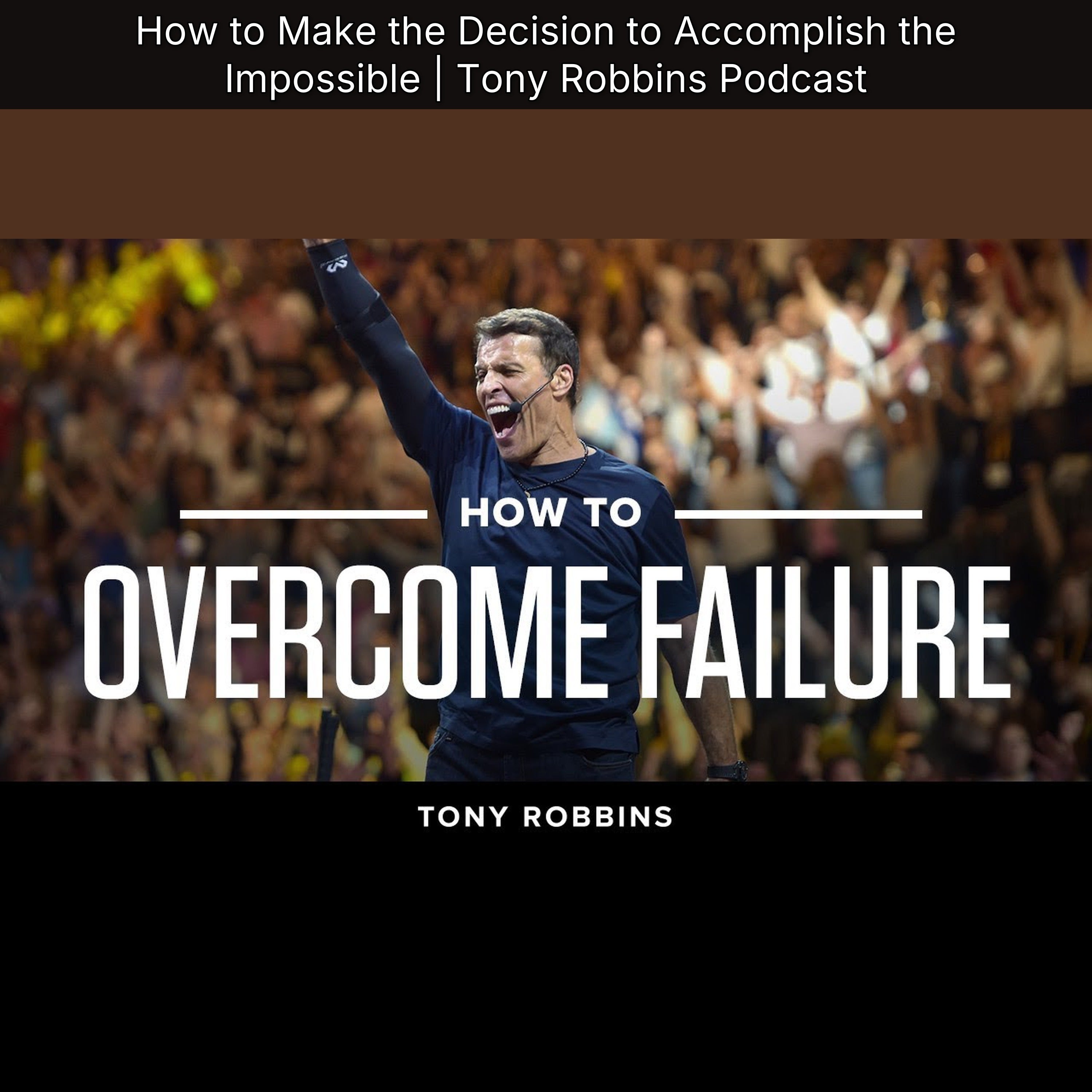
How to Make the Decision to do the Impossible - Tony Robbins Podcast The fear of failure affects millions of people around the world – whether they admit it or not! Many people have big dreams, but they fail to act because they’re so afraid of disappointment. In this episode of the Tony Robbins podcast, Tony, Mary Buckheit and Siri Lindley discuss how to overcome fear of failure to pursue your greatest passion. Siri Lindley is a top-tier athlete who graduated from Brown University. After playing three collegiate sports, she graduated and became the number one triathlete on the planet. Top athletes can be a prime example of overcoming fear of failure. Olympians decide from a young age that they are willing to compete with people from across the globe to be the best in their sport. What drives these people to pursue excellence? What’s their mindset like? Whether you’re an athlete or a business owner, you have to learn how to overcome failure. Because no matter what, you will fail. You mi
After 28 years teaching math, Juan Narvaez started looking at his own income differently. His first merchant account showed him the potential of residual income, and now he’s building a credit card processing business alongside his full-time teaching job. On this Mentee Fridays episode of The Level Up Podcast, Paul Alex sits down with Juan Narvaez, known as The Merchant Coach, to discuss entrepreneurship, financial setbacks, and his plan to retire from teaching and become a full-time business owner. Before merchant services, Juan sold custom baseball gloves for extra money. He also tried an insurance business that didn’t work out the way he hoped. Already dealing with debt, he worried that trying again could leave him further behind. Juan shares how he moved forward, started his processing business around July 2023, and worked around the challenges of teaching full time in a small community. That meant planning his weeks on Sundays, scheduling installations after school, and driving 50
Berkshire Hathaway, legendary investor Warren Buffett’s holding company, just made a nearly $600M bet on the housing market, all while real estate sentiment (https://www.biggerpockets.com/blog/pulse-q3-2026) hits its lowest levels in over a decade. What do Berkshire and Buffett know about the real estate market that most Americans are completely missing? Between September 17th and October 2nd, Berkshire Hathaway invested nearly $600M in one building company—Lennar. Even with Lennar’s quarterly revenue down 9% as it experiences one of its weakest quarters in over a decade, Berkshire sees what nobody else does: housing will recover, and whoever can build and own it will profit. Berkshire is known for its long-term, conservative, and bottom-line-based investing strategy. So, if the best investors on earth are putting their money into real estate and projecting a long-term recovery on the horizon, should rental property (https://www.biggerpockets.com/guides/how-to-buy-rental-property) inve
Stop carrying the weight of the world. In this unscripted episode of The Positive Mindset Podcast, "How to Stop Carrying the Weight of the World and Live in Your Highest Timeline," Henry Lawrence talks to anyone who walks into a room and takes on everyone else's energy, emotions, and pain, and then feels responsible for it. He shows why taking on everybody else's emotions isn't a holy thing and doesn't make you Christlike, why you can't make yourself God in someone else's situation, and why it's naive to believe you could change someone else when changing yourself is already so hard. From there he talks about bringing everything into the light with God, lending your ear without being the answer, introducing people to Christ instead of carrying their weight, and why you can't save anybody. Near the start he leads a centering deep breath and an opening prayer, he invites a short prayer in the middle, and he closes with a breath, a thank-you, and a prayer. In this episode: • "it's for the
To learn to think like a scientist check out http://Brilliant.org/SpaceTime (http://brilliant.org/SpaceTime) Uploaded 17-06-19 PBS Member Stations rely on viewers like you. To support your local station, go to: http://to.pbs.org/DonateSPACE Check out the new Space Time Merch Store! Support Space Time on Patreon Black holes are really only dangerous if you get too close. Ha, who am I kidding. It turns out they may be responsible for ending star formation across the entire universe. Hosted by Matt O'Dowd Written by Matt O'Dowd Graphics by Leonardo Scholzer Directed by Andrew Kornhaber Produced By: Kornhaber Brown When we first realized that black holes could have masses of millions or even billions of times that of the sun, it came as a bit of a shock. They were discovered as the driving force behind quasars, where matter is heated to extreme incandescence before its plunge into vast black holes. But if that weren’t enough, we soon realized that every single decent-sized galaxy contains
The most successful entrepreneurs are prepared to turn business failures into new opportunities, but how do you build resiliency outside of business factors you can control? Today’s guest turned a life-changing diagnosis into a disruptive media business that now helps children with chronic illnesses all over the world. In this episode, Sammy Peterson sits down with former NBA player and entrepreneur Gary Forbes, who defied expectations after being diagnosed with type 1 diabetes at 19, surviving two diabetic comas and six knee surgeries while building a 12-year professional basketball career. Gary reveals how he transformed his athletic mindset into an entrepreneurial mission to create Sole Survivors, a superhero universe designed to empower children living with chronic health conditions. Gary also breaks down why consistency matters more than talent, how to turn adversity into opportunity, and what it really takes to build a legacy bigger than yourself. In this episode, Sammy and Gary
Jake Wood went from playing college football to serving as a Marine sniper, then built a disaster response organization that raised nearly $250 million. After 11 years, he walked away from the very organization he'd created. What makes a founder leave at the height of their success? In this episode, Jake joins Sammy to share how a spontaneous trip to earthquake-stricken Haiti became Team Rubicon, one of America's largest veteran-led nonprofits. He opens up about the fundraising struggles that nearly bankrupted the organization, the role of ego in leadership, and his decision to start over with Groundswell, a venture-backed company that faced its own unexpected challenges. In this episode, Sammy and Jake discuss: (04:07) The Accidental Birth of Team Rubicon (10:16) The Long Road to $250 Million (15:34) When Founders Become Their Own Biggest Obstacle (18:16) The Leadership Lessons He Hadn't Learned Yet (20:06) A $15 Million Bet That Nearly Backfired (25:37) Why Investors Were Willing to
No team in Major League Baseball plays in a smaller market than the Milwaukee Brewers. So how did they build a franchise that draws 3 million fans a year and just won the World Series? In this episode, Wendy Selig-Prieb, former president of the Milwaukee Brewers, talks about the risks she took that set the Brew Crew on the path to becoming the best team in baseball. She also breaks down how she used her platform as the only female MLB president in the 1990s to expose gaps in diversity and inclusion in other industries. Plus: the value of media training and why she pivoted from sports leadership to fashion. In this episode, Sammy and Wendy discuss: (00:00) Introduction (03:46) When Your Career Outgrows Your Plan (09:15) The Reality of Being the Only Woman in the Room (18:19) The Promotion She Never Saw Coming (22:54) What High-Stakes Negotiations Teach You (31:08) Turning a 10-Year Battle Into a Legacy (37:29) Why Walking Away Was Her Hardest Decision (41:35) The Challenges of Being You
Individuals should control whether organizations share their personal information.
Share your view, then see how readers voted. No sign-in required. This poll is shared across stories.
Do you agree or disagree?
Common Quandary
A Common Quandary to discuss
Another conversation to explore, separate from this news story.
A stranger is behaving horribly in public. Do you record them?
You witness a stranger berating a service worker in public. Recording could create accountability and protect the worker, but posting the video could expose everyone involved to a permanent online audience.
Who gets to decide when public behavior becomes public content?