The wars that inspired Game of Thrones - Alex Gendler
9 min
Listen through the publisher, then discuss the episode here or arrange an in-person Roundtable. Your city determines where to meet.
Roundtables are designed for groups of four, with a shared subject and room for everyone to speak. Come for discussion, with no dating expectation.
View full lesson: http://ed.ted.com/lessons/the-wars-that-inspired-game-of-thrones-alex-gendler Uploaded 11-05-15 Beginning around 1377, medieval England was shaken by a power struggle between two noble families, which spanned generations and involved a massive cast of characters, complex motives and shifting loyalties. Sound familiar? Alex Gendler illustrates how the historical conflict known as the Wars of the Roses served as the basis for much of the drama in Game of Thrones. Lesson by Alex Gendler, animation by Brett Underhill.
Episode information is provided by the publisher. Listening takes place on the publisher’s service.
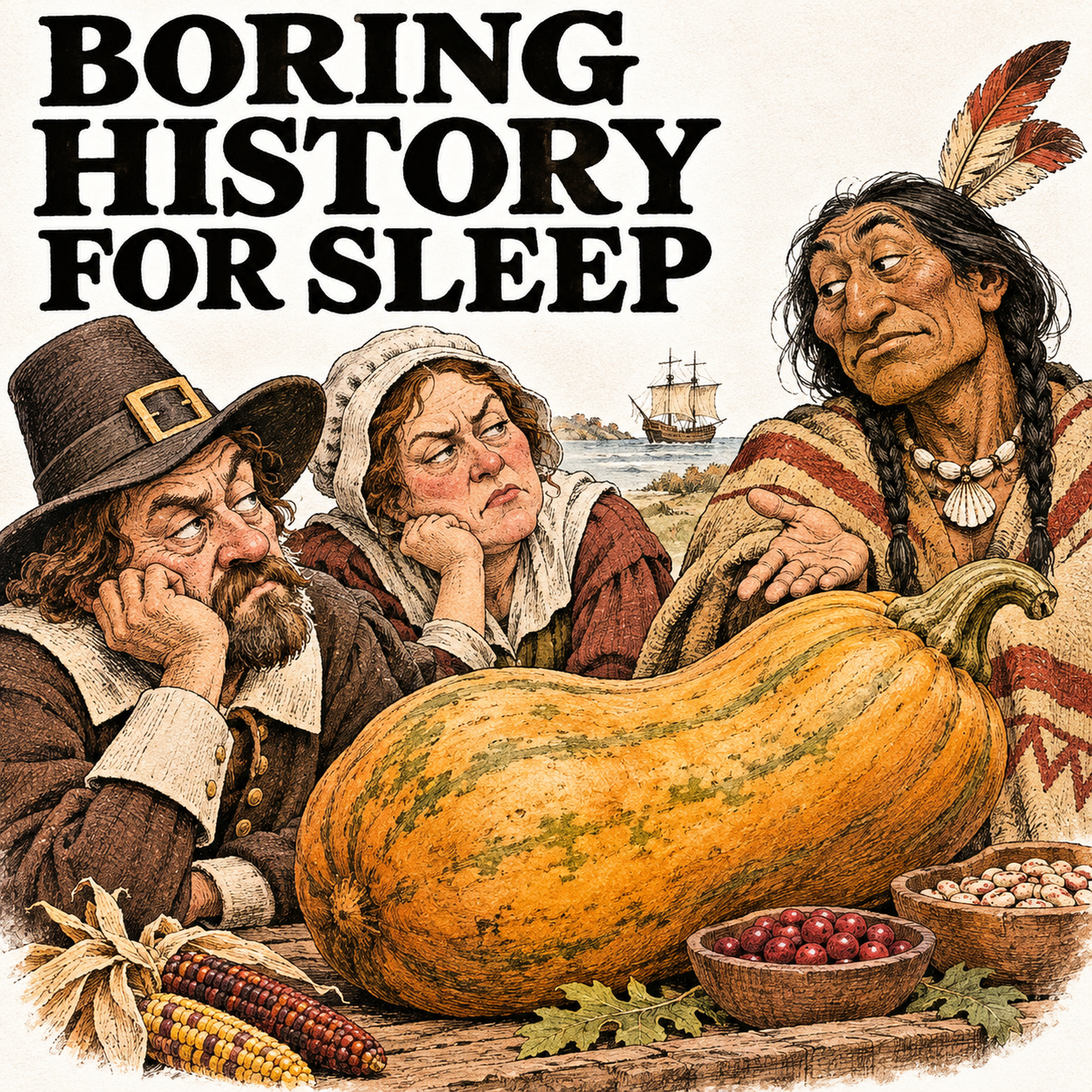
In 1620, a small ship called the Mayflower crossed the Atlantic carrying English settlers in search of a new life. Their arrival in North America became one of the most familiar stories in American history, but the reality behind the legend was far more complicated than the traditional Thanksgiving tale suggests. Discover why the Pilgrims left England, what their dangerous voyage was really like, and how they survived their first winter in an unfamiliar land. Explore their encounters with the Wampanoag people, the role of Tisquantum, also known as Squanto, and the assistance that helped the struggling settlers establish their colony. Uncover what happened at the harvest gathering of 1621, who actually attended, what was served, and how this event became connected to the modern Thanksgiving holiday. Follow the history beyond the familiar celebration and discover the people, cultural encounters, and historical realities behind the Mayflower story. Boring History for Sleep — Soft stories
I'd be willing to bet that somewhere along the way, you broke it. Not because you're a bad person. Not because you lack character. But because the promise you made to yourself is the one promise in your life that has no witness, no contract, no consequence you can see. And so you let it slide. Uploaded 19-08-26 If you gave your word to a business partner, you'd move heaven and earth to deliver. You'd stay up late. You'd cancel plans. Because someone was watching, and there was a cost to failing. But when the promise is to yourself, all of that evaporates. There's no partner waiting. And so the promise to yourself becomes the most breakable promise you own. Here is the truth: the reason you can't keep promises to yourself isn't a willpower problem or a motivation problem. It's a trust problem. And trust is the whole game. This seminar walks through the things you must understand about keeping your word to the one person who has to live with the results — you. CHAPTERS 0:00 Intro — the p
Have you ever tried something so hard, failed, and then tried again anyway? Meet Tony Hawk, the boy who turned his restless energy into skateboarding history! Growing up in sunny San Diego, California, Tony was a frustrated kid until his brother gave him a scratched-up blue skateboard. It was pure magic! By age 14, he was a fearless professional skater inventing wild, sky-high tricks on massive wooden ramps. Imagine being at the 1999 X Games, watching Tony attempt the ultimate, "impossible" trick: the 900! That's two and a half dizzying spins high in the air. Crash after crash, he fell ten times. But on his eleventh try? He landed it perfectly, while the crowd went absolutely wild! That same year, his smash-hit video game made him a superstar all around the world. But Tony didn't just want fame. He wanted every kid to have a safe place to ride, fall, and get back up. Through his charity, he has helped build hundreds of free public skateparks everywhere! Grab your helmet and drop in as
Get the 200+ Page Optimal Living Daily Workbook (PDF) - Free. Want to turn today's episode into an actionable plan? Episode 4234: In two short essays, Cylon George explains why we so often act against our own values: powerful unmet needs, not bad character, are usually what drive us. He then offers encouragement for anyone starting over after a setback, reminding listeners that beginning again never means starting from scratch and that treating yourself with kindness is part of the work of personal development. Read along with the original article(s) here: https://www.spirituallivingforbusypeople.com/why-you-do-what-you-do and https://www.spirituallivingforbusypeople.com/on-beginning-again Quotes to ponder: "We don't stray from our values because we're bad people." "To begin to understand why we do what we do, we must become intimately familiar with our needs." "It's hard work to begin again, and you don't need to be hard on yourself." We spend so much of our lives caught up in our tho
Have you ever seen pictures of giant stone heads sitting in the grass and wondered how they got there? Get ready for a mind-blowing adventure to one of the most remote places on Earth: Rapa Nui, also known as Easter Island! About 800 years ago, expert Polynesian sailors found this tiny island in the middle of the Pacific Ocean using only the stars and ocean currents to guide them. Once there, they carved nearly a thousand massive stone statues called moai! But here is the biggest surprise: these statues aren't just heads—they have full bodies buried underground! Some weigh as much as 40 cars, and the islanders moved them without wheels, cranes, or metal tools. How did they do it? The local legends say the statues literally walked to their places, waddling side to side with the help of ropes and incredibly smart human engineering! Join Mira and Finn as they uncover the secrets of the moai, find out how the island got its English name from a Dutch captain, and learn all about the giganti
Join NCI University today to master human behavior and influence: Uploaded 12-01-20 This video was an impromptu discussion with the Tennessee Law Enforcement Training Officer's Association and illustrates the massive flaw in our training systems nationwide. Chase explains why we all agree that the one deciding factor is also the same thing that's missing from our training.
View full lesson: http://ed.ted.com/lessons/surviving-a-nuclear-attack-irwin-redlener The face of nuclear terror has changed since the Cold War, but disaster-medicine expert Irwin Redlener reminds us the threat is still real. He looks at some of history's farcical countermeasures and offers practical advice on how to survive an attack. Talk by Irwin Redlener.
Explore what makes polio so dangerous, what is causing the 21st century resurgence of cases, and how we can eradicate the disease. -- In 1952, polio was everywhere: killing or paralyzing roughly half a million people annually. Yet just 10 years later, paralytic polio cases in the US dropped by 96% and we were on track to get rid of polio for good. But in recent years, the virus started striking back. So, what’s behind these recent spikes? Explore the dangers of poliovirus and the possibility of eradicating this deadly disease. Directed by Anton Bogaty. This video made possible in collaboration with Gates Ventures Learn more about how TED-Ed partnerships work: https://bit.ly/TEDEdPartner A special thanks to Ananda Bandyopadhyay, Amber Zeddies, and Kathleen O'Reilly who provided information and insights for the development of this video. Support Our Non-Profit Mission ---------------------------------------------- Support us on Patreon: http://bit.ly/TEDEdPatreon Check out our merch: htt
Todd Humphreys forecasts the near-future of geolocation when millimeter-accurate GPS "dots" will enable you to find pin-point locations, index-search your physical possessions ... or to track people without their knowledge. And the response to the sinister side of this technology may have unintended consequences of its own. (Filmed at TEDxAustin.) Uploaded 26-06-13 Talk by Todd Humphreys.
Officials should distinguish confirmed facts from uncertainty during developing incidents.
Share your view, then see how readers voted. No sign-in required. This poll is shared across stories.
Do you agree or disagree?
Common Quandary
A Common Quandary to discuss
Another conversation to explore, separate from this news story.
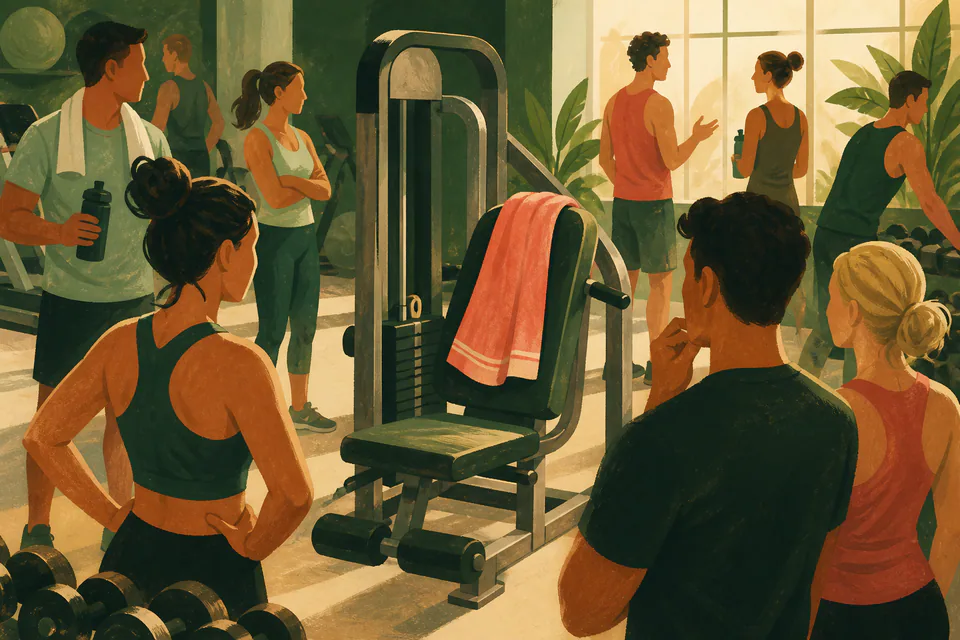
Someone reserves the best gym machine with a towel. When may you move it?
At a crowded gym, a towel has occupied the most popular machine for fifteen minutes while its owner chats across the room. Gym rules prohibit reserving equipment, but everyone occasionally steps away between sets.
How long may convenience masquerade as continued use?