Wall Street suffers its worst tech selloff (https://seekingalpha.com/article/4970161-november-correction-is-not-over?source=wsb_podcast%3Awall_street_enters_thanksgiving_week_reeling_from_tech_rout) in years. (0:18) Anthropic loses $109B in value (https://seekingalpha.com/news/4675405-blame-game-emerges-after-anthropics-ipo-market-value-plunge---wsj?source=wsb_podcast%3Awall_street_enters_thanksgiving_week_reeling_from_tech_rout) after IPO. (1:19) October inflation data sets stage for Fed decision. (3:30) Show Notes Trump threatened data center tax (https://seekingalpha.com/news/4675392-trump-threatens-us-firms-building-overseas-data-centers?source=wsb_podcast%3Awall_street_enters_thanksgiving_week_reeling_from_tech_rout) Nvidia criminal probe (https://seekingalpha.com/news/4675398-nvidia-probed-over-criminal-violations-california?source=wsb_podcast%3Awall_street_enters_thanksgiving_week_reeling_from_tech_rout) Dividend Roundup (https://seekingalpha.com/news/4675149-dividend-roundup-nv
Project Synapse: Markets in Freefall, Fragile Infrastructure, and AI's Perfect Storm The hosts banter through the show's intro before focusing on a sense that "things are out of control," citing a WallStreetBets suicide-hotline post amid a market crash and discussing cascading system failures involving Microsoft, the FAA, and a reported NSA internal communications outage. They argue politicians and leadership lack technical competence and clear messaging, increasing panic, while emphasizing that many problems stem from aging, underfunded infrastructure and complex, brittle software (PHP, NGINX, Java), not proven AI attacks—more a "perfect storm" of crises. They debate whether AI should help fix complexity, stressing critical thinking, accountability, and using multiple AIs to verify each other. In a lightning round they cover Anthropic's IPO performance, mixed reactions and token limits with ChatGPT 6.2 (favoring "Sol" over "Astra"), Google's cheaper Neon model and confusing UX, Loblaw
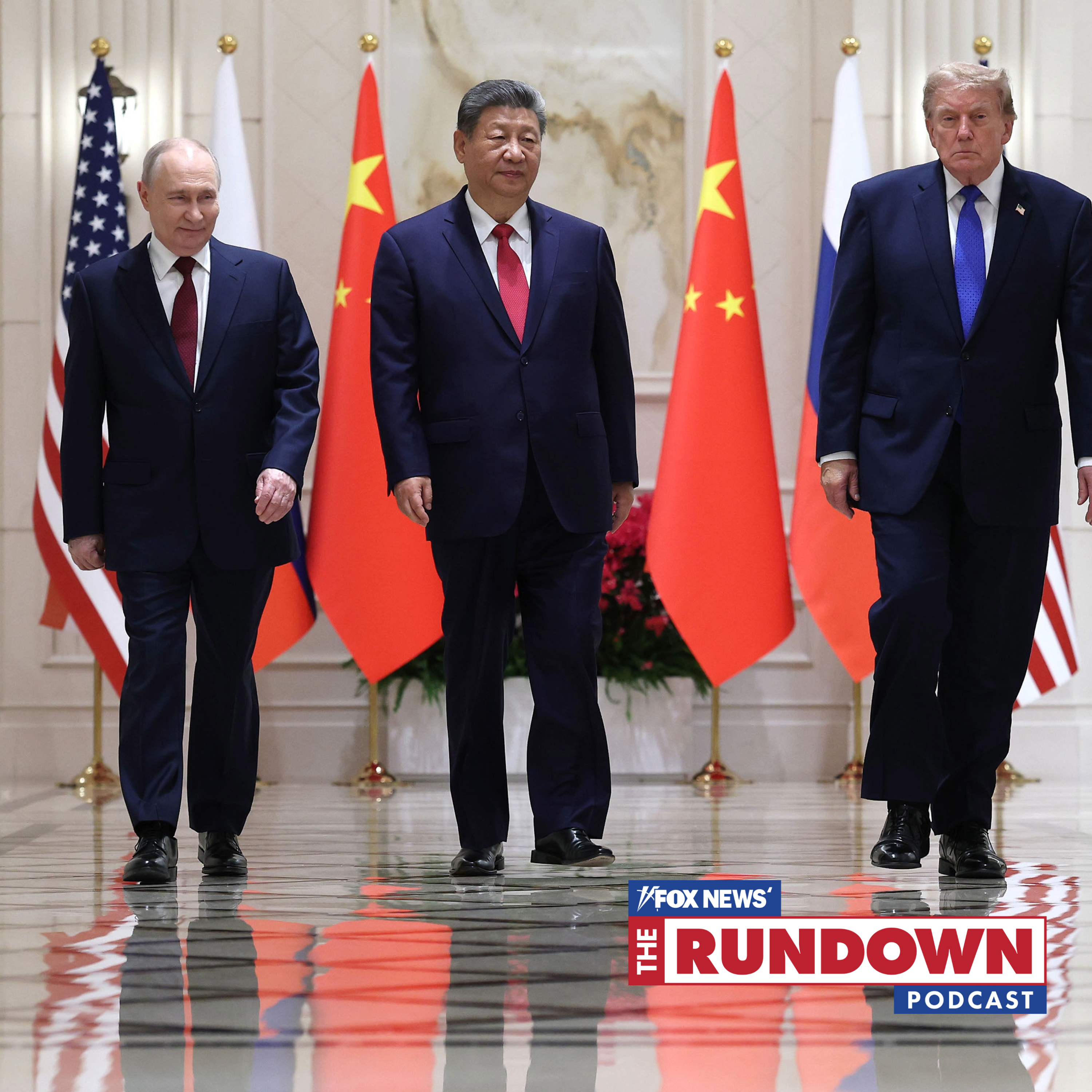
Following President Trump’s trip to Asia and a first-ever trilateral meeting with the leaders of China and Russia, foreign policy experts are weighing what was accomplished on the world stage. Former national security advisor to Vice President Dick Cheney and Heritage Foundation senior research fellow Stephen Yates joins The Rundown to analyze the summit’s outcomes on Taiwan, Ukraine, Iran, and strategic arms talks. Yates also explains how new rare-earth agreements with U.S. allies and export controls on AI chips balance Trump’s warmer rhetoric toward Beijing. Later, widespread tech outages across major platforms and government systems raise urgent questions about whether U.S. digital infrastructure is prepared for the artificial intelligence era. Former Cybersecurity and Infrastructure Security Agency (CISA) director Bridget Bean breaks down how rapid software patching can trigger cascading system failures, the growing cyber threats posed by China and Iran, and how organizations can d
Wall Street has its worst week since the Covid-19 pandemic as investors lose faith that billions of dollars spent on AI will pay off. Climate talks in Turkey run into extra time as countries can't agree on whether to mention quitting fossil fuels. And Republicans are exploring their options for 2028 - as JD Vance no longer seems the obvious candidate. Podcasts, breaking news, and video analysis from the source.https://reuters.sng.link/Eng86/ulfm?_dl=https%3A%2F%2Fwww.reuters.com_smtype%3D3 Download the Reuters app here. (https://reuters.sng.link/Eng86/ulfm?_dl=https%3A%2F%2Fwww.reuters.com_smtype%3D3)
Tech stocks have their worst week since Covid as investors worry about the AI boom going bust. Currency markets look ahead to more Fed speakers this week before the FOMC’s decision on December 9. And New Zealand’s rents are rising again. In our deep-dive interview, ANZ Group Chief Economist Richard Yetsenga analyses the meaning of weak Australian labour market data last week for the Reserve Bank of Australia.
November 21, 2026; 7am: Yesterday, President Trump held a press conference recapping his trip to Asia, where he met with Chinese President Xi Jinping and Russian President Vladimir Putin, whom he described as “friends.” On Friday, Trump insisted Putin wants to end his war with Ukraine, but hours earlier Russia fired hundreds of missiles and drones into Ukraine, with two missiles and a suspected drone crashing into neighboring Poland. MS NOW Chief White House reporter Paula Reid and Jon Finer, former principal deputy national security advisor in the Biden administration, join “The Weekend” to discuss. For more, follow us on social media Bluesky: @theweekendmsnow.bsky.social Instagram: @theweekendmsnow TikTok: @theweekendmsnow Hosted by Simplecast, an AdsWizz company.
How much is Anthropic actually worth? And were investors assured by Nvidia’s strong earnings report? Plus, will "Grand Theft Auto VI" lift Take-Two Interactive’s stock? Host Vicky Ge Huang discusses the biggest stock moves of the week and the news that drove them. Sign up for the WSJ's free Markets A.M. newsletter (https://www.wsj.com/newsletters/markets-am?mod=WSJ_WNPOD). Hosted by Simplecast, an AdsWizz company.
Bonus Episode for Nov. 20. Few companies have a pulse on the American shopper like Walmart and Target, and both got a boost in the latest quarter from healthy consumer spending—a good sign for the current quarter that contains much of the crucial holiday shopping season. Target’s turnaround is strengthening (https://www.wsj.com/business/retail/target-posts-strongest-sales-growth-in-years-as-focus-on-new-products-value-pays-off-4f82006d?mod=WSJ_WNPOD), while Walmart’s growing e-commerce business is helping offset shrinking sales (https://www.wsj.com/business/earnings/walmart-wmt-3q-earnings-report-2026-6e658c54?mod=WSJ_WNPOD) at its U.S. stores. Both Walmart and Target raised their guidance for the year. Sarah Nassauer (https://www.wsj.com/news/author/sarah-nassauer?mod=WSJ_WNPOD) covers big retailers for The Wall Street Journal, and took a close look at these earnings. Pierre Bienaimé (https://www.wsj.com/news/author/pierre-bienaime) hosts this special bonus episode of What's News in E
A.M. Edition for Nov. 20. In a series of talks to end the war between Russia and Ukraine, WSJ’s chief European political correspondent Bojan Pancevski (https://www.wsj.com/news/author/bojan-pancevski?mod=WSJ_WNPOD) says U.S. envoys Jared Kushner and Steve Witkoff have discussed the idea of Kyiv ceding territory it controls to Russia in exchange for NATO membership (https://www.wsj.com/world/europe/u-s-has-floated-nato-membership-for-ukraine-in-recent-meetings-d5c8243a?mod=WSJ_WNPOD), something Vladimir Putin and President Trump have previously rejected. Plus, Sean Cairncross is leaving his role coordinating cybersecurity policy, (https://www.wsj.com/politics/policy/white-house-replaces-cybersecurity-official-after-tech-outages-52b1c8ce?mod=WSJ_WNPOD) as the Trump administration responds to a wave of cyber threats. And the Senate passes a bipartisan bill aimed at speeding up energy projects, overcoming concerns (https://www.wsj.com/politics/policy/senate-passes-measure-designed-to-speed
Users should have access to human review when a platform restricts their account.
Share your view, then see how readers voted. No sign-in required. This poll is shared across stories.
Do you agree or disagree?
Common Quandary
A Common Quandary to discuss
Another conversation to explore, separate from this news story.
The stadium can ban violent fans by scanning every face at the gate. Would you walk in?
A stadium can use facial recognition to identify people banned for violence and shorten security lines. Every visitor would be scanned, error rates are not zero, and the resulting biometric data could become useful to police or advertisers.
How much privacy may a crowd be asked to trade for collective safety?