THIS Is Why The Dismissive Avoidant Hurts You & Then Acts Like It Was Nothing
16 min
Listen through the publisher, then discuss the episode here or arrange an in-person Roundtable. Your city determines where to meet.
Roundtables are designed for groups of four, with a shared subject and room for everyone to speak. Come for discussion, with no dating expectation.
https://offer.personaldevelopmentschool.com/self-esteem?utm_source=podcast&utm_campaign=self-esteem&utm_medium=organic&utm_term=VIDEOID&utm_content=yt-MM-DD-YY&el=podcast (https://offer.personaldevelopmentschool.com/self-esteem?el=podcast) They hurt you—and then carry on like nothing happened. When a Dismissive Avoidant doesn’t acknowledge your feelings, you may find yourself wondering whether they understand the impact or even care. In this episode, Thais Gibson breaks down three reasons a Dismissive Avoidant may respond this way, including differences in emotional needs, avoidance of conflict, and difficulty taking accountability. She explains how these patterns can leave Anxious and Fearful Avoidant partners feeling unheard—and shares practical ways to communicate hurt, ask for reassurance, and set boundaries. Understanding their behavior is only part of the picture. Your feelings deserve space, and repairing a relationship requires both people to participate. In this video, you’ll learn: • Why a Dismissive Avoidant may not recognize that their behavior hurt you. • How conflict avoidance can leave difficult conversations unresolved. • Why accountability matters for a secure relationship. • How Anxious Attachment can lead to self-silencing and increased reassurance-seeking. • How to make your needs clear with specific, practical requests. • A somatic processing exercise for Fearful Avoidant emotional reactions. • Why repeated dismissal of your needs calls for boundaries. Timestamps: 00:00 Why a Dismissive Avoidant acts like nothing happened 00:59 Different sensitivities to words and actions 02:30 Conflict avoidance and emotional shutdown 03:56 Difficulty taking accountability 05:18 Anxious Attachment: the cost of self-silencing 06:16 How to communicate hurt and ask for reassurance 07:16 Make your needs specific 07:53 When your needs are repeatedly dismissed 08:11 Free self-esteem course with a 7-day trial 09:03 Fearful Avoidant reactions to feeling hurt 09:57 Introduction to somatic processing 11:49 Noticing emotions and physical sensations 12:59 Regulate before communicating your needs 13:15 A practical emotional processing exercise 14:21 Express your hurt and what you need going forward 14:45 Closing thoughts Meet Thais IAT works across six pillars: Rewire Your Attachment Core Wounds Learn Your Attachment Needs Regulate Your Nervous System Somatically Learn Healthy Boundaries Improve Communication Rewire Your Unhealthy Protest Behaviors Helpful Resources: Take the Free Attachment Style Quiz Become an IAT Relationship Coach Read the New Attachment Theory Book Discover Podcast Episodes Read the PDS Blog Let’s Connect on Socials: TikTok: https://www.tiktok.com/@thaisgibson
Episode information is provided by the publisher. Listening takes place on the publisher’s service.
Your free behavior course: https://nci.university/learn Uploaded 10-05-25 Exclusive NCI-4 (Grad School) Vault Release This is Behavioral Magnetics—the hidden force that draws you back to chaos, to patterns you swore you’d outgrow, to people who echo your oldest pain. It’s why peace feels boring. Why CALM makes you anxious. It’s not intuition—it’s your nervous system recycling what it knows. In this Grad School lecture, we uncover the 4 emotional magnets that shape who you trust, chase, or sabotage... even when it hurts. If you've ever said, “Why do I keep doing this?”—this is your answer. Why you're attracted to the wrong people The 4 types of emotional magnets How trauma rewires your compass Why peace can feel like withdrawal How to break free from recycled patterns Please note that the content provided in this broadcast is for informational and educational purposes only and should not be construed as legal, medical, financial, or professional advice. No material in this communication
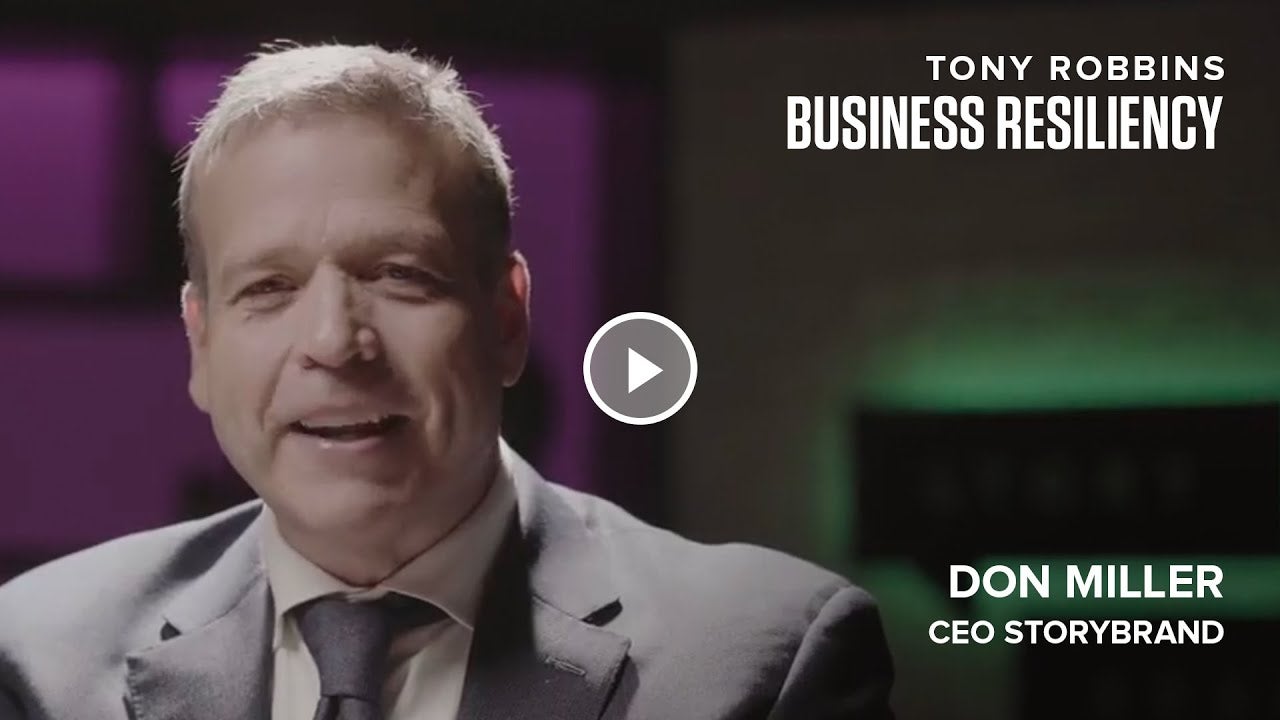
Donald Miller is a storytelling expert, founder of StoryBrand, CEO of Business Made Simple, author and speaker – and he’ll share with you the two most essential aspects of communication in times of crisis. Uploaded 22-04-20 Communication is a trait of great leaders, and in times of uncertainty, it becomes more important than ever. From Nelson Mandela inspiring a revolution during dark times to Indra Nooyi’s famously “straight-shooting” style when she took over Pepsi Co. with uncertain prospects, effective crisis leadership depends on the ability to communicate. Learn more about how you can develop your crisis leadership skills at https://www.tonyrobbins.com/career-business/crisis-leadership-skills. Communication in times of crisis is more than talking. Anyone can talk – leaders know that communication isn’t about talking, but about reassurance, demonstrating confidence and articulating a plan of action. There’s a reason that during times of stress, the president holds a press conferenc
The small decisions you repeat every day are quietly shaping your future—whether you realize it or not. Uploaded 24-03-26 In this video, you’ll learn how daily habits, discipline, and consistent choices compound over time to create either progress or stagnation. Success is not built in dramatic moments. It’s built through ordinary actions repeated long enough to produce real results. This lesson breaks down the hidden patterns behind growth, including: How your daily routine determines your long-term direction Why consistency matters more than motivation The difference between choosing comfort and choosing growth How small habits compound into major life outcomes Why results always reflect repeated decisions Most people don’t notice the direction their life is taking until years have passed. By then, those small choices have already created a pattern that’s difficult to change. If you feel stuck, behind, or unsure why progress isn’t happening, this will show you exactly what’s going on
Learn to act like nothing bothers you. Episodes created by entrepreneur and masculinity ace Jack Hopkins for his youtube channel, this podcast is dedicated to helping men rediscover their inner strength and confidence in a society that often promotes feminine values over masculine ones.Follow the podcast for valuable insights, inspiring stories, and practical advice on how to embrace your masculinity, build your confidence, and achieve your goals. Whether you're looking to improve your relationships, advance your entrepreneurial career, or simply feel more confident and capable, Jack has valuable insights that can help you achieve your goals.So, if you're ready to reclaim your masculinity and awaken the beast that lives inside you, follow the podcast & turn on notis Follow Jack Hopkins:Insta: @jackhopfitnessYT: @JackhopkinsCEODisclaimer: All content rights belong to @JackhopkinsCEO on YouTube. This is a fan page. --------------- Keywords: men's personal development, millionaire mindset
This week on The Necessary Conversation, it's Chad, Haley, and Mary Lou. Bob is still recovering but sent in a video message about Trump calling Putin his friend that we watch together. 🇷🇺 Trump held the first-ever three-way talks with Putin and Xi, called it a "12 out of 10," and produced nothing. Then at a press conference he called Putin his friend — and when asked if Putin is a friend to America, the president of the United States said, "I can't speak to America." That same day, Trump's friend Putin launched massive strikes into Ukraine, hit Poland with two missiles — an act of war against a NATO ally — then struck near a Ukrainian restaurant and drone-bombed the first responders, killing a 7-year-old child and a 20-year-old paramedic. We watch Bob's video and ask Mary Lou: is Russia our friend? 🇨🇳 The House Foreign Affairs Committee revealed Trump's Commerce Department approved nearly 880,000 advanced AI chips for Chinese military-linked companies including Alibaba, Tencent, a
Narcissism grows fast when there is nothing left to serve except your own feelings. Check out the full episode: https://greatness.lnk.to/1509DM Dr. John Delony, a mental health and relationships expert, told Lewis that the biggest cause of pain in relationships today comes down to three words: me over us. He shared an image about couples after infidelity. On September 12th, nobody swept up the dust and steel to rebuild the towers from it, and a marriage that has fallen can't be rebuilt from its rubble either. So John treats his own marriage as a new one, now that he and his wife are raising an 8th grader and a 2nd grader. He exercises and sleeps so he can show up whole for what they are building together. As John put it, answer your partner with a quippy grenade and “you're going to end up sleeping outside by yourself.” Sign up for the Greatness newsletter! (https://info.lewishowes.com/newsletter?source=podcast-post-roll) Hosted by Simplecast, an AdsWizz company.
https://offer.personaldevelopmentschool.com/self-esteem?utm_source=podcast&utm_campaign=self-esteem&utm_medium=organic&utm_content=pod-11-18-26&el=podcast (https://offer.personaldevelopmentschool.com/self-esteem?el=podcast) Why can someone with a Dismissive Avoidant Attachment Style move past rejection early in dating, yet struggle to get over it once they’ve let someone in? In this episode, Thais Gibson explains why rejection can linger after someone who’s used to relying on themselves starts trusting another person with their needs. She explores how the meaning we give rejection can bring up shame, why losing a trusted connection can stir up fears of abandonment, and how you can begin working through those feelings. In This Video, You’ll Learn Why rejection can feel different early in dating and after trust has formed How rejection can bring up the belief that something is wrong with you Why it can be so hard to lose a connection where you felt safe asking for what you needed How rec
https://offer.personaldevelopmentschool.com/self-esteem?utm_source=podcast&utm_campaign=self-esteem&utm_medium=organic&utm_content=pod-11-16-26&el=podcast (https://offer.personaldevelopmentschool.com/self-esteem?el=podcast) When a partner suddenly texts less, stops making plans, or seems distracted when you’re together, it’s easy to wonder if someone else is in the picture. How do you make sense of what’s changed without getting stuck analyzing every interaction? In this episode, Thais Gibson explains what “monkey branching” means and walks through five changes you might notice when a partner with a Dismissive Avoidant Attachment Style starts investing in someone else while still in the relationship. She explains why it matters to look at what’s changed from your partner’s usual behavior and how to start a conversation about what you’ve noticed. These shifts can have several causes, and a direct conversation gives you a chance to talk about what each of you needs. In This Video, You’ll
https://offer.personaldevelopmentschool.com/self-esteem?utm_source=podcast&utm_campaign=self-esteem&utm_medium=organic&utm_content=pod-11-13-26&el=podcast (https://offer.personaldevelopmentschool.com/self-esteem?el=podcast) Blocked out of nowhere by a Dismissive Avoidant? When someone suddenly cuts off contact, it’s easy to wonder whether you ever mattered—or what you did wrong. In this episode, Thais Gibson explores why a Dismissive Avoidant may block someone after a breakup, including emotional pain, shame, and a desire to avoid reminders of the relationship. She also discusses other possible reasons, such as feeling overwhelmed by repeated contact or reacting after a conflict. Blocking alone doesn’t tell you exactly what someone feels or whether they’ll return. This video invites you to examine the meaning you’re giving their behavior, question beliefs about being “not good enough,” and begin separating your self-worth from someone else’s response. In this video, you’ll learn: • Why
Removing outdated rules is worthwhile even when it reduces some existing protections.
Share your view, then see how readers voted. No sign-in required. This poll is shared across stories.
Do you agree or disagree?
Common Quandary
A Common Quandary to discuss
Another conversation to explore, separate from this news story.
You know the relationship is over, but the vacation is nonrefundable. Do you wait to break up?
You have decided to end a year-long relationship. In five days, you are both leaving on an expensive vacation that cannot be refunded or transferred. Your partner is excited and believes the relationship is thriving.
Can avoiding financial waste justify delaying a painful truth?