U.S. works to close loophole that let China access advanced AI chips
8 min
Listen through the publisher, then discuss the episode here or arrange an in-person Roundtable. Your city determines where to meet.
Roundtables are designed for groups of four, with a shared subject and room for everyone to speak. Come for discussion, with no dating expectation.
The Trump administration announced new rules today to further restrict China's access to advanced chips for the use of AI. It comes as questions are mounting about how the Commerce Department allowed loopholes for chip exports. The rule puts new restrictions on overseas data centers and is designed to counter possible smuggling. Amna Nawaz discussed more with Liza Tobin. Hosted on Acast. See acast.com/privacy
Episode information is provided by the publisher. Listening takes place on the publisher’s service.
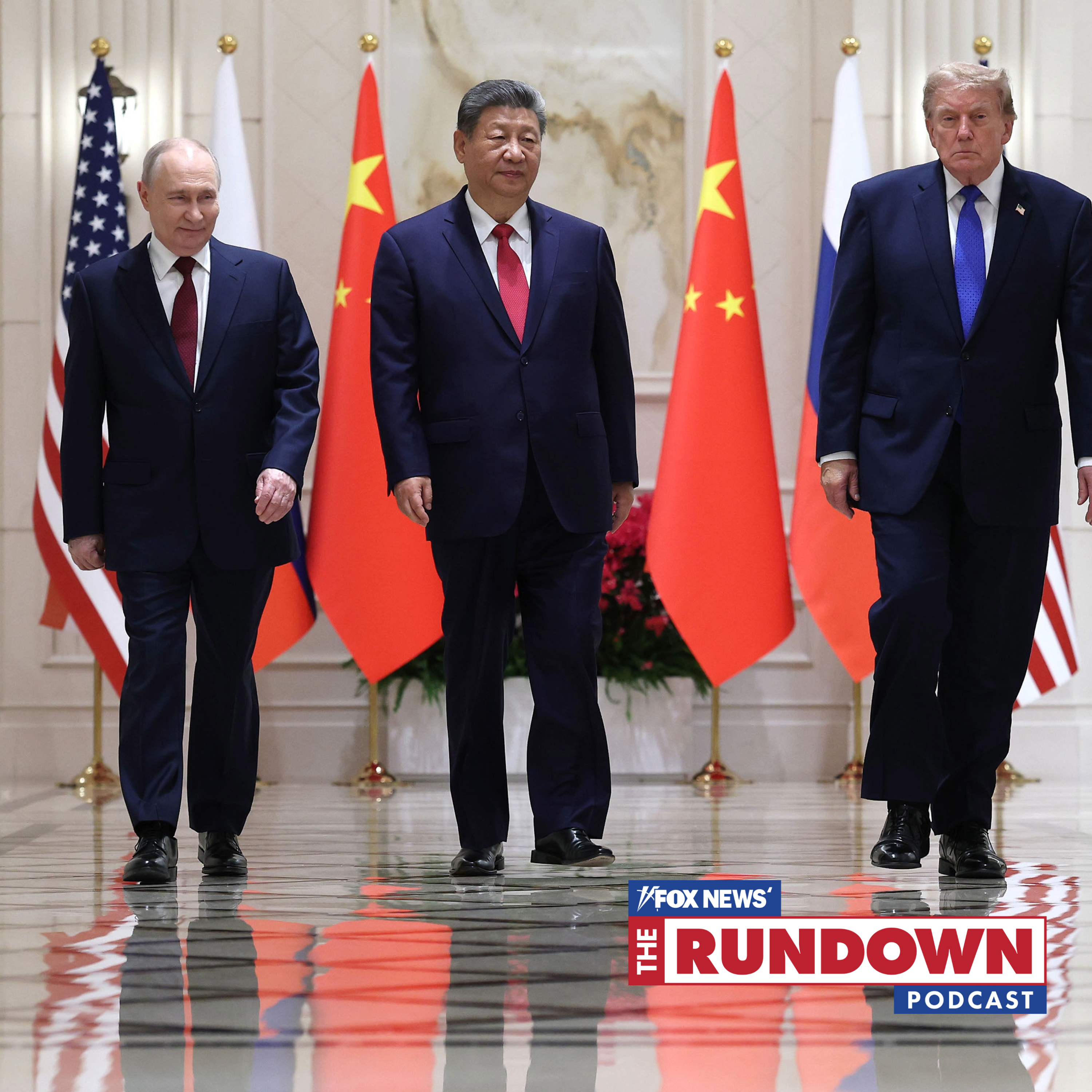
This week on The Necessary Conversation, it's Chad, Haley, and Mary Lou. Bob is still recovering but sent in a video message about Trump calling Putin his friend that we watch together. 🇷🇺 Trump held the first-ever three-way talks with Putin and Xi, called it a "12 out of 10," and produced nothing. Then at a press conference he called Putin his friend — and when asked if Putin is a friend to America, the president of the United States said, "I can't speak to America." That same day, Trump's friend Putin launched massive strikes into Ukraine, hit Poland with two missiles — an act of war against a NATO ally — then struck near a Ukrainian restaurant and drone-bombed the first responders, killing a 7-year-old child and a 20-year-old paramedic. We watch Bob's video and ask Mary Lou: is Russia our friend? 🇨🇳 The House Foreign Affairs Committee revealed Trump's Commerce Department approved nearly 880,000 advanced AI chips for Chinese military-linked companies including Alibaba, Tencent, a
This episode is brought to you by Sarmaya Partners. Learn more about Sarmaya’s LENS ETF, their full data and comparison, including performance here: https://sarmayaetf.com/ In this episode of Other People's Money, Max Wiethe sits down with Muddy Waters Capital founder Carson Block to discuss his firm's explosive new short thesis on Nvidia. Block breaks down the alarming connections between a former Nvidia executive and a former SMCI executive recently implicated in a major chip smuggling scandal. The conversation dives deep into the national security implications of dual-use technology and how the ongoing geopolitical tug-of-war between the US and China is reshaping the semiconductor sector. Tune in to hear why Block believes this scandal goes far beyond CEO indiscretions and could trigger a massive regulatory reckoning for Silicon Valley's biggest players. Follow Muddy Waters on X: https://x.com/muddywatersre Follow Max on X: https://x.com/maxwiethe Follow Other People’s Money on: App
Jensen Huang stepped down as Nvidia CEO on November 12, 2026, after reports about an extramarital relationship with Alice Huang, a former senior executive at Megaspeed. U.S. intelligence reportedly viewed her as an asset working for Beijing. That allegation is not a conviction, and it is not the same thing as proof Nvidia secrets changed hands. Tony Brueski brings in retired FBI Special Agent Robin Dreeke, former leader of the bureau’s Counterintelligence Behavioral Analysis Program, for the question behind the headlines: how does somebody who helped build one of the world’s most important technology companies fail to recognize a possible intelligence threat in his personal life? Huang apologized to his family and Nvidia employees for infidelity. The board announced an outside investigation, while saying it knew of no reason to believe national security or proprietary information was compromised. Reuters subsequently reported that Huang had previously told Nvidia leaders his encounters
Wall Street suffers its worst tech selloff (https://seekingalpha.com/article/4970161-november-correction-is-not-over?source=wsb_podcast%3Awall_street_enters_thanksgiving_week_reeling_from_tech_rout) in years. (0:18) Anthropic loses $109B in value (https://seekingalpha.com/news/4675405-blame-game-emerges-after-anthropics-ipo-market-value-plunge---wsj?source=wsb_podcast%3Awall_street_enters_thanksgiving_week_reeling_from_tech_rout) after IPO. (1:19) October inflation data sets stage for Fed decision. (3:30) Show Notes Trump threatened data center tax (https://seekingalpha.com/news/4675392-trump-threatens-us-firms-building-overseas-data-centers?source=wsb_podcast%3Awall_street_enters_thanksgiving_week_reeling_from_tech_rout) Nvidia criminal probe (https://seekingalpha.com/news/4675398-nvidia-probed-over-criminal-violations-california?source=wsb_podcast%3Awall_street_enters_thanksgiving_week_reeling_from_tech_rout) Dividend Roundup (https://seekingalpha.com/news/4675149-dividend-roundup-nv
Following President Trump’s trip to Asia and a first-ever trilateral meeting with the leaders of China and Russia, foreign policy experts are weighing what was accomplished on the world stage. Former national security advisor to Vice President Dick Cheney and Heritage Foundation senior research fellow Stephen Yates joins The Rundown to analyze the summit’s outcomes on Taiwan, Ukraine, Iran, and strategic arms talks. Yates also explains how new rare-earth agreements with U.S. allies and export controls on AI chips balance Trump’s warmer rhetoric toward Beijing. Later, widespread tech outages across major platforms and government systems raise urgent questions about whether U.S. digital infrastructure is prepared for the artificial intelligence era. Former Cybersecurity and Infrastructure Security Agency (CISA) director Bridget Bean breaks down how rapid software patching can trigger cascading system failures, the growing cyber threats posed by China and Iran, and how organizations can d
Rebuilding the government after Trump and DOGE will take more than rehiring the people they fired last year. The Supreme Court enabled the administration’s assault on services and protections millions of Americans rely upon, and it could still block the rebuilding, too. On this week’s Amicus, Dahlia Lithwick talks with Cornell law professor and former Biden administration official K. Sabeel Rahman about his new book, Remaking the State: A New Blueprint for American Democracy (https://www.amazon.com/dp/1967190208?tag=slatmaga-20&th=1), about why restoring the old machinery of the administrative state won’t be enough. Rahman connects DOGE’s slash-and-burn campaign to a much longer legal project. He explains why doctrines that constrain regulation remain a threat to future policymaking, even as the high court supercharges Trump’s executive power grabs. But this is not just a damage assessment. From stronger consumer protections to easier access to public benefits and a meaningful democrat
In a lengthy press conference, President Trump touted his recent trip to Asia and defended his relationship with Chinese President Xi Jinping and Russian President Vladimir Putin. White House correspondent Liz Landers was in the briefing room as the president took questions from reporters. Hosted on Acast. See acast.com/privacy
In our news wrap Friday, stocks tumbled to end the week as worries about AI rattled the market, a second federal judge is blocking President Trump's triumphal arch in Washington and a federal appeals court is blocking the Army from detonating several tons of bomb-making chemicals amid concerns over environmental and health risks. Hosted on Acast. See acast.com/privacy
President Trump has replaced the nation's top cybersecurity official following a string of seemingly unrelated technology outages over the last couple of weeks. Officials have repeatedly stressed that these outages were not the result of intentional attacks, but given the growth of AI, there's growing concern that attacks are on the horizon. William Brangham discussed more with Chris Krebs. Hosted on Acast. See acast.com/privacy
News organizations should disclose major financial relationships that could influence their coverage.
Share your view, then see how readers voted. No sign-in required. This poll is shared across stories.
Do you agree or disagree?
Common Quandary
A Common Quandary to discuss
Another conversation to explore, separate from this news story.
Your ex's streaming password still works. When does borrowing become stealing?
Months after a friendly breakup, your television remains logged into your ex's streaming account. They have never mentioned it, the service allows several screens, and your viewing does not increase their monthly bill.
Can silence count as permission when asking might end the benefit?