DISCOVER GRAD SCHOOL: https://nci.university/home-v2?utm_source=chase_youtube&utm_medium=social_video&utm_campaign=nci4_promo (https://nci.university/home-v2) Uploaded 02-05-26 LEARN ABOUT NCI LEVEL 2: https://nci.university/nci-2?utm_source=chase_youtube&utm_medium=social_video&utm_campaign=nci2_promo (https://nci.university/nci-2) There’s a moment in every conversation where everything gets decided. It happens before logic. Before persuasion. Before anyone thinks they’re “in control.” And most people miss it completely. That’s why conversations feel unpredictable… Why people react in ways that don’t make sense… Why you can say the right thing — and still lose the room. Because the outcome was already set. This video breaks down the hidden structure behind human interaction: * how conversations organize themselves before words matter * how frames control behavior without force * how categories decide what’s allowed (and what isn’t) * how identity and metaphor quietly shape every respo
What is vesperance? That sense of gathering night and change...Episode release date: 18 Sep 2023Spreading awareness about the works of some of the leading educators in the AI revolution. Core Ideas: Metamodernism: Narratives and emergence view of reality - Reduce suffering - Increase prosperity - Increase understanding mantra: Seek knowledge. ELABORATE: Add depth and detail to understanding, weaving comprehensive and nuanced explanations.DISCLAIMER: This is a community-driven show. ----------------What is vesperance? That sense of gathering night and change...Episode release date: 18 Sep 2023Spreading awareness about the works of some of the leading educators in the AI revolution. Core Ideas: Metamodernism: Narratives and emergence view of reality - Reduce suffering - Increase prosperity - Increase understanding mantra: Seek knowledge. ELABORATE: Add depth and detail to understanding, weaving comprehensive and nuanced explanations.DISCLAIMER: This is a community-driven show. -------- K
You went back. Maybe not to the same person, but to the idea of them. You rehearsed the conversation again in your mind. You thought of better words, sharper examples, a clearer way to say the thing you'd already said. You kept trying to win an argument that was already over, with a person who had already walked away. Uploaded 13-10-26 That hunger to be understood is one of the most natural things in the world. And it is also one of the quietest thieves of a person's peace that I know of. You explain yourself to one person, feel relief for a day, and then someone else shakes their head, and you're back building the case for your own life all over again. Here is the truth: it is not another person's job to understand you. It is your job to understand yourself. And once you've done that interior work, the opinions of people who don't understand you go from feeling like a verdict to feeling like weather. This seminar unpacks the single mechanic behind why you keep over-explaining your lif
At a concert, most listeners hear the melody. A trained singer hears the breath control that carries a difficult phrase. At a football match, the crowd follows the ball while a coach notices the defender who quietly closes off an attack. Knowing more changes who seems extraordinary. Audiences have traditionally borrowed that knowledge from commentators, critics, and friends, whose explanations help determine which achievements receive applause and which pass unnoticed. AI could make that guidance a routine part of watching almost anything. Tools already track players’ movements, analyze musical pitch and timing, and explain technical processes. As those abilities become integrated into broadcasts and personal assistants, viewers could ask what made a particular passage difficult or why a player chose one route over another. Instead of receiving occasional commentary, someone could explore an entire performance with detailed explanations tailored to their questions. The consequential sh
A kiss can be wonderful. It can create an instant connection, spark romance, or make you feel closer to someone. But a kiss can also have the opposite effect — and sometimes ruin everything. So what makes kissing so powerful, and why can one kiss make such a difference? There's some fascinating science behind it. https://www.scientificamerican.com/article/why-we-kiss/ We spend an enormous amount of time worrying about what's going to change. What's next? What's coming? How do we prepare? But what if we're paying attention to the wrong things? Some of the most important forces shaping our lives never change, and understanding them may be far more valuable than trying to predict the future — something humans are notoriously bad at. Morgan Housel, partner at The Collaborative Fund and author of Same as Ever: A Guide to What Never Changes (https://amzn.to/3SwWn6u) (https://amzn.to/3SwWn6u)), joins me to explain why the things that stay the same may be the most important things to understan
Today, Mel is doing something she's never done before on The Mel Robbins Podcast. She's bringing members of her team into the studio for live coaching with world-renowned communications expert Vinh Giang. Vinh is known for teaching millions of people online how to stop sounding insecure, speak more clearly, and get people to listen when you talk. And when you hear him coaching today, it will be like he’s coaching you. One person freezes when they're put on the spot. Another can't stop interrupting people. Someone else has great ideas but stays quiet because they're afraid of being judged. Does any of that sound familiar? And Vinh isn't just giving advice. He's coaching real people through practical exercises, right there in the studio, so you can hear the difference and start making those same changes in your own life. As Mel says, put yourself in their shoes. As Vinh works with each person, you'll recognize things you struggle with, too. You'll learn: -What to do when your mind goes b
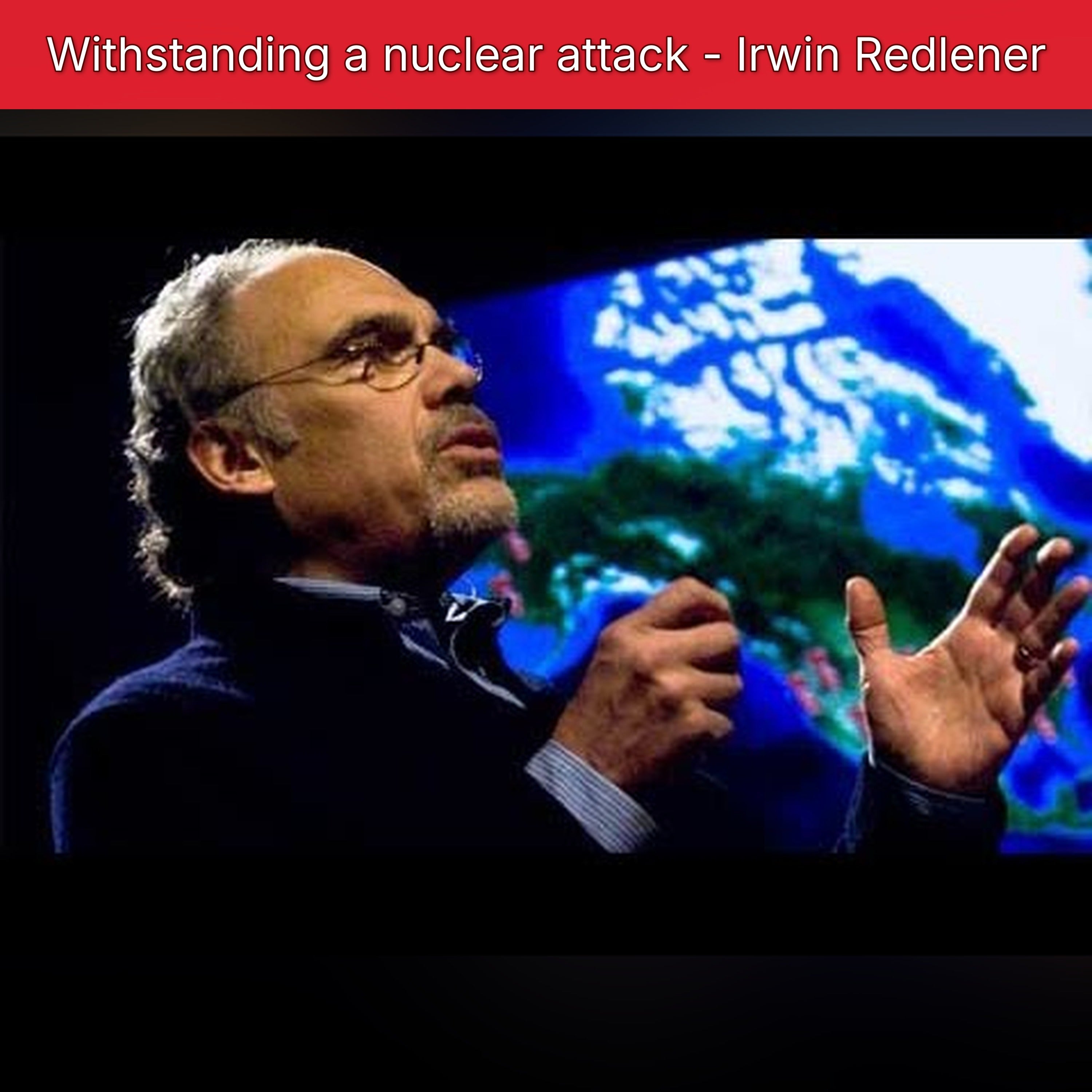
View full lesson: http://ed.ted.com/lessons/surviving-a-nuclear-attack-irwin-redlener The face of nuclear terror has changed since the Cold War, but disaster-medicine expert Irwin Redlener reminds us the threat is still real. He looks at some of history's farcical countermeasures and offers practical advice on how to survive an attack. Talk by Irwin Redlener.
Explore what makes polio so dangerous, what is causing the 21st century resurgence of cases, and how we can eradicate the disease. -- In 1952, polio was everywhere: killing or paralyzing roughly half a million people annually. Yet just 10 years later, paralytic polio cases in the US dropped by 96% and we were on track to get rid of polio for good. But in recent years, the virus started striking back. So, what’s behind these recent spikes? Explore the dangers of poliovirus and the possibility of eradicating this deadly disease. Directed by Anton Bogaty. This video made possible in collaboration with Gates Ventures Learn more about how TED-Ed partnerships work: https://bit.ly/TEDEdPartner A special thanks to Ananda Bandyopadhyay, Amber Zeddies, and Kathleen O'Reilly who provided information and insights for the development of this video. Support Our Non-Profit Mission ---------------------------------------------- Support us on Patreon: http://bit.ly/TEDEdPatreon Check out our merch: htt
Todd Humphreys forecasts the near-future of geolocation when millimeter-accurate GPS "dots" will enable you to find pin-point locations, index-search your physical possessions ... or to track people without their knowledge. And the response to the sinister side of this technology may have unintended consequences of its own. (Filmed at TEDxAustin.) Uploaded 26-06-13 Talk by Todd Humphreys.
People's reported experiences should matter as much as official service-performance targets.
Share your view, then see how readers voted. No sign-in required. This poll is shared across stories.
Do you agree or disagree?
Common Quandary
A Common Quandary to discuss
Another conversation to explore, separate from this news story.
The restaurant forgot your expensive entrée. Do you point it out?
After a crowded dinner, you notice the restaurant omitted your most expensive entrée from the bill. Service was slow, the server seemed overwhelmed, and correcting it may create trouble for the person who made the mistake.
Does protecting someone from consequences ever justify benefiting from their error?