Listen through the publisher, then discuss the episode here or arrange an in-person Roundtable. Your city determines where to meet.
Roundtables are designed for groups of four, with a shared subject and room for everyone to speak. Come for discussion, with no dating expectation.
Historian Walter Stahr has written books on John Jay, William Henry Seward, Edwin Stanton, and Salmon Chase. Now comes his biography of America's 27th president, William Howard Taft, who subsequently also served as the 10th Chief Justice of the United States. Walter Stahr writes at the beginning of his book: "Taft was a modern conservative president, one who avoided foreign wars, worked closely with our allies, lowered tariff rates, and reduced the federal deficit." Stahr also writes that "Taft didn't agree with his predecessor, Theodore Roosevelt, that the president had some vague power to pursue the public good."
Episode information is provided by the publisher. Listening takes place on the publisher’s service.
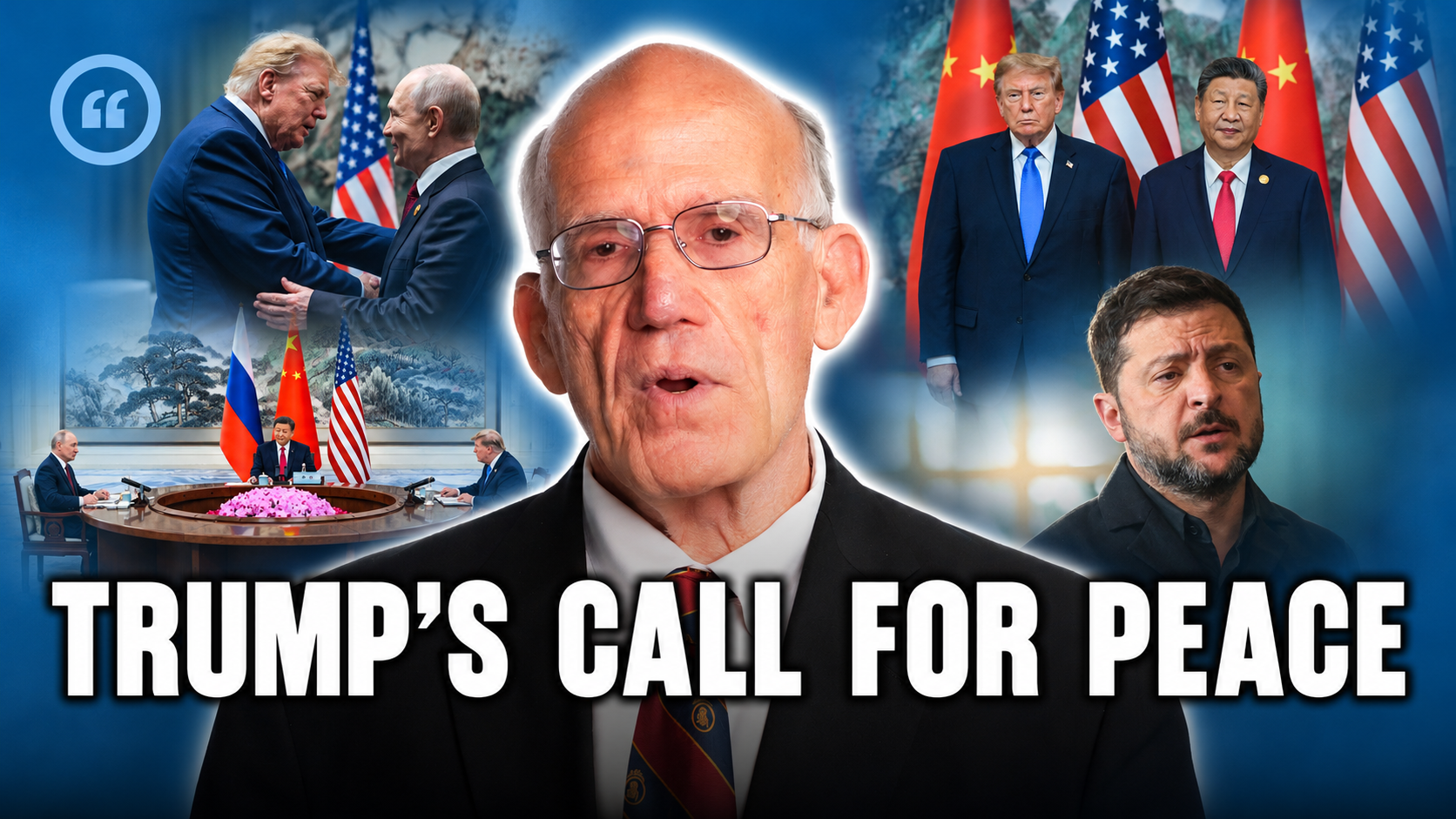
President Donald Trump's first ever trilateral summit with Vladimir Putin and Xi Jinping raises questions about the future of the war in Ukraine and whether a peace agreement could finally be within reach. Victor Davis Hanson and Sami Winc examine the summit on today’s edition of “Victor Davis Hanson: In His Own Words,” discussing Russia's declining influence, potential territorial concessions in Ukraine, and Europe's frustration over Trump's peace negotiations. Hanson criticizes Hillary Clinton's attacks on Trump's diplomacy; he also argues that European leaders have weakened their influence by neglecting defense spending and relying on American military protection. They discuss Elon Musk's shifting political allegiances, and Hanson warns that distancing himself from MAGA may not protect him from Democrat investigations. They also discuss the potential economic benefits of artificial intelligence and the challenges facing Hakeem Jeffries as Democrats prepare to take control of the Hou
On Open Line Friday, Erick Erickson brings the receipts on America's lost measles elimination status, walking through the University of Minnesota data on Somali and Ethiopian vaccination rates, the Gaines County, Texas Mennonite outbreak, and why blaming RFK Jr., Donald Trump, or MAGA for measles is partisan hackery. Then Senator Tom Cotton goes after Commerce Secretary Howard Lutnick over Nvidia chips flowing to China, Russia fires missiles at British troops in Poland, Zohran Mamdani pitches a climate friendly Rikers Island, and callers ask why gas prices are falling. Measles outbreak data the fact checkers buried: MSNBC blames the Trump administration, but University of Minnesota research shows only 31% of Somali Minnesotan children vaccinated by age 2, plus the Gaines County Mennonite outbreak that traveled from Canada to Texas to Mexico Tom Cotton vs. Howard Lutnick: Megaspeed, 800,000 Nvidia and AMD chips approved for China, Scott Bessent, Marco Rubio, and Jamieson Greer doing an
Former USAID Administrator Andrew S. Natsios discusses the Trump administration’s dismantling of USAID and why he argues the consequences could threaten Americans’ health, safety and prosperity. Natsios, author of “Guns Are Not Enough: Foreign Aid in the National Interest,” explains why foreign aid remains a critical tool of US soft power. Also on today’s show: British model and actress Twiggy reflects on her journey from working-class London to becoming a defining face of the 1960s and a British cultural icon, as chronicled in a new documentary by Sadie Frost. Olivia Harrison joins Walter Isaacson to discuss “The Third Eye: Early Photographs by George,” a collection of more than 200 photographs and film stills from her husband George Harrison’s personal archives, and what they reveal about the late Beatle’s personality and artistic curiosity.
2014 GANYMEDE CONTENTS JOHN BATCHELOR SHOW 11-20-2026 California Storms Train Robberies City Politics — Part One Jeff Bliss reports that severe Pacific storms are dumping heavy snow across Lake Tahoe while driving massive coastal surges against the sand berms protecting beaches. Meanwhile, Los Angeles Mayor-elect Nithya Raman faces mounting criticism over thousands of missed votes, and police have apprehended a gang that stole twenty million dollars in goods from moving freight trains. (1) Beatles Vegas Historic Atomic Tests Formula — Part Two Jeff Bliss recalls how, in August 1964, the Beatles transformed Las Vegas entertainment by moving from the small Congo Room to the Convention Center for sixteen thousand fans. Archival footage from 1957 shows unwitting spectators on Fremont Street watching atmospheric nuclear tests, while today's Las Vegas hosts thrilling Formula Oneraces. (2) Iranian Conflict Regime Change War Powers — Part One Richard Epstein analyzes the military clashes betwe
Prince Harry criticizes the Trump administration’s approach to Ukraine and says he would return to military service if asked. Palace Intrigue covers his interview with The Telegraph during a visit to Lviv, his support for Ukraine, and his comments about veterans being prepared to serve again. Former royal protection chief Dai Davies argues that Harry’s public remarks could complicate his security and create difficulties for King Charles. A source close to the Duke of Sussex pushes back, questioning Davies’s decision to discuss Harry’s protection publicly. Royal writer Tom Sykes also criticizes the timing of Harry’s publicity during Prince William and Kate Middleton’s Earthshot visit to India. Plus, Harry discusses life in Britain with Meghan Markle, Prince Archie, and Princess Lilibet during an appearance on ITV’s This Morning. He shares updates on the children’s adjustment to school, Christmas plans, country walks, and pub life. The family’s Winter Wonderland visit also draws coverage
Billions in taxpayer dollars allegedly lost to fraud, Chinese-backed efforts to undermine American energy production, and a growing wave of AI-powered cyber threats. Is America doing enough to protect itself? John Solomon and Amanda Head are joined by Minnesota Congressman Pete Stauber, who discusses the expanding welfare fraud scandal, efforts to hold those responsible accountable, and allegations that Chinese-funded organizations are working to obstruct American mining and energy projects. Stauber also addresses permitting reform and the battle over America's critical mineral independence. Then, American Energy Institute CEO and former Texas state representative Jason Isaac warns that proposed electricity price controls could discourage investment, threaten grid reliability, and ultimately drive energy costs even higher. He also examines China's influence over global oil markets, America's growing energy production, and how AI data centers could generate their own electricity rather
Barbara J. Keys is a historian of U.S. foreign policy, diplomacy, and human rights. She is a professor at Durham University in Great Britain and received her PhD from Harvard. Her book is titled "Super K: The Making, Breaking, and Remaking of Henry Kissinger's Legacy." Dr. Kissinger died on November 29, 2023, at 100 years of age. In the promotion of the book, Prof. Keys' publisher, Simon & Schuster says: "'Super K' is not just a portrait of one man’s quest to shape history; it is a sweeping account of the media and elite institutions that enabled him, revealing vulnerabilities that still shape public and political life today."
This week's program is an encore presentation featuring a C-SPAN interview with Eric Sevareid that was recorded in his Georgetown home 37 years ago in 1989. Sevareid was a war correspondent with CBS Radio starting in 1939. He spent a total of 38 years with the network. When CBS News with Walter Cronkite went to 30 minutes in 1963, Eric Sevaride would end each newscast with a two-minute analysis and commentary. Some refer to him as "The Grey Eminence." The Cronkite evening news audience in those days was close to 30 million viewers a night. Today the program is watched by around 4 million people. The American population has increased by 100 million people since 1989.
Preventive services deserve protected funding even when immediate needs are pressing.
Share your view, then see how readers voted. No sign-in required. This poll is shared across stories.
Do you agree or disagree?
Common Quandary
A Common Quandary to discuss
Another conversation to explore, separate from this news story.
The mayor is excellent at the job—and secretly cheating on a spouse. Is that news?
A local official is effective, honest in office, and privately having an affair. A journalist can verify it but finds no misuse of public resources or direct connection to official duties.
Does private dishonesty reveal something citizens are entitled to judge?