Get the 200+ Page Optimal Living Daily Workbook (PDF) - Free. Want to turn today's episode into an actionable plan? Episode 3615: Becca Shern explains why the common nutrition advice of everything in moderation may not be serving people well. She looks at how heavy marketing and social norms around sugar and alcohol make it easy to overconsume while still feeling moderate, and what the actual recommended limits are. The takeaway is that taking a critical look at what moderation really means, and setting a higher standard, can build healthier habits for ourselves and the people around us. Read along with the original article(s) here: http://minimalwellness.com/reconsideringmoderation/ Quotes to ponder: "Moderation is a squishy term." "Our consumption patterns are dramatically influenced by marketing, but they're also molded by social norms." "Setting a higher standard for ourselves helps others do the same."
Today, I’m honored to connect with Dr. Troy Badger. He is a board-certified cardiologist and interventionalist and the founder of Cardiostrong, a concierge preventive cardiology clinic in Provo, Utah, focused on reducing cardiovascular risk, optimizing metabolic health, and improving strength and cardiorespiratory fitness for executives and athletes. In today’s conversation, we discuss Dr. Badger’s gender- and age-specific approach to heart health, including treatment differences for men and women, and diagnoses such as INOCA, SCAD, vasospastic disease, and Takotsubo. We examine emotions and their influence on heart health, coronary ischemia and cardiomyopathies, labs and diagnostics, how Dr. Badger assesses risk in his patients, and the differences between a CAC and a CCTA. Dr. Badger also shares the labs he finds essential for all patients and discusses the role of VO2 Max, cardiovascular training, and lifestyle—specifically nutrition, the use of GLP-1 drugs, and a multidisciplinary
If you're training hard but feeling wiped, eating a restricted diet for your gut, or just never hungry after a tough workout, you might not be getting the protein you need. This episode breaks down how much you really need and how to get it without upsetting your gut. YOU'LL TAKEAWAY: Macronutrients and calories 101, and how restrictive diets throw off your balance How your body digests protein, and why it matters before workouts The many roles of protein, from enzymes and iron storage to post-workout appetite How much protein you need, plus 3 easy low FODMAP ways to boost it — RESOURCES & LINKS MENTIONED: ⤵️ Want high touch coaching support for IBS & fuelling performance? Apply for coaching. (http://gutfitnutrition.com/apply) Free Training: How to Control IBS So You Can Fuel Your Training Without a Lifelong Low FODMAP Diet (https://gutfitnutrition.com/heal-ibs-training-live) Supporting your immune system when you're sick (Ep. 70) (https://open.spotify.com/episode/5bCto0jWLcbC5hQW4hrH6
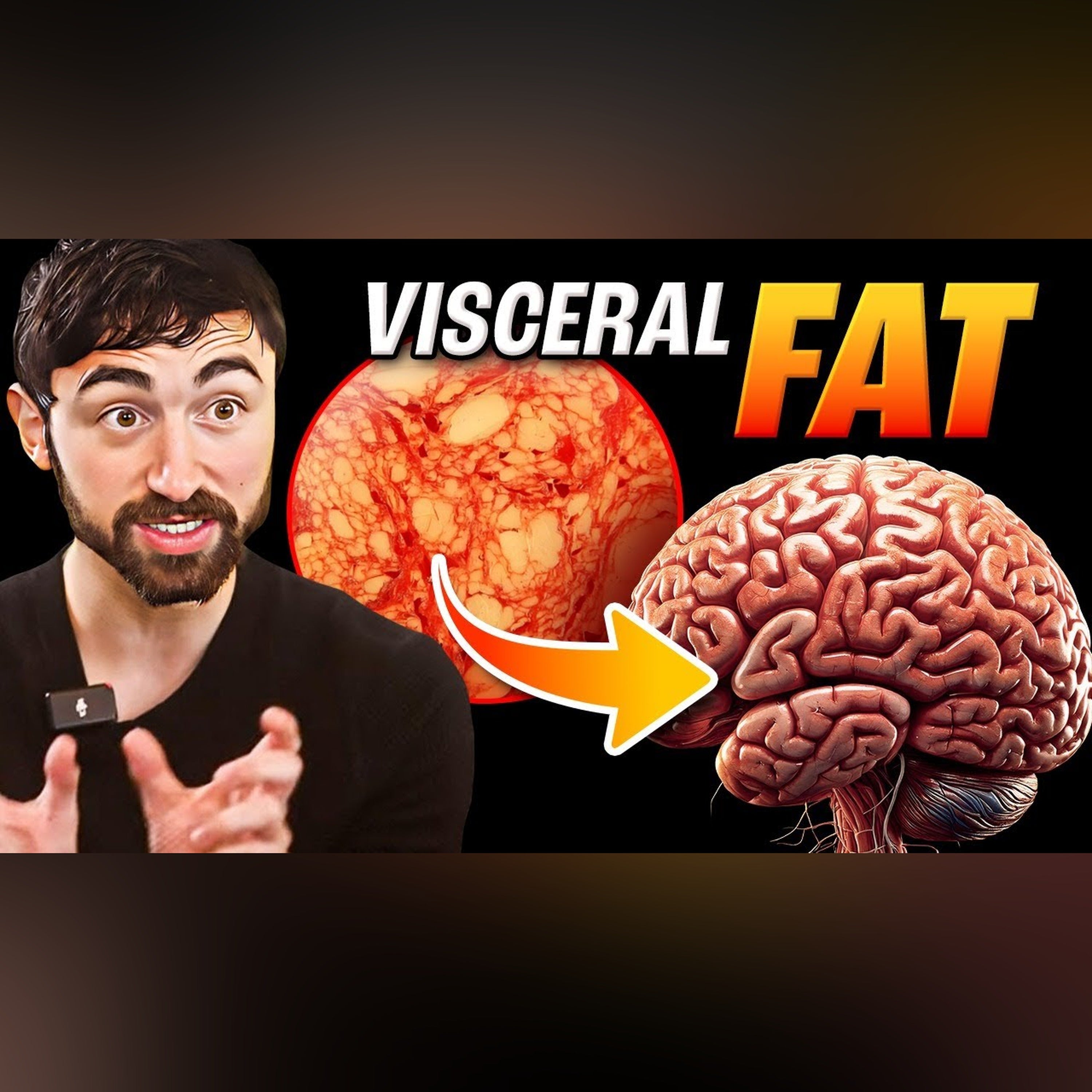
For all references and even deeper nuances, check out the StayCurious Metabolism letter: https://staycuriousmetabolism.substack.com/p/can-visceral-fat-cause-depression?r=40ekz2 Chapter *Call our service line at 815-STAY-CUR (815-782-9287) *Learn more about the data, here: https://staycuriousmetabolism.substack.com/p/life-or-death-in-the-fine-print-the?r=40ekz2 Visceral Fat Randomized Controlled Trial Video: https://youtu.be/lDeegZ1wtAI Description: Most people think of fat as extra weight—something cosmetic or something to “burn off.” But new science is showing something far more profound: visceral fat is an endocrine organ that sends biochemical messages across the entire body, including directly into the brain. And those messages can change mood, increase stress sensitivity, and even promote depression. In this video, we break down a brand-new study revealing how visceral fat releases tiny molecular packages called extracellular vesicles. Inside those vesicles is a specific microRNA—
Rob reveals his secrets to keeping things hot in the bedroom throughout his marriage and well after menopause and he called in to talk all about it. Tune in to hear all the details including how things changed in their bedroom once his wife finally spoke up about her not having orgasms, what he learned about pleasing her and how he went on a mission to figure her out, the books he read that completely changed the game, how their sex life changed when she went through menopause, all the things he tried to make sex more pleasurable again for her, how he came up with a unique way to apply lubricant that helped prevent pain and tearing, how his wife had a prolapsed cervix and the surgery she had to correct it, how and why she became way to tight afterwards, what he introduced in the bedroom that completely loosened her up and allowed her to start having sex again, why she refused to go on HRT and the over-the-counter products he found for her that helped with vaginal dryness and tearing, h
Is your body weight stable, but you're still not eating enough to properly fuel your training, recovery, and overall health? Introducing Why Stable Weight Doesn't Always Mean You're Eating Enough from Jeff Hoehn of the Mind Muscle Connection Podcast (https://www.buzzsprout.com/1508401). Just because your weight isn't changing doesn't necessarily mean you're adequately fueled. In this episode, Jeff breaks down why maintaining a stable body weight doesn't always mean you're meeting your body's energy needs, especially if you're training hard, staying lean, or spending long periods dieting. You'll learn: Why stable body weight doesn't automatically mean adequate energy availability Who is most at risk of underfueling, even when their weight isn't changing How high training output, staying too lean, and chronic dieting can contribute to low energy availability The potential signs of underfueling, including changes in performance, recovery, hormones, and menstrual health Why spending too lo
Struggling with menopause belly fat after 45? If you're dealing with perimenopause weight gain, bloating and cravings that won't shift, this episode shows how gut health affects menopause weight loss for women over 45. Eating healthy and eating for fat loss after 45 are not the same thing — especially in perimenopause or menopause. In this episode I break down how to reset your gut to lose menopause belly fat, how your gut microbiome controls appetite, cravings, inflammation and insulin resistance, and the exact foundation I use with women over 45 for lasting menopause weight loss. In this episode you'll learn: ️ Why counting calories and cutting carbs stops working for perimenopause weight gain ️ How hormonal shifts disrupt your gut and drive menopause belly fat ️ The 3 everyday habits quietly wrecking gut health after 45 ️ The simple nutrition foundation to support digestion, reduce bloating and cravings, and make fat loss feel easier This is for you if you're a woman over 45 navigat
Changing a public decision in response to new evidence is a sign of responsible leadership.
Share your view, then see how readers voted. No sign-in required. This poll is shared across stories.
Do you agree or disagree?
Common Quandary
A Common Quandary to discuss
Another conversation to explore, separate from this news story.
Software says a student cheated with AI. Is that enough to fail the paper?
A teacher suspects several essays were written with AI. Detection software marks one student's work as highly likely to be generated, but the software is known to make mistakes and the student denies using it.
How should responsibility be assigned when evidence is powerful but unreliable?