What could be next for the flipped State Board of Education?
26 min
Listen through the publisher, then discuss the episode here or arrange an in-person Roundtable. Your city determines where to meet.
Roundtables are designed for groups of four, with a shared subject and room for everyone to speak. Come for discussion, with no dating expectation.
In the Texas Democratic sweep on Election Day, the Texas State Board of Education flipped. For years the SBOE has been ground zero in the culture war by issuing directives to public schools to teach a curriculum that pushed a pro-Christian right point of view, denying climate change and twisting history. We are joined by the South Texas SBOE representative Marisa Perez Diaz to hear about her plans in the new blue SBOE.
Episode information is provided by the publisher. Listening takes place on the publisher’s service.
For review: 1. Iraq has reached a compromise with the powerful Iran-backed militia Kataeb Hezbollah, three senior security officials said, after Prime Minister Ali al-Zaidi readied security forces to move against the group. Reflecting the gravity of the situation, Iraqi Shiite political sources said Esmail Qaani, commander of Iran’s elite Revolutionary Guards’ Quds Force, arrived in Baghdad late on Monday to help defuse tensions with Kataeb Hezbollah, Tehran’s most powerful militia ally in Iraq. 2. Lebanese President Joseph Aoun launched a lengthy rebuke of Iran in an Independence Day address, arguing that the Islamic Republic does not have the right to interfere in Lebanon’s internal affairs, as it long has via support for its local terror proxy, Hezbollah. 3. Yemen’s Houthis launched strikes on the Saudi capital Riyadh on Saturday, after vowing reprisals for a “special operation” by the Saudi-led coalition fighting them. The coalition later said it had “intercepted and destroyed” thr
This week on the podcast Alan Milburn has published his final recommendations on youth unemployment – a NEET target, a youth guarantee and a call to rethink the role of higher education. More money is already heading to further education colleges – so does a rethink mean less for universities, and can they really be part of the solution? Plus we discuss a new Post-18 Project paper calling for a statutory civic duty for universities, and our guests pick their stories of the week. With Johnny Rich, Director at ResearchPlus, Sharanya Sivarajah, Community and Policy Officer at Wonkhe, James Coe, Associate Editor at Wonkhe and Research Agenda and presented by Michael Salmon, News Editor at Wonkhe. GOV.UK (http://gov.uk/): From a Welfare State to a Working State (https://www.gov.uk/government/publications/from-a-welfare-state-to-a-working-state-a-new-settlement-for-the-next-generation) Phase 2 of Milburn’s NEET report (https://wonkhe.com/blogs/phase-2-of-milburns-neet-report/) Earning “or” l
This week on Texas Matters: How flipping Texas blue creates an opportunity for labor and workers’ rights. And Texas claimed islands in the Rio Grande as state territory. Will that change with a new land commissioner?
In this week’s Q&A: Robert Pattinson has been named the next James Bond – but is he the right man for the job? Michael and Maddie discuss what kind of 007 he might make, why the franchise may have dodged a bullet by casting after the peak of the culture wars, and why recent Bond villains have fallen flat. Michael also pitches a plot of his own. Also this week: if you could bring back one thing Britain has lost over the past 50 years, what would it be? Michael chooses the Church of Scotland, whose churches in his hometown of Aberdeen are being sold off or turned into yoga studios. Maddie makes the case for the stiff upper lip – has Britain lost the thicker social ties that once held it together? Plus: is the BBC still worth the licence fee? Michael and Maddie on what they would change, and the one thing they would miss most. Produced by Henry Lloyd Contact us: [email protected] Hosted on Acast.
John and Victor revisit some of the Military Retirement Podcast’s most useful conversations from 2025: how to find purpose after military service, recover from the pace and mission focus of military life, reconnect with family, and build a meaningful next chapter. This wide-ranging retrospective also covers practical AI use, civilian job searching and networking, reading recommendations, Space-A travel, a Camino de Santiago pilgrimage, veteran organizations, USO access, VA-related education and care discussions, and pending veterans legislation. It is designed for service members preparing to separate or retire, military retirees, veterans, spouses, and anyone navigating the transition to civilian life. The discussion returns often to a simple idea: retirement is not only a financial or administrative milestone. It can be a period for rest, reflection, relationships, learning, travel, service, and intentional planning. Episode Timestamps 00:01:20 Podcast origins and 2025 review 00:03:2
Europe's Little Anarchy: The Rise and Fall of Neutral Moresnet (https://bookshop.org/a/12343/9781501788147)(Cornell UP, 2026) uncovers the history of Neutral Moresnet: a once-forgotten space without borders, nationalism, or a recognized government. Between 1815 and 1919, this square mile of land wedged between Belgium, the Netherlands, and Germany was home to thousands of people living off the grid, free of taxation and oversight. But they also had no political status, police, legal currency, proper law courts, or government presence in sectors like public health, infrastructure maintenance, or education. Meanwhile, practical control over Neutral Moresnet lay in the hands of the local industry: a for-profit, multinational mining company that, because it owned rights to the land, also held a near monopoly on the supply of high-quality zinc to the rest of the world. Dr. Steven Press explores how the residents of Neutral Moresnet sought to improve their quality of life, appealing to Germa
We think of the surrender of Robert E. Lee as the end of the Civil War, but the end really wasn’t clear at the time. The Galveston News reported Lee’s surrender as a positive development for the Confederacy and encouraged Texans to fight on. How did Lincoln’s peace take hold? How did a divided nation come together? Michael Vorenberg’s new book is Lincoln’s Peace: The Struggle to End the American Civil War.
As many Texans struggle to pay their power utility bills, a new analysis projects that federal energy policy changes will cost Texas households an additional $96 billion through 2040. What can be done to keep electricity bills affordable for Texans?
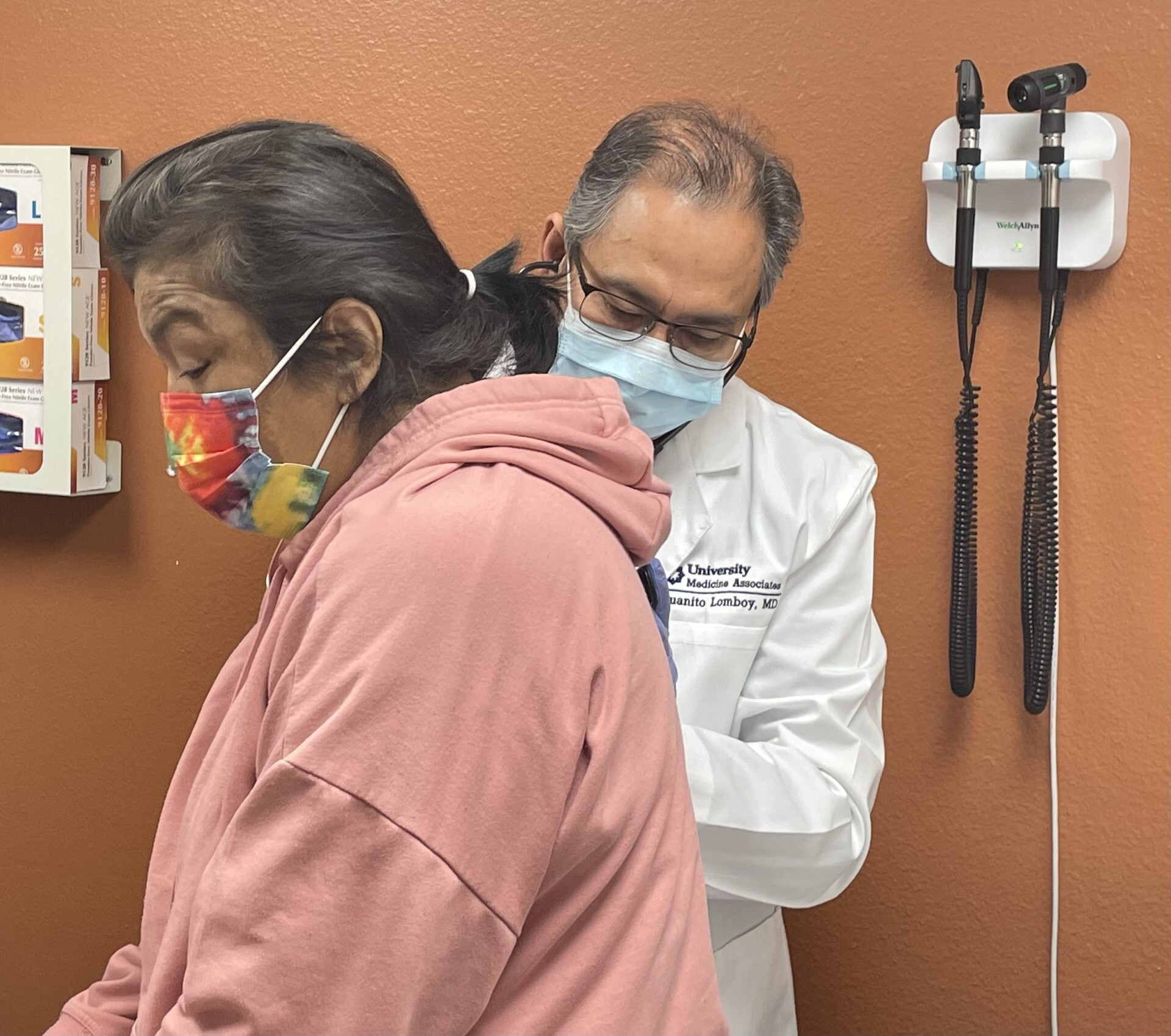
Governor-elect Gina Hinojosa says expanding Medicaid is a priority. And many other elected Democratic lawmakers are on board. In the state with the highest number of uninsured people, what does this mean? When Medicaid expands coverage in Texas who benefits? And how this is not the solution for the state's health care crisis.
A workable temporary compromise is often better than delaying all action.
Share your view, then see how readers voted. No sign-in required. This poll is shared across stories.
Do you agree or disagree?
Common Quandary
A Common Quandary to discuss
Another conversation to explore, separate from this news story.
One friend is rich, one is broke, and everyone ordered differently. How do you split dinner?
A group of longtime friends traditionally divides restaurant bills equally. Their incomes have grown increasingly unequal, and one friend now declines gatherings because even their share is difficult to afford while others order without thinking about price.
When should friendship adjust for differences in wealth?