Listen through the publisher, then discuss the episode here or arrange an in-person Roundtable. Your city determines where to meet.
Roundtables are designed for groups of four, with a shared subject and room for everyone to speak. Come for discussion, with no dating expectation.
Have you ever tried to solve a riddle that is actually impossible? What if the whole point of a puzzle is to completely break your brain? Welcome to the wild world of the Zen koan! In the 1700s, a famous Japanese Zen teacher named Hakuin asked his students a brain-twisting question: 'Two hands clap and there is a sound. What is the sound of one hand?' Students would spend months—even years!—trying to figure it out. They would guess snapping, waving, or even total silence, but every single answer was wrong! Why? Because this special puzzle wasn't meant to test their logic. It was designed to exhaust their busy, thinking minds until they simply gave up! Once their brains stopped trying to solve the problem, they could finally relax and experience the beautiful present moment without worrying. Join Mira and Finn on Philosophy is Not Boring as they explore this amazing ancient brain hack, learn how to turn off the noisy static in our heads, and challenge you with a fun trivia quiz! Get ready to listen... with one hand!
Episode information is provided by the publisher. Listening takes place on the publisher’s service.
To check the transcript: https://www.buzzsprout.com/2379282 Somewhere along the way Have you ever had a friend who used to be such a big part of your life that you couldn't imagine a day without talking to them? You shared ordinary moments, private jokes, and conversations that lasted until midnight. You were the first people each other turned to, whether something wonderful happened or the world felt a little too heavy. But years passed, and life took you in different directions. Then one day, you meet again. You're happy to see each other, and there's still affection between you, but something feels different. You remember each other beautifully, yet you realize you no longer know the people you've become. “We still know so much about who we used to be, but somewhere along the way, we stopped getting to know who we were becoming.” Hello everyone, and welcome to Daily English. Today's expression is “somewhere along the way.” We use this expression when something happens or changes dur
Did you know your mouth is a nonstop biological water park?! Every single day, your body makes enough saliva to fill up to four whole water bottles! But spit isn't just warm water—it's a magical biological potion packed with incredible superpowers. Join Mira and Finn as they explore the wild world of saliva! Discover how a microscopic machine called amylase starts digesting your favorite foods the exact millisecond you take a bite. Find out how spit turns sharp, crunchy chips into soft, squishy balls to protect your throat! Plus, did you know saliva actually builds invisible armor for your teeth by filling in holes with special minerals like calcium and phosphate? It even works as a magical liquid key to unlock flavors—without saliva, chocolate and pizza would taste like absolute cardboard! From amazing spit factories hiding inside your cheeks to real-life birds that build entire nests out of spit, get ready for a mind-blowing biological adventure! Tune in to find out why your mouth is
Have you ever told someone, "Thanks a million!" or claimed you have "a million toys to clean up"? We use the word "million" all the time to mean "a whole lot," but have you ever stopped to wonder just how big a real million actually is? Join Mira and Finn on a mind-blowing math adventure as they discover the quiet power of giant numbers! Imagine counting one number every single second without ever stopping to eat or sleep. It wouldn't take a few hours or a long weekend—it would take you about eleven and a half days just to reach one million! And what about its giant neighbor, the billion? Counting to a billion the exact same way would take a whopping thirty-two years. That's a grown-up's whole life so far! In this amazing episode, we won't just look at numbers on a page; we’ll learn to feel their true size. Find out how much space a million grains of rice would take up, and discover exactly how far a million footsteps would carry you. Get ready to stretch your brain and learn why being
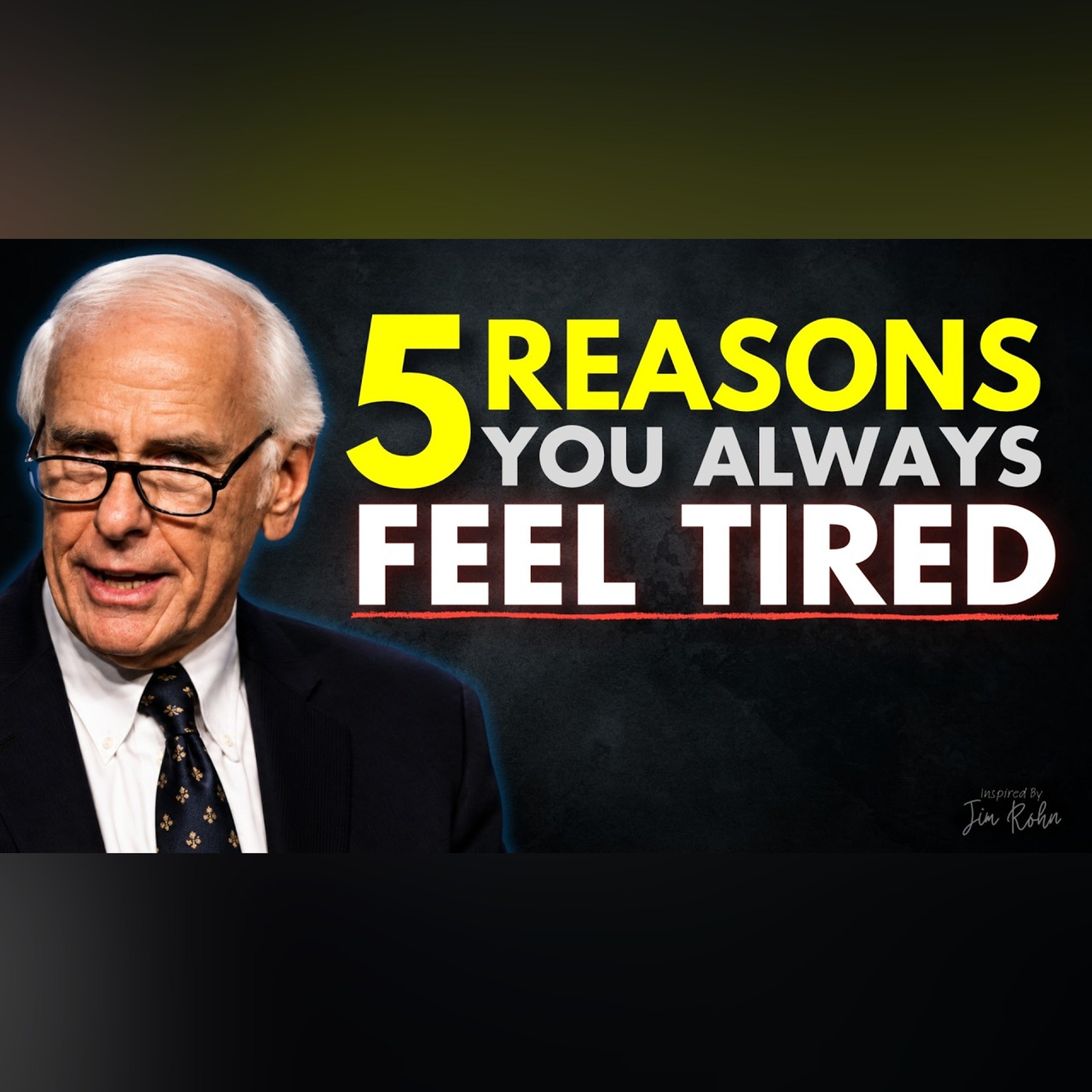
You've been tired for years. You know it. The people around you know it. And every solution you've tried — going to bed earlier, sleeping in on weekends, taking naps, drinking more coffee, drinking less coffee, trying new mattresses, trying new vitamins — none of it has actually fixed the problem. Uploaded 16-06-26 You're still tired. Not falling-asleep tired. Just heavy. Just dragged. Just running on a battery that never seems to charge all the way back, no matter how many hours you put your head down. Here's the truth: most of the tiredness you carry is not about sleep. And that is why none of the sleep-based solutions have worked. You've been treating the wrong condition for years. You've been adding hours of rest to a body that fundamentally doesn't need more rest. It needs something else entirely. The chronic, low-grade, never-quite-go-away exhaustion most adults carry is not physical fatigue. It is a different kind of tiredness with completely different causes. And until you unde
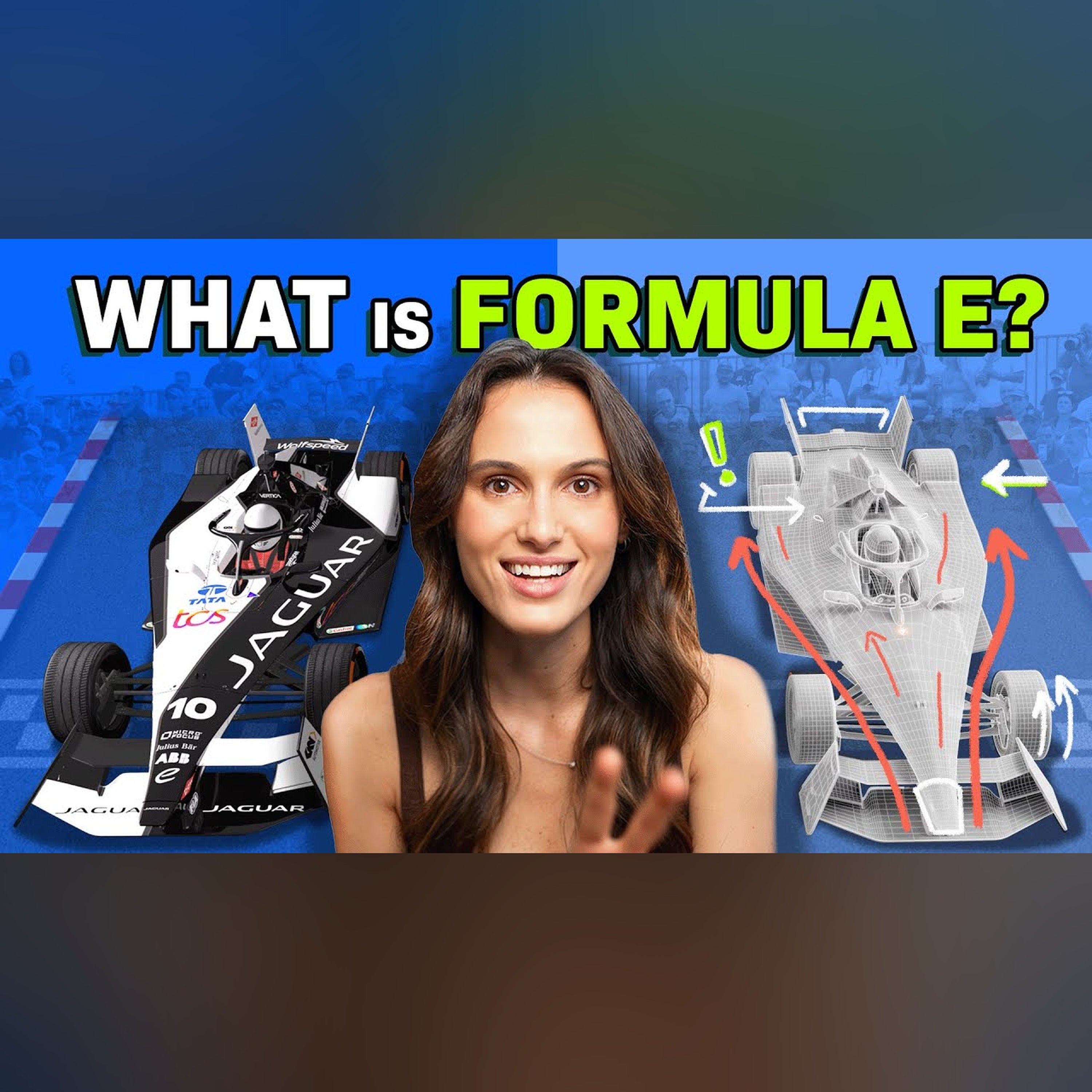
The fight for the future of car racing has begun... If you want more optimistic stories about technology, subscribe to support our show! You already know about Formula 1. The car racing sport is famous around the world and is skyrocketing in popularity in the US in part because of the Netflix series Drive To Survive. But Formula 1 has a problem. More and more the cars that we drive are going fully electric, and the cars that they drive… aren’t. That matters, because the real reason F1 gets all this money and attention is that big companies are investing in and advertising their cutting edge tech. If that tech gets outdated, it loses the point - and the extra investment. What is the future of car racing? If it’s electric, does F1 change? Or is someone else going to get there first? Enter Formula E, the all-electric Formula 1. In this video, we explore the future of car racing, explain Formula E’s amazing tech and wild rules, and break down the drama within one of the world’s most popula
Have you ever seen pictures of giant stone heads sitting in the grass and wondered how they got there? Get ready for a mind-blowing adventure to one of the most remote places on Earth: Rapa Nui, also known as Easter Island! About 800 years ago, expert Polynesian sailors found this tiny island in the middle of the Pacific Ocean using only the stars and ocean currents to guide them. Once there, they carved nearly a thousand massive stone statues called moai! But here is the biggest surprise: these statues aren't just heads—they have full bodies buried underground! Some weigh as much as 40 cars, and the islanders moved them without wheels, cranes, or metal tools. How did they do it? The local legends say the statues literally walked to their places, waddling side to side with the help of ropes and incredibly smart human engineering! Join Mira and Finn as they uncover the secrets of the moai, find out how the island got its English name from a Dutch captain, and learn all about the giganti
Have you ever noticed how quiet grown-ups are on a crowded bus or train? It's like everyone has an invisible forcefield around them! People just stare at their shoes, read a book, or scroll on their phones in total silence. But why do we ignore each other? In 2014, scientists Nicholas Epley and Juliana Schroeder at the University of Chicago decided to find out! They set up an amazing experiment on a morning commuter train. They asked one group of tired people to sit in quiet solitude, and another group to actually strike up a conversation with a total stranger! The results were shocking. Even though people predicted that talking to a stranger would be super awkward and annoying, the group who said "hello" ended up having a much happier trip! It turns out, humans are naturally built to connect. Ancient Greek philosophers like Aristotle called us "social animals," and the Stoics believed we are all part of one big human family. Join Mira and Finn as they explore why a simple, safe "hello
Have you ever been told to do something just "because I said so"? It can feel super unfair! But did you know that just by being a kid, you have actual, real-life rights? In this thought-provoking episode of Philosophy is Not Boring, Mira and Finn dive into the incredible true story of Janusz Korczak! He was a brilliant doctor in Poland who strongly believed children are "people of today," not just adults-in-training. Imagine living in a place where kids actually get to make the rules! Dr. Korczak ran a famous orphanage where children had their very own court of law, and they could even put grown-ups (including Dr. Korczak himself!) on trial for being unfair! He completely changed how the world treats kids. His groundbreaking ideas even inspired the United Nations to create the Convention on the Rights of the Child—a giant global rulebook that says every kid has the right to be safe, to be heard, and even the right to play! Tune in to discover mind-bending facts about this hero of child
Did you know that over half the people on planet Earth share the exact same great-great-great-great grandfather in their faith? It is true! Join Mira and Finn as they explore the amazing ancient story of Abraham! Thousands of years ago in the ancient city of Ur, Abraham made a massive, brave decision. He packed up his entire family and walked right into the unknown desert! Why? Because he believed in one God who promised him his family would become as huge and uncountable as the stars in the night sky! Today, nearly four billion people trace their family tree of beliefs back to him! Discover why Jewish people call him their very first ancestor, why Christians see him as the ultimate hero of faith, and why Muslims honor him as the mighty prophet Ibrahim who helped build the Kaaba in Mecca! Three huge world religions, billions of people, and one incredible family story! Tune in to find out how people all over the world are so much more connected than we ever imagined. Get ready for a min
Travel providers should disclose meaningful environmental impacts alongside prices.
Share your view, then see how readers voted. No sign-in required. This poll is shared across stories.
Do you agree or disagree?
Common Quandary
A Common Quandary to discuss
Another conversation to explore, separate from this news story.
Would you want a doctor to give you a fake pill if the lie might make you feel better?
A patient has persistent symptoms that have not responded to standard treatments. A harmless placebo may help, but its effect could weaken if the clinician fully explains that it contains no active medicine.
Can a beneficial deception respect the person it helps?