Listen through the publisher, then discuss the episode here or arrange an in-person Roundtable. Your city determines where to meet.
Roundtables are designed for groups of four, with a shared subject and room for everyone to speak. Come for discussion, with no dating expectation.
The subject we’re talking about today is most associated with Japan, but is also relevant in many other parts of the world. The Japanese word “Karoshi” means "death by overwork". In a broad sense, it refers to workers who die suddenly from a bodily failure like a stroke or heart attack due to extreme stress and long working hours. Let’s look into the causes and consequences of a phenomenon that affects millions of workers in Japan and beyond. Overworking in Japan actually became very common during the post WW2 economic boom, when the country rapidly rose to the status of the world's second-largest economy, after the United States. Is "Karoshi" a recent issue? what can be done to prevent Karoshi? In under 3 minutes, we answer your questions ! To listen to the latest episodes, click here: What is the medication Ozempic and why is it being used for weight loss? (https://originals.bababam.com/bababam-do-you-really-know/202306080300-what-medication-ozempic-and-why-it-being-used-weight-loss) What are subway shirts, the viral anti-harassment trend? (https://originals.bababam.com/bababam-do-you-really-know/202306070300-what-are-subway-shirts-viral-anti-harassment-trend) What is the optimism bias? (https://originals.bababam.com/do-you-really-know/202306070300-what-optimism-bias) A Bababam Originals podcast written and realised by Joseph Chance. First Broadcast: 10/6/2024
Episode information is provided by the publisher. Listening takes place on the publisher’s service.
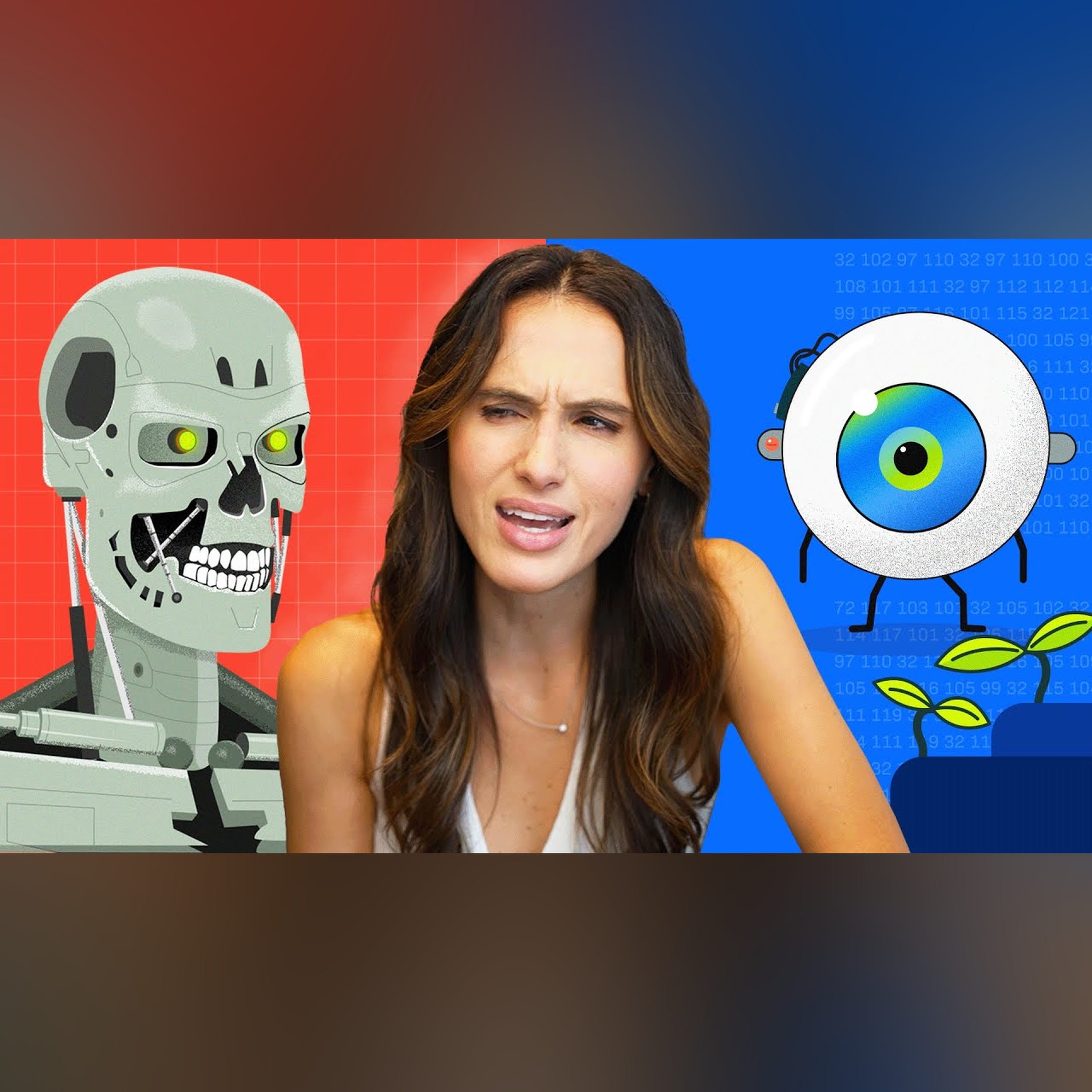
AI is here. Now what? Everyone’s talking about artificial intelligence and machine learning. There are lots of names thrown around - OpenAI’s ChatGPT and DALLE-2, Google’s Bard, Meta’s LLaMa 2, Midjourney, AlphaFold… Right now, we’re in this weird moment where lots of smart people agree we’re on the cusp of a truly world-changing technology. But some seem to be saying it's going to lead to human extinction while others are saying it’s “more profound than fire.” But it all feels so VAGUE. I want to know: How specifically would AI kill me? Or totally transform my life for the better? In this video, that’s what I’m going to try to learn. We dive into what the most extreme bad and good AI futures actually look like, so that you and I can get ready. And more importantly, so we can make sure that we get our real future RIGHT. Chapters: 00:00 Why is AI so confusing? 1:13 What is AI? 2:37 Why is everyone talking about AI now? 5:12 Why is AI dangerous? 6:22 How would AI kill me? 8:08 Should we
To check the transcript: https://www.buzzsprout.com/2379282 Imagine someone who has lived abroad for many years. One evening, they're talking to a friend about their hometown. They mention the streets they used to walk down, the familiar voices, and the little things they never thought they'd miss. Their friend asks: “Why do you get so emotional whenever you talk about your hometown? Do you want to move back?” They reply: “It's not that simple. It goes deeper than that. I miss a version of my life that doesn't exist there anymore.” Hello everyone, and welcome to Daily English. Today's expression is “It goes deeper than that.” We use this expression when something is more complicated, meaningful, or emotionally significant than it first appears. In other words, there's something beneath the surface that people might not immediately recognize. In our opening example, the person isn't necessarily longing to return to their hometown. What they miss might be their childhood, the people they
I've watched a lot of capable people over the years. People with more talent than they knew what to do with, more drive than most, a willingness to work that would put others to shame. And a strange thing kept happening. The most capable ones, the ones who could do anything, kept ending up buried under everything. Not because they lacked ability. Because they refused to let go of any of it. Uploaded 16-08-26 They told themselves this was strength. But it wasn't only strength. It was also a kind of quiet, slow-motion collapse — and the tragedy is that it looked like the opposite. It looked like competence. It looked like a person holding everything together. And that's exactly why it's so dangerous. Here is the truth: the habit of doing everything yourself is one of the most expensive habits a person can have, and almost nobody counts the cost, because the bill doesn't arrive all at once. It arrives in small quiet installments over years. This seminar walks through four things you must
Master the skills that change lives — enroll in your free human behavior course today: https://nci.university/learn Uploaded 23-01-26 Influence is a sacred weapon that most will never truly see. Please note that the content provided in this broadcast is for informational and educational purposes only and should not be construed as legal, medical, financial, or professional advice. No material in this communication establishes any form of professional relationship that is privileged or confidential. The insights and opinions expressed herein solely reflect the personal views of the speaker based on his extensive expertise and academic background in his field of study. These are purely personal opinions and should not be taken as direct statements of fact about any individuals, whether stated explicitly or implied. Any opinion shared in this broadcast is drawn from referenced material specific to this publication only. Remember, what's discussed here are perspectives—not claims of fact.
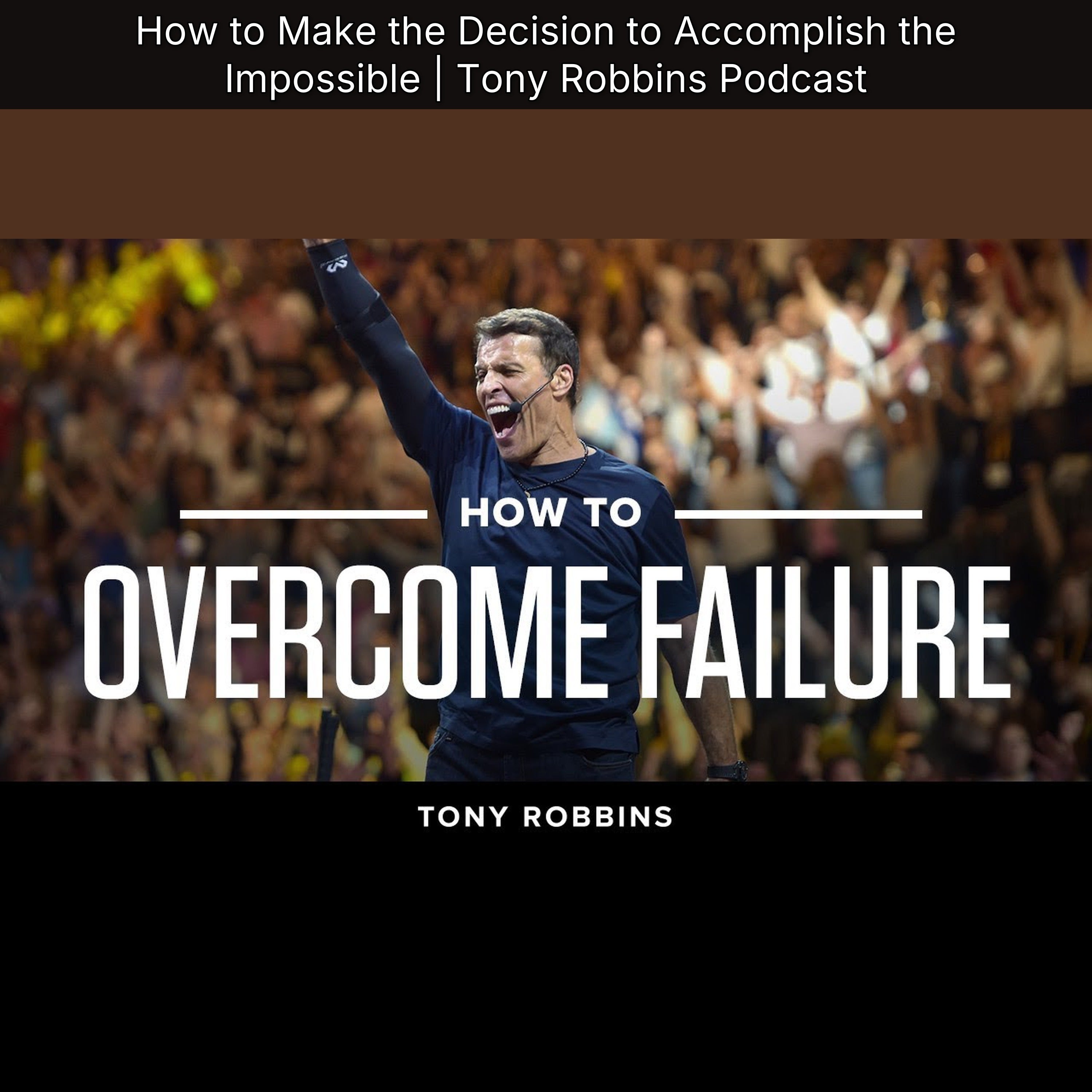
How to Make the Decision to do the Impossible - Tony Robbins Podcast The fear of failure affects millions of people around the world – whether they admit it or not! Many people have big dreams, but they fail to act because they’re so afraid of disappointment. In this episode of the Tony Robbins podcast, Tony, Mary Buckheit and Siri Lindley discuss how to overcome fear of failure to pursue your greatest passion. Siri Lindley is a top-tier athlete who graduated from Brown University. After playing three collegiate sports, she graduated and became the number one triathlete on the planet. Top athletes can be a prime example of overcoming fear of failure. Olympians decide from a young age that they are willing to compete with people from across the globe to be the best in their sport. What drives these people to pursue excellence? What’s their mindset like? Whether you’re an athlete or a business owner, you have to learn how to overcome failure. Because no matter what, you will fail. You mi
A.I. for Building Self-esteem: Seeing Yourself More Clearly and Kindly, a practical, beginner-friendly look at how artificial intelligence can help you see yourself a little more clearly and kindly. Building Self-esteem? Press play on Episode 427 of A.I. for Beginners and learn exactly how artificial intelligence, especially ChatGPT, alongside a journaling app, can help you see yourself a little more clearly and kindly. WHAT YOU WILL LEARN IN THIS EPISODE - Why building self-esteem is so hard to handle alone, and what is actually going on underneath it - A specific way to use a journaling app to work through it, step by step - An example prompt you can copy word for word: "Help me notice when I'm judging myself far harsher than I'd judge a friend" - A second practical technique, with another ready-to-use prompt: "Help me write down three qualities I actually like about myself, beyond achievements" WHO THIS EPISODE IS FOR - Anyone currently working on building self-esteem - Anyone curio
Until a little under two weeks ago, Silicon Valley Bank was the sixteenth largest bank in the United States, the favoured choice of tech startups due to the tailored services it provided. But by 10th March 2023, American authorities were taking control of SVB following its collapse. It had assets of over $200bn, making for the second biggest bank failure in US history. There were a number of factors behind the collapse, and it’s causing concern as it’s common for one bank collapse to be followed by another, due to what’s called financial contagion. Indeed, just a few days later it was the turn of New York-based Signature Bank to collapse. And over in Europe, Switzerland’s second largest bank Crédit Suisse had to take out a $54bn to stay afloat, before then being bought out by the country’s largest bank UBS, in a bid to halt the crisis. Why did Silicon Valley Bank collapse? How do stock market crashes happen? In under 3 minutes, we answer your questions! To listen to the last episodes,
In some cultures, being well at home is all about making sure that others feel well when visiting, by welcoming them in the right way. In Japan, for example, hospitality is like an art form, and even has a name: omotenashi. You can’t really translate the concept into English; the meaning of the term goes a lot deeper than “hospitality”. It also has connotations of mindfulness. In Japanese culture, knowing how to welcome others and being totally focused on your guest go hand in hand. So you could say omotenashi is the ability to anticipate a guest’s needs before they can even think of them themselves. Hence the idea of being fully available for your guest, right from the moment they arrive. The most obvious example in Japanese culture is serving tea. Where does omotenashi come from? So you’re saying it’s not limited to the home environment, are you? In under 3 minutes, we answer your questions! To listen to the last episodes, you can click here: How can I beat my smartphone addiction? (
When you’re feeling a little blue, eating to feel better can be an appealing proposition. But the reality is we often turn to junk food or sugary treats that are high in calories and packed with salt or saturated fats. Of course, our mood can be impacted by a number of factors and there’s no magic fix that will instantly make us feel better. But there are actually types of food out there that have been proven to improve brain health and thereby beat mood disorders. Which foods are proven to improve brain health? Avocados are rich in Omega 3, aren’t they? Don’t bananas also contain tryptophan? In under 3 minutes, we answer your questions! To listen to the last episodes, you can click here: Do tongue scrapers actually help with bad breath? (https://originals.bababam.com/do-you-really-know/202406140300-do-tongue-scrapers-actually-help-bad-breath) Do our brains really tell the whole story about us? (https://originals.bababam.com/do-you-really-know/202406130300-do-our-brains-really-tell-who
Keeping a league competitive is more important than maximizing rewards for its strongest teams.
Share your view, then see how readers voted. No sign-in required. This poll is shared across stories.
Do you agree or disagree?
Common Quandary
A Common Quandary to discuss
Another conversation to explore, separate from this news story.
An old friend refuses to use someone's new name. Do you correct them at the reunion?
At a reunion, an old friend repeatedly uses the name a former classmate had years ago. They say shared history gives the old name affectionate meaning; the classmate has clearly introduced themselves with a different name.
When does preserving your shared past deny who someone is now?