Listen through the publisher, then discuss the episode here or arrange an in-person Roundtable. Your city determines where to meet.
Roundtables are designed for groups of four, with a shared subject and room for everyone to speak. Come for discussion, with no dating expectation.
Have you ever wondered why countries have colorful flags waving in the breeze? Join Mira and Finn as they unravel the incredible history of flags from the ancient world to today! Picture this: thousands of years ago, Roman armies didn't have radios to communicate during loud, dusty battles. Instead, they used tall wooden poles topped with shiny metal eagles to help soldiers know exactly where to go! Over time, these heavy metal eagles turned into the bright cloth banners carried by medieval knights. Get ready for some jaw-dropping flag legends! Did you know the flag of Denmark is over 800 years old, and legend says it magically fell right out of the sky during a massive battle? We'll also uncover the secret Aztec story hidden on the Mexican flag, featuring a golden eagle eating a snake! Plus, find out how a 17-year-old student designed the 50-star United States flag for a school project—and originally got a B-minus! From Canada's famous red maple leaf to Nepal's unique double-triangle design, you'll discover that a flag isn't just a piece of cloth. It's an epic story! Tune in and become a flag-memory master!
Episode information is provided by the publisher. Listening takes place on the publisher’s service.
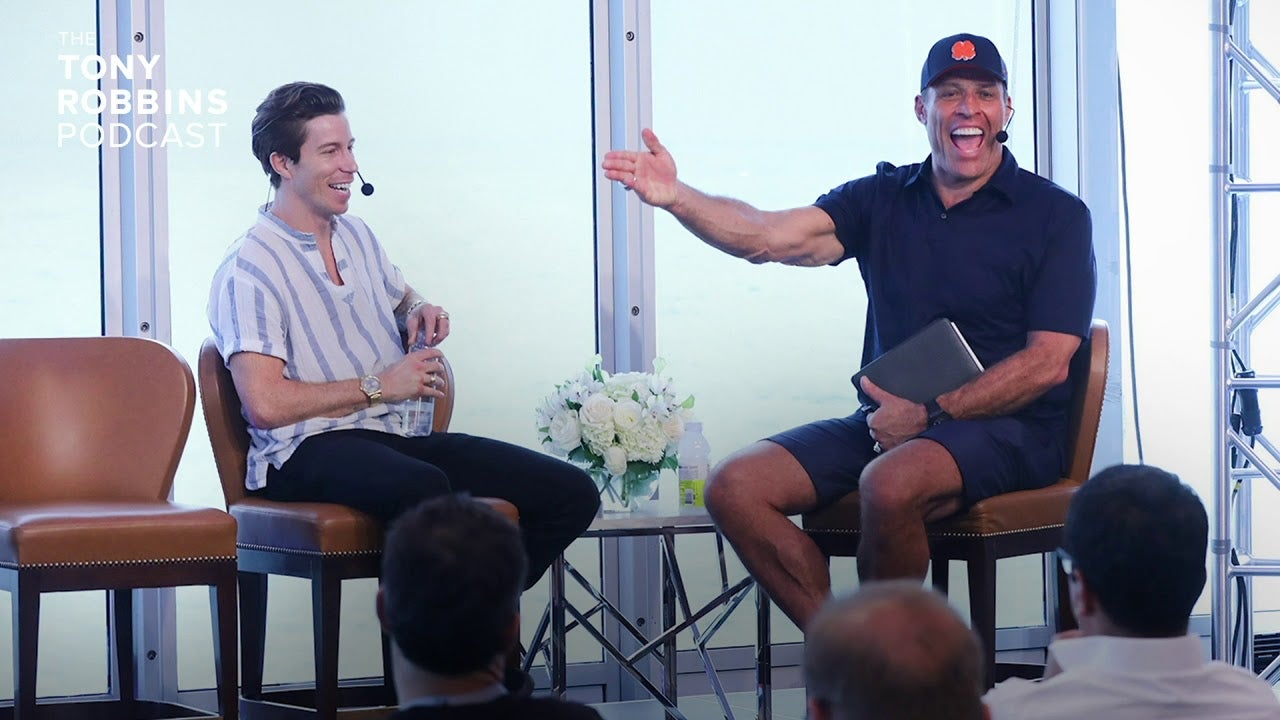
Tony Robbins uncovers the art – and science – of the comeback in this interview with snowboard legend Shaun White. As a three-time Olympic gold medalist and world record holder, Shaun knows a thing or two about success. He turned snowboard pro at 13 and skateboard pro at 16. He has the most wins of anybody in the history of the extreme sports event the X Games. Uploaded 29-06-20 His phenomenal wins didn’t come without a fight. How can you take those hits and come back? The answer lies in a deep sense of self-belief. Shaun started life with asthma and a heart defect that required surgery, but his parents never put boundaries on what he could accomplish. He says, “From the get go I believed I could do it. I saw the pros and I knew I could get to that point.” You too can create this deep belief in yourself using the tips at https://www.tonyrobbins.com/building-confidence/how-to-believe-in-yourself. Shaun also used his failures as fuel. Instead of being defeated, losing drove his desire to
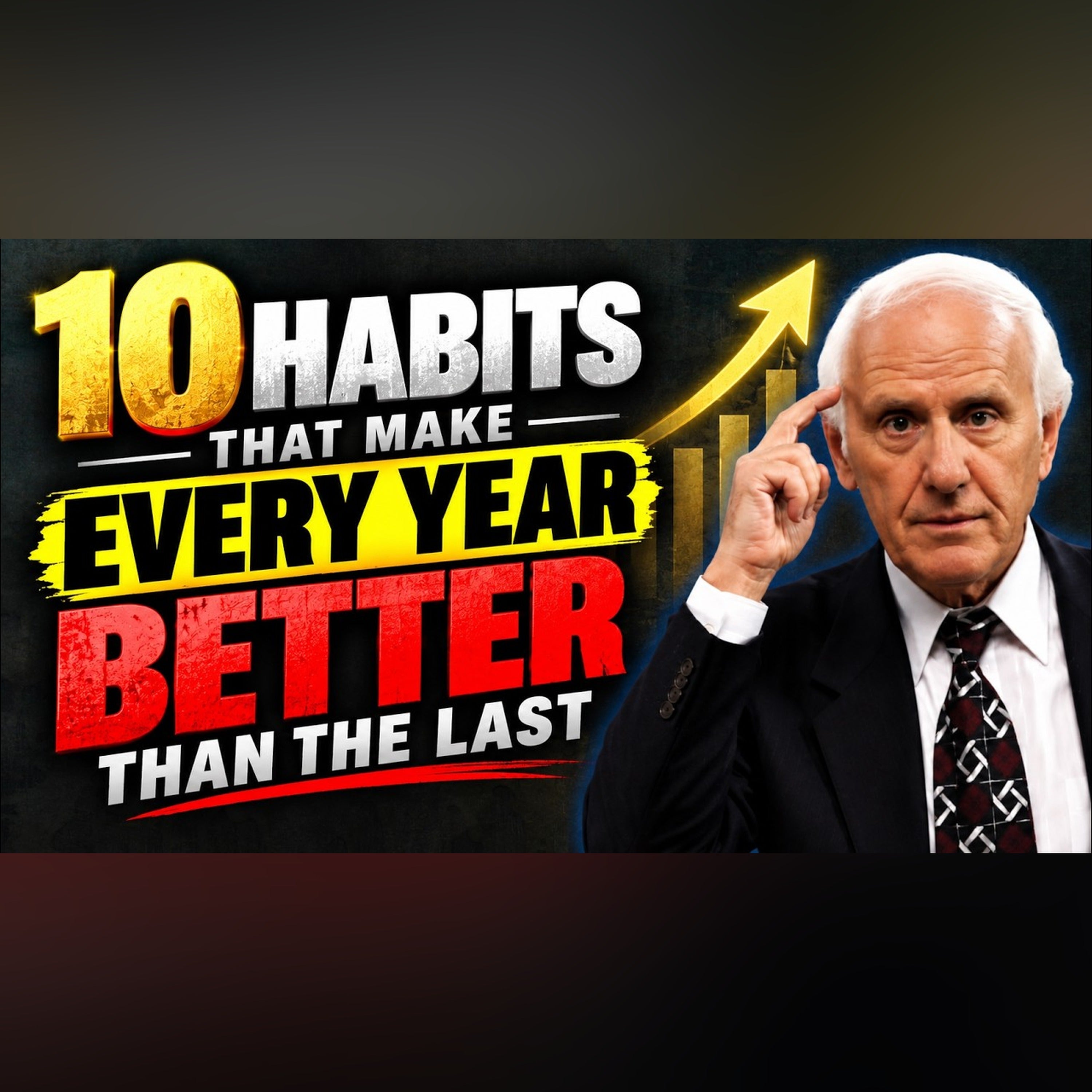
Most people wait for the year to be good to them. They hope. They resolve. They set intentions in January and abandon them in February. And then they wonder why the next December looks exactly like the last one. Uploaded 25-09-26 But the year didn't fail them. They lived it the same way they lived the one before. And a year lived the same way produces the same result. That's not bad luck. That's just arithmetic. Here is the truth: there is a small set of habits that, once you build them, quietly make every year better than the one that came before. Not dramatically. Not overnight. But steadily, so that after five years you're standing somewhere the old version of you could never have reached. This seminar walks through 10 things you must understand about the habits that make every year climb instead of repeat. CHAPTERS 0:00 Intro — a year lived the same way 1:07 The invisible arithmetic underneath every year 5:00 #1 — Review the year before you plan the next 5:24 #2 — Learn one new thi
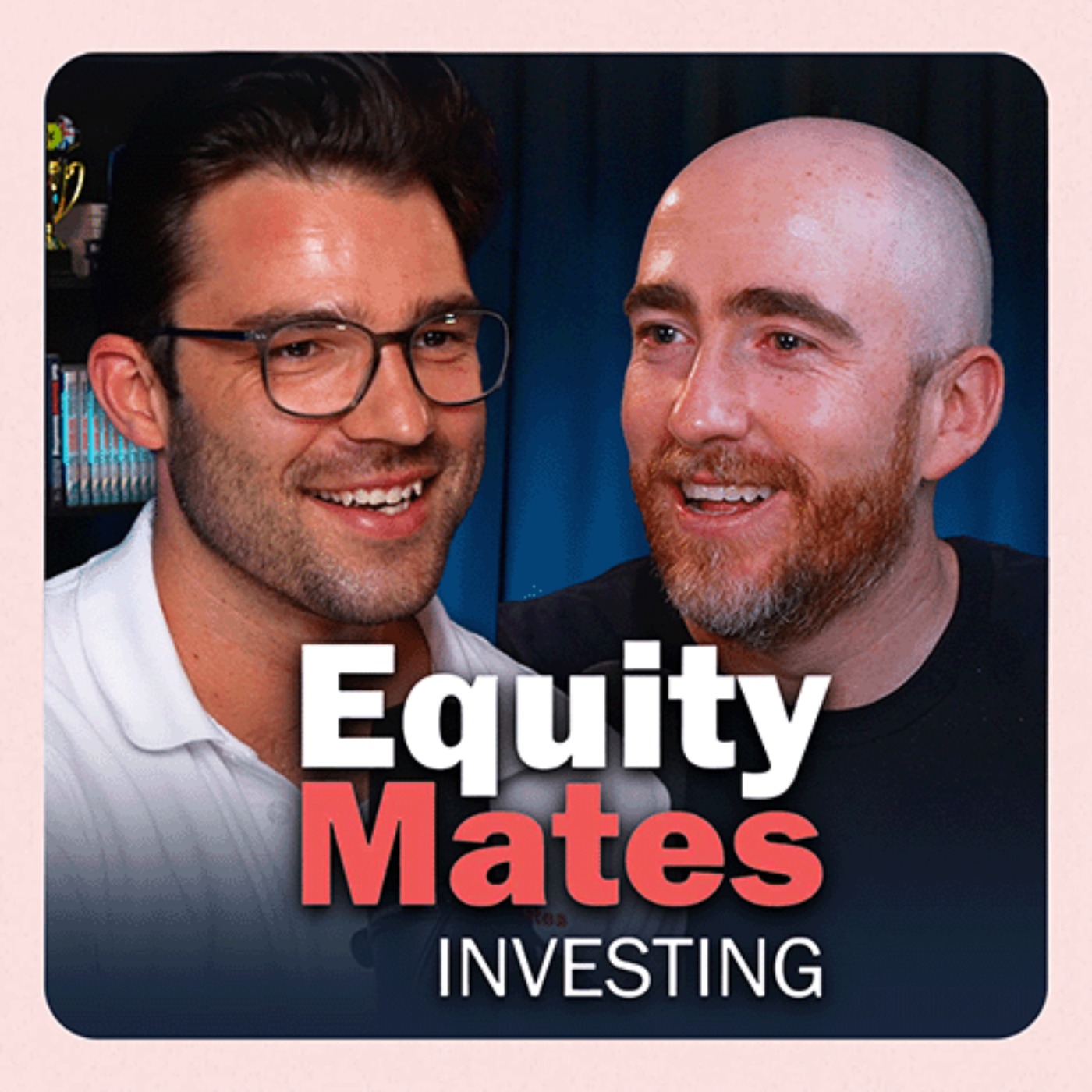
Jensen Huang is back, Nvidia has added $1 trillion in market value in a single day, and Anthropic's IPO has created thousands of new paper millionaires. Bryce & Ren unpack the biggest stories coming out of Silicon Valley, why Cathie Wood's market timing keeps letting her down, plus, we explore the individual investor's secret weapon and how to use it when the world's best companies offer extraordinary buying opportunities. In this episode: 00:00 Coming to you from Launceston 02:38 Jensen Huang returns & Nvidia surges 31% 07:43 How Bryce & Ren are investing in Nvidia 09:40 Anthropic: The new millionaire’s factory 13:08 Cathie Wood's market timing struggles 18:23 The individual investor's secret weapon 19:54 Great companies, incredible buying opportunities 25:38 Buying when others are fearful Stocks & ETFs Mentioned: Anthropic (NASDAQ: ANT), Nvidia (NASDAQ: NVDA), SpaceX (NASDAQ: SPCX), JPMorgan Chase (NYSE: JPM), Macquarie Group (ASX: MQG), Alphabet (NASDAQ: GOOGL), Meta Platforms (NASD
The Fair Work Tribunals edition of Wednesday 25 November 2026 (39 decisions, two with headnotes), with the Fair Work Tribunals edition of Tuesday 24 November 2026 (228 decisions, three with headnotes) alongside it. A Full Bench on why the Black Coal award's redundancy relief clause runs through the dispute procedure and not compulsory arbitration; another on appealing a refusal to reinstate and counting the anticipated period; and three rulings where generative AI did some of the drafting: costs and fictitious authorities, an AI-drafted agreement that made a worker an employee, and an AI-prepared witness statement. Fair Work Desk: relief from retrenchment pay goes through the dispute procedure (opening story). R2S Medical & Emergency Response Pty Ltd v Peter Quirk and Others [2026] FWCFB 291 (https://jade.io/article/1307378) - Gibian VP, Dobson and Slevin DP, 5 November 2026. Signal Doctrine and Practice & Procedure. Black Coal Mining Industry Award 2020 cll 32, 34.4, 34.6; Fair Work A
Forget the violence. The most dangerous thing about GTA 6 is what it does to your bank account. Grand Theft Auto 6 is the biggest video game launch in more than a decade, with more than $2 billion on opening day. But Dr. Phil says the headlines are missing the real story: it's the money.In this episode of The Real Story, Dr. Phil explains: - Why GTA 6 launching with "nothing to buy" is the same playbook GTA 5 used - How a game estimated to cost $1 billion to $3 billion to make compares with the most expensive movies, rides and Olympic ceremonies ever - What Shark Cards are and why "10 million GTA dollars" is priced so it doesn't feel like $100 of real money - The $5 billion players have already spent on in-game currency in earlier GTA games - Real cases: a 9-year-old who ran up $19,000 on Roblox, and another whose spending hit $118,000 in three weeks - Why your teenager's brain makes him an easy target, and why "I can't stop, I'm in the middle of something" isn't a lie Plus 5 things ev
Float through a winter wonderland with a tiny snowflake in tonight’s sleep meditation for kids. Carried by the north wind, you’ll drift over snowy countryside and glowing rooftops, watching the world settle down for the evening. With slow breaths and a little imagination, follow the snowflake towards a cozy place to rest. & leave us a five star review! ⭐️⭐️⭐️⭐️⭐️ Narrator: Abbe Opher Author: Luke Prendergast Story Themes: Meditation, Relaxing, Bedtime Stories For Kids. — Join the Koko Club - HERE (https://kokoclub.supercast.com/) ️ Start your 7-Day FREE Trial ️ Support Koala Moon! Bonus episodes every Wednesday Ad-free listening on all episodes Go YEARLY for an Abbe shout-out Extended Compilation Episodes Full access to 800+ episodes Unlock the Cappy & Tito Series Join on Spotify, Yoto & more Join Koko Club (https://kokoclub.supercast.com/) Or Join via Apple Podcasts (https://bit.ly/joinkokoclubonapple) Unlock Even More Stories, With Koala Moon Audiobooks! ️ Follow For More Fun Tiktok:
Have you ever wondered who invented bubblegum, and why it is almost always pink? People have been chewing gum for thousands of years! Ancient Greeks chewed sticky tree resin, the Maya chewed rubbery chicle, and Americans chewed spruce gum. But there was one huge problem—you couldn't blow bubbles with any of them! Discover the hilarious and sticky history of bubblegum, starting with a totally disastrous candy called Blibber-Blubber that would literally glue itself to your face if a bubble popped! Yikes! Learn how a 23-year-old math accountant named Walter Diemer accidentally invented the perfect, stretchy bubblegum recipe while watching a pot for his boss. And why is it pink? Because it was the absolute only color of food dye left in the factory that day! Join Mira and Finn as they unwrap the amazing, accidental history of Dubble Bubble, how Walter had to teach grown salesmen how to blow bubbles, and how this pink, sweet treat took over the whole world!
Have you ever looked at a yellow, sweet banana in your lunchbox and wondered where it came from? You won't believe the epic history hidden inside this everyday fruit! Grab your time machine because we are traveling back 7,000 years to a muddy swamp in Papua New Guinea. Did you know the first wild bananas weren't sweet at all? They were green, starchy, and packed with rock-hard black seeds! Yuck! Join Mira and Finn as they uncover the wild journey of the banana! You'll discover how a crazy natural mutation created the seedless, sweet fruit we love today, meaning every single banana is actually a giant clone! Plus, find out how sailing ships and speedy steamships carried these tropical treats all across the globe. We'll even reveal how a terrifying fungus almost wiped out bananas forever in the 1950s, until a special rescue mission saved the day! Prepare to have your mind blown with weird facts, like how a banana plant is actually a giant herb, and the fruit itself is scientifically a sl
Have you ever seen pictures of giant stone heads sitting in the grass and wondered how they got there? Get ready for a mind-blowing adventure to one of the most remote places on Earth: Rapa Nui, also known as Easter Island! About 800 years ago, expert Polynesian sailors found this tiny island in the middle of the Pacific Ocean using only the stars and ocean currents to guide them. Once there, they carved nearly a thousand massive stone statues called moai! But here is the biggest surprise: these statues aren't just heads—they have full bodies buried underground! Some weigh as much as 40 cars, and the islanders moved them without wheels, cranes, or metal tools. How did they do it? The local legends say the statues literally walked to their places, waddling side to side with the help of ropes and incredibly smart human engineering! Join Mira and Finn as they uncover the secrets of the moai, find out how the island got its English name from a Dutch captain, and learn all about the giganti
Sporting success should include character and contribution, not only winning.
Share your view, then see how readers voted. No sign-in required. This poll is shared across stories.
Do you agree or disagree?
Common Quandary
A Common Quandary to discuss
Another conversation to explore, separate from this news story.
Scientists can edit mosquitoes until a deadly disease disappears. Who gets to say yes?
Scientists can potentially release modified mosquitoes whose genes would spread through wild populations and sharply reduce a deadly disease. The ecological effects could cross borders and may be impossible to reverse.
Who may authorize an irreversible change intended to save lives?