Listen through the publisher, then discuss the episode here or arrange an in-person Roundtable. Your city determines where to meet.
Roundtables are designed for groups of four, with a shared subject and room for everyone to speak. Come for discussion, with no dating expectation.
Have you ever looked at a yellow, sweet banana in your lunchbox and wondered where it came from? You won't believe the epic history hidden inside this everyday fruit! Grab your time machine because we are traveling back 7,000 years to a muddy swamp in Papua New Guinea. Did you know the first wild bananas weren't sweet at all? They were green, starchy, and packed with rock-hard black seeds! Yuck! Join Mira and Finn as they uncover the wild journey of the banana! You'll discover how a crazy natural mutation created the seedless, sweet fruit we love today, meaning every single banana is actually a giant clone! Plus, find out how sailing ships and speedy steamships carried these tropical treats all across the globe. We'll even reveal how a terrifying fungus almost wiped out bananas forever in the 1950s, until a special rescue mission saved the day! Prepare to have your mind blown with weird facts, like how a banana plant is actually a giant herb, and the fruit itself is scientifically a slightly radioactive berry! Tune in now for the most amazing fruit adventure ever!
Episode information is provided by the publisher. Listening takes place on the publisher’s service.
Imagine being able to play the piano, saxophone, trumpet, and clarinet—all without being able to see! Meet Ray Charles, a boy who grew up in a tiny Florida town with a huge love for music. Even though an illness took away his eyesight by the time he was seven years old, Ray never let that stop his dreams. Thanks to his hardworking mom and a special school where he learned to read music using tiny raised bumps called Braille, Ray became a musical mastermind! He packed his bags as a teenager, moved all the way across the country to Seattle, and did something nobody had ever done before. Ray mixed the soaring sounds of gospel church choirs with the gritty emotions of the blues and the lively fun of jazz to invent a brand new style of music called Soul! From his stomping, joyful performances to having a whole US state name their official song after him, Ray's music is still celebrated everywhere. Join Mira and Finn as they explore the incredible, toe-tapping story of "The Genius" of Soul,
We tell each other to be comfortable. We buy comfortable chairs and comfortable shoes, and we spend our whole lives working toward what we call a comfortable living. It sounds like a good thing. Uploaded 19-10-26 But after many years of watching people rise and watching people stay exactly where they are, I've learned something. The thing most people are really protecting isn't their dream, or their future, or even their family. It's their comfort. And they'll sacrifice almost anything to keep it — their ambition, their growth, the person they could have become. The tragedy is they never know they're doing it. They think they're being sensible. Here is the truth: comfort is the most expensive thing you will ever buy, because you pay for it with your potential, and nobody ever shows you the price tag. This seminar unpacks the single mechanic behind why comfort quietly keeps you small — and how to take your life back from it, one uncomfortable choice at a time. CHAPTERS 0:00 Intro — the
Join Abbe as Munchy returns to Sleep HQ with another mailbag packed with news from across the Koala Kingdom! Snaffles finds a crumpled Christmas star that dreams of topping a tree, Prickles goes for an unexpected ride in a Christmas tree, and Cappy & Tito see snow for the very first time. Plus, there’s BIG news from Koala Shine! Hector & Sunny are stuck inside a magical snow globe in a brand-new four-part Christmas special! & leave us a five star review! ⭐️⭐️⭐️⭐️⭐️ Narrator: Abbe Opher Author: Luke Prendergast Story Themes: Christmas, December, Koala Kingdom, Bedtime Stories For Kids. — Join the Koko Club - HERE (https://kokoclub.supercast.com/) ️ Start your 7-Day FREE Trial ️ Support Koala Moon! Bonus episodes every Wednesday Ad-free listening on all episodes Go YEARLY for an Abbe shout-out Extended Compilation Episodes Full access to 800+ episodes Unlock the Cappy & Tito Series Join on Spotify, Yoto & more Join Koko Club (https://kokoclub.supercast.com/) Or Join via Apple Podcasts (h
Ever put off investing because you feel like you need to know everything first? Same. Elliott thought investing meant picking individual companies and understanding the whole share market. Ana bought ten ETFs (bundles of investments you buy in one go) because choosing just one felt too risky. Both were trying not to get it wrong, and playing it safe made things messier for both of them. So how much do you actually need to know before you start? In this episode, Ana Kresina and Elliott O'Callaghan look back at their first investments and what confused them along the way. From a $10 crypto gift to ten ETFs that held a lot of the same companies, they talk about the gap between reading about investing and actually doing it. In this episode we'll chat about: Why Ana bought ten ETFs to feel safer, then found out she owned a lot of the same companies several times over. What a $10 Ethereum gift taught Elliott about watching his money go up and down. How Elliott went from thinking investing wa
He solved “the most important unsolved problem in science”… If you need more optimistic science and tech stories, subscribe to support HUGE*! Demis Hassabis is a Nobel Prize winner and CEO of Google DeepMind. He is one of the most important people alive on what is quickly becoming the biggest technological advance of our lifetime. Because the biggest way AI is going to impact your life, you can’t see. It’s not a chatbot or an image generator. It’s the tools he and his team are building that are invisible to you – in new drug design, nuclear fusion, natural disasters detection, quantum computers. So who Demis is and what he chooses to build matters a lot. And he’s fascinating… He’s a childhood chess prodigy who at 17 turned down a reportedly million dollar job offer from a gaming company to go to college instead, and then get a PhD in neuroscience. He founded his company DeepMind with a mission to “solve intelligence” – starting with beating video games. He sold that company to Google s
David Rose, former deputy leader of the Progressive Unionist Party under David Ervine, takes us inside the unionist mindset: where it comes from, what it fears, and why it’s so often misunderstood south of the border. David grew up in Bangor, Co. Down. He was five when the Troubles began and 35 when they ended. A history teacher by trade, he joined the PUP in 1996, the small working-class loyalist party linked to the UVF that backed the Good Friday Agreement. In this conversation, David explains why the First World War and the Somme still shape unionism, how the plantation, religious freedom and individual rights sit at its core, and why many unionists feel written out of Irish history. He talks about the political education that came out of Long Kesh, the PUP’s relationship with the UVF, decommissioning, and how unionism split after the Good Friday Agreement. He also explains why he left the PUP in 2010, and why he believes unionism lives with one underlying fear: “If we lose once, it
Have you ever seen pictures of giant stone heads sitting in the grass and wondered how they got there? Get ready for a mind-blowing adventure to one of the most remote places on Earth: Rapa Nui, also known as Easter Island! About 800 years ago, expert Polynesian sailors found this tiny island in the middle of the Pacific Ocean using only the stars and ocean currents to guide them. Once there, they carved nearly a thousand massive stone statues called moai! But here is the biggest surprise: these statues aren't just heads—they have full bodies buried underground! Some weigh as much as 40 cars, and the islanders moved them without wheels, cranes, or metal tools. How did they do it? The local legends say the statues literally walked to their places, waddling side to side with the help of ropes and incredibly smart human engineering! Join Mira and Finn as they uncover the secrets of the moai, find out how the island got its English name from a Dutch captain, and learn all about the giganti
Did you know your favorite morning breakfast used to be a super-serious health food that could literally break your teeth? In the 1890s, Americans were eating huge, greasy breakfasts like half-pound steaks and heavy potatoes. People were getting terrible stomach aches! To fix this, doctors started creating healthy, meat-free alternatives. Enter the very first breakfast cereal: Granula! It was a food so rock-hard that you had to soak it overnight just to chew it! But the real magic happened in Battle Creek, Michigan, at a massive health spa. Dr. John Harvey Kellogg and his brother Will were trying to make plain health bread for their patients. One day, Will accidentally left a pot of boiled wheat out for hours. Instead of throwing it away, they rolled it out, and it magically formed hundreds of crispy flakes! The patients went wild! But Will and John had a massive fight over adding sugar, leading to a giant cereal war with rival inventors like C.W. Post! Join Mira and Finn as they crunc
Imagine running an empire of ten million people without ever writing down a single word! Welcome to Tawantinsuyu, the massive Inca Empire hidden high up in the towering Andes Mountains! In 1438, a brilliant ruler named Pachacuti transformed the mountain town of Cusco into a glittering capital city shaped exactly like a giant puma. But how did they keep track of everything without pencils or paper? They used a genius math system made of colorful knotted strings called a quipu! To send important messages, they didn't use horses or wheels. Instead, they relied on superhuman relay runners called chasqui, who sprinted across scary woven grass suspension bridges and could travel 150 miles in a single day! They even built giant green staircase farms right into the steep mountainsides to grow huge amounts of freeze-dried potatoes. And guess what? They kept a very fluffy, squeaky pet in their kitchens for dinner—guinea pigs! Although the Spanish explorer Francisco Pizarro eventually brought dow
Public bodies should publish the evidence behind important decisions.
Share your view, then see how readers voted. No sign-in required. This poll is shared across stories.
Do you agree or disagree?
Common Quandary
A Common Quandary to discuss
Another conversation to explore, separate from this news story.
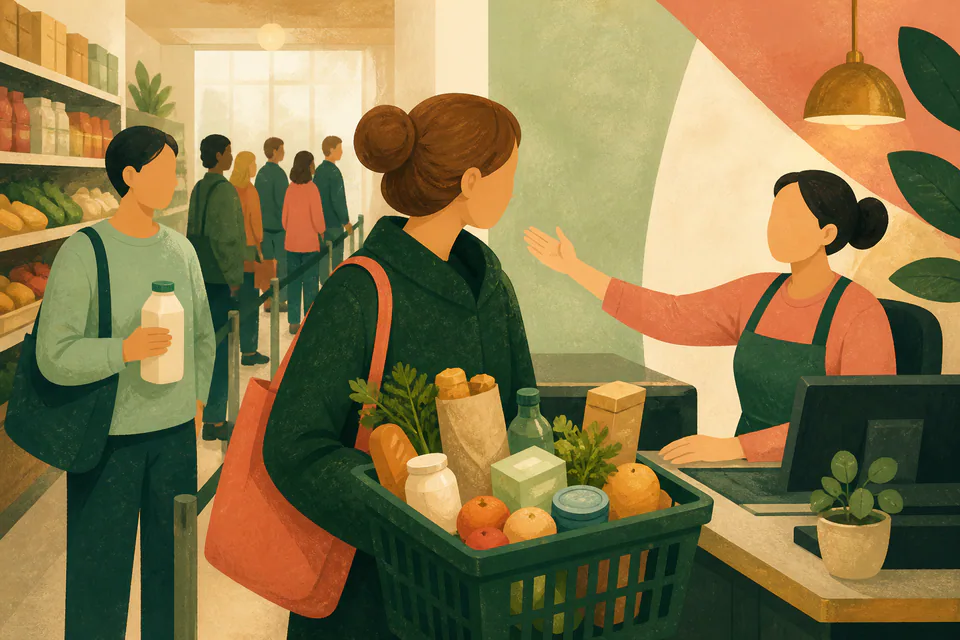
The sign says twelve items and you have fourteen. Is the express lane still yours?
The regular checkout lines are long and the express lane is empty. You count fourteen small items, two over the posted limit. A shopper approaches behind you carrying a single carton of milk as the cashier waves you forward.
Are small rules optional when enforcing them would seem fussier than breaking them?