Listen through the publisher, then discuss the episode here or arrange an in-person Roundtable. Your city determines where to meet.
Roundtables are designed for groups of four, with a shared subject and room for everyone to speak. Come for discussion, with no dating expectation.
Can you imagine a world without bubbly body wash or foaming hand soap? It was a very, very stinky place! Join Mira and Finn on a gross and fascinating journey through 4,000 years of history to discover how humans finally learned to get clean! You won't believe how the ancient Babylonians made the first soap using wood ashes and animal fat. Or how ancient Romans skipped soap entirely, choosing to scrape off their sweaty, oily dirt with a curved metal blade called a strigil! Want to know the grossest part? People actually bought bottles of that scraped-off athlete sweat to use as medicine! Yuck! We also uncover why people during the Middle Ages were terrified of taking baths, believing warm water would let sickness inside their bodies. Plus, learn about the incredible true story of Dr. Ignaz Semmelweis, a medical detective who realized that simply washing hands could save millions of lives—even if older doctors mocked him for it at first! From magical floating soap to 10 billion pounds of bubbles, get ready for a squeaky-clean adventure!
Episode information is provided by the publisher. Listening takes place on the publisher’s service.
Did you know your mouth is a nonstop biological water park?! Every single day, your body makes enough saliva to fill up to four whole water bottles! But spit isn't just warm water—it's a magical biological potion packed with incredible superpowers. Join Mira and Finn as they explore the wild world of saliva! Discover how a microscopic machine called amylase starts digesting your favorite foods the exact millisecond you take a bite. Find out how spit turns sharp, crunchy chips into soft, squishy balls to protect your throat! Plus, did you know saliva actually builds invisible armor for your teeth by filling in holes with special minerals like calcium and phosphate? It even works as a magical liquid key to unlock flavors—without saliva, chocolate and pizza would taste like absolute cardboard! From amazing spit factories hiding inside your cheeks to real-life birds that build entire nests out of spit, get ready for a mind-blowing biological adventure! Tune in to find out why your mouth is
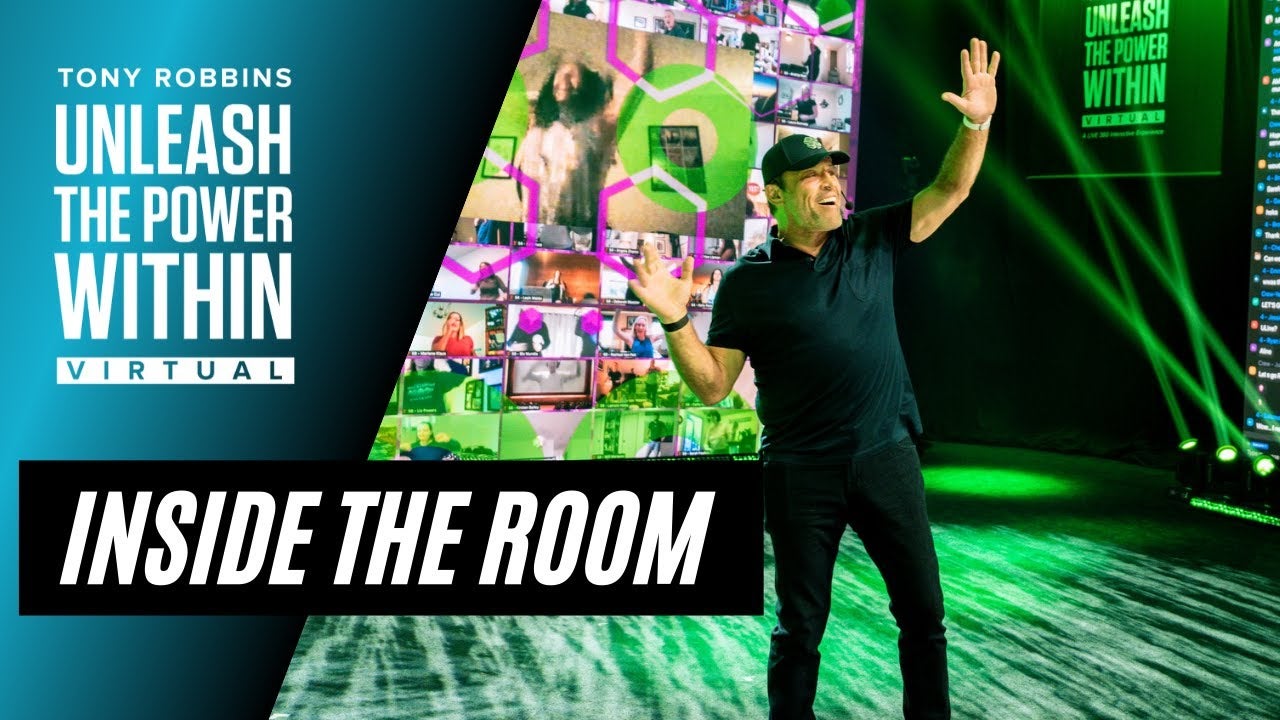
The FIRST Unleash the Power Within of 2022 just wrapped and we had 26,000 households from 151 countries around the world STEP UP and JOIN TOGETHER for one of our largest events in history! Uploaded 23-03-22 Here are some highlights from the week. Enjoy this video for a peek inside our virtual stadium It’s such a privilege to spend time with such DRIVEN, COMMITTED, LOVING SOULS all coming here with a hunger to GROW. For me, getting to hear your goals and witness each of you creating a unique life for yourselves, your loved ones, and your communities is deeply moving. We grow so we have MORE to GIVE, and the truth is, the world is a better, more beautiful and kind place because of people like YOU. If you’ve never experienced an Unleash the Power Within, it can be hard to imagine the HUMAN POTENTIAL and the RAW ENERGY⚡️ that converge over these four days and nights. It's electrifying to feel people from every walk of life, every background, every stage of life UNITE to find a deeper meani
Have you ever told someone, "Thanks a million!" or claimed you have "a million toys to clean up"? We use the word "million" all the time to mean "a whole lot," but have you ever stopped to wonder just how big a real million actually is? Join Mira and Finn on a mind-blowing math adventure as they discover the quiet power of giant numbers! Imagine counting one number every single second without ever stopping to eat or sleep. It wouldn't take a few hours or a long weekend—it would take you about eleven and a half days just to reach one million! And what about its giant neighbor, the billion? Counting to a billion the exact same way would take a whopping thirty-two years. That's a grown-up's whole life so far! In this amazing episode, we won't just look at numbers on a page; we’ll learn to feel their true size. Find out how much space a million grains of rice would take up, and discover exactly how far a million footsteps would carry you. Get ready to stretch your brain and learn why being
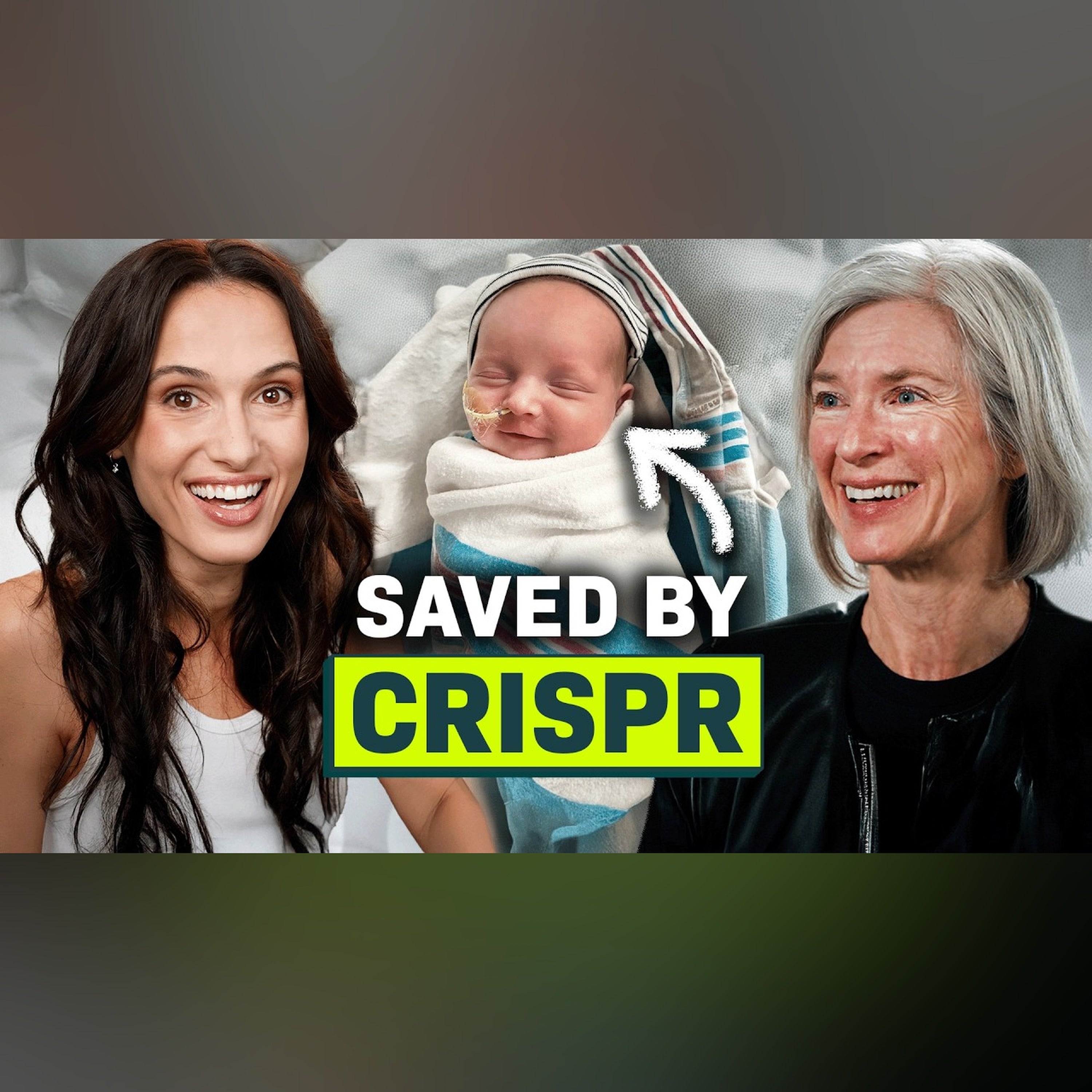
Human DNA editing is finally here. Check out the new WHOOP here! https://join.whoop.com/cleo There is a microscopic technology that now gives us the power to edit our own genes while we’re alive. To cure certain diseases, possibly prevent others, or boost what our bodies can do… or maybe, one day give our kids abilities no one has ever had before… effectively putting evolution into our hands. This is not some sci-fi future! We’re already using this technology in real medical treatments in plants to grow new crops and in animals to create new species! Just yesterday, news broke that a baby’s life was saved using personalized gene editing that fixed one tiny error in its DNA. This is truly “huge if true.” Deciding how we use this new superpower may be the biggest challenge we have ever faced - and the biggest opportunity to reduce human suffering. This tool is called CRISPR. Dr. Jennifer Doudna won the Nobel Prize for discovering it. So, in this third episode of Huge Conversations, Dr. D
Have you ever tried something so hard, failed, and then tried again anyway? Meet Tony Hawk, the boy who turned his restless energy into skateboarding history! Growing up in sunny San Diego, California, Tony was a frustrated kid until his brother gave him a scratched-up blue skateboard. It was pure magic! By age 14, he was a fearless professional skater inventing wild, sky-high tricks on massive wooden ramps. Imagine being at the 1999 X Games, watching Tony attempt the ultimate, "impossible" trick: the 900! That's two and a half dizzying spins high in the air. Crash after crash, he fell ten times. But on his eleventh try? He landed it perfectly, while the crowd went absolutely wild! That same year, his smash-hit video game made him a superstar all around the world. But Tony didn't just want fame. He wanted every kid to have a safe place to ride, fall, and get back up. Through his charity, he has helped build hundreds of free public skateparks everywhere! Grab your helmet and drop in as
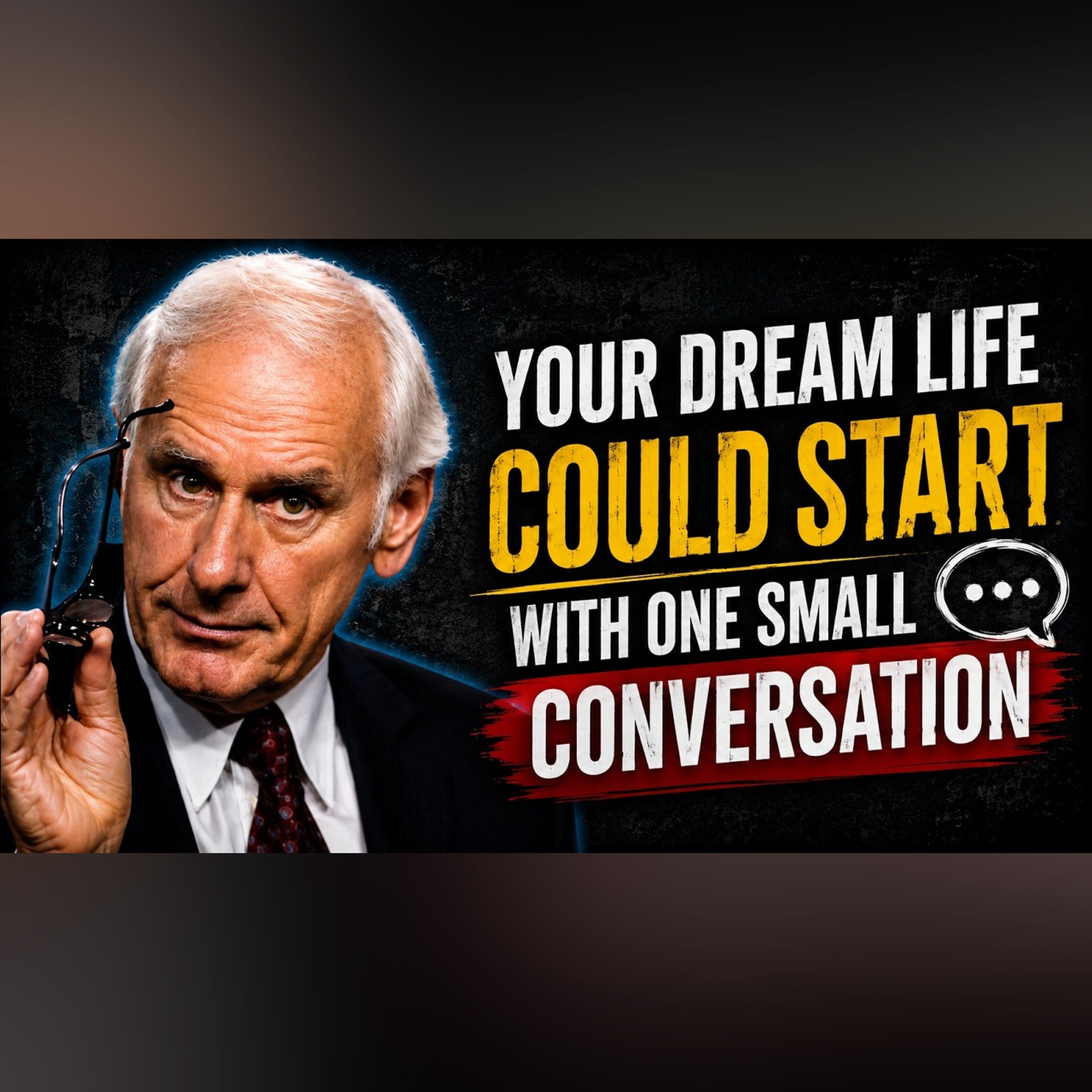
You've gotten very good at pretending you don't feel it. Uploaded 21-08-26 Maybe it's a conversation with someone you love. Someone you work for. A partner, a parent, a friend who's been quietly taking more than they give. Or the hardest one of all — a conversation with yourself, the one where you finally admit something you've refused to say out loud for years. You know exactly which one I'm talking about. You felt it the moment I said the word. A name came up, or a face, and your stomach did something small and unpleasant, and you pushed it back down where it's been living. That flinch is the most honest thing that's happened to you all day. Here is the truth: the life you say you want — the freedom, the peace, the relationship, the income, the respect — there's a very good chance it's on the other side of one conversation you keep refusing to have. Not ten. One. This seminar unpacks the single mechanic behind a stuck life: the necessary conversation you keep treating like a locked d
Have you ever seen pictures of giant stone heads sitting in the grass and wondered how they got there? Get ready for a mind-blowing adventure to one of the most remote places on Earth: Rapa Nui, also known as Easter Island! About 800 years ago, expert Polynesian sailors found this tiny island in the middle of the Pacific Ocean using only the stars and ocean currents to guide them. Once there, they carved nearly a thousand massive stone statues called moai! But here is the biggest surprise: these statues aren't just heads—they have full bodies buried underground! Some weigh as much as 40 cars, and the islanders moved them without wheels, cranes, or metal tools. How did they do it? The local legends say the statues literally walked to their places, waddling side to side with the help of ropes and incredibly smart human engineering! Join Mira and Finn as they uncover the secrets of the moai, find out how the island got its English name from a Dutch captain, and learn all about the giganti
Did you know your favorite morning breakfast used to be a super-serious health food that could literally break your teeth? In the 1890s, Americans were eating huge, greasy breakfasts like half-pound steaks and heavy potatoes. People were getting terrible stomach aches! To fix this, doctors started creating healthy, meat-free alternatives. Enter the very first breakfast cereal: Granula! It was a food so rock-hard that you had to soak it overnight just to chew it! But the real magic happened in Battle Creek, Michigan, at a massive health spa. Dr. John Harvey Kellogg and his brother Will were trying to make plain health bread for their patients. One day, Will accidentally left a pot of boiled wheat out for hours. Instead of throwing it away, they rolled it out, and it magically formed hundreds of crispy flakes! The patients went wild! But Will and John had a massive fight over adding sugar, leading to a giant cereal war with rival inventors like C.W. Post! Join Mira and Finn as they crunc
Imagine running an empire of ten million people without ever writing down a single word! Welcome to Tawantinsuyu, the massive Inca Empire hidden high up in the towering Andes Mountains! In 1438, a brilliant ruler named Pachacuti transformed the mountain town of Cusco into a glittering capital city shaped exactly like a giant puma. But how did they keep track of everything without pencils or paper? They used a genius math system made of colorful knotted strings called a quipu! To send important messages, they didn't use horses or wheels. Instead, they relied on superhuman relay runners called chasqui, who sprinted across scary woven grass suspension bridges and could travel 150 miles in a single day! They even built giant green staircase farms right into the steep mountainsides to grow huge amounts of freeze-dried potatoes. And guess what? They kept a very fluffy, squeaky pet in their kitchens for dinner—guinea pigs! Although the Spanish explorer Francisco Pizarro eventually brought dow
Organizations should explain important automated decisions in language people can understand.
Share your view, then see how readers voted. No sign-in required. This poll is shared across stories.
Do you agree or disagree?
Common Quandary
A Common Quandary to discuss
Another conversation to explore, separate from this news story.
An old friend refuses to use someone's new name. Do you correct them at the reunion?
At a reunion, an old friend repeatedly uses the name a former classmate had years ago. They say shared history gives the old name affectionate meaning; the classmate has clearly introduced themselves with a different name.
When does preserving your shared past deny who someone is now?