What Life Used to Smell Like & How the Telephone Changed Us
50 min
Listen through the publisher, then discuss the episode here or arrange an in-person Roundtable. Your city determines where to meet.
Roundtables are designed for groups of four, with a shared subject and room for everyone to speak. Come for discussion, with no dating expectation.
You know that uneasy feeling when someone or something gives you the creeps? Is your brain picking up on a hidden danger, or is something else going on? There's some fascinating science behind what makes things creepy and why certain people and situations trigger that feeling. https://www.smithsonianmag.com/science-nature/science-creepiness-180957093/ The world doesn't smell the way it used to. Some odors that were once part of everyday life have disappeared, while others have taken their place. But did people in the past actually smell worse than we do today? What did cities and homes smell like centuries ago? And why haven't we figured out how to eliminate unpleasant smells? Will Tullett, a historian and senior lecturer at the University of York, has spent years studying the history of smell. He joins me to reveal how smells have changed over time, how they shape our lives, and why the history of odors is surprisingly fascinating. He is the author of Sniff: A History of Smells (https://link.amazon/B07NVJ7hm). (https://link.amazon/B07NVJ7hm) The telephone used to be attached to a wall, and when it rang, you had no idea who was calling. Now we carry phones everywhere, know who's calling, and often prefer texting to talking. How did we get from there to here? The story is filled with remarkable inventions, colorful characters, and unexpected twists. And along the way, the telephone changed far more than how we communicate. James Gleick, science and technology writer and former writer and editor for The New York Times, joins me to explore how the telephone evolved and transformed our lives. He is the author of The Telephone: A New History (https://link.amazon/B0c7ncuE9). (https://link.amazon/B0c7ncuE9) Why does a paper clip look the way it does? It's such a simple object, yet its familiar design has barely changed in more than a century. Behind that little piece of bent wire is a surprisingly interesting story of clever engineering and competing designs. So why did this particular shape win out? https://www.scientificamerican.com/article/the-paper-clip/ PLEASE SUPPORT OUR SPONSORS Now available in Canada, too! Upgrade your whole setup for less! Listen or watch wherever you get your podcasts!
Episode information is provided by the publisher. Listening takes place on the publisher’s service.
Disclaimer: This is not medical advice. I'm not a doctor. Uploaded 20-09-24 Methylene Blue: https://www.mitozen.club/?ref=JNn9OgsqRy1P_X *this is an affiliate link which will cost you nothing extra *melatonin that I've been using is also in this link ***You can also get these elsewhere and I encourage you to shop around, there's no need to use my link whatsoever. Nine months ago, my brain was falling apart—I was having up to 9 seizures a day and didn’t even recognize my own family at times. Diagnosed with temporal lobe epilepsy, I was losing hope until I discovered something that changed everything: methylene blue. This blue dye from the 1800s, combined with melatonin and psychedelic therapy, helped me reverse my brain damage and regain my life. In this video, I’ll share how these powerful molecules transformed my brain health, stopped my seizures, and might even help someone you know. Dr. John Lieurance’s channel: https://www.youtube.com/@DrJohnLieurance My Neurology Protocol: [screen
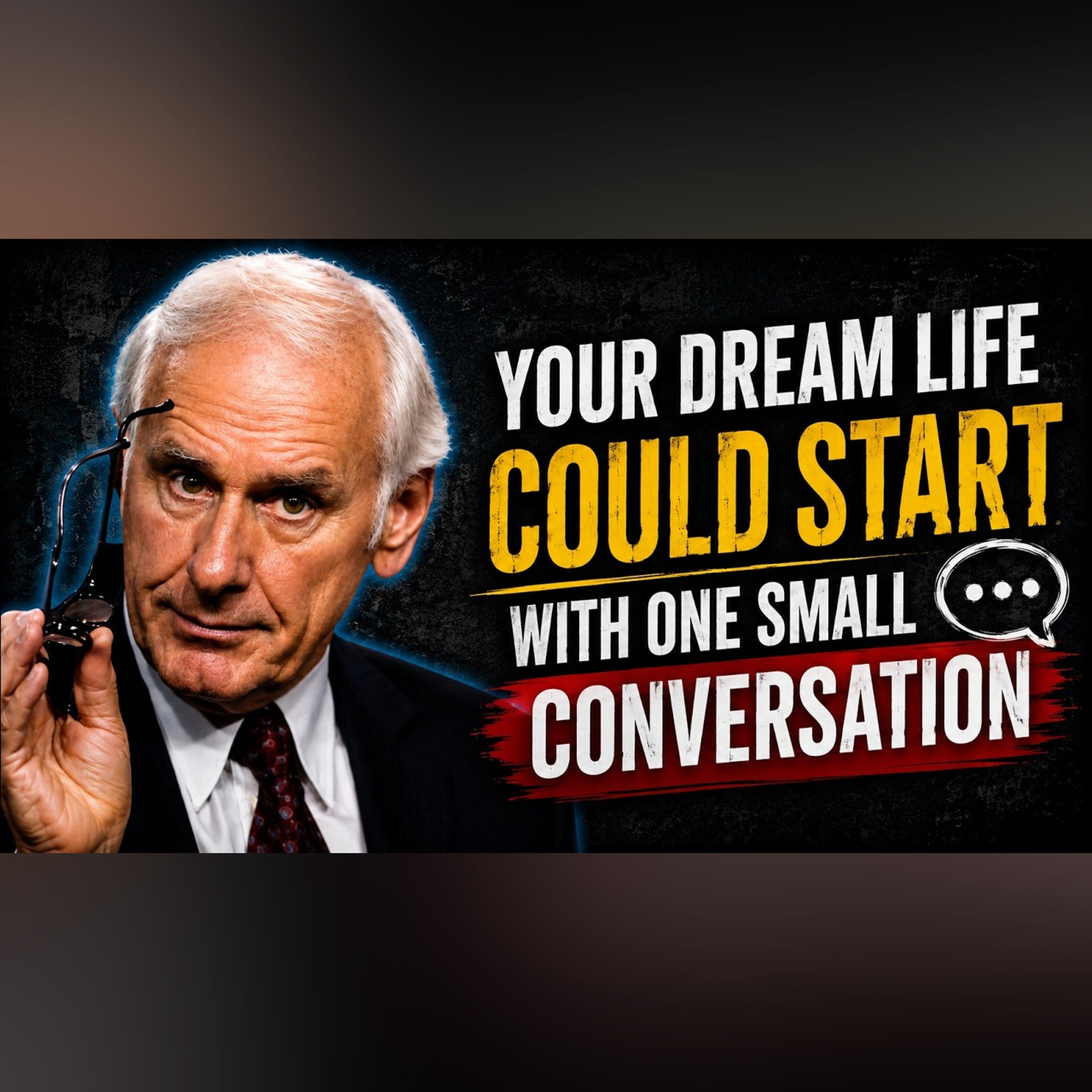
You've gotten very good at pretending you don't feel it. Uploaded 21-08-26 Maybe it's a conversation with someone you love. Someone you work for. A partner, a parent, a friend who's been quietly taking more than they give. Or the hardest one of all — a conversation with yourself, the one where you finally admit something you've refused to say out loud for years. You know exactly which one I'm talking about. You felt it the moment I said the word. A name came up, or a face, and your stomach did something small and unpleasant, and you pushed it back down where it's been living. That flinch is the most honest thing that's happened to you all day. Here is the truth: the life you say you want — the freedom, the peace, the relationship, the income, the respect — there's a very good chance it's on the other side of one conversation you keep refusing to have. Not ten. One. This seminar unpacks the single mechanic behind a stuck life: the necessary conversation you keep treating like a locked d
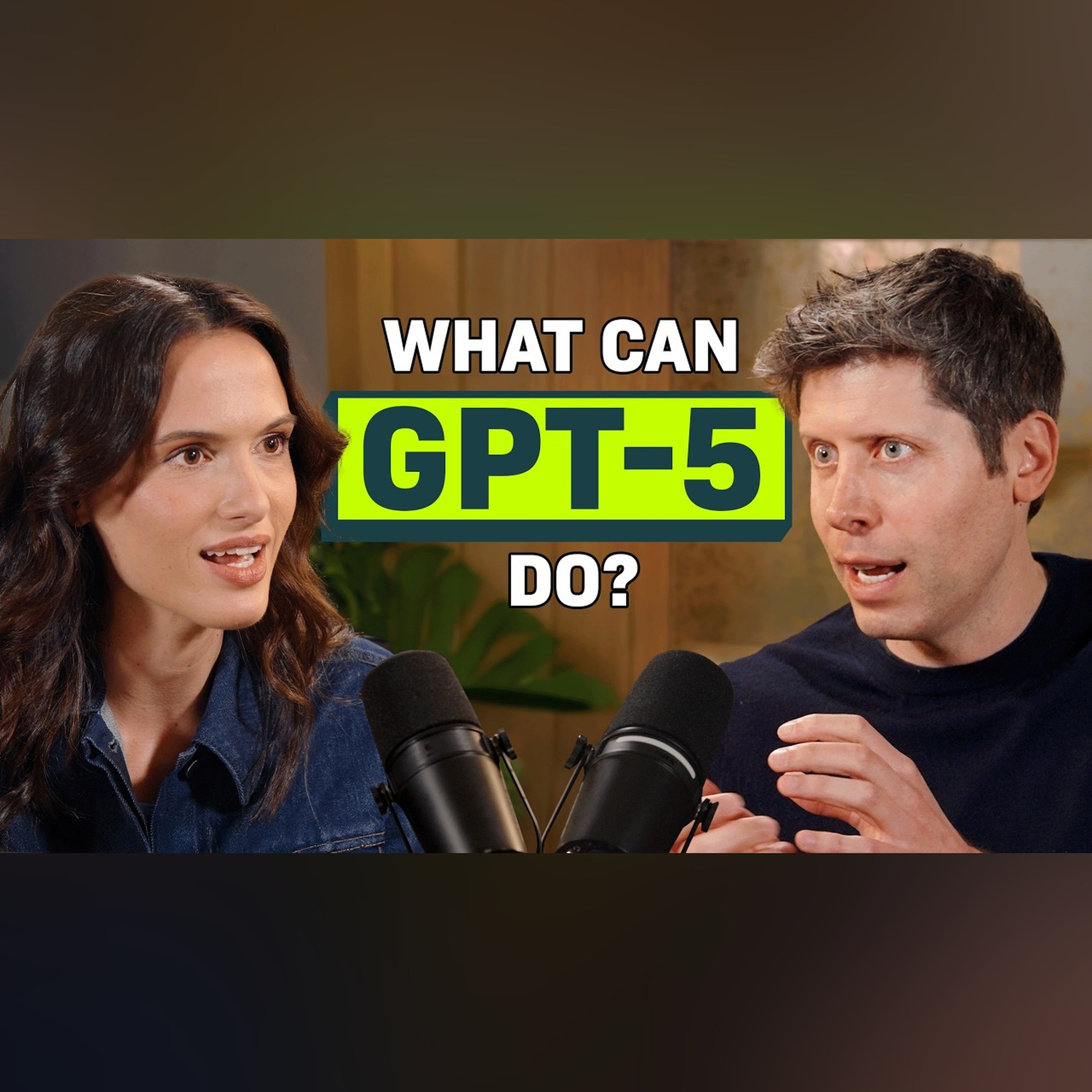
We’re about to time travel into the future Sam Altman is building… I interviewed Sam Altman, the CEO of OpenAI, the company behind ChatGPT. They’re trying to build a “superintelligence” that could far exceed humans in almost every field – and they just released their most powerful tool yet, GPT-5. A few years ago, that would’ve sounded like science fiction! Not anymore. In fact, they’re not alone. We’re in the middle of the most high stakes global race any of us have ever seen. Hundreds of billions of dollars and an unbelievable amount of human work… It’s a profound moment. Most people never see a huge technological shift like this in their lives and it’s happening all around us right now. So in this conversation, I’m going to try to time travel into the future with Sam Altman, to see what he’s trying to build… so you and I can really understand what’s coming. Welcome to HUGE* Conversations. Chapters: 0:00 What future are we headed for? 2:06 What can GPT-5 do that GPT-4 can’t? 6:57 Wha
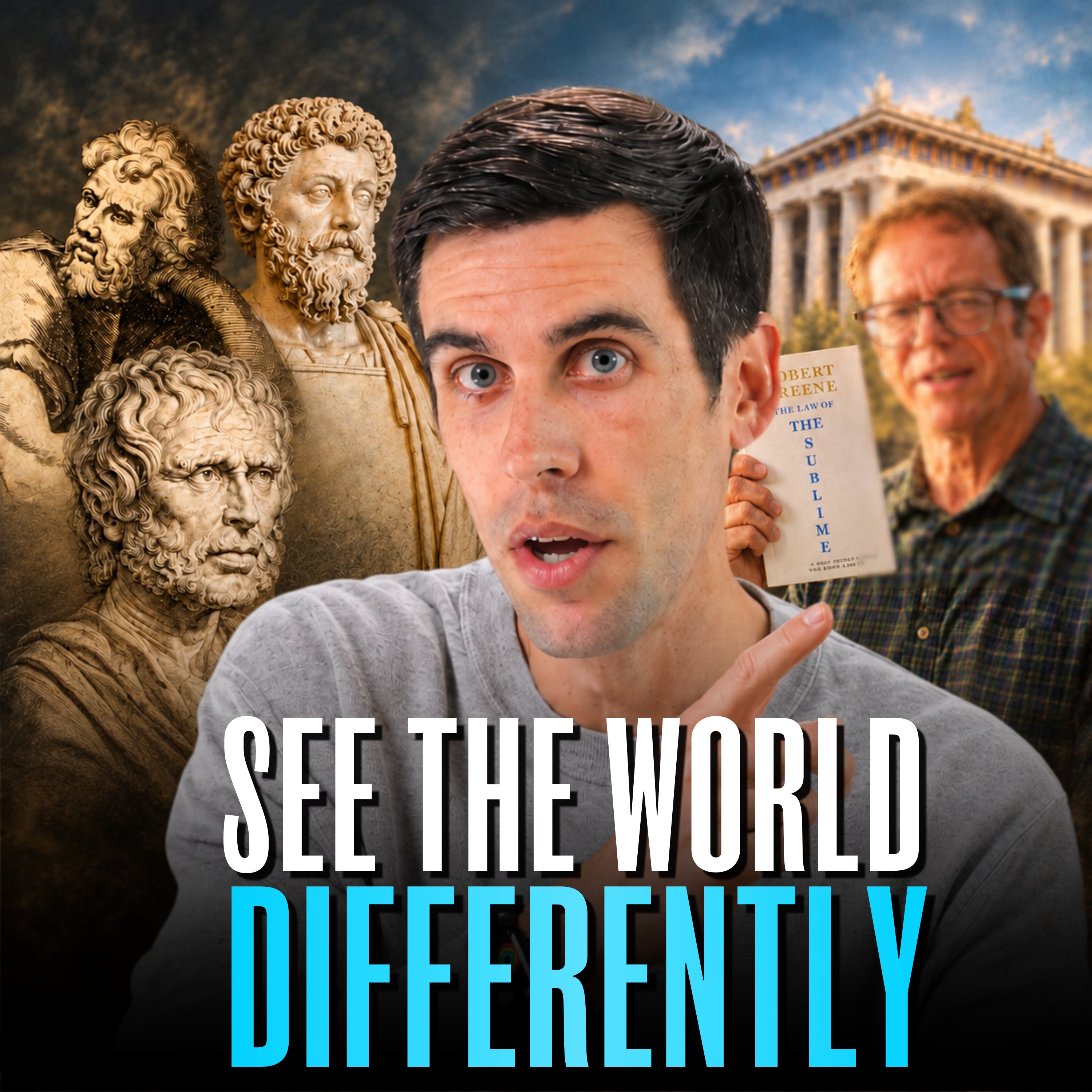
We spend so much time caught up in the demands of everyday life that we forget to appreciate how extraordinary it is to be alive. Inspired by Robert Greene's new book, The Law of the Sublime (https://www.thepaintedporch.com/products/the-law-of-the-sublime?_pos=13&_sid=e0d7a8c03&_ss=r), Ryan explores what the Stoics understood about finding beauty in the ordinary, seeing life from a different perspective, recognizing our connection to something bigger than ourselves, and remembering just how lucky we are to be alive. Watch this episode (https://www.youtube.com/watch?v=eCjqWcbsK1M) on YouTube: https://www.youtube.com/watch?v=eCjqWcbsK1M Watch the NEW Robert Greene Daily Stoic Podcast Episode HERE (https://www.youtube.com/watch?v=Kp_wYiuPD_o): https://www.youtube.com/watch?v=Kp_wYiuPD_o If you want to get your own dedicated privacy specialist and an emergency threat response team who can protect the privacy of you and your family, go to https://incogni.com/dailystoic Hosted on Acast.
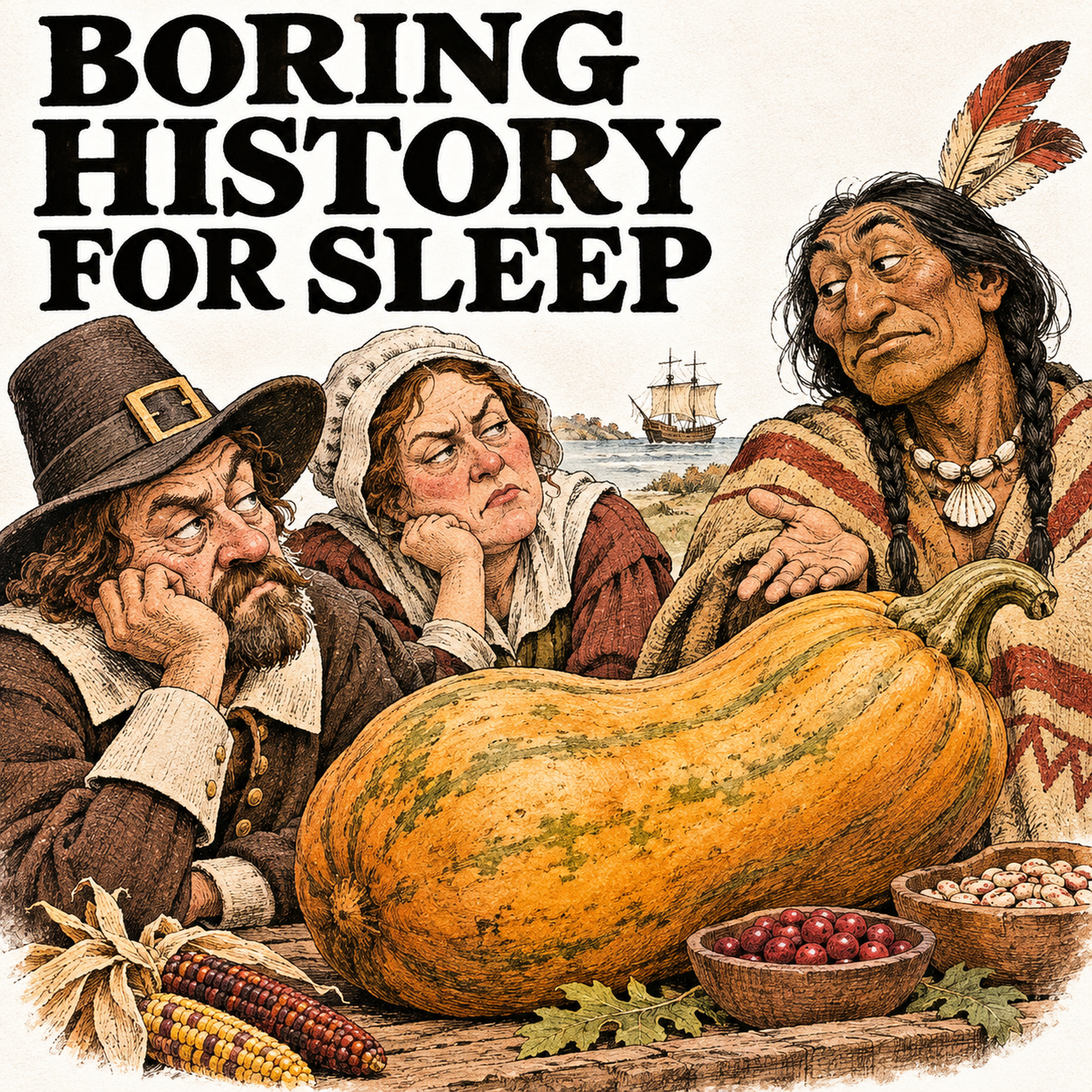
In 1620, a small ship called the Mayflower crossed the Atlantic carrying English settlers in search of a new life. Their arrival in North America became one of the most familiar stories in American history, but the reality behind the legend was far more complicated than the traditional Thanksgiving tale suggests. Discover why the Pilgrims left England, what their dangerous voyage was really like, and how they survived their first winter in an unfamiliar land. Explore their encounters with the Wampanoag people, the role of Tisquantum, also known as Squanto, and the assistance that helped the struggling settlers establish their colony. Uncover what happened at the harvest gathering of 1621, who actually attended, what was served, and how this event became connected to the modern Thanksgiving holiday. Follow the history beyond the familiar celebration and discover the people, cultural encounters, and historical realities behind the Mayflower story. Boring History for Sleep — Soft stories
Merriam-Webster's Word of the Day for November 22, 2026 is: copacetic • \koh-puh-SET-ik\ • adjective Copacetic (less commonly spelled copasetic or copesetic) describes things that are very satisfactory. // Worry not: I assure you that everything’s copacetic. See the entry > (https://www.merriam-webster.com/dictionary/copacetic) Examples: “We will be blessed with a second lunar eclipse on this night, but it won’t quite be total: at maximum, a little more than 90 percent of the moon will fall into Earth’s shadow. The event will start at 10:35 P.M. EDT, and the maximum eclipse will occur just after midnight. It won’t be as cool as the March eclipse, but the timing will be a lot more copacetic.” — Phil Plait, Scientific American, 9 Jan. 2026 Did you know? Copacetic (with many variant spellings) is probably better known for competing theories of its origin than for any record of unconscious everyday use in American English. The first written occurrence of the word thus far detected (as copa
A kiss can be wonderful. It can create an instant connection, spark romance, or make you feel closer to someone. But a kiss can also have the opposite effect — and sometimes ruin everything. So what makes kissing so powerful, and why can one kiss make such a difference? There's some fascinating science behind it. https://www.scientificamerican.com/article/why-we-kiss/ We spend an enormous amount of time worrying about what's going to change. What's next? What's coming? How do we prepare? But what if we're paying attention to the wrong things? Some of the most important forces shaping our lives never change, and understanding them may be far more valuable than trying to predict the future — something humans are notoriously bad at. Morgan Housel, partner at The Collaborative Fund and author of Same as Ever: A Guide to What Never Changes (https://amzn.to/3SwWn6u) (https://amzn.to/3SwWn6u)), joins me to explain why the things that stay the same may be the most important things to understan
Ever get a shopping cart at the grocery store with one wheel that wobbles, squeaks, or refuses to go where you want it to? It happens so often you have to wonder if there's a reason for it. Could those troublesome wheels actually be deliberate? The explanation may surprise you. https://www.cbsnews.com/amp/pittsburgh/news/why-are-shopping-carts-always-broken/ Joy is one of the best feelings we can experience. So why do so many of us have trouble letting ourselves fully enjoy it? Some people seem naturally joyful, while others struggle to find it — or even feel uncomfortable when things are going well. What gets in the way of joy? And can you actually learn to experience more of it? Psychologist and Stanford University lecturer Kelly McGonigal, author of Joy Is a Risk Worth Taking (https://link.amazon/B06WrZoj5), (https://link.amazon/B06WrZoj5) joins me to explain why we sometimes hold ourselves back from feeling joy, why it matters more than we realize, and how to bring more of it into
The human body is an amazing thing. Millions of years of evolution have given us remarkable abilities, but they've also left us with some pretty strange flaws. Why do we have body parts we don't really need? Why are our backs so prone to problems? And why does something as essential as the human body have so many things that can go wrong? It turns out evolution isn't about creating perfection. It's about making things work well enough to survive — and sometimes the results are downright bizarre. Biology professor Nathan Lents, author of Human Error: A Panorama of Our Glitches from Pointless Bones to Broken Genes (https://amzn.to/2zo2u67), (https://amzn.to/2zo2u67)joins me for a fascinating tour of the human body and its evolutionary history. Listen as he reveals the surprising mistakes, awkward compromises, and peculiar leftovers evolution has handed down to us — and why understanding these imperfections can tell us so much about what it means to be human. PLEASE SUPPORT OUR SPONSORS A
Creators should be compensated when their work is used commercially to train AI systems.
Share your view, then see how readers voted. No sign-in required. This poll is shared across stories.
Do you agree or disagree?
Common Quandary
A Common Quandary to discuss
Another conversation to explore, separate from this news story.
The restaurant forgot your expensive entrée. Do you point it out?
After a crowded dinner, you notice the restaurant omitted your most expensive entrée from the bill. Service was slow, the server seemed overwhelmed, and correcting it may create trouble for the person who made the mistake.
Does protecting someone from consequences ever justify benefiting from their error?