Listen through the publisher, then discuss the episode here or arrange an in-person Roundtable. Your city determines where to meet.
Roundtables are designed for groups of four, with a shared subject and room for everyone to speak. Come for discussion, with no dating expectation.
You may know that the Bible commands you to rejoice even when life is hard. But when you face trials like job loss, sickness, or the death of a loved one, how can you obey God’s command to rejoice always? As we close out this Thanksgiving week, join John MacArthur as he shows you why you can praise God and rejoice in any circumstance. Click the icon below to listen.https://feeds.gty.org/-/974176880/0/gtyradiobroadcast.mp3
Episode information is provided by the publisher. Listening takes place on the publisher’s service.
Read: Psalm 100; Philippians 4:6-7 (https://www.biblegateway.com/passage/?search=Psalm+100%3B+Philippians+4%3A6-7) Aunt Diana finished reading and closed her Bible. “Now, let’s pray and take our needs before Jesus.” “I don’t want to,” Anna said, crossing her arms. “God never answers my prayers.” Austin gasped, looking wide-eyed at his big sister and then his aunt. Aunt Diana looked tenderly at her niece. “I’m sorry to hear that, Anna. Have you tried being thankful when you pray?” Anna shrugged. “Let’s bow our heads anyway and I’ll pray,” said Aunt Diana. After she prayed, Aunt Diana stood up. “Put on your tennis shoes. We’re going on a nature hike!” “Yeah!” Austin jumped up from his chair. When they were on the trail, Austin pointed to something hanging from Aunt Diana’s neck. “What’s that?” “These are binoculars,” Aunt Diana replied. “They help you see what you might miss otherwise.” She held them up to her eyes. “Look, there’s a woodpecker in the oak tree.” “Let me see,” said Austin.
How often do we ask Jesus to bless our plans instead of surrendering to his? What did a mother's misguided request reveal about the disciples's understanding of God's kingdom? And what does it look like to pursue God's mission his way? In today's episode, Jensen explores Matthew 20:20–34 and shows us why following Jesus means surrendering our own motives and embracing his mission of serving others. Want to become a more consistent Bible reader? Read the Bible with us! We're almost done exploring the Gospels—Matthew, Mark, Luke, and John—but it's never too late to jump in! Your support makes TMBT possible. Ten Minute Bible Talks is a crowd-funded project. Join the TMBTeam to reach more people with the Bible. Give now (https://info.tenminutebibletalks.com/support). Like this content? We'd love to hear from you! Passage: Matthew 20:20-34 (https://www.biblegateway.com/passage/?search=Matthew+20%3A20-34&version=NIV)
Have you ever turned to ChatGPT for spiritual advice before talking to your pastor? How do you know if the answers you’re getting are worth trusting? Todd Friel explores the risks of relying on AI, what draws conservative Protestants to Roman Catholicism, and what’s behind a call for Christian resistance. Segment 1 The irony behind a liberal Christian manifesto. Are Christian nationalists heretics? Should you join the resistance movement? Segment 2 How does a conservative Baptist end up Catholic? Why your kids need to know their Christian roots. Are you trusting AI instead of your pastor? Segment 3 Todd’s AI experiment will make you think twice. How secure is your career in the age of AI? An overlooked career opportunity for Christians. Segment 4 Don’t get caught in this rhetorical trap. Are you missing a vital part of Christian discipleship? Would others recognize your spiritual growth? ___ Thanks for listening! As part of our Multiply 2027 year-end campaign, every gift made through D
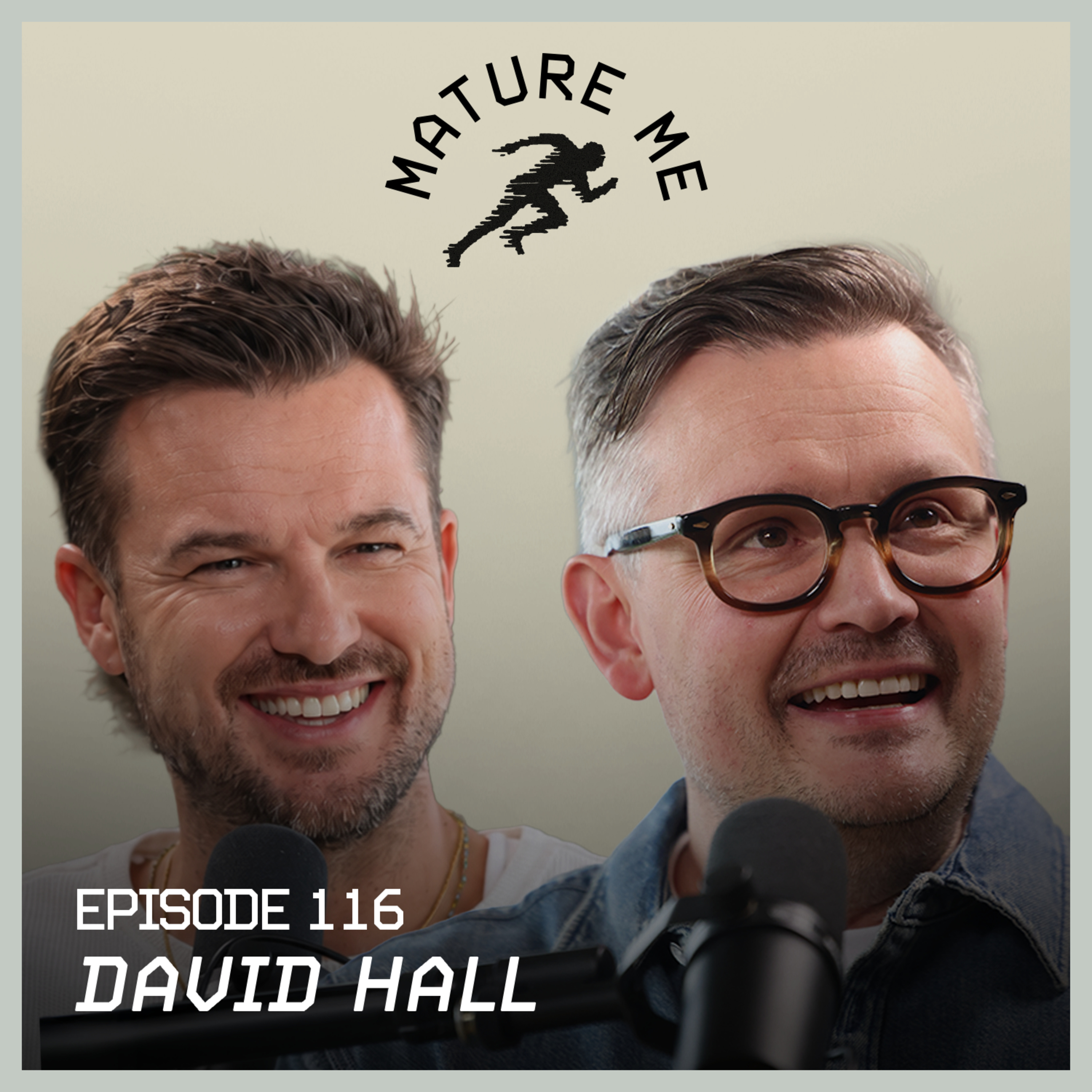
Are we really making room for God to move? This week on Mature Me, I sit down with my old friend @davidhall1981, pastor of Revival City Church in Australia. I've known David since the late '90s, and man, this guy has been around ministry a long time. I love his heart for God and the wisdom that comes from years of walking out the calling. We talk about the importance of staying rooted in God's Word, making room for the Holy Spirit, having the right voices in your life and what it takes to keep going when things get hard. Just because things don't look the way you thought they would doesn't mean God isn't working. Sometimes maturity is simply refusing to quit on what God has called you to.
Can we be grateful for aspects of a religion we no longer believe in? Can we acknowledge institutional dishonesty, religious trauma, and the harm Mormonism has caused while still appreciating some of what we gained from our experiences within it? In this special Thanksgiving edition of Mormonism Live, we explore the more complicated relationship former Mormons can have with their religious past. We’ll discuss ten things ex-Mormons might still be grateful for, including meaningful relationships, opportunities for personal growth, experiences of transcendence, a commitment to service, and the courage we discovered in ourselves when we chose authenticity over belonging. We’ll also explore several important psychological insights: • Why gratitude doesn’t require minimizing harm. • How we can reclaim meaningful experiences without accepting the religious narrative attached to them. • Why growing from adversity doesn’t justify the adversity. • How leaving Mormonism can deepen our empathy for
Can we be grateful for aspects of a religion we no longer believe in? Can we acknowledge institutional dishonesty, religious trauma, and the harm Mormonism has caused while still appreciating some of what we gained from our experiences within it? In this special Thanksgiving edition of Mormonism Live, we explore the more complicated relationship former Mormons can have with their religious past. We’ll discuss ten things ex-Mormons might still be grateful for, including meaningful relationships, opportunities for personal growth, experiences of transcendence, a commitment to service, and the courage we discovered in ourselves when we chose authenticity over belonging. We’ll also explore several important psychological insights: • Why gratitude doesn’t require minimizing harm. • How we can reclaim meaningful experiences without accepting the religious narrative attached to them. • Why growing from adversity doesn’t justify the adversity. • How leaving Mormonism can deepen our empathy for
What are you thankful for this year? Maybe that’s a hard question for you. In fact, these may be very difficult days for you. But if you’re in Christ, you have cause to give thanks even today—and every day. John MacArthur’s next message will help you see why. So be here for a special Thanksgiving Day lesson. Click the icon below to listen.https://feeds.gty.org/-/974053082/0/gtyradiobroadcast.mp3
As you look at the world around you—with your head spinning at all the chaos, all the problems, all the wrong thinking, all that’s upside-down—what can you be thankful for? Find out why, if you’re a Christian, you have every reason to overflow with thankfulness, as you’ll hear in the last sermon John MacArthur ever preached. Click the icon below to listen.https://feeds.gty.org/-/973987403/0/gtyradiobroadcast.mp3
If you’re a Christian, how do you cultivate thankfulness even when circumstances aren’t going your way? Well, with Thanksgiving in view, John MacArthur will show you from Scripture how you can become an always-thankful person, no matter what life might throw at you. Make sure you’re here for John’s lesson called “A Model for Giving Thanks.” Click the icon below to listen.https://feeds.gty.org/-/973893257/0/gtyradiobroadcast.mp3
Major project cost overruns should trigger a public review before more money is committed.
Share your view, then see how readers voted. No sign-in required. This poll is shared across stories.
Do you agree or disagree?
Common Quandary
A Common Quandary to discuss
Another conversation to explore, separate from this news story.
A DNA test reveals a family time bomb. Do you tell relatives who would rather not know?
A genetic test reveals that you carry a serious inherited condition. Your siblings and adult cousins may carry it too, but one has previously said they would rather live without predictions about illnesses that cannot yet be prevented.
Can someone's wish not to know outweigh your responsibility to warn them?