What NASA, air ambulances, and Covid taught Kevin Fong about chaos in medicine
66 min
Listen through the publisher, then discuss the episode here or arrange an in-person Roundtable. Your city determines where to meet.
Roundtables are designed for groups of four, with a shared subject and room for everyone to speak. Come for discussion, with no dating expectation.
The World Uncertainty Index for 2026 argues that we’ve never had to deal with so much uncertainty before. But it’s not just uncertainty - it’s also volatility, complexity and ambiguity that are wracking world politics and healthcare systems. How individual doctors, and clinical teams, respond to this environment is the topic of a new book by Kevin Fong, professor of anaesthesia at UCL. The book’s called “Minute Six” - and it draws on Kevin’s personal experience as an emergency doctor, national lead for the Covid 19 response, and as an astrophysicist. Reading list: Minute Six, by Kevin Fong (https://www.penguin.co.uk/books/430645/minute-six-by-fong-kevin/9781847923684) AI apocalypse? It’s the end of the world as we know it, but I feel fine (https://www.bmj.com/content/395/bmj-2026-101182)
Episode information is provided by the publisher. Listening takes place on the publisher’s service.
Narcissistic abuse rewires your hormones. Cortisol, oxytocin, dopamine, thyroid, reproductive hormones and blood sugar all get thrown off, which is why so many survivors have symptoms doctors cannot explain. Chapters 00:00 Introduction 01:13 Dysregulated Cortisol Production 03:14 Disrupted Oxytocin and Dopamine Systems 05:26 Thyroid Dysfunction and Metabolic Disruption 07:23 Reproductive Hormone Chaos 09:22 Insulin Resistance and Blood Sugar Dysregulation 11:08 Why Doctors Miss These Patterns 12:03 Steps Towards Healing and Recovery 12:50 Join the Thrive After Narcissistic Abuse Program 13:17 Conclusion and Final Thoughts Is this narcissistic abuse? Watch this episode on YouTube: youtu.be/bwfVmEIk6rw (https://youtu.be/bwfVmEIk6rw)
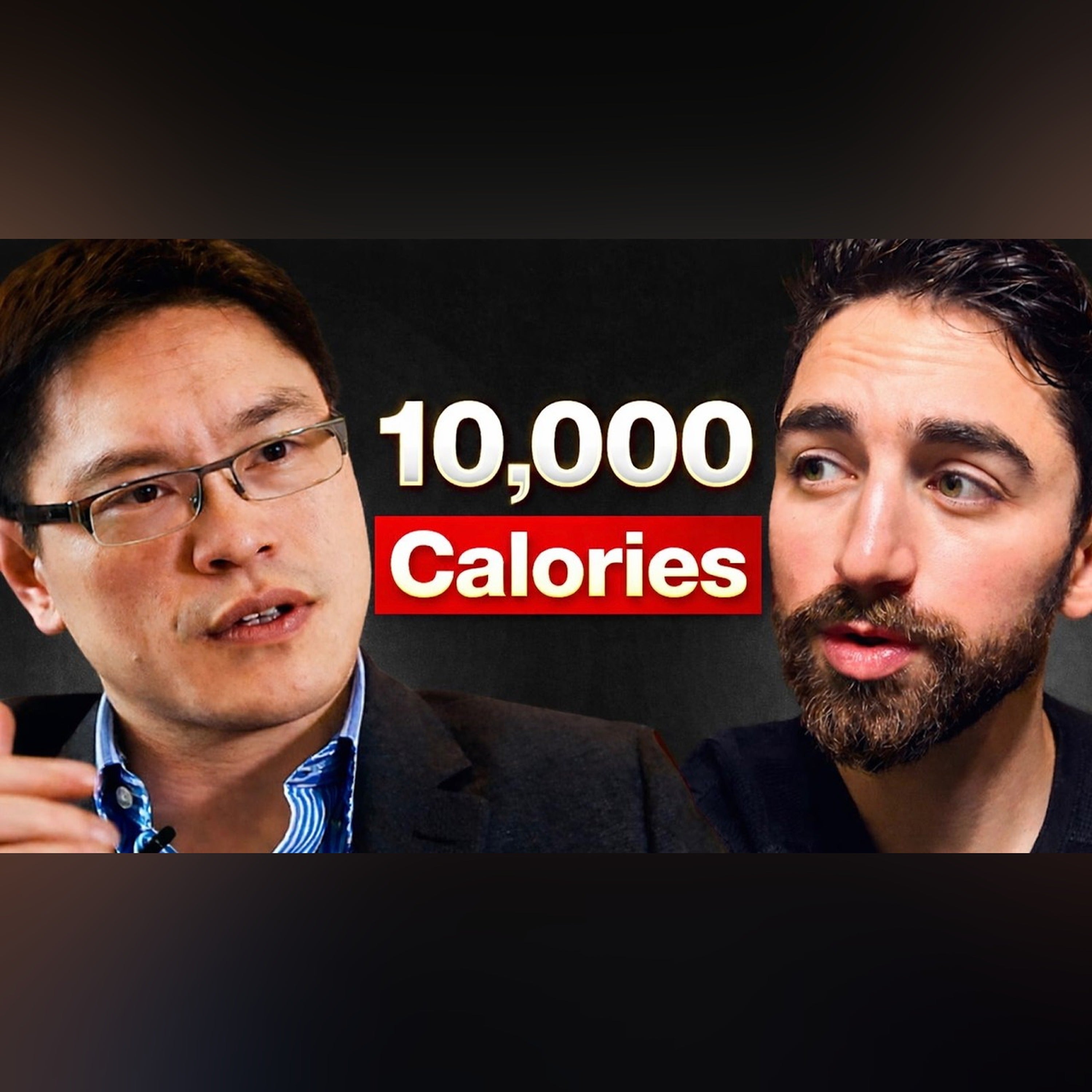
The Hunger Code Book: https://www.amazon.com/Hunger-Code-Resetting-Thermostat-Ultra-Processed/dp/1778401562 Weighted Vest Letter: https://staycuriousmetabolism.substack.com/p/how-weighted-vests-trick-your-body?r=40ekz2 Brain Insulin Resistance Letter: https://staycuriousmetabolism.substack.com/p/this-study-changed-how-i-see-junk?r=40ekz2 “Calories don’t cause obesity” is a provocative phrase—but it’s biologically accurate. It challenges a deeply entrenched misconception: that overeating causes obesity, rather than obesity driving overeating. If that sounds confusing, you’re not alone. Most people have been taught to think about it the other way around. In this discussion, Dr. Jason Fung and I work to untangle that misunderstanding. We explore how energy imbalance—so-called “overeating” and "excess calories"—is more often a consequence of obesity, not its root cause. What truly drives obesity is a complex interplay of social and hormonal factors that increase hunger and/or reduce energy
A kiss can be wonderful. It can create an instant connection, spark romance, or make you feel closer to someone. But a kiss can also have the opposite effect — and sometimes ruin everything. So what makes kissing so powerful, and why can one kiss make such a difference? There's some fascinating science behind it. https://www.scientificamerican.com/article/why-we-kiss/ We spend an enormous amount of time worrying about what's going to change. What's next? What's coming? How do we prepare? But what if we're paying attention to the wrong things? Some of the most important forces shaping our lives never change, and understanding them may be far more valuable than trying to predict the future — something humans are notoriously bad at. Morgan Housel, partner at The Collaborative Fund and author of Same as Ever: A Guide to What Never Changes (https://amzn.to/3SwWn6u) (https://amzn.to/3SwWn6u)), joins me to explain why the things that stay the same may be the most important things to understan
Listen to the full 1 Hour plus Between Friends episode. Go Directly to this Patreon Episode "I Just Need Everyone to Go Away plus Unicorn Lifeguards, Stalkers, Trauma and Me Fully Melting Down" Picture this: Your houseguest arrives in an hour, the furniture delivery is a disaster, and the bed is in the WRONG room! Chalene shares the hilarious chaos of trying to move a massive bed herself, in a tight dress and heels, while Bret gets sent on an emergency hardware store run. But just when they think they've got it handled, things take a painful turn! This story is part of The Saturday Spill series a little peek into the wild, unfiltered stuff that usually stays on Patreon. Some weeks it's hilarious, some weeks it's jaw-dropping, but it's always real life that doesn't quite fit on the regular show. If you're into a little chaos and behind-the-scenes tea, you're in the right place. If you love it, amazing…you can listen to the full, unedited version here https://Chalene.com/more (https://ww
Does your relationship feel like home, or does it feel like standing on the edge of something you might lose? In Part 3 of our Relationship Anxiety series, clinical hypnotherapist and former paramedic Martin Hewlett guides you through the process of teaching your nervous system that love doesn't have to hurt to be real. We explore the physical manifestations of anxiety—the tight chest, the 2:00 AM racing mind, and the "stomach drop" when a text takes too long—and provide the tools to "turn down the alarm" of your internal survival response. If you are ready to stop "cherry-picking" evidence of disaster and start building a foundation of trust, this session is for you. In This Episode, We Cover: The Science of Safety: Understanding how your nervous system confuses love with danger. Guided Visualization: A journey into your own "safe room" where you are already enough. Rewiring the Brain: Moving from worst-case disaster reels to the reality of small, daily kindnesses. Breaking the Cycle:
For the days you got through and nobody saw what it took. A quiet place this evening where it counts. About 12 minutes with Steven Webb's calm voice and music underneath. Perfect for the evening. We let the body soften, from the jaw and the eyes down to the belly, because it's been on alert all day. Then we look at what today really cost. Getting up when your body said no. Being kind to someone while you were falling apart inside. Saying "yeah, fine" because where would you even start? There's an old Zen idea I keep coming back to: a thing doesn't need to be seen to be real. The rain falls on an empty field, nobody watches, and it still soaks in. We put the day down for a minute, not away, just down, and finish with three gentle wishes. May the hard days I got through be counted. I've been paralysed a long time, and I know what it can take just to get through the day. You're not doing this on your own. Treat me to a coffee, keep the podcast free, and get my Weekly Calm every Sunday. It
In this magazine episode, we talk about the forever chemicals in our blood, how to protect patients from cosmetic procedures gone wrong, and the long-standing dearth of LGBTQ+ data. Per- and poly-fluoro-alkyl substances, also called PFAS or "forever chemicals", have become ubiquitous in our environment over the last 70 years. As the UK government launches a new epidemiological study into human exposure, we discuss the persistent biological effects of PFAS and what this means for long-term health outcomes. Also this week, we turn our attention to the up-and-coming new restrictions in England targeting non-surgical cosmetic procedures. But will these proposed changes actually protect the public from unscrupulous providers? We discuss the problems with regulation in a profit driven market, and what it means for patient safety. Finally, while health outcomes for LGBTQ+ people are known to be worse than the general population, the extent of that gap, and what’s causing it, are still difficu
In this episode of the Medicine and Science podcast, we dive into a cross-border public health mystery and hear about the loneliness of the resident doctor. Canada recently lost its measles elimination status following a major outbreak of over 2,000 cases that began in late 2024. It's essential that public health agencies can track the virus as it moves through a population - but how do they do it? Two public health physicians from Ontario join us to explain how they went into full investigatory mode. We discuss how genomic sequencing, contact tracing, and vaccination data came together to form a detective story that exposes the vulnerability of under-vaccinated populations, the porous nature of international borders, and what it will take to regain elimination status. Then, we turn to the ongoing retention and morale crisis among resident doctors in the UK. A new BMJ opinion piece points to a possible different fuel for the discontent: workplace loneliness. We explore how rotational p
Environmental commitments should be judged by measured outcomes rather than announced targets.
Share your view, then see how readers voted. No sign-in required. This poll is shared across stories.
Do you agree or disagree?
Common Quandary
A Common Quandary to discuss
Another conversation to explore, separate from this news story.
Your boss offers lessons to make you sound “more professional.” Do you take them?
Clients sometimes ask an employee to repeat themselves during calls. Their manager offers company-paid speech coaching framed as clearer communication, but the employee experiences the request as pressure to hide part of their identity.
When does improving communication become demanding conformity?