Forever chemicals, cosmetic fillers, and LGBTQ+ data
33 min
Listen through the publisher, then discuss the episode here or arrange an in-person Roundtable. Your city determines where to meet.
Roundtables are designed for groups of four, with a shared subject and room for everyone to speak. Come for discussion, with no dating expectation.
In this magazine episode, we talk about the forever chemicals in our blood, how to protect patients from cosmetic procedures gone wrong, and the long-standing dearth of LGBTQ+ data. Per- and poly-fluoro-alkyl substances, also called PFAS or "forever chemicals", have become ubiquitous in our environment over the last 70 years. As the UK government launches a new epidemiological study into human exposure, we discuss the persistent biological effects of PFAS and what this means for long-term health outcomes. Also this week, we turn our attention to the up-and-coming new restrictions in England targeting non-surgical cosmetic procedures. But will these proposed changes actually protect the public from unscrupulous providers? We discuss the problems with regulation in a profit driven market, and what it means for patient safety. Finally, while health outcomes for LGBTQ+ people are known to be worse than the general population, the extent of that gap, and what’s causing it, are still difficult to study. Basic data collection is shockingly poor. We hear why that is, and what’s needed to fill the gap. Guest List: Tony Fletcher – Honorary associate professor at the London School of Hygiene & Tropical Medicine Alexandra Mullock – Senior lecturer in medical law at the University of Manchester Joel Bates – Research assistant at King’s College London Reading: PFAS: the persistent problem of forever chemicals and health (https://www.bmj.com/content/395/bmj-2026-101278) Delayed regulation of non-surgical cosmetic procedures threatens patient safety (https://www.bmj.com/content/395/bmj-2026-101147) The NHS doesn’t routinely collect data on LGBTQ+ health, even though meaningful improvements can’t happen without it
Episode information is provided by the publisher. Listening takes place on the publisher’s service.
For extra nuances and all the references, please see the newsletter: https://staycuriousmetabolism.substack.com/p/can-we-become-like-captain-america?r=40ekz2 The StayCurious Human Enhancement Series We're launching a new series at StayCurious Metabolism called Peptides Plus, where we'll explore the most promising tools available today—and the innovations that may shape tomorrow. We have dozens of deep dives planned, covering everything from emerging therapeutics to cutting-edge performance and longevity interventions. GO HERE: https://staycuriousmetabolism.substack.com/p/peptides Chapters 0:00 — Superhuman Biology Is Already Starting 2:40 — Beyond GLP-1: Fat Loss Without Muscle Loss 7:28 — Gene Editing, CRISPR, and the Future of Disease Cure 14:57 — Cellular Reprogramming and Biological Age Reset 18:49 — MicroRNAs, Mitochondria, and What Comes Next Video Description What if the idea of “superhuman biology” isn’t science fiction anymore—but early-stage reality? From drugs that selective
Is your body weight stable, but you're still not eating enough to properly fuel your training, recovery, and overall health? Introducing Why Stable Weight Doesn't Always Mean You're Eating Enough from Jeff Hoehn of the Mind Muscle Connection Podcast (https://www.buzzsprout.com/1508401). Just because your weight isn't changing doesn't necessarily mean you're adequately fueled. In this episode, Jeff breaks down why maintaining a stable body weight doesn't always mean you're meeting your body's energy needs, especially if you're training hard, staying lean, or spending long periods dieting. You'll learn: Why stable body weight doesn't automatically mean adequate energy availability Who is most at risk of underfueling, even when their weight isn't changing How high training output, staying too lean, and chronic dieting can contribute to low energy availability The potential signs of underfueling, including changes in performance, recovery, hormones, and menstrual health Why spending too lo
Today, I’m honored to connect with Dr. Troy Badger. He is a board-certified cardiologist and interventionalist and the founder of Cardiostrong, a concierge preventive cardiology clinic in Provo, Utah, focused on reducing cardiovascular risk, optimizing metabolic health, and improving strength and cardiorespiratory fitness for executives and athletes. In today’s conversation, we discuss Dr. Badger’s gender- and age-specific approach to heart health, including treatment differences for men and women, and diagnoses such as INOCA, SCAD, vasospastic disease, and Takotsubo. We examine emotions and their influence on heart health, coronary ischemia and cardiomyopathies, labs and diagnostics, how Dr. Badger assesses risk in his patients, and the differences between a CAC and a CCTA. Dr. Badger also shares the labs he finds essential for all patients and discusses the role of VO2 Max, cardiovascular training, and lifestyle—specifically nutrition, the use of GLP-1 drugs, and a multidisciplinary
"The Big Secret" documentary portrays how the U.S. healthcare system was reshaped by corporate and pharmaceutical forces, replacing natural healing with a drug-centered, profit-driven medical monopoly The shift began with the Flexner Report, backed by Carnegie and Rockefeller interests, which redefined medical legitimacy and opened the door to corporate control over healthcare Modern medicine has wrongly vilified cholesterol, leading to widespread statin use that can undermine hormone health, cognitive function, and metabolic resilience Industrial agriculture, glyphosate, and processed foods strip essential minerals from the food supply. This has been linked to widespread nutritional deficiency and chronic disease across generations The real "big secret" is that health can restore itself once you eliminate what disrupts it and provide the inputs it's always required
A kiss can be wonderful. It can create an instant connection, spark romance, or make you feel closer to someone. But a kiss can also have the opposite effect — and sometimes ruin everything. So what makes kissing so powerful, and why can one kiss make such a difference? There's some fascinating science behind it. https://www.scientificamerican.com/article/why-we-kiss/ We spend an enormous amount of time worrying about what's going to change. What's next? What's coming? How do we prepare? But what if we're paying attention to the wrong things? Some of the most important forces shaping our lives never change, and understanding them may be far more valuable than trying to predict the future — something humans are notoriously bad at. Morgan Housel, partner at The Collaborative Fund and author of Same as Ever: A Guide to What Never Changes (https://amzn.to/3SwWn6u) (https://amzn.to/3SwWn6u)), joins me to explain why the things that stay the same may be the most important things to understan
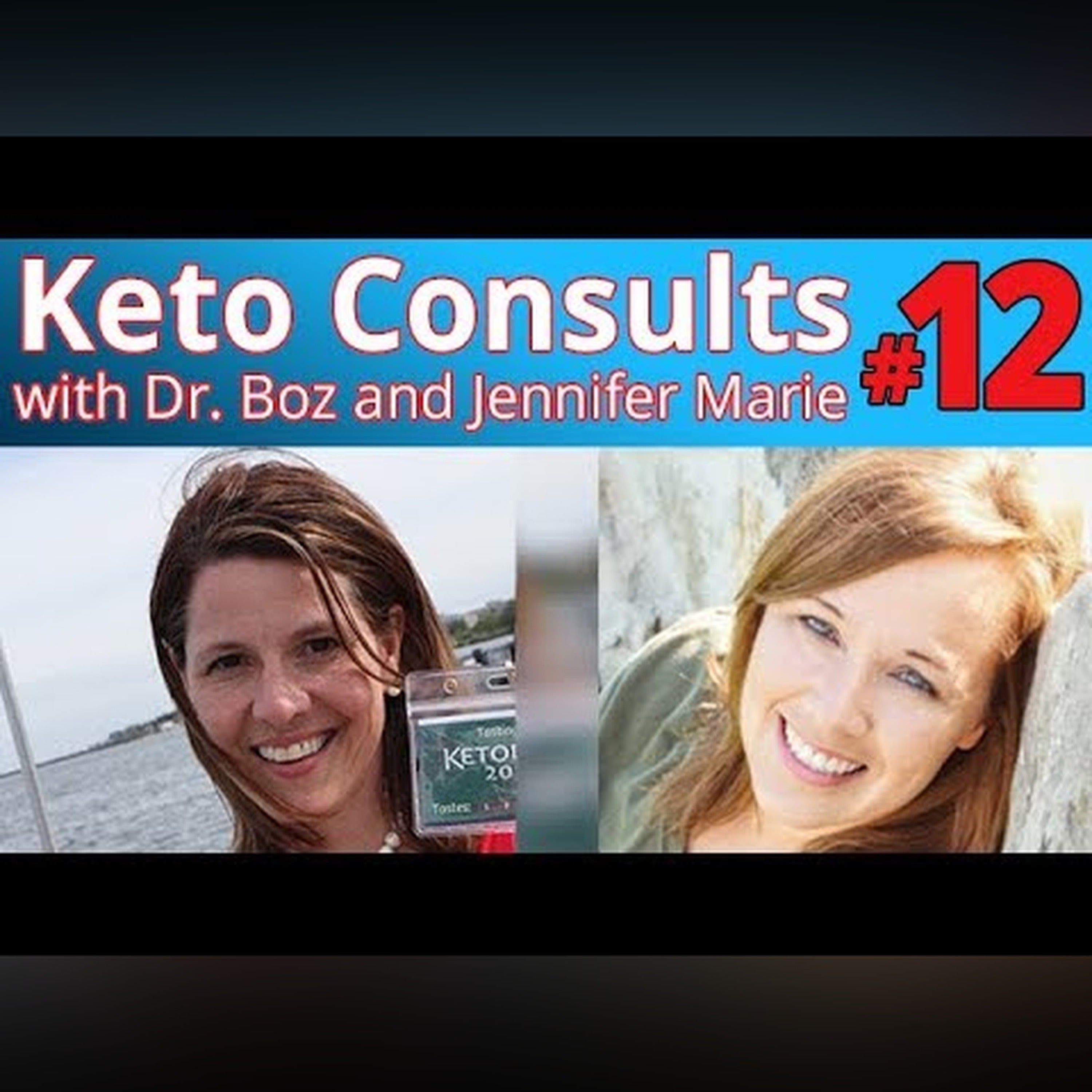
Keto Consult #12, This week Jennifer and I talk about my experience at the Metabolic Health Center 2019. I was able to hear some really interesting lectures about Keto for Cancer and Keto for Mental Health. The talk about Keto for Cancer and Keto for Mental Health has come such a long way in the past 2 years and continues to evolve. We also discuss the Effects of Marijuana on the Brain and Hyperbaric Oxygen Chambers and the benefits of Hyperbaric Oxygen Therapy. Finally we get an update from Jennifer and discuss her personal Keto Journey. Thanks for tuning into my channel. To learn more about Keto and Cancer, read my blog here: https://bozmd.com/m-d-anderson-on-the-keto-diet-and-cancer/ BOOK-LINK - ANYWAY YOU CAN. AUDIBLE: https://adbl.co/2SLLfS1 PAPERBACK= (Affilate link) https://amzn.to/2Cq1IVC The two most common questions I get ... 1) "Doc, what BLOOD METER do you recommend?" ANSWER: FORACARE: http://bit.ly/2QKGmKG For years my diabetics told me this system was great. I tried sever
The World Uncertainty Index for 2026 argues that we’ve never had to deal with so much uncertainty before. But it’s not just uncertainty - it’s also volatility, complexity and ambiguity that are wracking world politics and healthcare systems. How individual doctors, and clinical teams, respond to this environment is the topic of a new book by Kevin Fong, professor of anaesthesia at UCL. The book’s called “Minute Six” - and it draws on Kevin’s personal experience as an emergency doctor, national lead for the Covid 19 response, and as an astrophysicist. Reading list: Minute Six, by Kevin Fong (https://www.penguin.co.uk/books/430645/minute-six-by-fong-kevin/9781847923684) AI apocalypse? It’s the end of the world as we know it, but I feel fine (https://www.bmj.com/content/395/bmj-2026-101182)
In this episode of the Medicine and Science podcast, we dive into a cross-border public health mystery and hear about the loneliness of the resident doctor. Canada recently lost its measles elimination status following a major outbreak of over 2,000 cases that began in late 2024. It's essential that public health agencies can track the virus as it moves through a population - but how do they do it? Two public health physicians from Ontario join us to explain how they went into full investigatory mode. We discuss how genomic sequencing, contact tracing, and vaccination data came together to form a detective story that exposes the vulnerability of under-vaccinated populations, the porous nature of international borders, and what it will take to regain elimination status. Then, we turn to the ongoing retention and morale crisis among resident doctors in the UK. A new BMJ opinion piece points to a possible different fuel for the discontent: workplace loneliness. We explore how rotational p
Keeping food affordable should not require producers to work for an unsustainable income.
Share your view, then see how readers voted. No sign-in required. This poll is shared across stories.
Do you agree or disagree?
Common Quandary
A Common Quandary to discuss
Another conversation to explore, separate from this news story.
Your adorable child could pay for college by becoming an influencer. Do you start filming?
Parents post cheerful videos of their young child and earn enough to fund the child's education. The child enjoys filming now but cannot understand what it means for strangers to watch those moments years later.
Can parents consent to a permanent public identity on a child's behalf?