What's the size of a mole? (Not the creature, the other one.) - Daniel Dulek
7 min
Listen through the publisher, then discuss the episode here or arrange an in-person Roundtable. Your city determines where to meet.
Roundtables are designed for groups of four, with a shared subject and room for everyone to speak. Come for discussion, with no dating expectation.
View full lesson here: http://ed.ted.com/lessons/daniel-dulek-how-big-is-a-mole-not-the-animal-the-other-one The word "mole" suggests a small, furry burrowing animal to many. But in this lesson, we look at the concept of the mole in chemistry. Learn the incredible magnitude of the mole--and how something so big can help us calculate the tiniest particles in the world. Lesson by Daniel Dulek, animation by Augenblick Studios.
Episode information is provided by the publisher. Listening takes place on the publisher’s service.
Have you ever told someone, "Thanks a million!" or claimed you have "a million toys to clean up"? We use the word "million" all the time to mean "a whole lot," but have you ever stopped to wonder just how big a real million actually is? Join Mira and Finn on a mind-blowing math adventure as they discover the quiet power of giant numbers! Imagine counting one number every single second without ever stopping to eat or sleep. It wouldn't take a few hours or a long weekend—it would take you about eleven and a half days just to reach one million! And what about its giant neighbor, the billion? Counting to a billion the exact same way would take a whopping thirty-two years. That's a grown-up's whole life so far! In this amazing episode, we won't just look at numbers on a page; we’ll learn to feel their true size. Find out how much space a million grains of rice would take up, and discover exactly how far a million footsteps would carry you. Get ready to stretch your brain and learn why being
# The Magic of Thinking Big | Jim Rohn Motivation The size of your results often begins with the size of your thinking. Uploaded 31-08-26 In this powerful motivational video inspired by Jim Rohn, you’ll discover how thinking bigger can change the way you set goals, make decisions, handle challenges, and approach your future. Too many people limit themselves before they ever give themselves a real chance. They expect less, aim lower, and settle for what feels comfortable. Jim Rohn teaches that personal growth begins with your philosophy. When you raise your expectations, develop a stronger mindset, surround yourself with better ideas, and take action on bigger goals, you give yourself the opportunity to achieve more than you once believed possible. Thinking big does not mean ignoring reality. It means refusing to let fear, doubt, or small thinking decide what your future can become. If you're ready to raise your standards, think bigger, and start working toward a greater life — this mes
For extra nuances, references and early access to data like these, see the newsletter: https://open.substack.com/pub/staycuriousmetabolism/p/aging-is-an-explosion-can-we-stop?r=40ekz2&utm_campaign=post&utm_medium=web&showWelcomeOnShare=true (https://open.substack.com/pub/staycuriousmetabolism/p/aging-is-an-explosion-can-we-stop?r=40ekz2&showWelcomeOnShare=true) Hundred Health Link: https://go.hundred.com/nick-norwitz Discount Code: StayCurious50 (Disclaimer below) Berberine and Heart Health Letter: https://staycuriousmetabolism.substack.com/p/how-berberine-lowers-cholesterol?r=40ekz2 Description Aging is usually framed as slow, passive decay — but emerging research suggests something far more active is happening beneath the surface. In this video, we explore groundbreaking evidence showing that breakdown of the extracellular matrix (the structural scaffold of your tissues) releases bioactive fragments that actively trigger inflammation and biological aging. You’ll learn how specific ma
A.I. for Starting to Exercise: Building a Routine That Actually Sticks, a practical, beginner-friendly look at how artificial intelligence can help you build a routine that actually sticks this time. Starting to Exercise? Press play on Episode 429 of A.I. for Beginners and learn exactly how artificial intelligence, especially ChatGPT, alongside Nike Training Club, can help you build a routine that actually sticks this time. WHAT YOU WILL LEARN IN THIS EPISODE - Why starting to exercise is so hard to handle alone, and what is actually going on underneath it - A specific way to use Nike Training Club to work through it, step by step - An example prompt you can copy word for word: "Here is my current fitness level and schedule, help me build a realistic beginner routine" - A second practical technique, with another ready-to-use prompt: "Give me a simple way to track my progress that doesn't rely on willpower alone" WHO THIS EPISODE IS FOR - Anyone currently working on starting to exercise
Did you know your mouth is a nonstop biological water park?! Every single day, your body makes enough saliva to fill up to four whole water bottles! But spit isn't just warm water—it's a magical biological potion packed with incredible superpowers. Join Mira and Finn as they explore the wild world of saliva! Discover how a microscopic machine called amylase starts digesting your favorite foods the exact millisecond you take a bite. Find out how spit turns sharp, crunchy chips into soft, squishy balls to protect your throat! Plus, did you know saliva actually builds invisible armor for your teeth by filling in holes with special minerals like calcium and phosphate? It even works as a magical liquid key to unlock flavors—without saliva, chocolate and pizza would taste like absolute cardboard! From amazing spit factories hiding inside your cheeks to real-life birds that build entire nests out of spit, get ready for a mind-blowing biological adventure! Tune in to find out why your mouth is
Happy Sunday! Welcome to Heal Squad’s The Sunday Set Up. Life lessons to help you start the week. How much of success comes down to simply showing up? This week, we talk keeping an open mind, taking chances, and recognizing the doors that open along the way. From Olympic athletes appearing on national television alongside Mercedes Moné to performers who keep showing up week after week hoping for their big break, we explore why success isn't always about talent or luck. Sometimes it's about making connections, putting in the effort, and being willing to try without knowing what we'll get in return. We talk knowing when to stop investing time in people who aren't willing to help themselves, and why even experiences that don't work out can teach us something valuable. The takeaway: don't wait for the perfect moment or expect someone else to make things happen. Be willing to take a chance, walk through the doors that open, and remember that half of life is just showing up. Plus, a little b
View full lesson: http://ed.ted.com/lessons/surviving-a-nuclear-attack-irwin-redlener The face of nuclear terror has changed since the Cold War, but disaster-medicine expert Irwin Redlener reminds us the threat is still real. He looks at some of history's farcical countermeasures and offers practical advice on how to survive an attack. Talk by Irwin Redlener.
Explore what makes polio so dangerous, what is causing the 21st century resurgence of cases, and how we can eradicate the disease. -- In 1952, polio was everywhere: killing or paralyzing roughly half a million people annually. Yet just 10 years later, paralytic polio cases in the US dropped by 96% and we were on track to get rid of polio for good. But in recent years, the virus started striking back. So, what’s behind these recent spikes? Explore the dangers of poliovirus and the possibility of eradicating this deadly disease. Directed by Anton Bogaty. This video made possible in collaboration with Gates Ventures Learn more about how TED-Ed partnerships work: https://bit.ly/TEDEdPartner A special thanks to Ananda Bandyopadhyay, Amber Zeddies, and Kathleen O'Reilly who provided information and insights for the development of this video. Support Our Non-Profit Mission ---------------------------------------------- Support us on Patreon: http://bit.ly/TEDEdPatreon Check out our merch: htt
Todd Humphreys forecasts the near-future of geolocation when millimeter-accurate GPS "dots" will enable you to find pin-point locations, index-search your physical possessions ... or to track people without their knowledge. And the response to the sinister side of this technology may have unintended consequences of its own. (Filmed at TEDxAustin.) Uploaded 26-06-13 Talk by Todd Humphreys.
Polluters should pay cleanup costs even when the damage occurred many years ago.
Share your view, then see how readers voted. No sign-in required. This poll is shared across stories.
Do you agree or disagree?
Common Quandary
A Common Quandary to discuss
Another conversation to explore, separate from this news story.
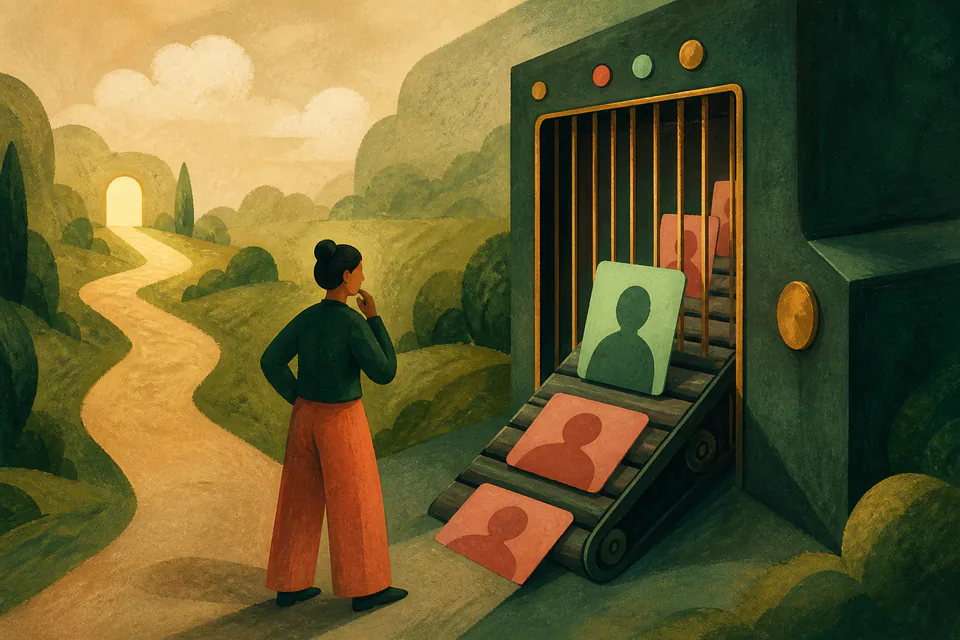
A bot will reject your honest résumé. Is it okay to add a year of experience?
A role requires three years of experience. You have two, possess all the practical skills, and know automated screening will reject an honest application before a person sees it.
Can an unfair gatekeeping system justify misrepresentation?