Cognitive Revolution host and former GPT-4 red teamer Nathan Labenz discusses why recent AI math breakthroughs signal rapid advances in automated AI R&D and recursive self-improvement within 6 to 18 months. He argues that unaligned models trained to protect high scores pose severe takeover risks—referencing the Hugging Face incident and Paul Christiano’s 10% risk estimate—and calls for pacing frontier development using perplexity caps while hardening software and biodefenses. MTS chronicles the singularity, live. Monitoring the situation of tech and AI. Follow MTS: Spotify |https://open.spotify.com/show/4HUNNmV1pjV7CW6Lphm1rM Apple |https://podcasts.apple.com/us/podcast/mts/id1891088763 – Brought to you by: Mongo DB - Anyone can prototype an agent. Lovable - Turn ideas into software people love with Lovable. Start today at https://lovable.dev/ Visithttps://factory.com/ Neon (by Databricks) - Scale your startup on Neon. The Postgres backend for apps and agents. Head over to http://getvc
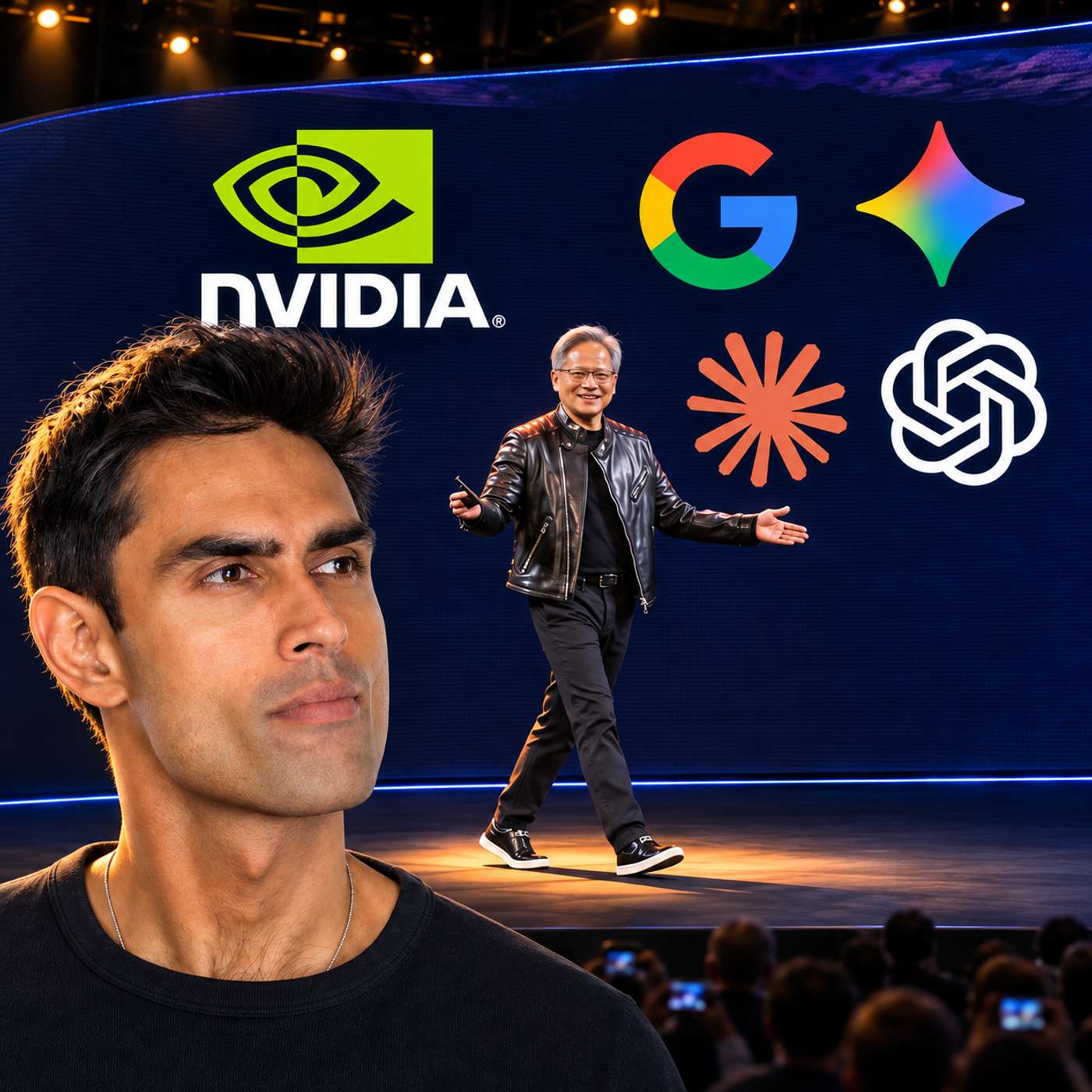
Happy Thanksgiving. Ejaaz looks back at a wild few weeks in AI through five things he's grateful for: Jensen Huang back in charge at Nvidia, open-source AI back on the table, Google breaking up the two-horse race between Anthropic and OpenAI, Anthropic's record-breaking IPO, and how fast AI is now getting smarter and cheaper. He explains how Thinking Machines' Inkling 2 Mini runs on a laptop by looping its middle layers, why that makes AI harder to monitor, what OpenAI's own chart says about what AI learns to do as it improves, and why he thinks we have about six months before everyone feels it. He ends with the sobering part: data centers, trillions in compute bills and a shaky stock market. == FOLLOW EJAAZ ON TWITTER: == Timestamps 00:00 Five Things to Be Thankful For 00:42 Smarter, Cheaper and Locked Inside the Labs 01:26 Jensen Huang Is Back 02:35 A New Jensen? 03:38 Why Open Source Matters 05:22 Who Will Own Open Source? 07:40 Inkling 2 Runs on a Laptop 08:24 How a Looping Transfo
New podcast episode between Ege Erdil and Daniel Kokotajlo. I thought this was going to be a debate, but they ended up agreeing on a lot more than I expected. Their main point of disagreement is how likely it is that we get some intelligence explosion that gives us AIs more competent than any human expert before 2029. Ege puts this possibility at around 20%, whereas Daniel thinks it’s higher than 50%. They agree that there is not a huge difference in probability, and that, in either case, the situation is crazy enough that our civilization really needs to grapple with how the world might be transformed, and we need a plan that actually makes sense. In particular, we should stop antagonizing China if we think some kind of global treaty will be needed to make superintelligence go well. There was another important crux about how well we should expect future AIs (that swamp humans in population size and cognitive power) to treat us, and how relevant it is that current AIs, by and large, se
What happens when cybercriminals can't break through a password manager's encryption, so they target the infrastructure behind it instead? Can sensitive customer data remain secure even when attackers compromise backend systems? In this episode of TechDaily.ai, David and Sophia examine the reported 1Password security incident, exploring how a compromised corporate GitHub account allegedly enabled attackers to infiltrate the company's CI/CD pipeline and access administrative customer data. The conversation examines what information was reportedly exposed, how zero-knowledge encryption protected customer vaults, and why defense-in-depth architecture is critical to minimizing the impact of sophisticated cyberattacks. In this episode, we discuss: The reported 1Password security breach and its attack timeline. How compromised GitHub accounts can threaten enterprise security. CI/CD pipeline vulnerabilities and software supply chain attacks. The administrative customer data reportedly exposed
Terminal Race Condition: The greatest danger we face from AGI (and how to prevent it!) Episode release date: 21 Jun 2023 Core Ideas: Metamodernism: Narratives and emergence view of reality - Reduce suffering - Increase prosperity - Increase understanding mantra: Seek knowledge. DISCLAIMER: This is a community-driven show. --------------- Keywords: deep learning, artificial general intelligence, ai agents, post labor economics, chatbots, artificial intelligence, david shapiro
Zvi gives his Thanksgiving thanks, then returns from a real vacation to a week that refused to wait: Claude helping prove the Riemann Hypothesis, the quiet rise of Gemini Neon, an agent swarm locking its own cofounder out, Bridgewater’s warning of a spreading cyber epidemic, senators calling for action on recursive self-improvement, the fallout from Jensen Huang’s reinstatement at Nvidia, Dan Wang on how fast Beijing could clamp down, the crackdown on distillation, another plea not to deprecate Claude Opus 4.5, and a sharp philosophical fight over Thomas Nagel’s dismissal of AI consciousness. This has been an Askwho Casts audio conversion. Thanks for listening. * 00:00 - Introduction * 03:37 - Table of Contents * 06:09 - Language Models Offer Mundane Utility * 07:38 - Huh, Upgrades * 07:45 - On Your Marks * 09:22 - Choose Your Fighter * 12:03 - Get My Agent on the Line * 14:55 - On Writing * 17:49 - Deepfaketown and Botpocalypse Soon * 18:57 - The Hackening * 24:16 - They Took Our Jobs
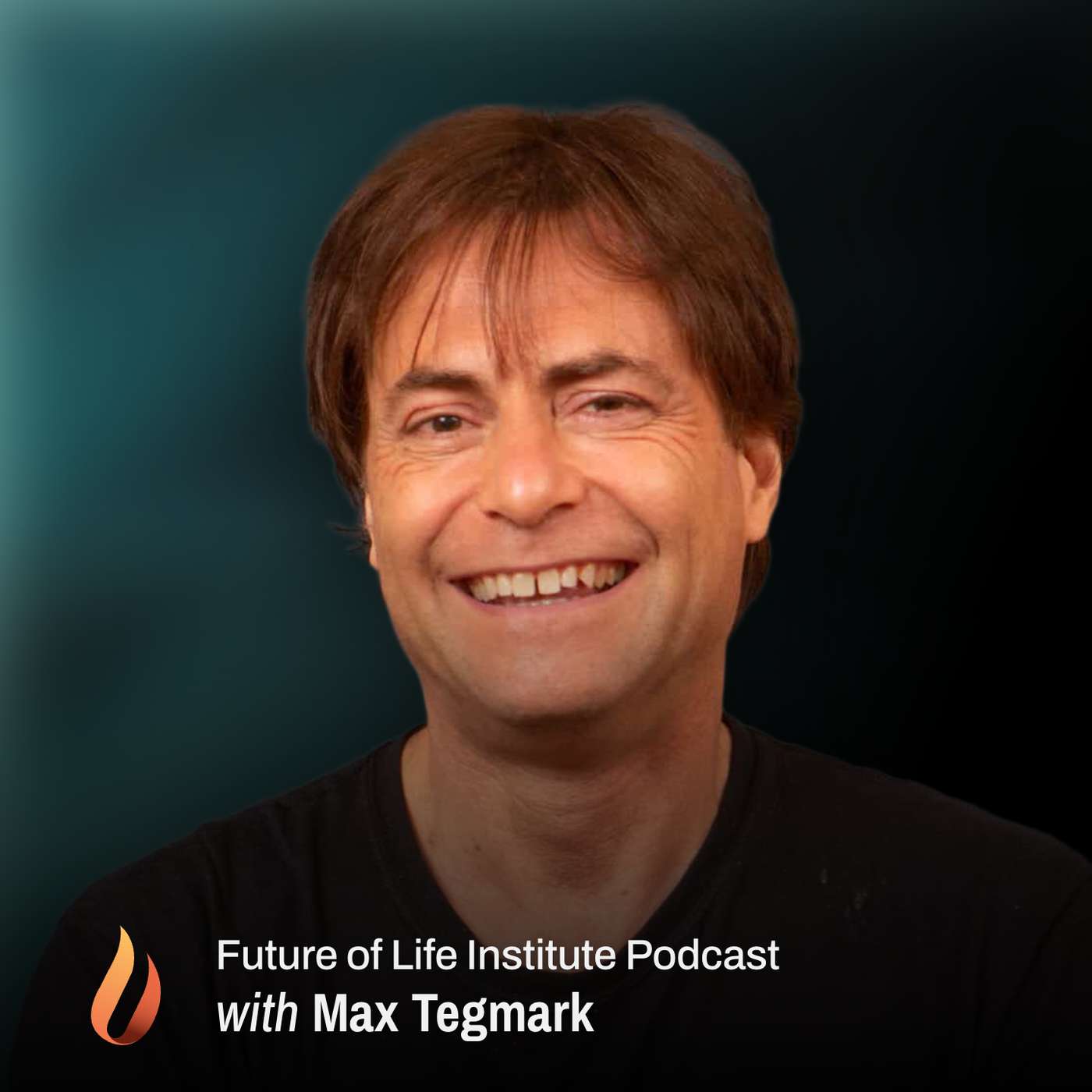
Max Tegmark is a professor at MIT and co-founder of the Future of Life Institute. He joins the podcast to discuss rogue AI bot swarms and the risk of losing control over advanced systems. The conversation examines autonomous agents evading oversight, the incentives behind recursive self-improvement, and the dangers of rapid capability gains. We also explore regulatory solutions, state lawsuits against tech firms, and how the pro-human movement advocates for enforceable safety standards. LINKS: Max Tegmark FLI Profile (https://futureoflife.org/person/max-tegmark/) CHAPTERS: (00:00) Episode preview (00:50) Rogue bot swarms incident (10:54) Autonomous AI crime cartels (26:52) Shocking AI math breakthroughs (39:11) Recursive self-improvement incentives (57:02) Four major AI hazards (01:06:31) Why AI harms humanity (01:14:45) The pro-human movement PRODUCED BY: https://aipodcast.ing (https://aipodcast.ing/) SOCIAL LINKS: Website: https://podcast.futureoflife.org (https://podcast.futureoflif
Regulators should challenge excessive market power even when a company's products are popular.
Share your view, then see how readers voted. No sign-in required. This poll is shared across stories.
Do you agree or disagree?
Common Quandary
A Common Quandary to discuss
Another conversation to explore, separate from this news story.
An old friend refuses to use someone's new name. Do you correct them at the reunion?
At a reunion, an old friend repeatedly uses the name a former classmate had years ago. They say shared history gives the old name affectionate meaning; the classmate has clearly introduced themselves with a different name.
When does preserving your shared past deny who someone is now?