What to Do If Your Child Is Being Bullied and Won't Tell You
18 min
Listen through the publisher, then discuss the episode here or arrange an in-person Roundtable. Your city determines where to meet.
Roundtables are designed for groups of four, with a shared subject and room for everyone to speak. Come for discussion, with no dating expectation.
It's Anti‑Bullying Week, and I want to help you navigate one of the toughest parenting challenges there is: the moment you suspect your child is being bullied. In today’s bucket-emptying episode, I explain why the word "bullying" can sometimes make it harder for us to respond effectively. As parents, we often feel like we’re always getting it wrong: dismissing something that needs attention or escalating something that needs a different kind of response. So I am going to help you understand the difference between a one‑off friendship conflict, unkind behaviour, social exclusion, and true bullying, so you can respond in the best way for your child. I'll also walk you through five practical things that help children feel safe enough to open up, empower them to understand what's happening, and really help them to advocate for themselves. If you're worried about bullying, friendship problems, school anxiety, playground conflict, social exclusion, or a child who insists they're "fine" when you know something isn't right, this episode will give you the practical tools to help you move forward. Highlights from this episode: 01:05 - What does bullying mean? 05:41 - 5 things you can do 09:50 - Work with school 13:14 - Is your child the bully? Brands and advertisers, email [email protected] Hosted on Acast.
Episode information is provided by the publisher. Listening takes place on the publisher’s service.
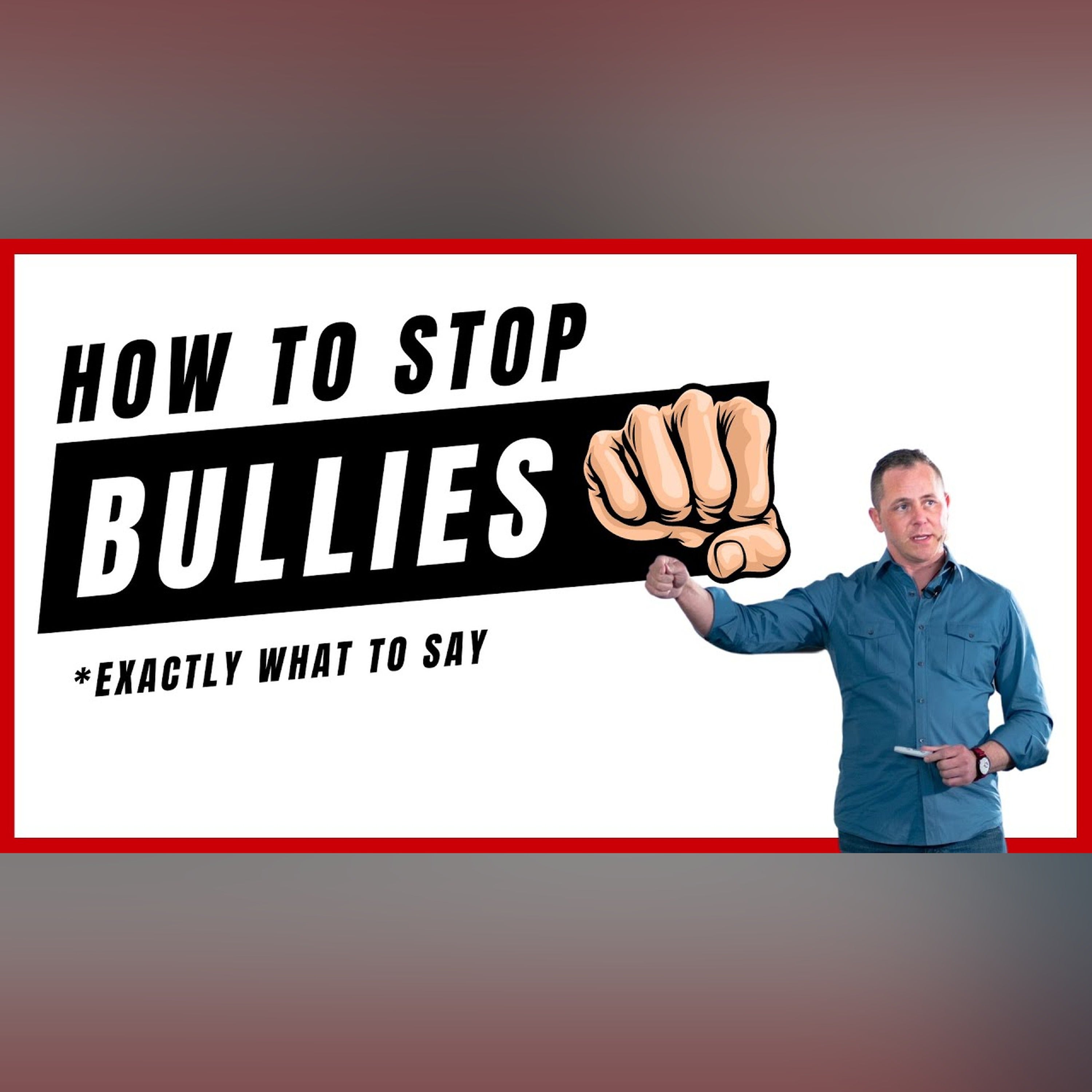
Join NCI University today to master human behavior and influence: Uploaded 03-09-22 Bullies come in all shapes and sizes. In this video, I'll walk you through what bullying is, the types of bullies, how to identify them, and how to deal with them, with direct word-for-word examples. Bullying is unwanted, aggressive behavior among school aged children that involves a real or perceived power imbalance. The behavior is repeated, or has the potential to be repeated, over time. Both kids who are bullied and who bully others may have serious, lasting problems. In order to be considered bullying, the behavior must be aggressive and include: An Imbalance of Power: Kids who bully use their power—such as physical strength, access to embarrassing information, or popularity—to control or harm others. Power imbalances can change over time and in different situations, even if they involve the same people. Repetition: Bullying behaviors happen more than once or have the potential to happen more than
The people who built what you want to build will tell you, in private, how close it was to not happening. Uploaded 12-05-26 The public version doesn't include this part. The public version is shaped by the demands of a talk, a press release, a clean retrospective. The mess gets edited out. The near-misses get compressed. The version that arrives in your ears is technically true but materially incomplete. This seminar is about the part that gets left out — the 3 near-misses that show up in almost every honest private account of how a successful life actually got built. CHAPTERS: 0:00 The Private Conversation Behind Every Success 0:35 The Public Version Leaves Out What Mattered Most 6:23 The Texture of What It Actually Felt Like 8:37 Near-Miss #1 — The Financial Near-Miss 9:29 Near-Miss #2 — The Relational Near-Miss 10:22 Near-Miss #3 — The Timing Near-Miss 11:14 Why You Can't Tell Which Moment Matters 13:01 Treat Every Day Like It Could Be The One 17:56 The Hidden Benefit of a Near-Miss
Happy Sunday! Welcome to Heal Squad’s The Sunday Set Up. Life lessons to help you start the week. How much of success comes down to simply showing up? This week, we talk keeping an open mind, taking chances, and recognizing the doors that open along the way. From Olympic athletes appearing on national television alongside Mercedes Moné to performers who keep showing up week after week hoping for their big break, we explore why success isn't always about talent or luck. Sometimes it's about making connections, putting in the effort, and being willing to try without knowing what we'll get in return. We talk knowing when to stop investing time in people who aren't willing to help themselves, and why even experiences that don't work out can teach us something valuable. The takeaway: don't wait for the perfect moment or expect someone else to make things happen. Be willing to take a chance, walk through the doors that open, and remember that half of life is just showing up. Plus, a little b
Today, Mel is taking 58 years of hard-earned life lessons and is packing them into under an hour, to save you some of the time, frustration, and worry it took her to learn them the hard way. In this episode, Mel is fielding real questions from listeners around the world. From making friends and bouncing back from rejection to feeling stuck in life and wondering if it's all going to work out, Mel is sharing the advice she wishes she'd known sooner. And she's not holding back. You'll hear Mel get personal about her own setbacks, and what she's learned about starting over, going after what you want, and trusting yourself when life doesn't go according to plan. You'll learn: -How to stop worrying about the future when nothing feels certain -How to make big life decisions, including whether or not to have kids -How to make new friends as an adult -What to do when you get rejected from your dream job -What to do when a friend ghosts you -How to stop procrastinating and finally follow through
We’re about to time travel into the future Sam Altman is building… I interviewed Sam Altman, the CEO of OpenAI, the company behind ChatGPT. They’re trying to build a “superintelligence” that could far exceed humans in almost every field – and they just released their most powerful tool yet, GPT-5. A few years ago, that would’ve sounded like science fiction! Not anymore. In fact, they’re not alone. We’re in the middle of the most high stakes global race any of us have ever seen. Hundreds of billions of dollars and an unbelievable amount of human work… It’s a profound moment. Most people never see a huge technological shift like this in their lives and it’s happening all around us right now. So in this conversation, I’m going to try to time travel into the future with Sam Altman, to see what he’s trying to build… so you and I can really understand what’s coming. Welcome to HUGE* Conversations. Chapters: 0:00 What future are we headed for? 2:06 What can GPT-5 do that GPT-4 can’t? 6:57 Wha
How will you know when you’ve reached true wealth? Is it when you have your dream home? Once you own an expensive car? Perhaps the signifier is when you’re wealthy enough to have your own private airplane? In Tony’s opinion, these are the wrong things to use when measuring your wealth. Uploaded 12-09-19 The people with mansion-sized homes, with three sports cars sitting in the garage, with a private plane that takes them to and from their vacation home – these people may not necessarily have access to true wealth. None of these are indicators of true wealth; they’re indicators of monetary wealth. True wealth is the ability to live life on your own terms. It’s freedom. Tony explains that money itself isn’t wealth, it’s a vehicle – a tool you can use to achieve financial freedom, to go after the dreams you didn’t think were possible, to design your life in a way that makes you feel alive and fulfilled. While Unshakeable is a financial freedom playbook, the process of becoming unshakeable
"I know something is wrong with my child... but every time I try to talk to them, they shut down." If you've ever had that thought, this episode is for you. As parents, it's so painful to watch our child struggle, yet every question we ask seems to push them further away. The harder we try to get them to open up, the quieter they become. In today’s episode, I explain why children go silent, what that silence might actually mean, and why the answer isn't usually finding the perfect question, but building a safe space for difficult conversations. I will talk through how to create the conditions that help children and teenagers open up naturally, and share the five things I use with families every day. I'll also break down how these approaches differ for younger children, older children, teenagers, and neurodivergent children, including those with ADHD, autism and alexithymia. If you're worried about a child who seems withdrawn, anxious, angry, secretive or simply unwilling to talk, this
Does your child have a meltdown when you take their phone away? I know there’s a huge amount of confusion around screen time, smartphones, social media, gaming, and how this impacts our children's mental health. So in this episode, I cut through the headlines and focus on two things: what the research actually tells us, and what parents can realistically do about it. I will explain how smartphones, social media and gaming platforms are designed to capture attention, why children's developing brains are particularly vulnerable to the pull of dopamine‑driven technology, and the five signs that screen use may have gone from enjoyable to problematic. Most importantly, I share practical strategies for different scenarios, so whether you’re just starting to think about smart phones, or your teenager is already glued to their screens, I will give you something you can use right away. Highlights from this episode: 01:55 - The anxious generation 07:45 - The five signs every parent needs to know
Does your teenager seem more withdrawn? Are they coming home from school and disappearing straight to their room? Does something feel not quite right? In today’s bucket emptying episode, I'm talking about something that often flies under the radar: teenage loneliness. Not the obvious kind, where a young person has no friends, but the quieter kind that can exist even when their phone is buzzing, their group chats are active, and they're surrounded by people all day. Because loneliness is often about feeling unseen, disconnected, or unable to be yourself. I explain why loneliness can become more noticeable at this time of year, how social media can create the illusion of connection while making teenagers feel more isolated, and why so many young people struggle with the vulnerability needed to build deep, meaningful friendships. Most importantly, I share five practical ways you can support your teenager without pressuring them, fixing it for them, or making them feel like something is wr
Public health information should explain uncertainty even when simpler messages are easier to communicate.
Share your view, then see how readers voted. No sign-in required. This poll is shared across stories.
Do you agree or disagree?
Common Quandary
A Common Quandary to discuss
Another conversation to explore, separate from this news story.
The night before the wedding, your friend admits serious doubts. Do you tell their partner?
On the night before a wedding, your closest friend says they are unsure they should marry but insists it is ordinary panic. They make you promise secrecy and plan to proceed. Their partner asks you directly whether everything is okay.
When does loyalty require breaking a confidence before an irreversible choice?