Listen through the publisher, then discuss the episode here or arrange an in-person Roundtable. Your city determines where to meet.
Roundtables are designed for groups of four, with a shared subject and room for everyone to speak. Come for discussion, with no dating expectation.
It’s been a bruising night for Donald Trump at the midterm elections - losing both the House and the Senate – but what does it mean for Britain? In a special edition, Sam Coates and Anne McElvoy hear from a variety of experts – on both sides of the Atlantic – as the balance of power shifts in Washington. So where does the President go from here - will he double down or change course? Could he relaunch an offensive in Iran? What will happen to the world economy? And could the fallout fundamentally reshape Britain’s relationship with its closest ally?
Episode information is provided by the publisher. Listening takes place on the publisher’s service.
Hey everybody, Tom Bilyeu here. On today’s episode of Impact Theory, we’re taking on a topic that’s got the whole world holding its breath: the escalating crisis between the United States and Iran. As tensions ratchet up, we’re asking the tough questions—how did we get stuck in this “escalation trap,” and what does it mean for America’s global leverage, our economy, and our very sense of security? The conversation focused on why the traditional idea of “strategy” might be failing policymakers, using powerful analogies—like chess versus roulette—to show how doubling down in conflict can spiral out of control. We’ll break down the risks of tactical “wins” that create even bigger crises, the real leverage Iran holds with control of the Strait of Hormuz, and the mounting pressure on President Trump as political support erodes and legacy hangs in the balance. A key theme that emerged is what happens when military might runs into decentralized opposition, and why high-stakes gambles—like the
This week on The Necessary Conversation, it's Chad, Haley, and Mary Lou. Bob is still recovering but sent in a video message about Trump calling Putin his friend that we watch together. 🇷🇺 Trump held the first-ever three-way talks with Putin and Xi, called it a "12 out of 10," and produced nothing. Then at a press conference he called Putin his friend — and when asked if Putin is a friend to America, the president of the United States said, "I can't speak to America." That same day, Trump's friend Putin launched massive strikes into Ukraine, hit Poland with two missiles — an act of war against a NATO ally — then struck near a Ukrainian restaurant and drone-bombed the first responders, killing a 7-year-old child and a 20-year-old paramedic. We watch Bob's video and ask Mary Lou: is Russia our friend? 🇨🇳 The House Foreign Affairs Committee revealed Trump's Commerce Department approved nearly 880,000 advanced AI chips for Chinese military-linked companies including Alibaba, Tencent, a
November 21, 2026; 12pm: In almost every presidency, there comes a time when the president turns their attention overseas – usually after some sort of political defeat. President Trump’s attention is definitely overseas, but for personal reasons. Ruth Ben-Ghiat points out the red flags of Trump cozying up to notorious Strongmen; Democrats have never held this much power before and it’s not just in Congress, it’s at the state level too. State Rep.-elect Allie Phillips (D-TN) and State Senator-elect Robyn Vining (D-WI) explain how they will set their most important agenda items into action; MS NOW’s Rachel Maddow continues her discussion with Jacob Soboroff about her brand new book “The Department of Fate,” Stephen Miller’s rise, and much more. Hosted by Simplecast, an AdsWizz company.
From August 18, 2025: On Aug. 18 at 3pm ET, Lawfare Editor in Chief Benjamin Wittes sat down with Lawfare Ukraine Fellow Anastasiia Lapatina, Lawfare Contributing Editor Eric Ciaramella, and Lawfare Legal Fellow Mykhailo Soldatenko to discuss the meeting between President Trump and Russian President Putin in Alaska this past weekend, the White House meeting with Ukrainian President Volodymyr Zelensky alongside European leaders, and what this all means for ending the Russia-Ukraine War. Hosted on Acast.
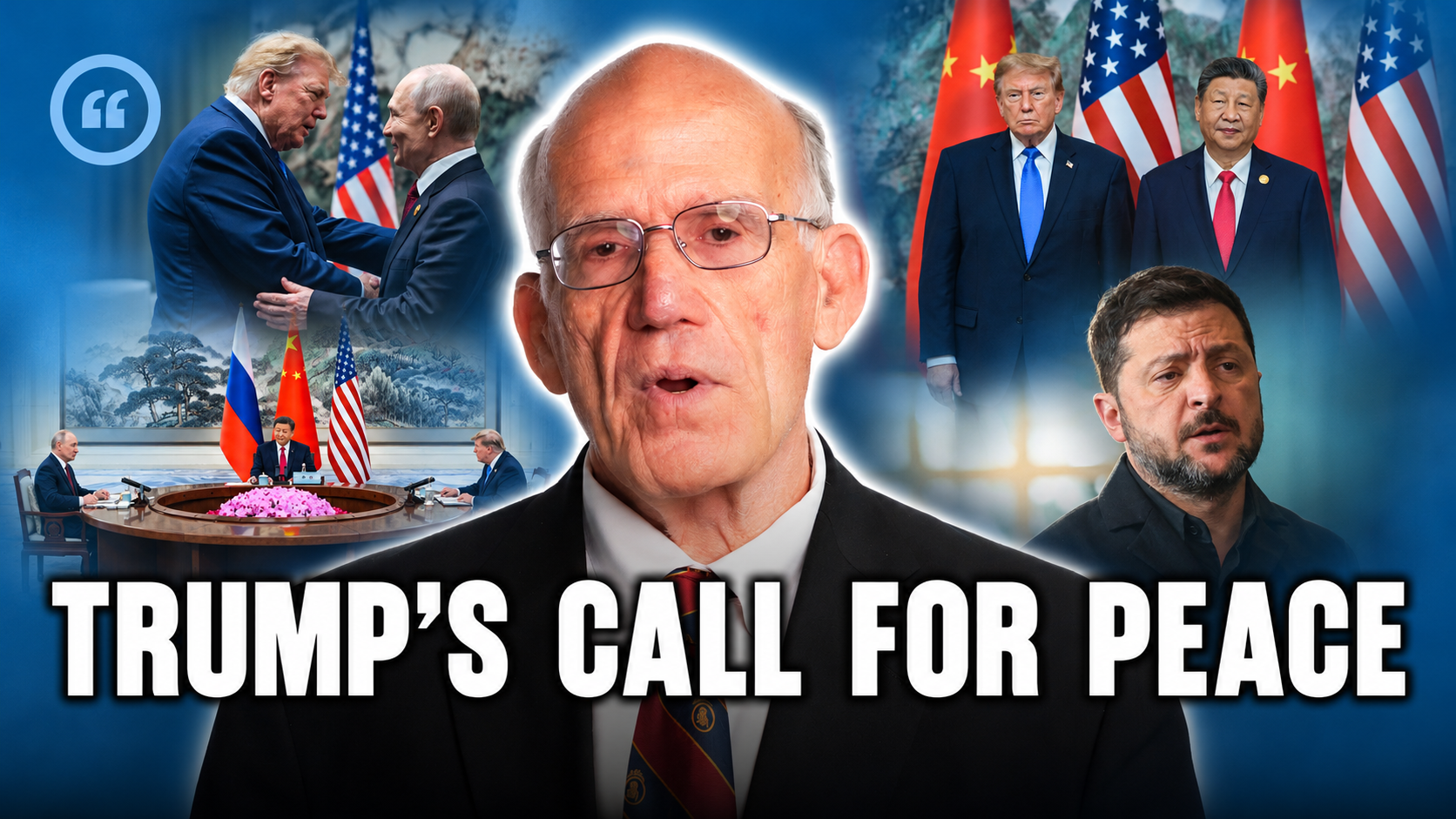
President Donald Trump's first ever trilateral summit with Vladimir Putin and Xi Jinping raises questions about the future of the war in Ukraine and whether a peace agreement could finally be within reach. Victor Davis Hanson and Sami Winc examine the summit on today’s edition of “Victor Davis Hanson: In His Own Words,” discussing Russia's declining influence, potential territorial concessions in Ukraine, and Europe's frustration over Trump's peace negotiations. Hanson criticizes Hillary Clinton's attacks on Trump's diplomacy; he also argues that European leaders have weakened their influence by neglecting defense spending and relying on American military protection. They discuss Elon Musk's shifting political allegiances, and Hanson warns that distancing himself from MAGA may not protect him from Democrat investigations. They also discuss the potential economic benefits of artificial intelligence and the challenges facing Hakeem Jeffries as Democrats prepare to take control of the Hou
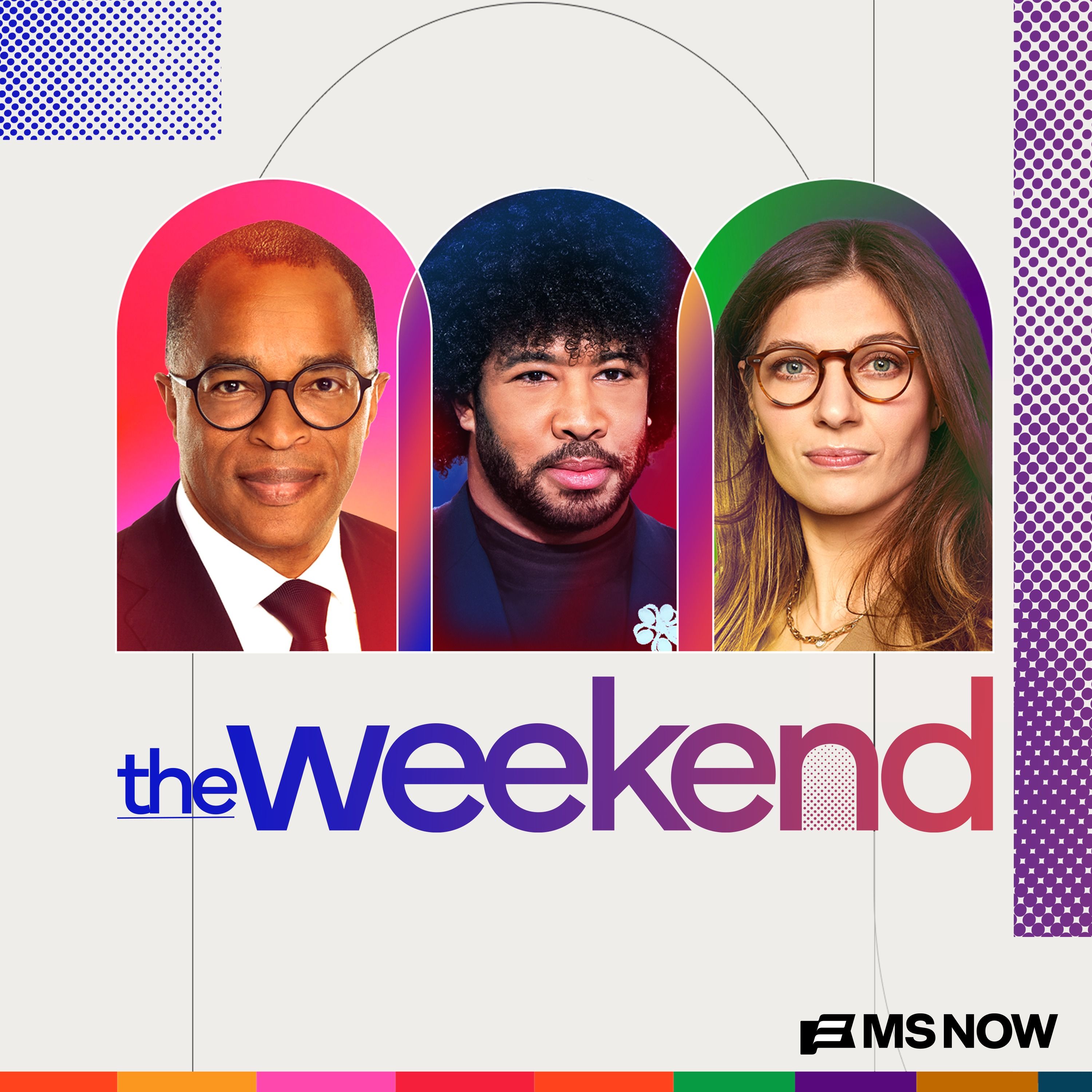
November 22, 2026; 8am: Yesterday, President Trump posted a photo of him and Putin shaking hands with the caption “my friend.” This comes after his Friday press conference, where President Trump praised both Xi, and Putin but called long-time ally Canada “emboldened.” According to a former Canadian official, Canada has been emboldened to write off America in the Trump era. Chrystia Freeland, Former Deputy Prime Minister and Minister of Finance of Canada, and Anne Applebaum, Staff Writer for The Atlantic and Pulitzer Prize-winning historian, join “The Weekend” to discuss. For more, follow us on social media Bluesky: @theweekendmsnow.bsky.social Instagram: @theweekendmsnow TikTok: @theweekendmsnow Hosted by Simplecast, an AdsWizz company.
With multiple high-stakes summits taking place across the world – where does Britain stand on the international stage and are we prepared for a new relationship with Europe? From Trump, Xi and Putin meeting in China to Andy Burnham preparing for the long-awaited UK-EU summit – Sam Coates and Anne McElvoy assess where Britain lies in the world. Will the future of Ukraine be decided behind closed doors, do the British public in favour European freedom of movement and will we see some dates and timelines?
As negotiations over the next phase of the UK’s relationship with Europe go to the wire, are there already holes in the prime minister’s plans? With the UK-EU Summit fast approaching, questions remain over everything – from fishing rights to steel tariffs. But one of the biggest sticking points is Britain’s potential financial contribution. As the government publishes its European Union reset myth-buster guide, Sam Coates and Anne McElvoy examine whether Whitehall is being completely clear about the costs. And could closer ties with the continent, including an increase in youth mobility, have a knock-on effect on implementing Alan Milburn’s welfare reforms?
Andy Burnham’s Number 10 North is already on the move. Sam Coates and Anne McElvoy have the details of where the PM’s Manchester base will end up. But this is the day that’s all about Alan Milburn – with breakfast interviews, a Cabinet appearance, a presser and a few more interviews before the commute home. He’s going for a complete reset to tackle the one million not in employment, education or training (NEETs). The government has the ambition of cutting the NEETs rate from 13% to 5% in the next decade.
Schools should evaluate new teaching approaches by actual improvements in learning.
Share your view, then see how readers voted. No sign-in required. This poll is shared across stories.
Do you agree or disagree?
Common Quandary
A Common Quandary to discuss
Another conversation to explore, separate from this news story.
Your teenager locks you out of their phone. When is it okay to look?
Your usually outgoing sixteen-year-old has withdrawn and stopped seeing friends. They insist they are fine and refuse to talk. You know their phone passcode and could read their messages without being discovered.
How serious must a fear be before protection outranks privacy?