Listen through the publisher, then discuss the episode here or arrange an in-person Roundtable. Your city determines where to meet.
Roundtables are designed for groups of four, with a shared subject and room for everyone to speak. Come for discussion, with no dating expectation.
In 2011, as Spain grappled with a deep economic crisis, a small fishing town in Galicia brought back the peseta almost a decade after it had been replaced by the euro. Led by a hardware store owner, local businesses joined forces to revive the old currency in an effort to boost spending and breathe life back into the area, sparking interest around the world. Maria Tenreiro-Eiris tells Reena Stanton-Sharma about how the initiative took off and what it was like to be at the centre of a story that captured the world's imagination. (Photo: Maria Tenreiro-Eiris and her husband Juan Rey at their hardware store. Credit: Maria Tenreiro-Eiris)
Episode information is provided by the publisher. Listening takes place on the publisher’s service.
Jason is a medically retired Army veteran from Southern Illinois. After years of dealing with injuries and health challenges—including TBI, PTSD, depression, and chronic knee, back, hip, and shoulder problems—he developed a severe food addiction, gained significant weight, and was taking multiple medications. In 2018, after encouragement from a close friend and psychologist, Jason began a ketogenic diet. He ultimately lost about 80 pounds and was able to discontinue his anxiety and depression medications. In 2023, still struggling with food addiction, cravings, inconsistent energy, allergies, and inflammation, Jason transitioned to a carnivore diet. Since then, he has experienced significant improvements in each of those areas. His experience sparked a deep interest in carnivore nutrition, metabolic health, strength, longevity, and understanding how diet and lifestyle influence physical and mental performance. Today, Jason focuses on continually improving his health, strength, resilien
Everything Feels Too Much? I'm Going to Be Okay — 10-Minute Guided Meditation & Affirmations for Anxiety | 3-2-5 Breathing When everything feels too much and your mind is racing, this 10-minute guided meditation for anxiety reminds you that you don't have to solve it all right now. With slow 3-2-5 breathing and gentle positive affirmations for anxiety, Martin Hewlett helps you find your feet, quiet overthinking and come back to one simple, steadying thought: I'm going to be okay. Take Calming Anxiety with you in the Anchored app, free on iPhone (https://apps.apple.com/us/app/anchored-panic-anxiety/id6785035669) and Android (https://play.google.com/store/apps/details?id=com.martinhewlett.anchored), with your three daily caring tips waiting every time you open it. You'll breathe in for three, pause for two and breathe out for five, softening the chest and shoulders with every out-breath. Then you'll rest with affirmations for feeling safe in this moment, releasing anxious thoughts withou
What would you do if the orbs inside an ancient temple seemed to be watching you? In this episode of Let’s Get Freaky, we welcome back Mark Olly, author, archaeologist and television presenter. Mark wrote and presented ITV Granada’s Lost Treasures and has appeared on Ancient Aliens. With the spirit of a real-life Indiana Jones, he takes us from an ancient tomb in Egypt to abandoned villages in Bulgaria and preserved Viking ships in Oslo. Inside the Egyptian temple, Mark and his fellow explorers encountered glowing orbs that seemed to be watching them. The team captured the encounter on camera, and Mark takes us through what happened and explains what made the lights seem intelligent. In Bulgaria, Mark recalls a time when entire derelict villages could be bought for as little as £3,000, complete with houses, churches and surrounding land. He also shares what drew him to these places and explores possible historical links between Eastern Europe and Britain. In Oslo, Mark describes what i
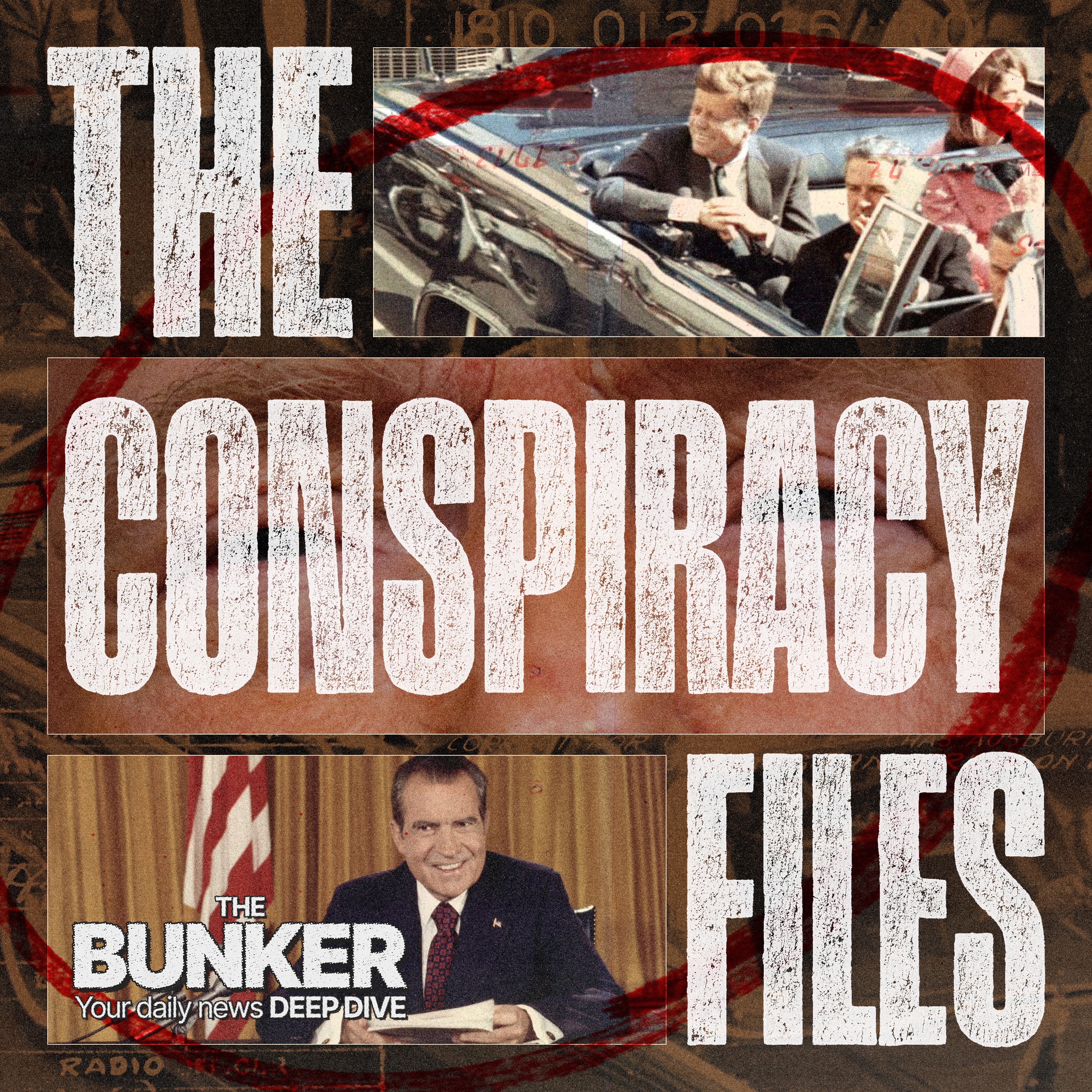
• Black Friday! Must end Tue Dec 15! Episode Two of a three-part Bunker miniseries... If JFK’s assassination planted the seeds of the modern conspiracy mindset, Watergate took it mainstream. Over the following decades, a string of scandals, cover-ups and government deceptions would convince millions that those holding power couldn’t be trusted. From Nixon and Watergate to the Vietnam War, 9/11 and the racist conspiracy theories targeting Barack Obama, Alex Von Tunzelmann and author and journalist Phil Tinline look at how legitimate suspicion of authority turns into a culture of paranoia – and eventually paved the way for Donald Trump. • Buy Phil’s book Ghosts of Iron Mountain: The Hoax that Duped America and its Sinister Legacy (https://uk.bookshop.org/a/13277/9781035903856) from our affiliate bookshop and you’ll help fund the podcast by earning us a small commission for every sale. Bookshop.org’s fees help support independent bookshops too. Back The Bunker on Patreon (https://www.patr
Iowa football moves up to No. 13 in the latest College Football Playoff rankings, but the Hawkeyes have a massive Black Friday matchup with Nebraska standing between them and a potential trip to Indianapolis. Keith Murphy and Andy Fales break down Iowa's playoff chances, the Big Ten Championship scenarios, and why beating Nebraska is the only thing the Hawkeyes can control. The guys discuss the results Iowa needs around the Big Ten, the possibility of reaching the College Football Playoff, and why this could be the biggest game at Kinnick Stadium in years. Plus, Iowa State gets a huge boost with Aiden Flora announcing his return, and the Cyclone running back becomes a Doak Walker Award finalist. Also, Aaron Rodgers gets benched by the Pittsburgh Steelers, the guys discuss the massive explosive detonation in southeast Iowa, and Thanksgiving Eve brings Drinksgiving, Thanksgiving guest horror stories, movie reviews, potluck food-safety concerns, ThrowDowns, and Unnecessary Censorship. All
In This Episode of the 2 Worlds Collide Podcast, I sit down with Luke Herdegen, One Nation’s Member for Secret Harbour in Western Australia, for a wide-ranging conversation about his journey from small business into Parliament, political campaigning, youth crime and freedom of speech. Luke explains why he stopped supporting the Liberal Party, joined One Nation and contested the Secret Harbour by-election. We discuss his campaign, the controversy surrounding an old blog post and why he believes established parties have lost touch with their communities. We also discuss the Victorian election, working-class voters, the federal Liberal campaign, family life, Australian culture and the loss of local car manufacturing. The conversation then turns to youth crime, accountability and community safety, before exploring concerns about online speech restrictions, independent media and transparency in government. Support independent voices Merch: 2 Worlds Collide website Stay Connected YouTube: @2
In 2010, Liberia got its main creditors to write off billions of dollars of debt. The West African nation owed large sums to foreign governments and international financial institutions, debts that had accumulated over almost two decades of conflict and economic turmoil. The burden was so large that Liberia had little realistic chance of repaying it. President Ellen Johnson Sirleaf led years of negotiations to secure debt relief and enlisted support from international figures, including the Irish rock star Bono, who campaigned for the debt to be waived. Those efforts culminated in a major debt write-off in 2010. In 2020, she spoke to Bob Howard about this achievement. (Photo: Ellen Johnson-Sirleaf in New Delhi. Credit: Raveendran/AFP via Getty Images)
In 1994, government trade ministers and ambassadors from around the world gathered in Marrakesh, Morocco to sign the agreement that created the World Trade Organization (WTO), the body that helps countries trade with each other by agreeing common rules and settling trade disputes. Twenty-three thousand pages, one hundred and twenty delegates and last-minute negotiations. The build up to the signing the Marrakesh agreement was challenging. Said El Hachimi was a young Moroccan trade official helping organise the historic summit. He tells Gill Kearsley about the huge logistical challenges, the royal banquet he almost missed, and witnessing a new era in global trade begin. (Photo: The signing of the Marrakesh agreement. Credit: Abdelhak Senna/AFP via Getty Images)
In 1976, the world was introduced to the underdog boxer Rocky Balboa. The film, which pitted an unknown challenger against the heavyweight champion of the world, made its star and writer, Sylvester Stallone, a household name. Stallone had written the script in three and a half days, but despite enthusiasm from producers for the story, he struggled to convince them to give him the part. Made with a small budget and on a tight deadline, the movie won three Academy Awards, including best picture. Produced by Tim O’Callaghan using interviews Sylvester Stallone has given to the BBC.
Elected representatives should serve people who voted against them as seriously as their supporters.
Share your view, then see how readers voted. No sign-in required. This poll is shared across stories.
Do you agree or disagree?
Common Quandary
A Common Quandary to discuss
Another conversation to explore, separate from this news story.
Your coworker bends a dumb rule to help people. Do you report it?
An underpaid coworker quietly bends a company rule to help colleagues receive benefits they were technically denied. No customer is harmed, but the records are inaccurate and you are asked to certify them.
Where should loyalty end when a rule seems unjust?