English-language podcasts

The Pastor's Heart with Dominic Steele

When Trauma Comes to Church — What Pastors Get Wrong and How to Care Well | Darby Strickland
35 min

Listen through the publisher, then discuss the episode here or arrange an in-person Roundtable. Your city determines where to meet.

Roundtables are designed for groups of four, with a shared subject and room for everyone to speak. Come for discussion, with no dating expectation.

When trauma comes to church, how should pastors respond? And what happens when our well-intentioned pastoral care actually makes things worse? How should pastors care for people whose lives are overwhelmed by suffering? What do we say when someone asks, ‘Where was God when this happened?’ When is it right to speak of hope, and when might even that be too much? What happens when someone's trauma leads them to hurt other people? How do we take their suffering seriously without excusing behaviour? We talk about lament, shame, the temptation to rush in with answers and what it means to rebuild. Darby Strickland is a biblical counsellor with the Christian Counseling & Educational Foundation and author of When It's Trauma. Hosted on Acast.

Episode information is provided by the publisher. Listening takes place on the publisher’s service.

Listen at the source ↗

Featured places to meet in Palo Alto, CA

Explore these places and arrange a conversation through ThinkMatch.

City guide for Palo Alto, CA

More from The Pastor's Heart with Dominic Steele

The Pastor's Heart with Dominic Steele

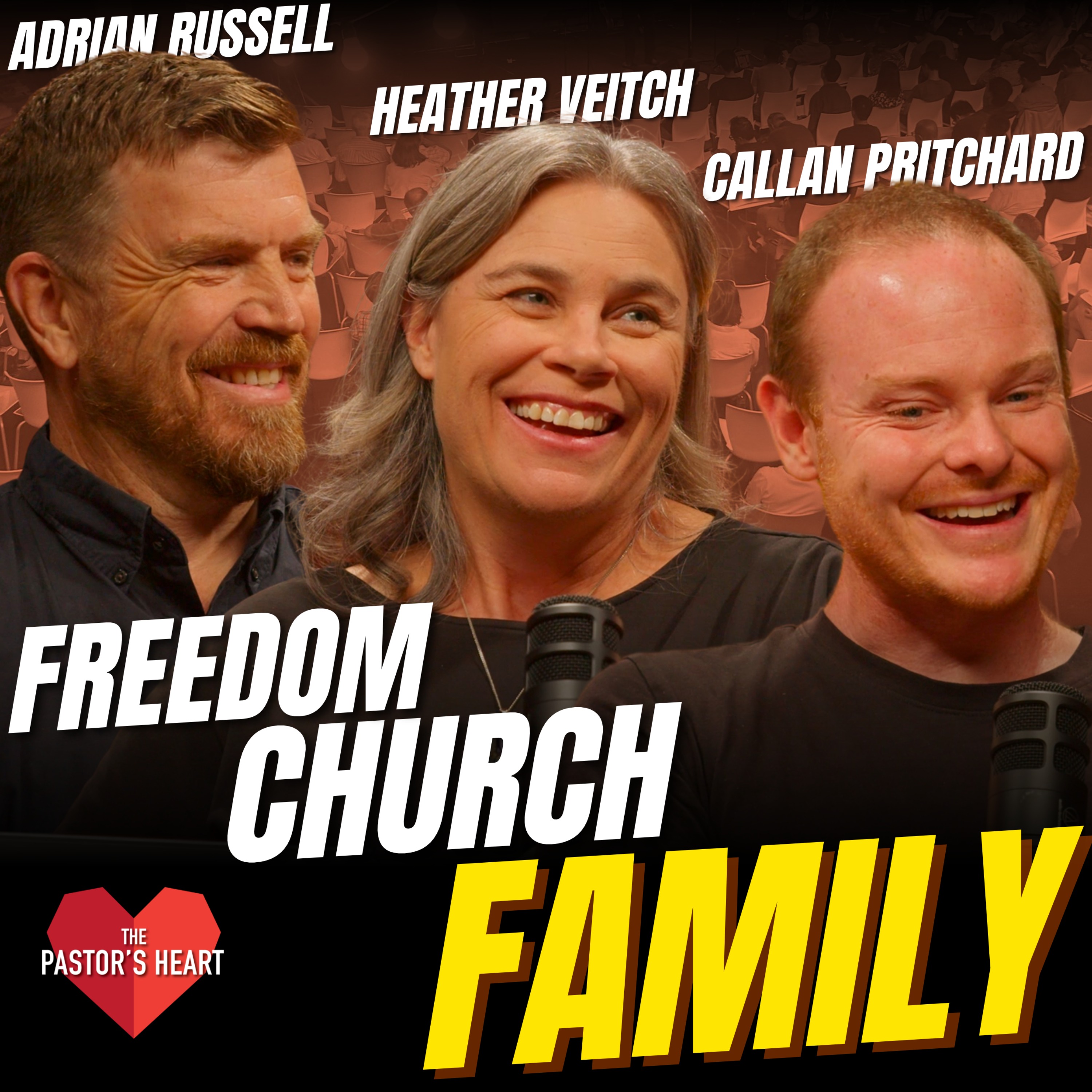
Sitting with your spouse at church: Why were we so triggered?

43 min

Spouse in the house? Why were we so triggered? | Heather Veitch, Adrian Russell and Callan Pritchard Why has a discussion about where spouses sit at church generated so much heat? Perhaps because both marriage and the church are deeply connected to the gospel. For some, protecting marriage and family feels at stake. For others, it’s honouring the church as our spiritual family. Both hear something precious being threatened. The conversation has become either/or—even though people on both sides recognise good reasons to sit together or apart in particular circumstances. Underneath it is a shared question: how am I called to use my Christian freedom to love others? We explore how these two gospel-shaped relationships fit together. What does faithfulness to our marriage and family look like within the family of God? How do we care for children, strengthen marriages and ensure single people and newcomers belong fully? And how can we help one another make wise, generous decisions in the dif

Discuss this episode

The Pastor's Heart with Dominic Steele

The Cost of Standing Firm — and What God Did Next | David Short

35 min

They Lost Their Church Building — But Not Their Church. Twenty-four years ago, Anglican minister David Short found himself at the centre of a controversy in Vancouver that would help reshape the worldwide Anglican Communion. David was leading one of Canada's largest Anglican congregations when a dispute over same-sex blessings became a much deeper battle over biblical authority, the gospel and the future of Anglicanism. David and his congregation eventually lost their church building. David lost his licence. The personal toll was devastating. He suffered a breakdown and spent more than two years away from full-time ministry. But that's not where the story ends. Today, a growing Anglican movement in Canada is training a new generation of gospel ministers, with consequences reaching far beyond Canada. After 33 years of ministry in Vancouver, David Short reflects on the cost of standing firm, the unexpected fruit of suffering and what the future holds for orthodox Anglicanism. What does i

Discuss this episode

Community Poll

Adults should generally be free to accept personal risks that do not substantially harm others.

Share your view, then see how readers voted. No sign-in required. This poll is shared across stories.

Do you agree or disagree?

Choose one answer

Common Quandary

A Common Quandary to discuss

Another conversation to explore, separate from this news story.

Your father is becoming a dangerous driver. Would you report him behind his back?

Your father values the independence his car gives him. He has not caused an accident, but his reactions have noticeably slowed and several recent drives frightened you. He refuses an assessment.

When may care override another adult's autonomy?

Explore this quandary