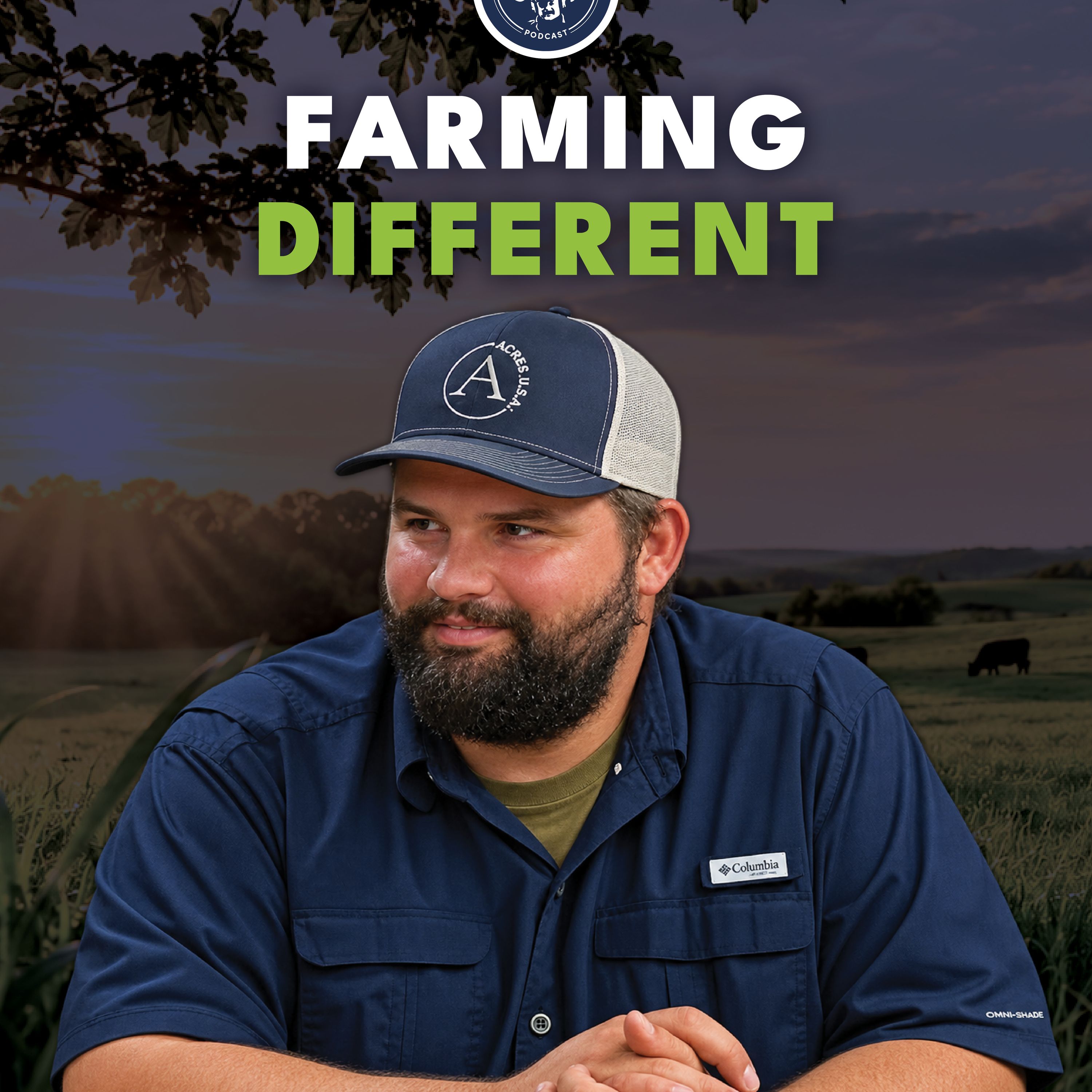
Who Gets the Farm? Why Equal Isn't Always Fair

Listen through the publisher, then discuss the episode here or arrange an in-person Roundtable. Your city determines where to meet.
Roundtables are designed for groups of four, with a shared subject and room for everyone to speak. Come for discussion, with no dating expectation.
Jace Young knows firsthand what it feels like to lose a family farming legacy. Growing up in Tribune, Kansas, his grandfather built a diversified agricultural operation that included a 14,000-head feedyard, crop production, and a grain elevator, with an estimated value of $10–15 million. But in 2005, after decades of growth, the operation collapsed. Jace describes how outdated management practices, market volatility, and an unwillingness to adapt contributed to the failure. Still in high school at the time, he watched his parents lose the home where they'd raised their family. The experience eventually led him into agricultural banking, where he gained access to financial reports that helped him better understand what had gone wrong. That experience became the foundation for Legacy Farmer, the financial and business coaching company Jace founded in 2019. Since his previous Farm4Profit appearance, Jace says the company has grown from approximately five employees and 85 customers to 45 employees and more than 400 customers. He explains why so many family farms struggle with financial transparency, particularly when older generations are reluctant to share information or acknowledge past mistakes. For Jace, the first step toward building a stronger operation is understanding the numbers: balance sheets, cash flow projections, operating debt, and field-by-field profitability. He encourages farmers to update their financial information monthly and share it proactively with their lenders rather than waiting until a problem arises. Tanner and Jace explore how better financial habits can transform a farmer's relationship with the bank. Instead of reacting to a major equipment breakdown or unexpected decline in commodity prices, producers can use cash flow projections to anticipate borrowing needs months in advance. Drawing on their shared agricultural banking experience, they discuss how farmers who demonstrate financial discipline and communicate regularly with lenders may be better positioned when seeking credit or negotiating terms. Jace argues that the goal isn't to eliminate uncertainty—it's to build enough financial awareness and flexibility to respond when unexpected challenges arise. The conversation then shifts to one of agriculture's most difficult subjects: farm succession and family expectations. Jace warns that avoiding uncomfortable conversations about ownership, leadership, and inheritance can create lasting damage, including sibling disputes, costly lawsuits, and the potential liquidation of family assets. He challenges the assumption that every child should automatically receive an equal share of the operation or that the oldest child should inherit the leadership role. Instead, he encourages families to identify the responsibilities their business requires and match those roles with each person's skills. One particularly practical recommendation for younger farmers: if you want your parents to establish an estate plan, start by completing your own. Jace calls this approach learn, live, lead. Leadership, mindset, and personal accountability also play a major role in the discussion. Jace shares his philosophy that business owners must learn to make decisions based on facts rather than emotions, communicate expectations clearly, and surround themselves with capable people. He and Tanner discuss the importance of positive leadership during difficult times, knowing when to delegate, and accepting that not everyone will agree with every decision. Jace introduces Legacy Farmer's five-stage Legacy Journey framework—Position, Production, Protection, Profit, and Prosper—which guides farmers through financial organization, profitability, asset protection, business growth, and long-term legacy planning. The episode closes with a challenge to farmers of every generation: the decisions you make—or avoid making—today may still affect your family 50 or 60 years from now. Jace shares that when he asked approximately 3,000 farmers and ranchers at speaking events whether they had completed succession plans, fewer than 10% raised their hands. His message is clear: protecting the family farm requires more than hard work and good yields. It takes financial discipline, honest communication, intentional leadership, and a willingness to make difficult decisions before it's too late. Listeners interested in learning more about Jace's approach can visit Legacy Farmer (https://legacyfarmer.com/). Want Farm4Profit Merch? Custom order your favorite items today! Website: www.Farm4Profit.com (http://www.farm4profit.com/) Email address: [email protected] Call/Text: 515.207.9640 Farm4Profit Media is not a financial, legal, or tax advisor. Hosted by Simplecast, an AdsWizz company.
Episode information is provided by the publisher. Listening takes place on the publisher’s service.
Listen at the source ↗