English-language podcasts

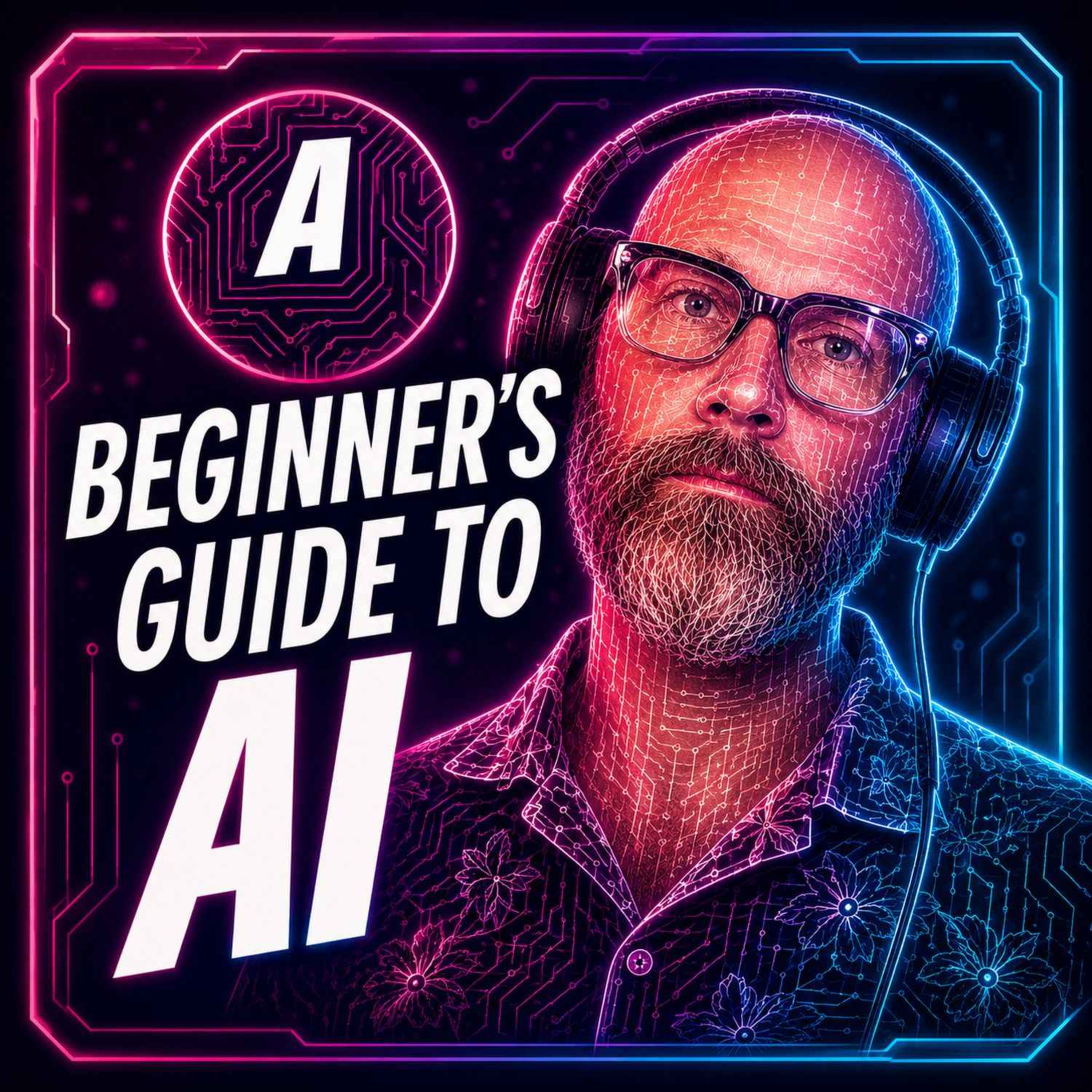
A Beginner's Guide to AI

Why AI Can Beat Grandmasters but Still Cannot Tie a Shoelace

26 min

Listen through the publisher, then discuss the episode here or arrange an in-person Roundtable. Your city determines where to meet.

Roundtables are designed for groups of four, with a shared subject and room for everyone to speak. Come for discussion, with no dating expectation.

Moravec’s paradox: vs. AI can defeat grandmasters, generate code, and analyse complex documents in seconds. Yet machines still struggle with abilities that humans use without conscious effort, such as opening a door, handling a soft object, understanding everyday context, or tying a shoelace. This is Moravec’s paradox: tasks that humans consider intellectually difficult can be relatively easy for computers, while perception, movement, and common sense remain some of the hardest problems in artificial intelligence. In this episode of A Beginner’s Guide to AI, we examine the difference between producing an intelligent answer and acting intelligently in the physical world. We look at the AI grounding problem, embodied intelligence, physical AI, robot perception, motor control, and the hidden limits of automation. A cake experiment demonstrates what happens when a robot follows its instructions perfectly but fails to adjust to a softer or slipperier object. We also examine the DARPA Robotics Challenge, where advanced robots attempted to drive, open doors, use tools, cross obstacles, and climb stairs in a simulated disaster environment. The episode asks an important business question: Are companies testing AI under realistic conditions, or are they being persuaded by polished demonstrations? Strong performance in one task does not guarantee common sense, adaptability, or reliability when the situation changes. Key Topics Moravec’s paradox in AI Why AI struggles with simple tasks Human intelligence versus artificial intelligence AI common-sense reasoning Embodied AI and physical AI Robot perception and motor skills The grounding problem Limits of AI automation Lessons from the DARPA Robotics Challenge AI reliability in unpredictable environments Tune in to get my thoughts and all episodes, don't forget to subscribe to our Newsletter (https://beginnersguideto.ai/): beginnersguideto.ai (https://beginnersguideto.ai/) Quotes from the Episode “They receive a map made from words, while humans also walk through the territory.”“Intelligence is not a single dial that moves neatly from foolish to brilliant.”“The machine may know every written instruction for tying a shoelace. The toddler may still be the only one wearing properly fastened shoes.” Chapters ⏱️ 00:00 Why Toddlers Still Beat AI 03:05 Moravec’s Paradox and the Reversal of Difficulty 07:32 Common Sense, Grounding, and Human Experience 13:18 The Cake That Defeated the Robot 15:10 The DARPA Robotics Challenge 20:34 Finding the Intelligence We Usually Ignore About Dietmar Fischer Dietmar is a podcaster and digital marketer from Argo.berlin. If you want to know how to get your AI or your digital marketing going, contact him at argoberlin.com (https://argoberlin.com/). Hosted on Acast.

Episode information is provided by the publisher. Listening takes place on the publisher’s service.

Listen at the source ↗

Featured places to meet in Palo Alto, CA

Explore these places and arrange a conversation through ThinkMatch.

City guide for Palo Alto, CA

More from A Beginner's Guide to AI

A Beginner's Guide to AI

The Soft Singularity: How AI Takes Control Without Taking Over

21 min

The Machines Do Not Need to Wake Up to Take Control What if the AI Singularity does not arrive with killer robots, flashing lights or one dramatic machine awakening? What if it is already developing quietly as humans delegate more work, knowledge and decision-making to systems they cannot fully understand? In this episode of A Beginner’s Guide to AI, we examine the technological Singularity, artificial superintelligence and recursive self-improvement. Ray Kurzweil predicts that the Singularity could arrive around 2045. Many researchers remain sceptical. But the date may be less important than the changes already taking place. AI does not need consciousness to transform society. It only needs to become faster, cheaper or more capable than people in enough valuable activities. This can create a soft Singularity, where machines gradually shape business, science and human choices faster than our institutions can adapt. We also examine AlphaEvolve, Google DeepMind’s algorithm-discovery syst

Discuss this episode

A Beginner's Guide to AI

The Data Problem Google Cannot Solve // DIETMARs OPINION

13 min

Can AI Replace Your Marketing Agency? Not So Fast Why clean conversion tracking, sufficient campaign data, and human oversight remain essential for small-business advertising. Google Ads is becoming increasingly automated. It can generate advertisements, adjust bids, expand targeting, and recommend search terms. But what happens when the AI does not have enough reliable information about the business it is supposed to promote? In this solo episode of Beginner’s Guide to AI, I examine the data problem behind Google Ads automation. Drawing on my daily work with small and medium-sized businesses, I explain why a limited advertising budget often creates limited conversion data, and why incorrect tracking can be even worse than having no data. Automated ad creation has improved significantly. Some of Google’s generated advertisements are now better than the work produced by people without Google Ads experience. But creating an ad is not the difficult part. The real challenge is controlling

Discuss this episode

A Beginner's Guide to AI

AI Is Creating a Global Identity Crisis - Says Derek Rydall // REPOST

58 min

The Hidden Cost of AI: Losing Meaning, Not Jobs AI is not just automating work. It is challenging the very foundation of human identity. In this episode, Derek Rydall breaks down why the biggest risk of AI is not unemployment, but a global meaning crisis. As intelligence becomes cheap and abundant, the real question becomes: what are humans for? You’ll learn why purpose is becoming the ultimate competitive advantage, how attention is being hijacked by algorithms, and what it takes to stay relevant in a world where machines outperform us. Tune in to get my thoughts and all episodes, don't forget to subscribe to our Newsletter: beginnersguide.nl (https://beginnersguide.nl/) Quotes from the Episode “If you don’t know yourself better than the algorithm knows you, it will use you.” “Intelligence is becoming a commodity. Humanity is becoming the moat.” “The real danger of AI is not losing your job. It’s losing your sense of meaning.” ⏱️ Chapters 00:00 From Hacker to Monk to AI Thinker 04:00

Discuss this episode

Community Poll

Keeping a league competitive is more important than maximizing rewards for its strongest teams.

Share your view, then see how readers voted. No sign-in required. This poll is shared across stories.

Do you agree or disagree?

Choose one answer

Common Quandary

A Common Quandary to discuss

Another conversation to explore, separate from this news story.

You find a wallet full of cash. Can you take a finder’s fee before returning it?

You find a wallet containing identification and several hundred dollars. Returning it will require a detour and some effort. The owner would probably never know if a small amount were missing.

Can an unrequested good deed entitle someone to compensation?

Explore this quandary