Why Can't I Stop Eating? Milkshake Study Offers Surprising Clues | Dr. Kevin Hall
31 min
Listen through the publisher, then discuss the episode here or arrange an in-person Roundtable. Your city determines where to meet.
Roundtables are designed for groups of four, with a shared subject and room for everyone to speak. Come for discussion, with no dating expectation.
Why can ultra-processed foods be so hard to stop eating? Kevin Hall, Ph.D. explains the surprising results of a brain-imaging study—and why they do NOT settle the debate about food addiction. The nutrition, metabolism, and obesity scientist joins Chuck Carroll to unpack research that challenged his own expectations. After participants consumed an ultra-processed milkshake high in fat and sugar, researchers did not detect the average increase in dopamine they anticipated under the study conditions. But Hall is clear: that does not prove food addiction is imaginary or that ultra-processed foods cannot drive overeating. For Chuck, who once weighed 420 pounds and ate as many as 10,000 calories of fast food and junk food a day, the findings raise deeply personal questions. In this conversation: What the 50-person milkshake study measured—and what it could not establish Why overeating and addiction are different research questions How calorie density and combinations of fat, sugar, and salt may influence food intake How Hall's team changed calorie intake while keeping diets highly ultra-processed Why Hall left the NIH after 21 years His account of restrictions on communicating research findings His concerns about research funding and the next generation of scientists Hall also discusses his subsequent work at AstraZeneca on obesity medications. Milk Shake Study Kevin Hall, Ph.D. https://www.kevinhallphd.com (https://www.kevinhallphd.com/) Exam Roomie of the Week - Judy Leahy Make a gift to support The Exam Room Podcast and the life-saving work of the Physicians Committee. All gifts of $20 or more receive a mention from Chuck. Gifts of $100 or more receive an exclusive Exam Room Podcast tote! Support The Exam Room Podcast & PCRM - About Us - The Physicians Committee is dedicated to saving lives through plant-based diets and ethical and effective scientific research. We combine the clout and expertise of more than 17,000 physicians with the dedicated actions of more than 175,000 members across the United States and around the world.
Episode information is provided by the publisher. Listening takes place on the publisher’s service.
Today’s guest is David Ludwig, MD, PhD, an endocrinologist, pediatrician, and international thought leader in obesity medicine and metabolic health. He’s also a treasured mentor of mine from my time at Harvard Medical School. In this episode, we discuss his new paper in the New England Journal of Medicine on ultra-processed foods and why “simple” is the enemy of metabolic health. We explore the science of nutrition, weight loss, and food quality, challenging conventional wisdom about diet and metabolism. If you’re courageous enough to listen all the way through, this conversation will expand your perspective, change the way you think about food, and inspire a healthier relationship with eating. New England Journal of Medicine Article: https://www.nejm.org/doi/full/10.1056/NEJMp2508694 David Ludwig MD PhD’s Medium Blog (No Paywall): https://davidludwigmd.medium.com/ultra-processed-food-retold-by-hc-andersen-7a3d2ae60f39 Chapters 0:00 – Meet Harvard Endocrinologist David Ludwig MD PhD 1:
Is your body weight stable, but you're still not eating enough to properly fuel your training, recovery, and overall health? Introducing Why Stable Weight Doesn't Always Mean You're Eating Enough from Jeff Hoehn of the Mind Muscle Connection Podcast (https://www.buzzsprout.com/1508401). Just because your weight isn't changing doesn't necessarily mean you're adequately fueled. In this episode, Jeff breaks down why maintaining a stable body weight doesn't always mean you're meeting your body's energy needs, especially if you're training hard, staying lean, or spending long periods dieting. You'll learn: Why stable body weight doesn't automatically mean adequate energy availability Who is most at risk of underfueling, even when their weight isn't changing How high training output, staying too lean, and chronic dieting can contribute to low energy availability The potential signs of underfueling, including changes in performance, recovery, hormones, and menstrual health Why spending too lo
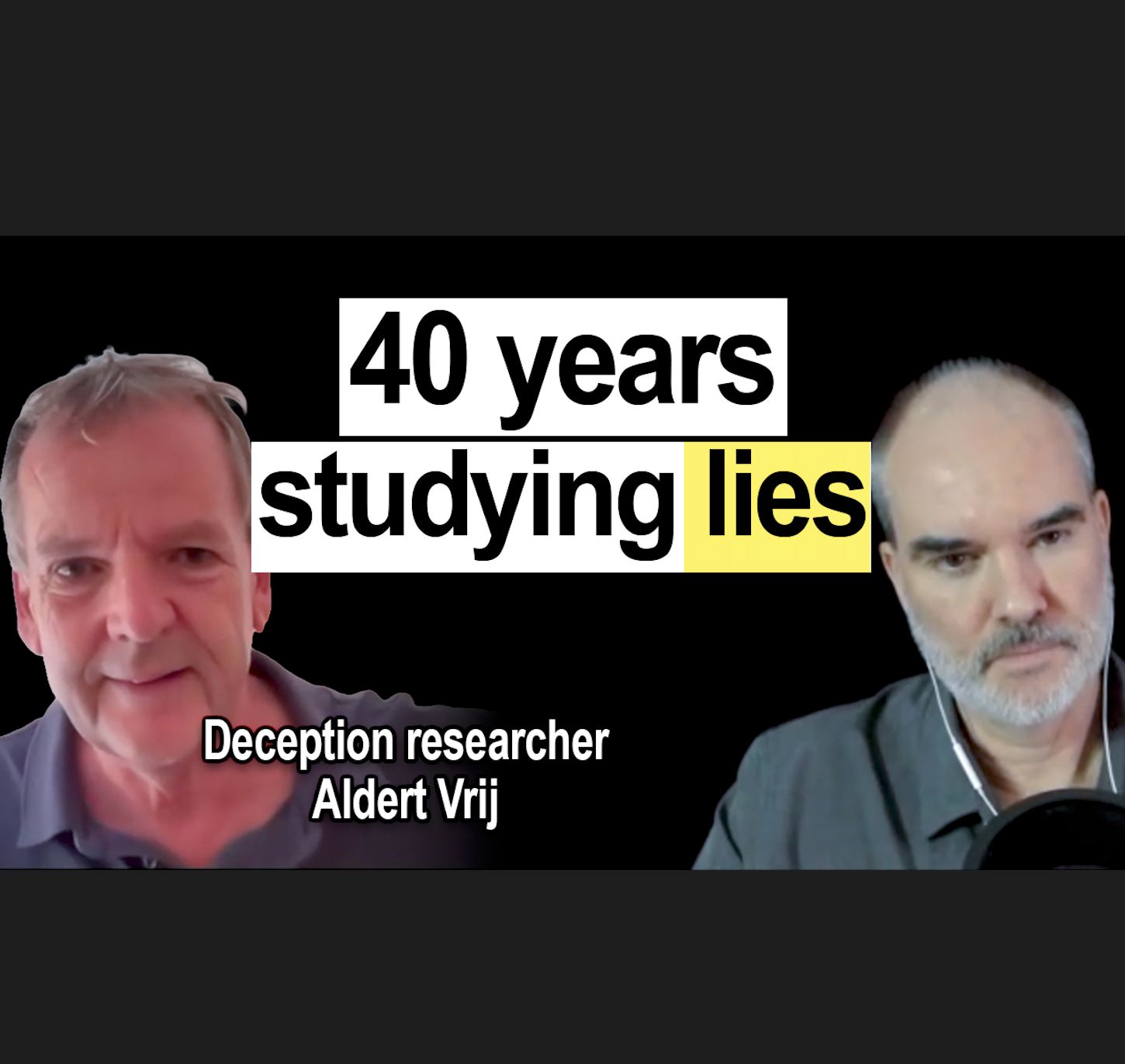
What actually works when it comes to detecting lies, and why are so many popular ideas about reading people and nonverbal behavior at odds with the scientific research? I talk with Aldert Vrij, one of the world's leading deception-detection researchers, who has spent almost four decades studying these topics. We discuss why what people say is far more revealing than their body language; why the perceived “sexiness” of reading nonverbal behavior has contributed to widespread myths and misconceptions; whether vocal behaviors like pitch, volume, and hesitation contain meaningful clues; and whether there's value in analyzing minor word choices and turns of phrase, as is done in so-called “statement analysis.” We discuss Paul Ekman's legacy as a source of faulty ideas about deception, micro-expression-based deception detection training, and the strategies that popular “body language experts” use to appear scientifically credible while simultaneously promoting ideas that conflict with the sc
Today, Mel is doing something she's never done before on The Mel Robbins Podcast. She's bringing members of her team into the studio for live coaching with world-renowned communications expert Vinh Giang. Vinh is known for teaching millions of people online how to stop sounding insecure, speak more clearly, and get people to listen when you talk. And when you hear him coaching today, it will be like he’s coaching you. One person freezes when they're put on the spot. Another can't stop interrupting people. Someone else has great ideas but stays quiet because they're afraid of being judged. Does any of that sound familiar? And Vinh isn't just giving advice. He's coaching real people through practical exercises, right there in the studio, so you can hear the difference and start making those same changes in your own life. As Mel says, put yourself in their shoes. As Vinh works with each person, you'll recognize things you struggle with, too. You'll learn: -What to do when your mind goes b
This week Kiley and I discuss Carb Cycling while Pregnant. Is it safe to Carb Cycle and break Ketosis during Pregnancy? I also talk about my experience at a conferences were I learned about Carb Cycling and explain the interesting research done on Carb Cycling. I also talk about Ketones for Brain development and more specifically, Ketones for Brain development as an Infant. It’s incredible to know how much significance Ketones for Brain development has as an Infant. Thanks for tuning into my channel. Find more stories and information at my website: www.BozMD.com BOOK-LINK - ANYWAY YOU CAN. AUDIBLE: https://adbl.co/2SLLfS1 PAPERBACK= (Affilate link) https://amzn.to/2Cq1IVC The two most common questions I get ... 1) "Doc, what BLOOD METER do you recommend?" ANSWER: FORACARE: http://bit.ly/2QKGmKG For years my diabetics told me this system was great. I tried several others before I bought this one. I can't count the number of times I have tested my blood only to get an ERROR message from
If you're training hard but feeling wiped, eating a restricted diet for your gut, or just never hungry after a tough workout, you might not be getting the protein you need. This episode breaks down how much you really need and how to get it without upsetting your gut. YOU'LL TAKEAWAY: Macronutrients and calories 101, and how restrictive diets throw off your balance How your body digests protein, and why it matters before workouts The many roles of protein, from enzymes and iron storage to post-workout appetite How much protein you need, plus 3 easy low FODMAP ways to boost it — RESOURCES & LINKS MENTIONED: ⤵️ Want high touch coaching support for IBS & fuelling performance? Apply for coaching. (http://gutfitnutrition.com/apply) Free Training: How to Control IBS So You Can Fuel Your Training Without a Lifelong Low FODMAP Diet (https://gutfitnutrition.com/heal-ibs-training-live) Supporting your immune system when you're sick (Ep. 70) (https://open.spotify.com/episode/5bCto0jWLcbC5hQW4hrH6
What can garlic, cinnamon, and ginger really do for your health? Dr. Michelle Loy opens the spice cabinet with ten picks and categories that bring more flavor to everyday plant-based meals. The New York-based integrative and lifestyle medicine physician joins Chuck Carroll on The Exam Room to explore herbs, spices, and practical ways to enjoy healthier food without building your routine around expensive supplements. Learn why Dr. Loy crushes garlic and lets it rest, how she uses cinnamon to add sweetness, and why cooking with an herb is different from taking a concentrated extract. The conversation explores the evidence, its limitations, and the importance of preparation and dose. Plus: smoked paprika for carrot dogs, an onion alternative Chuck is curious to try, dill popcorn, colorful herbal teas, and homemade spice blends that let you control the salt. DR. LOY'S TEN PICKS AND CATEGORIES Garlic Cinnamon Ginger, with discussion of turmeric and galangal Smoked paprika Onions, scallions,
Can eating more plants give your skin a glow—and change how attractive you are? Dr. Matt Nagra joins Chuck Carroll to unpack the research behind the "vegans are sexier" headlines. Nagra, a Vancouver-based naturopathic doctor and co-author of research on vegan attractiveness, explains three connections between diet and perceived attractiveness: skin coloration, body odor, and body composition. Find out why carrots, sweet potatoes, tomatoes, and peppers enter the conversation; garlic's surprising effects; and why carbohydrate quality matters more than simply fearing carbs. You will learn: Carotenoids and the science behind the "glow" How researchers test whether diet changes body odor Meat intake, sweat, and the limits of the evidence The surprising garlic findings Plant-forward eating versus a vegan label Body composition without assuming thinner always means better Why beans, fruit, and whole grains belong in the carbohydrate conversation How quickly some changes may appear Matt's rese
Dr. Kerry Graff hoped the doctors in Forks Over Knives were wrong. Then she tried a whole food, plant-based diet herself—and says she lost 25 pounds in three months without feeling hungry. After 17 years in family practice, the experience changed how she understood her own health and how she helped her patients. Dr. Graff joins Chuck Carroll (https://www.chuckcarroll.com/) on The Exam Room to share her journey from skepticism to lifestyle medicine, including the changes she experienced in reflux, constipation, and mood. She also explains why helping someone change their diet means understanding their sleep, stress, relationships, and reasons for wanting to feel better. Today, she brings that personal, practical approach to her work with Lifestyle Telemedicine and as medical director of Rochester Lifestyle Medicine Institute. In this conversation: Why being vegetarian did not automatically mean she was eating well. How she evaluated the nutrition claims that challenged her medical train
Sports eligibility rules should be based on transparent evidence and allow meaningful appeal.
Share your view, then see how readers voted. No sign-in required. This poll is shared across stories.
Do you agree or disagree?
Common Quandary
A Common Quandary to discuss
Another conversation to explore, separate from this news story.
You lecture everyone about climate change—then get invited on a dream flight. Do you go?
A close friend living overseas invites you to an important celebration. Flying is affordable but carbon-intensive. Your individual decision will not determine whether the flight operates, yet it conflicts with commitments you publicly encourage others to make.
When is a small personal contribution to a large harm morally significant?