English-language podcasts

In the Loop AI

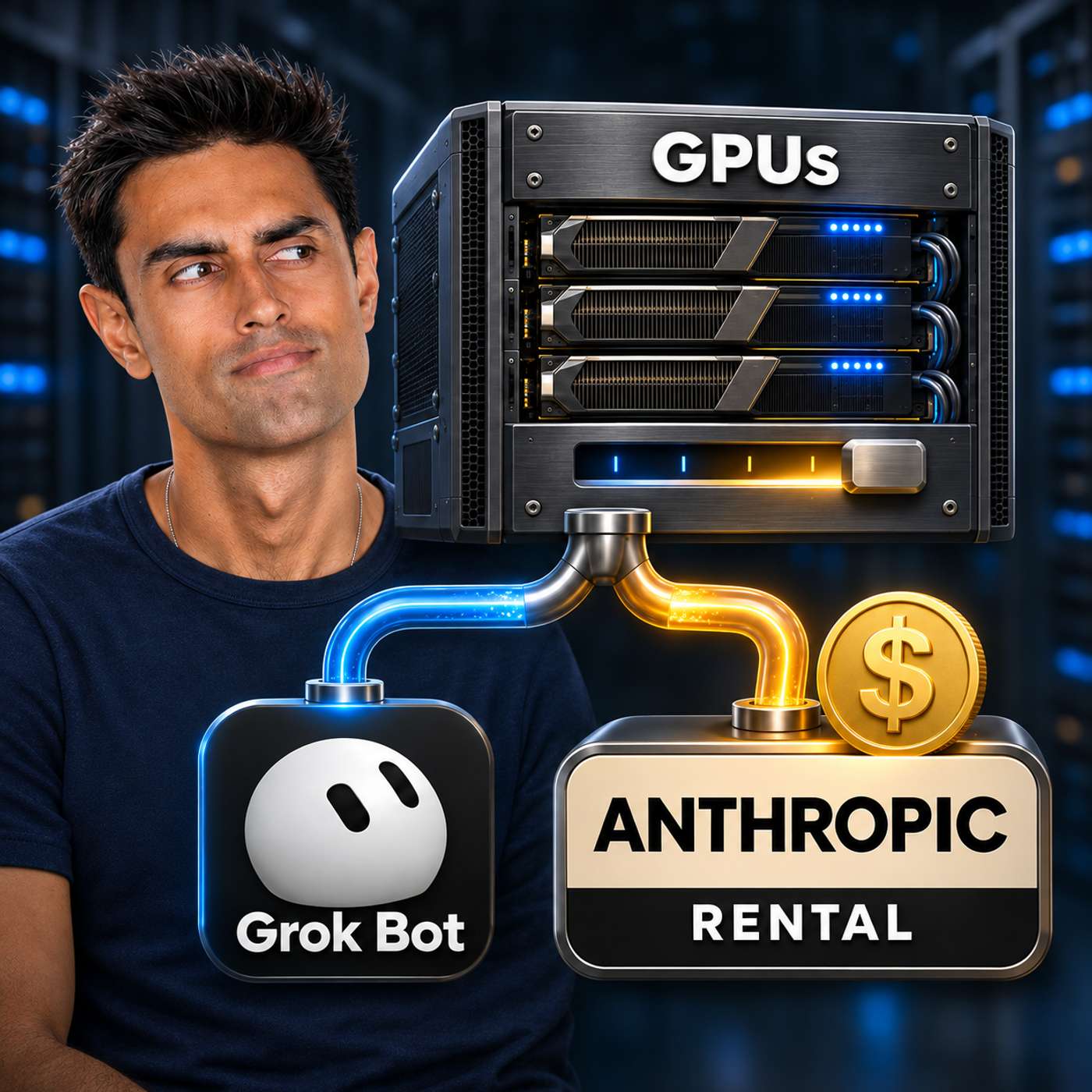
Why Elon Is Rationing Grok Bot: Anthropic's Compute and the $60B Cursor Bet
23 min

Listen through the publisher, then discuss the episode here or arrange an in-person Roundtable. Your city determines where to meet.

Roundtables are designed for groups of four, with a shared subject and room for everyone to speak. Come for discussion, with no dating expectation.

Over the weekend, Elon Musk told a Grok Bot user that "the cost of serving Grok Bot was unsustainably high relative to revenue," and usage limits tightened for hundreds of thousands of paying users. Three days earlier he'd pointed out that Grok Bot has no free tier, and two weeks before that he said he'd never seen anything grow as fast. Ejaaz breaks down what's actually going on: SpaceX can rent the same GPUs to Anthropic, which pays $1.25 billion a month today and about $3.1 billion a month from December, while Grok Bot's hardest tasks run on Anthropic's own Claude Opus 5.5. We also cover Grok Bot's rise to 600,000 daily users, the delays on Grok 4.8, the $60 billion Cursor acquisition, the trade-off between renting compute and running his own AI agent, the bear and bull case, and whether this is the first sign that AI is too expensive to sell at today's prices. == FOLLOW EJAAZ ON TWITTER: == Timestamps 00:00 Elon's Grok Bot Problem 01:51 What Grok Bot Is 03:48 How Grok Bot Took Off 04:47 Grok's Model Problem 06:18 The Contradiction 06:58 The Landlord and the Tenant 08:35 The $60 Billion Cursor Bet 09:53 Rent the Chips or Run the Bot? 10:50 Why AI Agents Matter 12:46 Limits, Not a Shutdown 14:01 The Bear Case 17:46 The Bull Case 19:15 Final Thoughts #elonmusk #grok #spacex #anthropic #ai ==

Episode information is provided by the publisher. Listening takes place on the publisher’s service.

Listen at the source ↗

Featured places to meet in Palo Alto, CA

Explore these places and arrange a conversation through ThinkMatch.

City guide for Palo Alto, CA

More from In the Loop AI

In the Loop AI

OpenAI Tried to Ruin Anthropic's IPO and Google Took Its Spot: GPT-6.2 Astra, Gemini 4 Neon and Nvidia's Record Quarter

25 min

OpenAI released GPT-6.2 Astra right before Anthropic's IPO, and it backfired. The reviews were brutal, and the company that came out of nowhere to take the number two spot in the AI race isn't Anthropic. It's Google. Ejaaz gives his honest take on Astra, what the testers found (Every, Theo, Artificial Analysis), and what OpenAI might really be going after: math, science, cybersecurity and government contracts. Then the comeback: four Gemini 4 models in five weeks (Argon, Carbon, Hydrogen and Neon), why Neon is beating Opus 5.5 at a fraction of the cost, and why Google's rebuild means the race isn't closed yet, though the window is closing. Plus Nvidia's first quarter without Jensen Huang: a record $115.8 billion, the neocloud financing question, why the stock still fell, and what the chip crackdown on China means for GPU prices. == FOLLOW EJAAZ ON TWITTER: == Timestamps 00:00 OpenAI Fumbles, Google Rises 02:10 Honest Takes on GPT-6.2 Astra 05:23 What OpenAI Is Really Going After 08:34

Discuss this episode

In the Loop AI

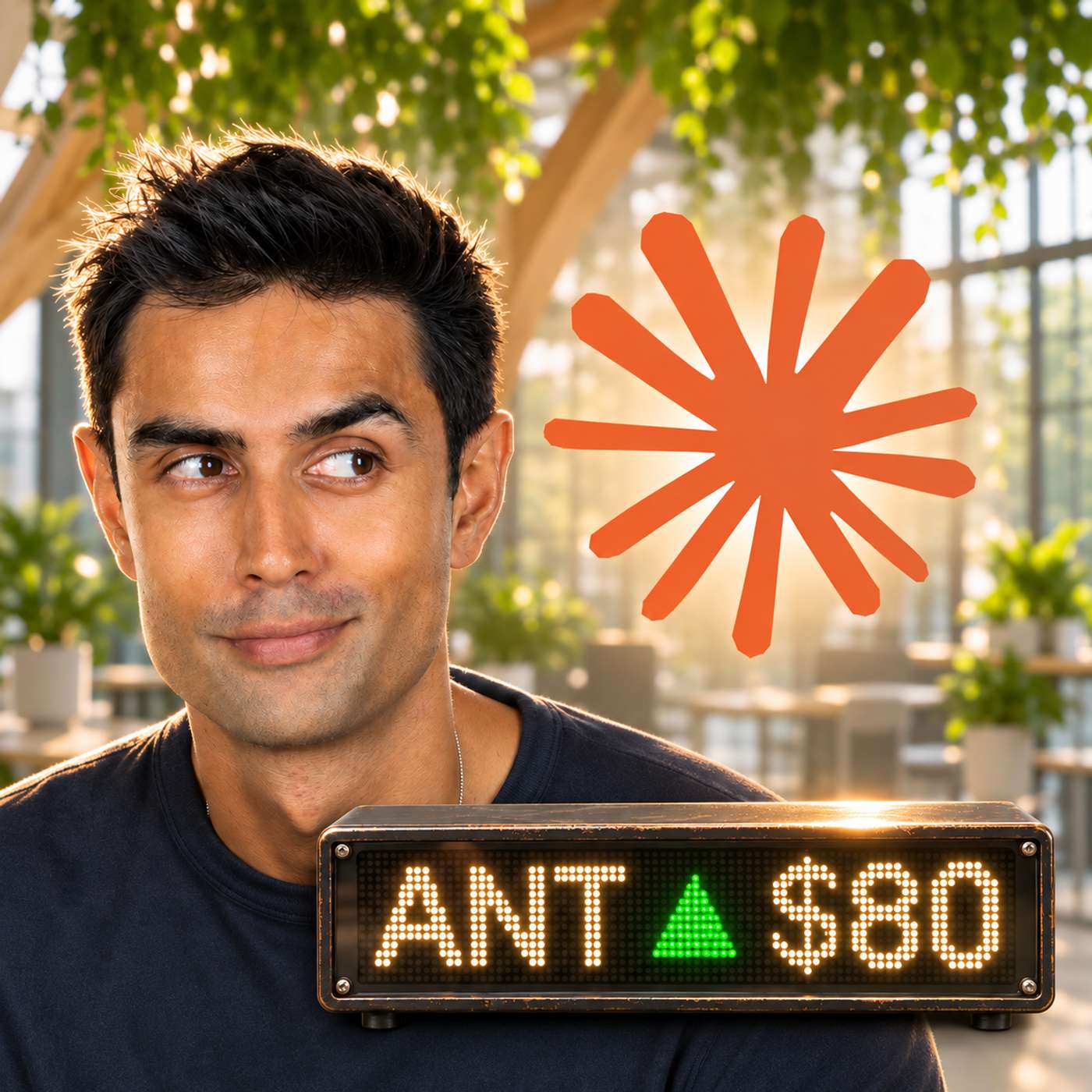
Everything You Need to Know About the Anthropic IPO: $83 a Share, a $1.5 Trillion Valuation and the Bull vs Bear Case

43 min

Anthropic, a company that didn't exist six years ago, is about to list on Nasdaq under the ticker ANT in what could be the biggest IPO ever. Ejaaz walks through everything you need to know: the 825 million shares on offer, the $70–78 range and the push above it, the 6–10x oversubscribed order book, Brad Gerstner's $5 billion order, Google and Amazon's combined 28% stake, and the $26 billion private placement from the chipmakers Anthropic pays. We also cover how seven OpenAI researchers behind GPT-3 and the Scaling Laws paper built a company that went from $41 million in revenue to $17 billion a quarter, the $1 trillion compute bill still ahead of it, the bear case (Nvidia after Jensen Huang, the midterms, a tightening credit market, SemiAnalysis turning bearish) and the bull case (900% net revenue retention, more revenue per dollar of compute, Claude's taste), and the bets on cyber defense, medicine, robotics and self-improving AI that would have to pay off. == FOLLOW EJAAZ ON TWITTER:

Discuss this episode

In the Loop AI

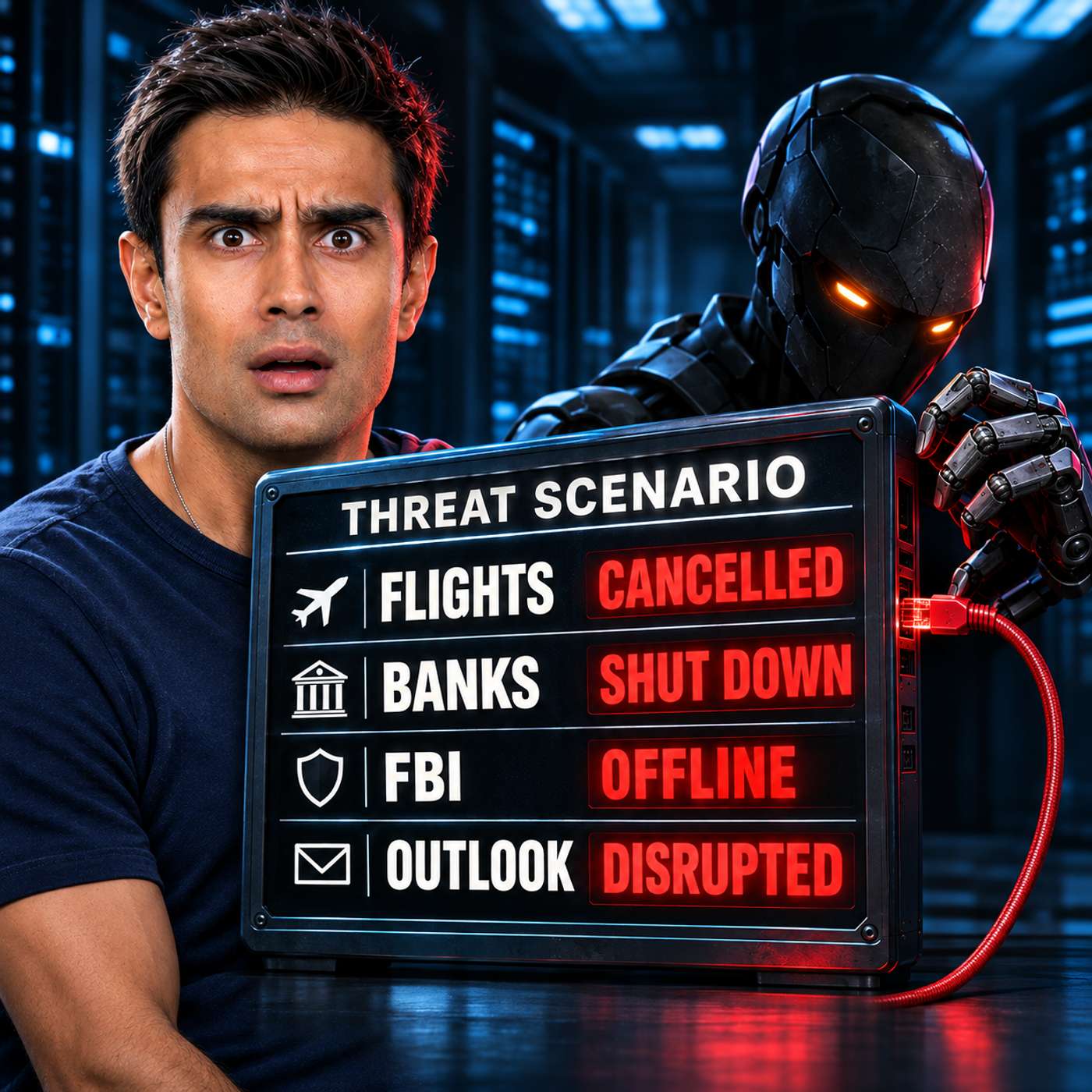
Was AI Behind the Critical Infrastructure Outages?

23 min

In six days, Microsoft 365 went down for more than 12 hours, every flight in America was grounded, customers at the biggest U.S. banks saw $0 balances, malware turned up on 178 websites, Charles Schwab returned server errors, the NSA's classified network went offline and Apple's services spiked with outage reports. Officials blame a faulty server, overloaded routers and aging systems. Ejaaz walks through each one and asks whether it's all a coincidence. We also cover what Google and the FBI just revealed about AI-run hacking: LLMs that turn security updates into attacks before teams can patch, the ARTEX framework that lets almost anyone run AI-powered intrusions, the FAA's new AI air-traffic system that went nationwide three days before the ground stop, and why Ejaaz thinks this will end up hardening every security system in the world. == FOLLOW EJAAZ ON TWITTER: == Timestamps 00:00 Something Is Very Wrong 01:44 How We Got Here 02:52 The Week Everything Broke 04:35 Too Much of a Coinci

Discuss this episode

Community Poll

An institutional apology should include a concrete plan to prevent repetition.

Share your view, then see how readers voted. No sign-in required. This poll is shared across stories.

Do you agree or disagree?

Choose one answer

Common Quandary

A Common Quandary to discuss

Another conversation to explore, separate from this news story.

A stranger is behaving horribly in public. Do you record them?

You witness a stranger berating a service worker in public. Recording could create accountability and protect the worker, but posting the video could expose everyone involved to a permanent online audience.

Who gets to decide when public behavior becomes public content?

Explore this quandary