English-language podcasts

Something You Should Know

Why English Makes No Sense & How to be Respectfully Assertive - SYSK Choice

50 min

Listen through the publisher, then discuss the episode here or arrange an in-person Roundtable. Your city determines where to meet.

Roundtables are designed for groups of four, with a shared subject and room for everyone to speak. Come for discussion, with no dating expectation.

If your doctor wears a necktie, you might want to keep your distance from it. Research has found that doctors' ties can harbor some pretty nasty germs — and those ties can come awfully close to patients during an examination. So just how much of a problem is this, and should doctors stop wearing ties altogether? https://pmc.ncbi.nlm.nih.gov/articles/PMC1382570/ English is a strange language. Why do tough, through, and dough look so similar but sound completely different? Why do some words break every rule, and why do familiar words sometimes change their meanings? It can all seem maddeningly inconsistent. But it turns out that many of these oddities have fascinating explanations. Linguist Arika Okrent, author of Highly Irregular: Why Tough, Through, and Dough Don't Rhyme—And Other Oddities of the English Language (https://amzn.to/3CWVCsQ), (https://amzn.to/3CWVCsQ) joins me to reveal the surprising stories behind the quirks of English and why our language is so wonderfully weird. Do you ever agree to things you don't want to do, avoid speaking up, or let other people get their way just to keep the peace? If so, you're hardly alone. But being passive can leave you feeling frustrated, resentful, and taken advantage of. Dennis Adams, a therapist, former minister, and self-described former passive person, has developed an approach he calls "Honest, Direct, and Respectful." He is the author of Honest, Direct Respectful: 3 Simple Words That Will Change Your Life (https://amzn.to/2Q0tMrs) (https://amzn.to/2Q0tMrs). Listen as he explains how three simple words can help you stand up for yourself without becoming aggressive or confrontational. We've all tried to hold in a sneeze, especially when the timing is inconvenient. But is that harmless, or could stopping a sneeze actually hurt you? There are some surprising risks to suppressing a sneeze, and one in particular may make you think twice before doing it again. https://health.clevelandclinic.org/dont-stifle-that-sneeze-you-could-get-hurt PLEASE SUPPORT OUR SPONSORS Now available in Canada, too! Upgrade your whole setup for less! Listen or watch wherever you get your podcasts!

Episode information is provided by the publisher. Listening takes place on the publisher’s service.

Listen at the source ↗

Featured places to meet in Palo Alto, CA

Explore these places and arrange a conversation through ThinkMatch.

City guide for Palo Alto, CA

More from Something You Should Know

Something You Should Know

The Benefits of Things That Don’t Change & How to Maximize Your Doctor/Patient Relationship - SYSK Choice

48 min

A kiss can be wonderful. It can create an instant connection, spark romance, or make you feel closer to someone. But a kiss can also have the opposite effect — and sometimes ruin everything. So what makes kissing so powerful, and why can one kiss make such a difference? There's some fascinating science behind it. https://www.scientificamerican.com/article/why-we-kiss/ We spend an enormous amount of time worrying about what's going to change. What's next? What's coming? How do we prepare? But what if we're paying attention to the wrong things? Some of the most important forces shaping our lives never change, and understanding them may be far more valuable than trying to predict the future — something humans are notoriously bad at. Morgan Housel, partner at The Collaborative Fund and author of Same as Ever: A Guide to What Never Changes (https://amzn.to/3SwWn6u) (https://amzn.to/3SwWn6u)), joins me to explain why the things that stay the same may be the most important things to understan

Discuss this episode

Something You Should Know

What Keeps You from Feeling Joy? & What Your Smartwatch Doesn’t Know

49 min

Ever get a shopping cart at the grocery store with one wheel that wobbles, squeaks, or refuses to go where you want it to? It happens so often you have to wonder if there's a reason for it. Could those troublesome wheels actually be deliberate? The explanation may surprise you. https://www.cbsnews.com/amp/pittsburgh/news/why-are-shopping-carts-always-broken/ Joy is one of the best feelings we can experience. So why do so many of us have trouble letting ourselves fully enjoy it? Some people seem naturally joyful, while others struggle to find it — or even feel uncomfortable when things are going well. What gets in the way of joy? And can you actually learn to experience more of it? Psychologist and Stanford University lecturer Kelly McGonigal, author of Joy Is a Risk Worth Taking (https://link.amazon/B06WrZoj5), (https://link.amazon/B06WrZoj5) joins me to explain why we sometimes hold ourselves back from feeling joy, why it matters more than we realize, and how to bring more of it into

Discuss this episode

Something You Should Know

SYSK TRENDING - The Curious Glitches in Human Evolution

23 min

The human body is an amazing thing. Millions of years of evolution have given us remarkable abilities, but they've also left us with some pretty strange flaws. Why do we have body parts we don't really need? Why are our backs so prone to problems? And why does something as essential as the human body have so many things that can go wrong? It turns out evolution isn't about creating perfection. It's about making things work well enough to survive — and sometimes the results are downright bizarre. Biology professor Nathan Lents, author of Human Error: A Panorama of Our Glitches from Pointless Bones to Broken Genes (https://amzn.to/2zo2u67), (https://amzn.to/2zo2u67)joins me for a fascinating tour of the human body and its evolutionary history. Listen as he reveals the surprising mistakes, awkward compromises, and peculiar leftovers evolution has handed down to us — and why understanding these imperfections can tell us so much about what it means to be human. PLEASE SUPPORT OUR SPONSORS A

Discuss this episode

Community Poll

Public cultural institutions should present contested works with context instead of simply removing them.

Share your view, then see how readers voted. No sign-in required. This poll is shared across stories.

Do you agree or disagree?

Choose one answer

Common Quandary

A Common Quandary to discuss

Another conversation to explore, separate from this news story.

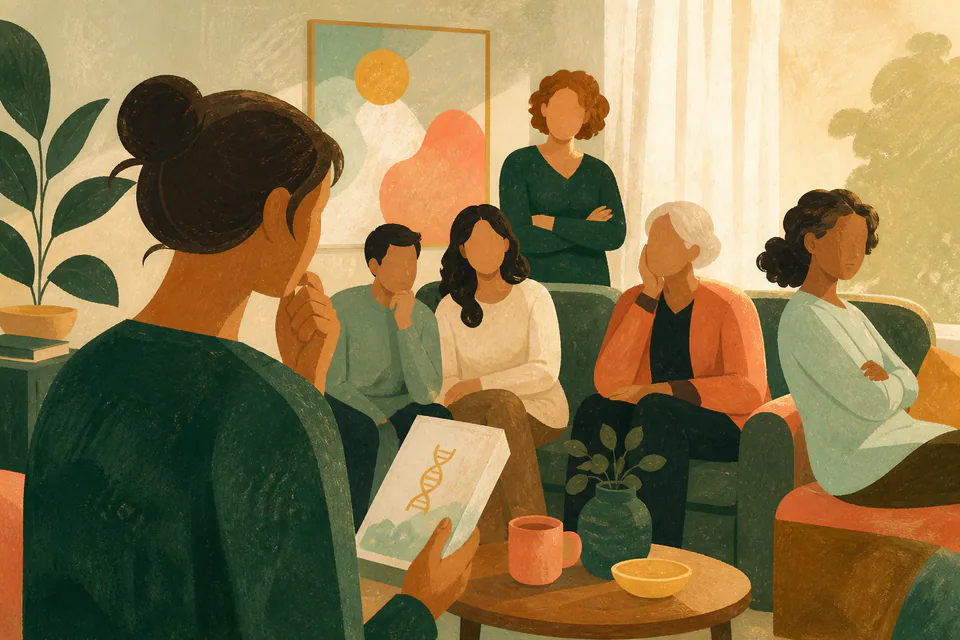
A DNA test reveals a family time bomb. Do you tell relatives who would rather not know?

A genetic test reveals that you carry a serious inherited condition. Your siblings and adult cousins may carry it too, but one has previously said they would rather live without predictions about illnesses that cannot yet be prevented.

Can someone's wish not to know outweigh your responsibility to warn them?

Explore this quandary