Why Europe wants to rely less on US tech companies
18 min
Listen through the publisher, then discuss the episode here or arrange an in-person Roundtable. Your city determines where to meet.
Roundtables are designed for groups of four, with a shared subject and room for everyone to speak. Come for discussion, with no dating expectation.
Europe has long relied on America's tech giants to power its digital economy. Now, as geopolitical tensions rise, it is seeking greater control over its digital future through a push for digital sovereignty. We examine what is driving the push and what it could mean for businesses and consumers.
Episode information is provided by the publisher. Listening takes place on the publisher’s service.
On this week’s edition of “Happy Hour,” Emily Jashinsky tackles whether America’s political system is irreparably broken, the growing distrust of political institutions, and why voters are increasingly fed up with corruption and self-serving politicians. She discusses Thomas Massie’s political future, the possibility of breaking up the two-party system, why she generally distrusts ProPublica’s reporting, and the ethics of the Supreme Court. She also weighs in on the dangers of authoritarian communism, foreign influence in Washington, and why maintaining faith in elections is so important. Emily addresses the political risks of embracing artificial intelligence, which careers might survive the technological revolution, and why she struggles to unplug from work. Finally, she shares her favorite time to visit Washington, D.C., her thoughts on Robert Pattinson as the next James Bond, and more… Hosted by Simplecast, an AdsWizz company.
This week has been nothing short of surreal: from a tumultuous nuclear three-way in China to inexplicable outages sweeping across America. Amidst this turmoil, we've witnessed alarming developments, including the unsettling rise of Nazi groups in Hamilton and a burgeoning scandal implicating the Ford government and the final countdown for Conservative Leader Pierre Poilievre. Join the Scandal Panel featuring Keith Leslie and Mark Cripps alongside our passionate host Laura Babcock as they navigate these pressing issues with both candour and humour. This isn't just another conversation; it's a therapeutic session where we dissect the realities of the world we inhabit. Together, we're standing up for democracy, and your voice matters! Stick with us until the end for our stress meters and a dose of encouragement. Let's face this fight together—because we truly are in this together! Don't miss out on the insights and camaraderie that can empower us all. Tune in and join the conversation! Pl
The RHOP are still down at Bethany Beach and Robin and Karen bond, Ayan lets us know Wendy paid 5K to be on the cover of a magazine, Ashley wants to spend money and newbie Courtney tells a few lies, sheds a few tears and tells a few more lies all while Karen does everything in her power to stay awake. Meanwhile, over on RHONY, Daisy still thinks she is Martha, Carole wrote a Substack about an onion named Sai, Pavit still hates Jessel, Erin is worried Erika’s billions wont be enough for a team of nannies and Lindsay Hubbard enters the chat to audition for her future role on RHONY once In The City gets cancelled. Last, but not least, Mary and Angie attempt to rebuild their friendship amongst many heated arguments and opinions about the matter both on and off the show. @davidyontef (https://www.instagram.com/behindvelvetrope/?hl=en)
Is the Republican Party heading for a major reckoning in 2028? Dave Rubin joins The Chicks on the Right for a brutally honest conversation about Trump's final two years, the future of the GOP, and the growing divisions threatening conservatives. Dave weighs in on the Republican Party's recent election losses, whether JD Vance, Marco Rubio, or Ron DeSantis can carry Trump's agenda forward, and why he's increasingly concerned about the political direction of America. The conversation heats up as Dave takes on Nick Fuentes, the rise of extremist voices on the right, and the socialist movement gaining influence within the Democratic Party. He also discusses radical Islamism, antisemitism, the dangers of online outrage, and why he believes Western civilization faces serious challenges. Plus, with cyberattacks, banking disruptions, and nationwide outages raising concerns, Dave shares his thoughts on whether Americans should be preparing for more chaos. And don't miss the lighter side of Dave
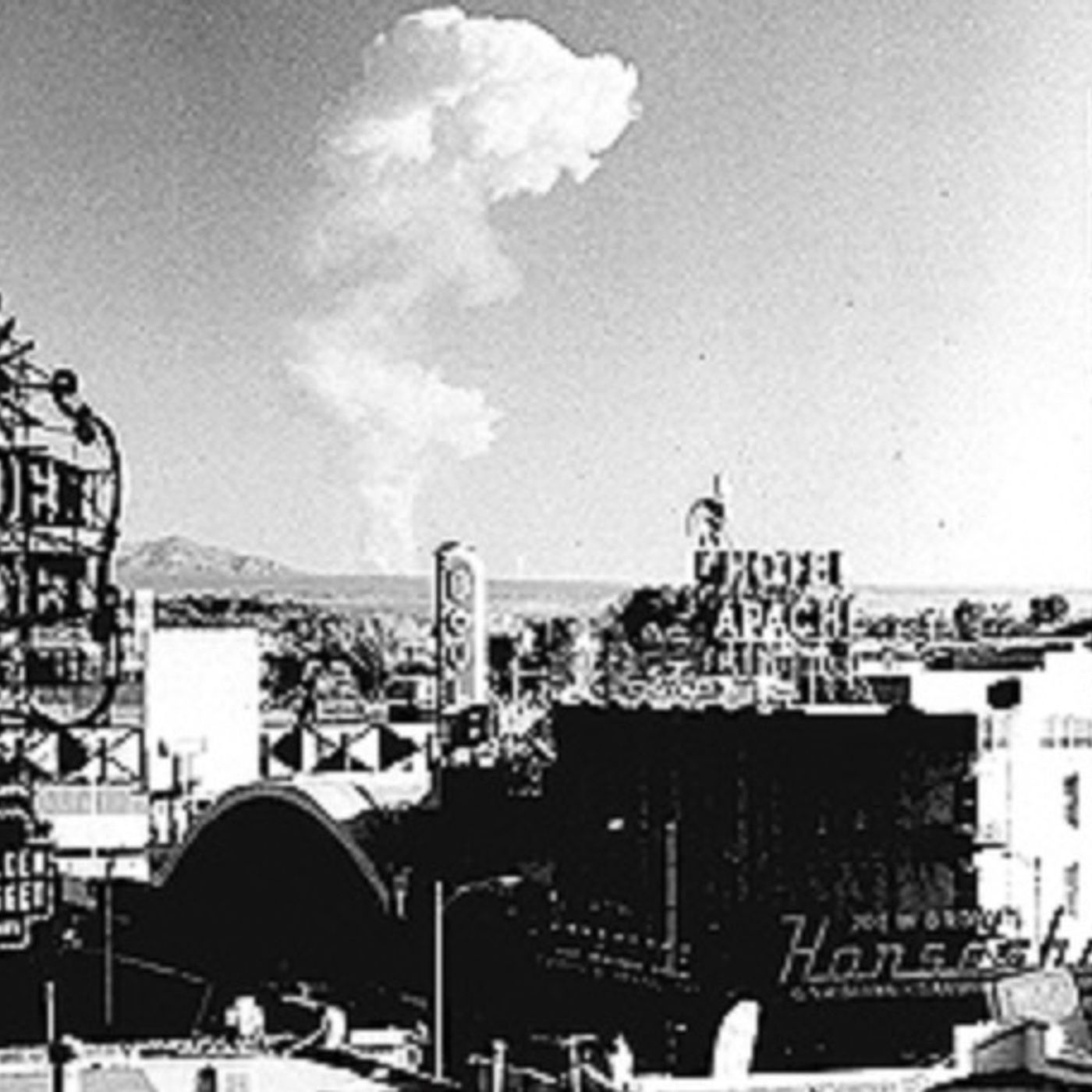
1951 MUSHROOM CLOUD FROM LAS VEGAS POV STREAMING-MAKING THE JOHN BATCHELOR SHOW 11-20-2026 The provided sources offer a wide-ranging discussion on severe weather patterns, historical events, and complex geopolitical conflicts. Meteorological events like El Nino and atmospheric rivers bring heavy rainfall, coastal wave warnings, and massive snowfall to the western United States and Australia. Historical retrospectives examine iconic cultural moments, such as the Beatles visiting Las Vegas, alongside the dangers and historical context of mid-century atomic bomb testing in Nevada. Geopolitical analysis covers global leadership dynamics, drawing parallels between current diplomatic summits and historical conferences like Yalta. Finally, the dialogue addresses rising international tensions, focusing on the potential for escalation in European and Middle Eastern conflicts, as well as the strategic hurdles facing modern governments.
Louisiana State Penitentiary, more commonly known as Angola Prison, is America’s biggest maximum security prison in a state that incarcerates more people than any other. That means they are there for having committed the most serious crimes, including murder. Most will never leave jail. Several days a year, some inmates are allowed to take part in the US's last prison rodeo. Whilst the inmates are primarily black, the paying audience is mostly white. Supporters of the rodeo say it’s a chance for the prisoners to interact with people from outside the prison and also potentially earn some money to send back to family or make their life more palatable. Opponents say it is exploitation - not unlike a roman gladiatorial contest, where the audience gleefully waits to see if the bulls are going to get the better of the cowboys. Anna Adams reports from Louisiana.
Could an AI model ever be conscious? And if it could, how would we know? The Interface hosts, Thomas Germain and Jessica Maddox, unpack the theories with philosopher Jeff Sebo, director of the Center for Mind, Ethics, and Policy at New York University. Jeff does not claim that AI is conscious, and he is clear that nobody knows. His case is that the possibility is serious enough to study properly and prepare for now, rather than scrambling after the fact, as we did with animals and the climate. Along the way, he explains what consciousness and sentience actually mean, why “it’s just software” is not the end of the argument, and why the idea makes so many people so angry. Tom and Jess push him on the big objections - shouldn’t we fix problems impacting humans first, and can we trust AI companies to answer any of this?
Tuvalu looks like paradise – a cluster of islands, with white sandy beaches lined with palm trees, surrounded by the deep blue of the Pacific Ocean. But the tiny nation, which is roughly midway between Australia and Hawaii, is facing the existential threat of rising sea levels, caused by climate change. The 11,000 or so inhabitants are reckoning with a future where their country may no longer be habitable. With world leaders meeting at the UN COP31 climate talks, we bring together three young women to share their experiences of life in Tuvalu. “I want my children to understand [Tuvaluan] values, to know the language,” Moeli tells us. “To know more about Tuvalu, you have to sit down, respect the elders, no talking when elders are talking, everything like that.”
Correcting clear officiating errors is worth some interruption to a game's flow.
Share your view, then see how readers voted. No sign-in required. This poll is shared across stories.
Do you agree or disagree?
Common Quandary
A Common Quandary to discuss
Another conversation to explore, separate from this news story.
The sign says twelve items and you have fourteen. Is the express lane still yours?
The regular checkout lines are long and the express lane is empty. You count fourteen small items, two over the posted limit. A shopper approaches behind you carrying a single carton of milk as the cashier waves you forward.
Are small rules optional when enforcing them would seem fussier than breaking them?