Why Gratitude Isn't Working When Fear Is Running the Show
10 min
Listen through the publisher, then discuss the episode here or arrange an in-person Roundtable. Your city determines where to meet.
Roundtables are designed for groups of four, with a shared subject and room for everyone to speak. Come for discussion, with no dating expectation.
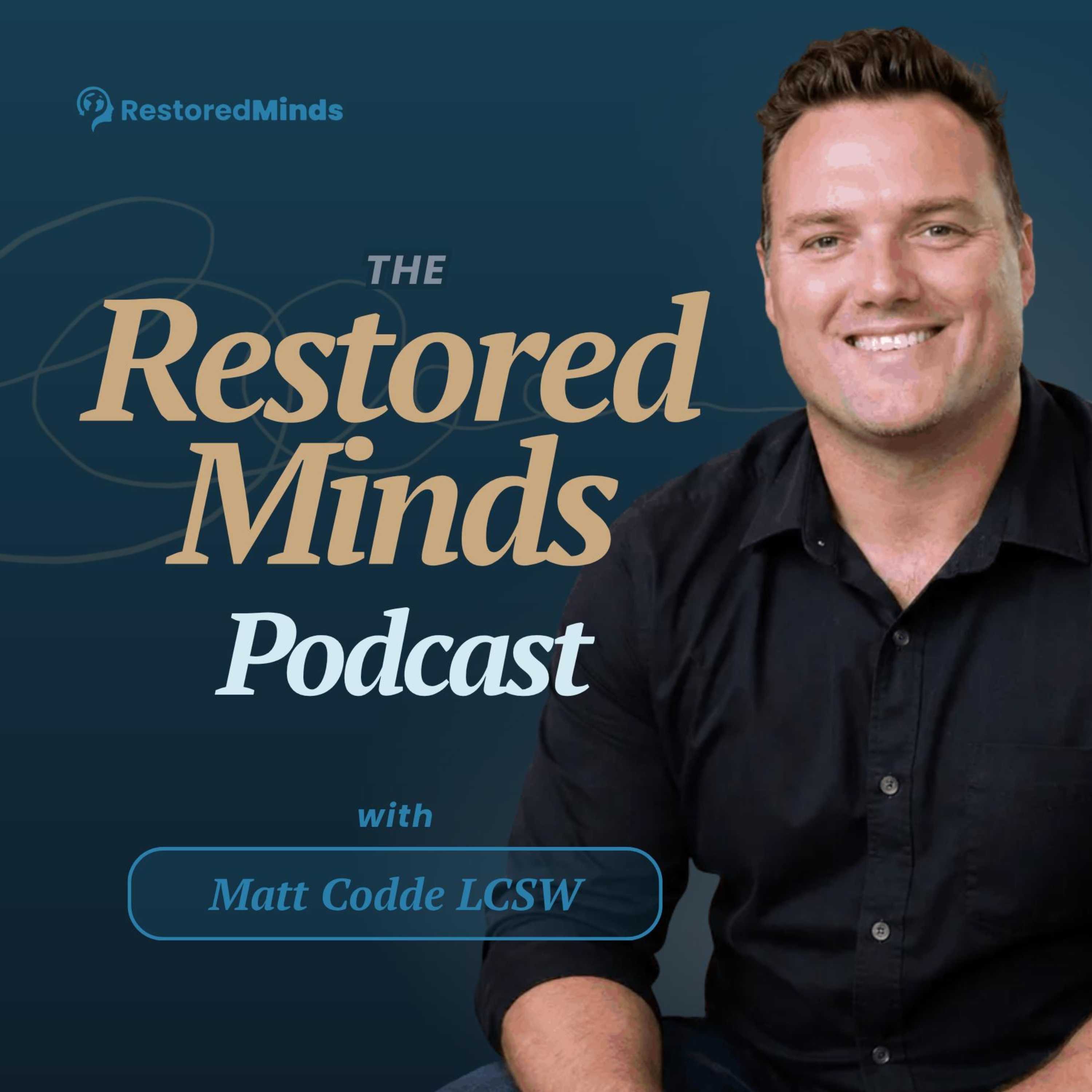
Gratitude and Fear During the Holidays: Why Forcing Gratitude Doesn't Work When You're Anxious Thanksgiving week asks a lot of us. Be thankful. Be present. Be fine. But when you're carrying fear, you can't just make yourself feel a different way. In this episode of the Restored Minds Podcast with Matt Codde, I talk about gratitude, fear, and the holidays. I share what the pressure to feel different than you feel actually does, why a gratitude exercise can't override a nervous system in fight or flight, and what to do instead. If you've been wearing a mask this season, this one is for you. What You’ll Learn in This Episode Recognize how holiday pressure adds resistance on top of the fear you already carry Understand why a gratitude list can't override a body in fight or flight Notice how fear gets projected onto people and events See why pretending to feel grateful keeps the weight stacking Give yourself honest space each day to feel how you actually feel Bring your best self into the room without a mask START HERE TO HEAL: Take the Assessment to Get Your Personalized Recovery Roadmap Daily App with On-Demand Tools Support for the moments you feel fear shows up, anytime you need it. Taking Back Control (TBC) Program Learn how to apply these principles daily and dissolve anxiety at the root. Apply Now: https://www.restoredminds.com/tbc━━━━━━━━━━━━━━━ Buy now: https://a.co/d/1WEvonT Learn more: https://www.restoredminds.com/book Leave a review on your favorite platform to help others discover this content: Apple Podcasts: https://apple.co/3NJI2zD Spotify: https://spoti.fi/46AiT30 Ask a question for a future episode: Follow Matt Codde, LCSW on Social Media: Instagram: https://www.instagram.com/mattcodde.restoredminds/ Facebook: https://www.facebook.com/mattcodde.restoredminds/ LinkedIn: linkedin.com/company/restoredminds/ TikTok: https://www.tiktok.com/@mattcodde.restoredminds If this episode helped you, share it on Instagram Stories and tag us! ⏱️ Timestamps 00:00 Gratitude, fear, and the holidays 00:28 The pressure to feel different than you feel 01:05 Why five things you're grateful for isn't a switch 01:57 When fear gets projected onto the room 02:34 Matt's morning gratitude practice 03:30 Why gratitude doesn't override fear 04:06 Fear, the nervous system, and the red zone 05:03 It's not about pretending 05:45 Give yourself space to feel 07:16 When a persona means nobody meets you 07:35 Where to go from here Disclaimer ⚠️This content is for educational purposes only and is not medical advice. Consult a licensed professional for personalized support.
Episode information is provided by the publisher. Listening takes place on the publisher’s service.
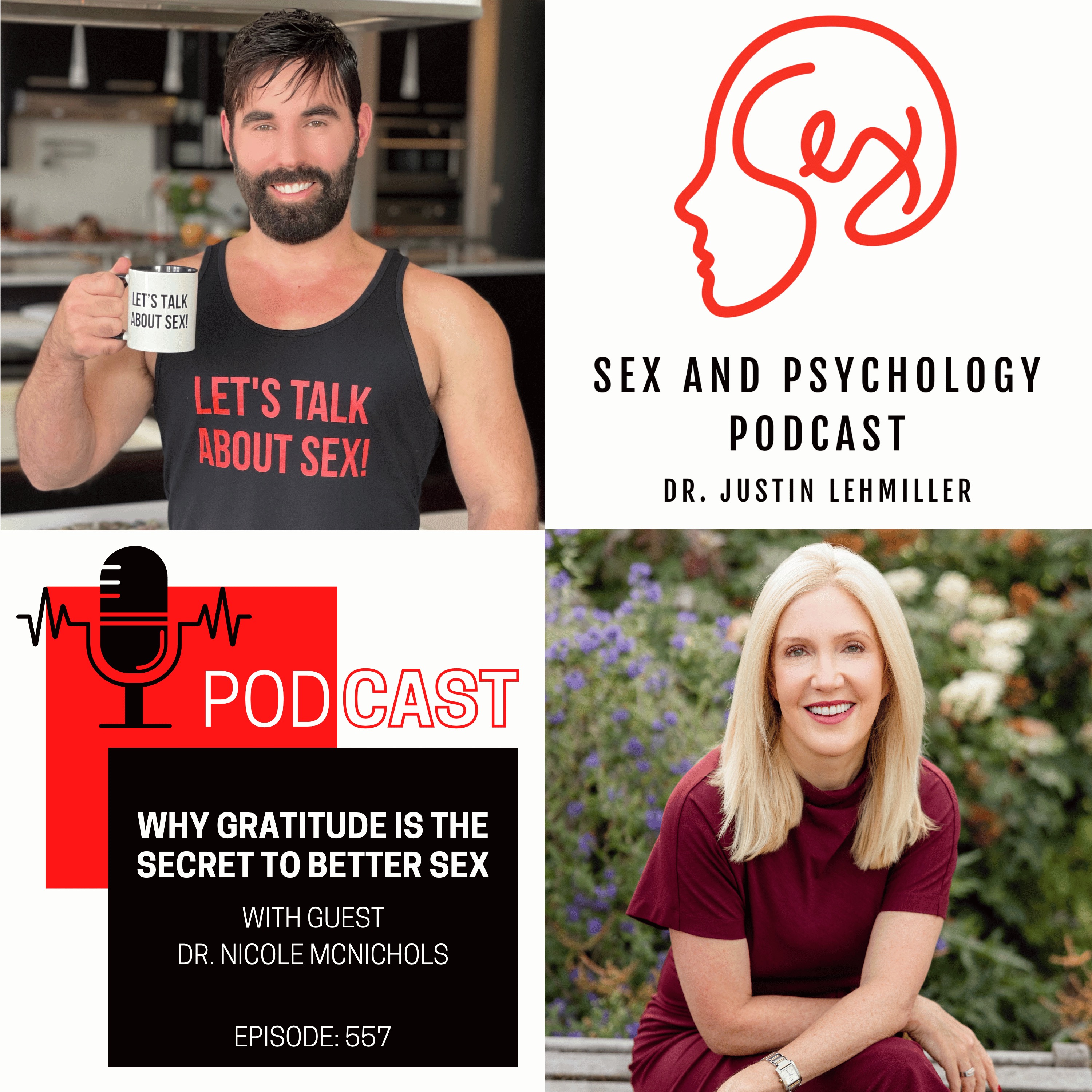
Thanksgiving is a time to reflect on the things we're grateful for, but when was the last time you stopped to appreciate your sex life? In this episode, we're exploring the surprising connection between gratitude and sexual desire. We'll discuss how feeling appreciated can strengthen intimacy, why gratitude can motivate us to be more attentive to our partners' needs, and simple ways to bring more appreciation into our sex lives without turning it into another obligation. I am joined once again by Dr. Nicole McNichols (https://nicolethesexprofessor.com/about-nicole/), an Associate Teaching Professor in the Department of Psychology at the University of Washington. Nicole's course, "The Diversity of Human Sexuality," is the largest and most popular course in the university's history with four thousand enrolled students each year. Nicole is author of the book You Could Be Having Better Sex. (https://link.amazon/B0iYWx0Q4) Some of the specific topics we cover include: What does it mean to p
"As you both recovered now, do you still experience doubt when anxiety shows up? Or do you just think, oh, it's a wave, and it'll be over soon?" A listener sent in this question, and a lot of people carry it around during recovery. Drew and Josh answer from their own experience: yes, the doubt still shows up sometimes. What changed is what they do next and how much it costs them. We cover why there is no delete button for old anxious pathways, why a trigger can still produce a flash of fear with a "what was that?" attached, and what that moment looks like now: dropping the shopping bags, then picking them back up instead of staring at them for two hours. Josh describes a sauna session where his heart rate stayed high, and Drew a tired evening on the sofa. Both lasted minutes. We also look at the "how will I know I'm recovered?" question and why asking it repeatedly is often more certainty-seeking. Instead, we talk about measuring functional impact: how long it took, how much of your da
What does it mean to experience authentic gratitude, especially when we are aware of so much suffering in our world? In this Thanksgiving talk, Tara explores how gratitude and generosity arise naturally when we pause, become present, and open our hearts to life as it is. Rather than turning away from sorrow, anger or injustice, we discover that meeting these experiences with mindful presence can awaken tenderness, appreciation and a deeper sense of connection. There are two pathways to awakening these qualities of the heart. The first is learning to pause and be fully present with whatever is here. The second is intentionally cultivating gratitude and generosity through simple, heartfelt practices. As we learn to receive the goodness and beauty of life, we become more available to offer our care and love to others. Through stories, reflections and guided practices, Tara invites us to move beyond the habits of fear, scarcity and self-protection that can close our hearts. We explore how
Get the 200+ Page Optimal Living Daily Workbook (PDF) - Free. Want to turn today's episode into an actionable plan? Episode 4239: Cal Newport explains pseudo-striving, the habit of pursuing goals with self-made plans that feel busy and satisfying but are not grounded in what actually works. Drawing on his own grad school experience and Chris Guillebeau's research for The $100 Startup, he argues that real accomplishment and productivity come from studying reality first, even when that path is harder and less pleasant. Read along with the original article(s) here: Quotes to ponder: "Most of us are content, it seems, to work hard and build complicated systems, but we avoid basing our efforts on a reality-based assessment of what really matters." "When it comes to constructing a remarkable life, I'm increasingly convinced that pseudo-striving is a common trap with devastating consequences." "It lulls you into a rhythm of busyness and complexity that might have very little to do with real a
Can't Stop Overthinking? — Guided Meditation for Racing Thoughts & Anxiety | Leaves on a River Can't stop overthinking everything? Replaying a conversation, imagining what might go wrong, trying to find an answer to something that hasn't even happened yet? When you're struggling with constant worry and racing thoughts, even the quietest moments can feel exhausting. This 10-minute guided meditation for overthinking and anxiety doesn't ask you to fight your thoughts. It offers you a gentle way to change how you respond to them. Hosted by clinical hypnotherapist and former paramedic Martin Hewlett, this session shows you how to stop overthinking and worrying about the future, one breath at a time. Bookmark it in the Anchored app and come back whenever you need to quiet an overactive mind. iPhone: https://apps.apple.com/us/app/anchored-panic-anxiety/id6785035669 Android: https://play.google.com/store/apps/details?id=com.martinhewlett.anchored Sitting beside a slowly flowing river, you'll w
Jay explains how the small tasks we keep putting off can quietly cost us time, money, and peace of mind, and shares six practical rules for overcoming procrastination. He breaks down the different emotions that keep us from taking action, from fear and perfectionism to resentment and boredom, and explains why each requires a different approach. Jay shares how to recognize what's really holding you back and choose the right strategy to finally get things done. With Love and Gratitude, Jay Shetty JAY'S DAILY WISDOM DELIVERED STRAIGHT TO YOUR INBOX What I Discuss: 00:00 Introduction 00:25 The Hidden Cost of Procrastination 01:30 What Unfinished Tasks Do to Your Brain 03:05 Rule One: If You're Confused, Get One Answer 06:15 Rule Two: If You're Embarrassed, Talk About It Before Taking Action 10:25 Rule Three: If You're Afraid, Don't Do It Alone 11:55 The Power of Support When Facing Our Fears 14:20 Rule Four: If You're Resentful, Determine If It's Still a Yes 17:25 Rule Five: If You're a Pe
How to Build Great Mental Health: 3 Things People Who Overcome Fear and Anxiety Do DifferentlyYou learn one more idea about your anxiety. You feel a little better for a few minutes. Then the fear asks for the next idea, and nothing in your life has changed.In this episode of the Restored Minds Podcast with Matt Codde, Matt walks through the three things he sees in people who actually get better, and what the opposite looks like so you can tell where you really are. He draws on thousands of conversations, and on the moment in his own life when managing a fear loop stopped being an acceptable outcome.Success in recovery is not accidental. It follows a path, and most people stay where they are because one part of that path is out of balance.Check our New App: restoredminds.com/startCheck our New App: restoredminds.com/startCheck our New App: restoredminds.com/start What You’ll Learn in This Episode Own your role in the pattern without taking blame for what was never yours Spot the differe
AI and Anxiety: Why Asking a Chatbot for Reassurance Keeps the Fear Loop GoingYou ask the question from inside the fear. The answer comes back shaped by that fear. You feel better for a few minutes, and then the loop asks again.In this episode of the Restored Minds Podcast with Matt Codde, Matt looks at how people use AI to settle fear and anxiety, where it can genuinely help, and why information alone has never been the thing that changes a life.Check our New App: restoredminds.com/startCheck our New App: restoredminds.com/startCheck our New App: restoredminds.com/start What You’ll Learn in This Episode Why the answer you get reflects the state you asked from How a quick reassurance becomes a compulsion that feeds the loop Why feeling better for a few minutes is not the same as getting better What it means to move from understanding an idea to embodying it Why the information lane feels safe and keeps you stuck Where AI, books and videos fit once you know the work is yours Resources t
In this episode of the Restored Minds Podcast with Matt Codde, we look at what sits underneath most fear and anxiety: what you are actually attached to. Not your thoughts. Not your symptoms. The foundation underneath them. Matt breaks down the difference between a fear-based attachment and a love-based attachment, and why so many people spend years managing anxiety and intrusive thoughts without ever touching the source. If you have worked hard to be good, to think your way out, or to build a life where nothing gets triggered, this episode shows why that effort keeps you in the same place. Check our New App: restoredminds.com/startCheck our New App: restoredminds.com/startCheck our New App: restoredminds.com/start What You’ll Learn in This Episode Spot the fear underneath your need to be good Recognize when you are masking pain instead of releasing it See why understanding an idea is not the same as living it Tell which state you are living from by how life actually feels Understand wh
Profitable companies should give workers extra support when reducing their workforce.
Share your view, then see how readers voted. No sign-in required. This poll is shared across stories.
Do you agree or disagree?
Common Quandary
A Common Quandary to discuss
Another conversation to explore, separate from this news story.
Your adorable child could pay for college by becoming an influencer. Do you start filming?
Parents post cheerful videos of their young child and earn enough to fund the child's education. The child enjoys filming now but cannot understand what it means for strangers to watch those moments years later.
Can parents consent to a permanent public identity on a child's behalf?