Why intuition is the heart of music | Fabiola Reyna
37 min
Listen through the publisher, then discuss the episode here or arrange an in-person Roundtable. Your city determines where to meet.
Roundtables are designed for groups of four, with a shared subject and room for everyone to speak. Come for discussion, with no dating expectation.
For guitarist and TED Fellow Fabiola Reyna, music is first and foremost a way of connecting — to ourselves, our ancestors and each other. They take us inside their creative process, discussing why great music starts with intuition, how they turned love and grief into an album and how they’re building space for people who feel stuck between cultures. Hosted on Acast.
Episode information is provided by the publisher. Listening takes place on the publisher’s service.
This is a Grave Talks CLASSIC EPISODE! PART TWO Built in 1901 in the small railroad town of Wymore, Nebraska, the Haunted Stephenson Building has carried more than a century of stories within its walls. Located in the heart of downtown near the railroad line that built the town, the structure was part of the early business district and reportedly served over the years as a dance hall, saloon, gambling space, and possibly even a brothel — the kind of place where money flowed, tempers flared, and secrets were buried. Today, it operates as a paranormal investigation site and oddities museum, attracting those who want to see if the rumors are true. Visitors consistently report footsteps pacing on empty upper floors, whispers captured in silent rooms, cold air that moves against logic, and shadow figures that vanish the moment you focus on them. Owner Christie Ayers joins us to discuss the building’s layered past and the unsettling question at the center of it all: are these simply echoes o
Your free behavior course: https://nci.university/learn Uploaded 10-05-25 Exclusive NCI-4 (Grad School) Vault Release This is Behavioral Magnetics—the hidden force that draws you back to chaos, to patterns you swore you’d outgrow, to people who echo your oldest pain. It’s why peace feels boring. Why CALM makes you anxious. It’s not intuition—it’s your nervous system recycling what it knows. In this Grad School lecture, we uncover the 4 emotional magnets that shape who you trust, chase, or sabotage... even when it hurts. If you've ever said, “Why do I keep doing this?”—this is your answer. Why you're attracted to the wrong people The 4 types of emotional magnets How trauma rewires your compass Why peace can feel like withdrawal How to break free from recycled patterns Please note that the content provided in this broadcast is for informational and educational purposes only and should not be construed as legal, medical, financial, or professional advice. No material in this communication
Nowadays, we will all have hundreds of apps on our phones, but we want to separate the wheat from the chaff when it comes to the software that can help us Parkies. This week, we're joined by the creator of the Parkinson’s UK Tech Guide, John Pettigrew, to help us make the most of what the app store has to offer. Find the PUK tech guide here (https://techguide.parkinsons.org.uk/). Produced and edited by Nick Hilton for Podot. Associate Producers: Ewan Cameron & Lulu Goad Music by Alex Stobbs Hosted on Acast.
The stage and screen actor Dame Kristin Scott Thomas is currently on stage in Anton Chekov's The Cherry Orchard at the Harold Pinter Theatre in London. She joins Nuala McGovern to talk about the play, losing her mother and that Fleabag scene. Joanne Young who was drugged, raped and advertised for sex online by her husband has said she will "never feel completely safe" after four men were found guilty of sexually abusing her, in the first trial of its kind in England. Anita Rani talks to campaigner Zoe Watts whose husband was jailed in 2023 for the drugging and sexually assaulting her while she was unconscious and who waived her right to anonymity earlier this year after the Gisele Pelicot trial, and also to Jess Phillips, Labour MP and former Minister for Safeguarding . We hear from Shanaze Reade whose rise in British cycling was extraordinary. A BMX world champion before 20, she went on to win five world titles across BMX and track cycling and arrived at the Beijing Olympics as the fa
Today, Mel is doing something she's never done before on The Mel Robbins Podcast. She's bringing members of her team into the studio for live coaching with world-renowned communications expert Vinh Giang. Vinh is known for teaching millions of people online how to stop sounding insecure, speak more clearly, and get people to listen when you talk. And when you hear him coaching today, it will be like he’s coaching you. One person freezes when they're put on the spot. Another can't stop interrupting people. Someone else has great ideas but stays quiet because they're afraid of being judged. Does any of that sound familiar? And Vinh isn't just giving advice. He's coaching real people through practical exercises, right there in the studio, so you can hear the difference and start making those same changes in your own life. As Mel says, put yourself in their shoes. As Vinh works with each person, you'll recognize things you struggle with, too. You'll learn: -What to do when your mind goes b
Adam Grant is one of the most sought after organisational psychologists in the world. He has provided expert advice to many of the world’s greatest business leaders, including Bill Gates and Sheryl Sandberg, equipping them with the mental tools to find motivation and meaning, rethink assumptions, and achieve greatness in their business and personal lives. In January 2024 Grant came to the Intelligence Squared stage for a rare, exclusive London event where he shared his revolutionary framework for how we can all exceed the expectations and aspirations we have set for ourselves. Drawing on his new book Hidden Potential he explained that despite living in a world that tends to admire people who start out with innate talent, there is clear scientific evidence that we can all bridge the biology gap and improve ourselves dramatically. In conversation with economist and FT columnist Tim Harford, Grant wove together groundbreaking evidence, surprising insights, and vivid story telling to take
The proliferation of dating apps have people thinking romance is dead. But is that what romance really is? In today’s Sunday Pick, we bring you another episode of the TED podcast, Corner Piece, where host Melissa sets out to discover the true definition of romance, and if it’s even achievable in modern life. She interviews Professor Carrie Jenkins to understand the biological and social foundations of romantic love, the core cultural narratives we construct about romance, and whether romance itself is exclusive to relationships. Find more episodes of Corner Piece here: https://link.mgln.ai/u4mZ9C Hosted on Acast.
AI data centers are popping up across the US — and the people living next to them are increasingly upset. Brian Janous, whose company finds land for some of the biggest data centers, hears those objections firsthand. He proposes a solution that would change who benefits from the AI boom, putting a bigger share of the wealth directly into the hands of local communities. Hosted on Acast.
You’ve likely never met composer Lau Noah, but she has a wish for you: that someday you’ll look back on your life and feel at peace. In a soulful performance that’s part concert, part story hour, she weaves together songs and short fables that celebrate love, friendship and the natural world. Hosted on Acast.
Interviewers should challenge powerful guests even when doing so risks losing future access.
Share your view, then see how readers voted. No sign-in required. This poll is shared across stories.
Do you agree or disagree?
Common Quandary
A Common Quandary to discuss
Another conversation to explore, separate from this news story.
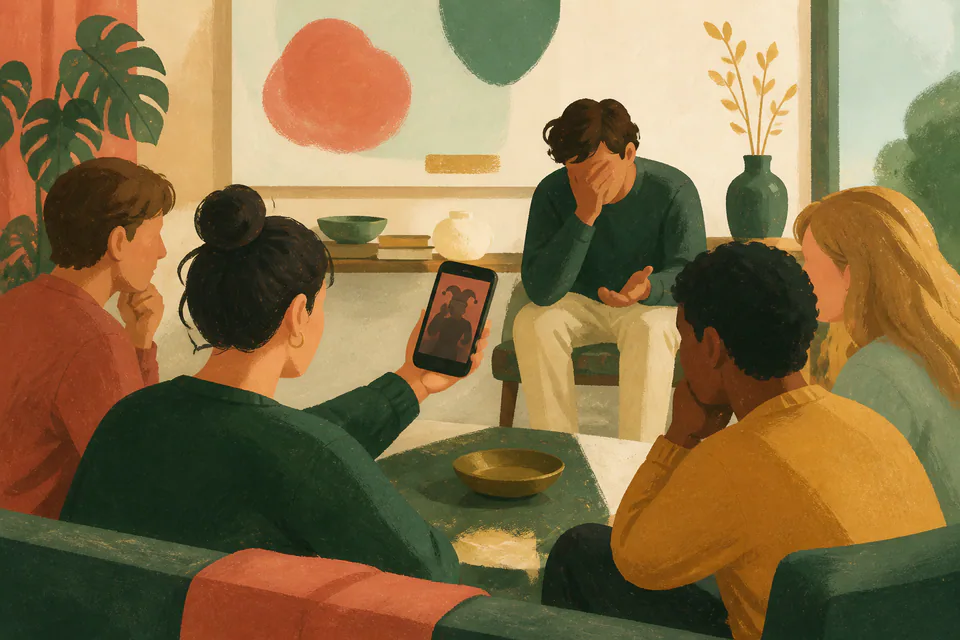
A private joke from years ago goes public. How long should it follow the person who wrote it?
Someone shares a screenshot of a tasteless joke made years ago in a private friends' chat. The person who wrote it says they were performing for a small audience, have changed, and never agreed to have the message made public.
How private should speech remain when it reveals something troubling?