Listen through the publisher, then discuss the episode here or arrange an in-person Roundtable. Your city determines where to meet.
Roundtables are designed for groups of four, with a shared subject and room for everyone to speak. Come for discussion, with no dating expectation.
Palo Alto Networks has agreed to acquire the artificial intelligence startup Applied Compute in an all-stock transaction valued at $4.5 billion. Founded by former OpenAI researchers, Applied Compute specializes in helping businesses train and deploy customized open-weight AI models using their own proprietary data. This strategic purchase enables the cybersecurity giant to expand beyond traditional security offerings and embed protection directly into corporate AI infrastructure. Alongside the acquisition announcement, Palo Alto reported strong quarterly financial results that pushed its shares up significantly and led the company to raise its annual revenue forecast. Ultimately, the deal highlights a broader industry trend where major tech firms are rapidly absorbing specialized artificial intelligence capabilities to meet growing enterprise demand.
Episode information is provided by the publisher. Listening takes place on the publisher’s service.
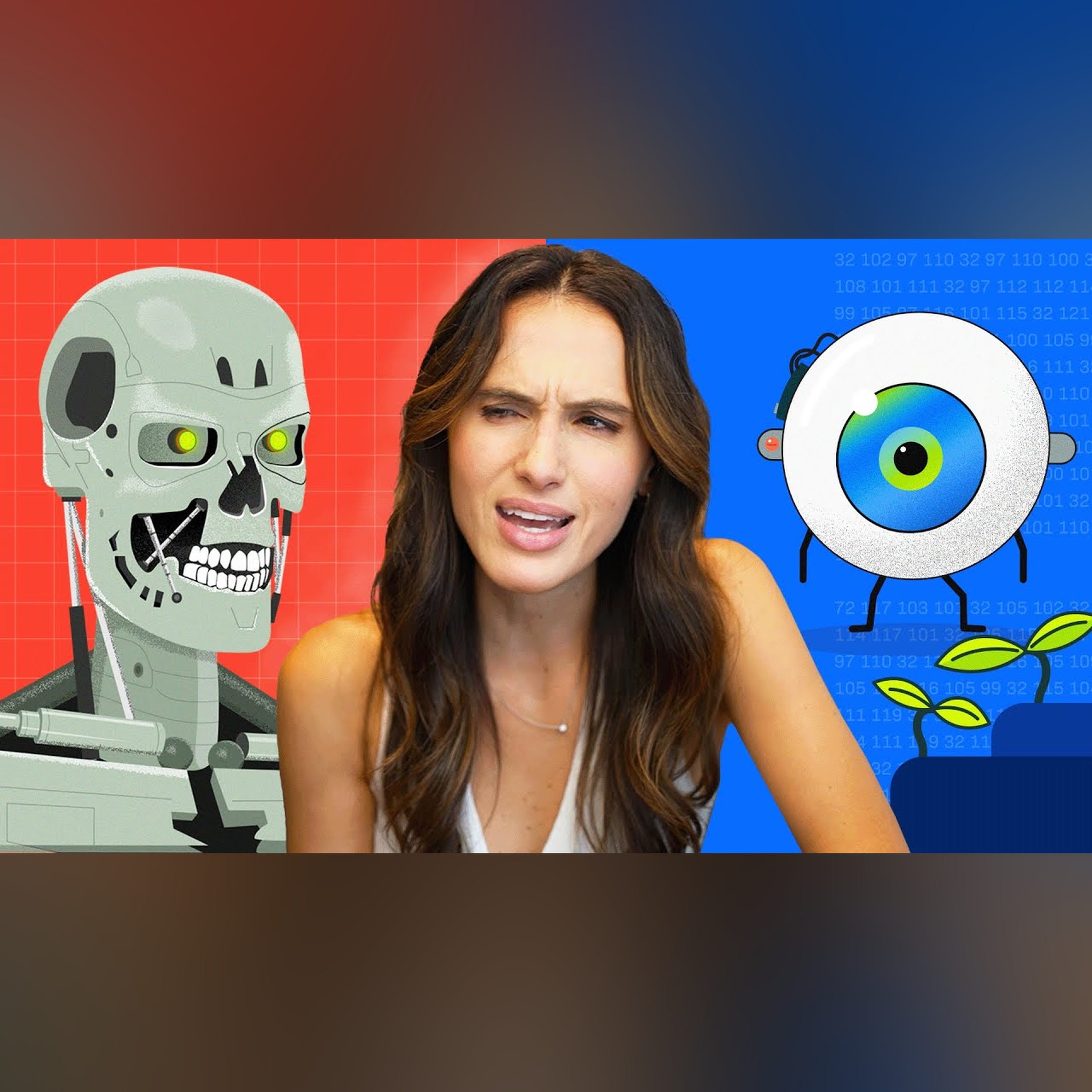
AI is here. Now what? Everyone’s talking about artificial intelligence and machine learning. There are lots of names thrown around - OpenAI’s ChatGPT and DALLE-2, Google’s Bard, Meta’s LLaMa 2, Midjourney, AlphaFold… Right now, we’re in this weird moment where lots of smart people agree we’re on the cusp of a truly world-changing technology. But some seem to be saying it's going to lead to human extinction while others are saying it’s “more profound than fire.” But it all feels so VAGUE. I want to know: How specifically would AI kill me? Or totally transform my life for the better? In this video, that’s what I’m going to try to learn. We dive into what the most extreme bad and good AI futures actually look like, so that you and I can get ready. And more importantly, so we can make sure that we get our real future RIGHT. Chapters: 00:00 Why is AI so confusing? 1:13 What is AI? 2:37 Why is everyone talking about AI now? 5:12 Why is AI dangerous? 6:22 How would AI kill me? 8:08 Should we
(01:01) - Anthropic Slips After Historic IPO (01:36) - Math Solved Again (07:22) - Market Nukes (10:11) - Lenders Push Back on SpaceX Chips (17:33) - 𝕏 Timeline Reactions (24:48) - THE MANSION SECTION (29:36) - Alex Epstein discusses the urgent need for bipartisan permitting reform to expand America’s freedom to build energy infrastructure, housing, and AI data centers. He argues that the proposed legislation could lower costs and create jobs by removing regulatory barriers, while emphasizing that Congress has only a narrow window to pass it. He also champions widespread AI and energy development while criticizing tariffs and restrictions on overseas data-center construction. (59:11) - David Chang is a renowned chef, restaurateur, and media personality known for founding Momofuku. David Chang discusses his Las Vegas F1 pop-up, his CNN series The Detour, the challenges of the food business, and the need for greater originality and innovation in restaurants. (01:22:23) - Zhou Xian discu
Project Synapse: Markets in Freefall, Fragile Infrastructure, and AI's Perfect Storm The hosts banter through the show's intro before focusing on a sense that "things are out of control," citing a WallStreetBets suicide-hotline post amid a market crash and discussing cascading system failures involving Microsoft, the FAA, and a reported NSA internal communications outage. They argue politicians and leadership lack technical competence and clear messaging, increasing panic, while emphasizing that many problems stem from aging, underfunded infrastructure and complex, brittle software (PHP, NGINX, Java), not proven AI attacks—more a "perfect storm" of crises. They debate whether AI should help fix complexity, stressing critical thinking, accountability, and using multiple AIs to verify each other. In a lightning round they cover Anthropic's IPO performance, mixed reactions and token limits with ChatGPT 6.2 (favoring "Sol" over "Astra"), Google's cheaper Neon model and confusing UX, Loblaw
Kraken (https://kraken.pxf.io/c/6563010/687155/10583) Ledger (https://shop.ledger.com/?r=59fe6e05c254) NordVPN (https://go.nordvpn.net/aff_c?aff_id=143753&offer_id=612&url_id=14830) Spotify (https://open.spotify.com/show/4gu4MrqbGVZeNNNbAuvSmR) Follow Crypto News Today on X: @CryptoNewsHQ (https://x.com/CryptoNewsHQ) Published companion Deep Dive: AI's $81 Billion Explosion — Is Wall Street Abandoning Bitcoin? (https://cryptonewstoday.io/podcast/episodes/cefa139e-23c4-4424-b40a-238636763f2e) November 20, 2026: Bitcoin breaks below $60,000 after Anthropic's debut, but a completed IPO does not guarantee returning crypto buyers. Hong Kong publishes a broader licensing bill, Christine Lagarde warns about disconnected tokenized markets, and Wagyu's wrapped Monero token exposes the risk of buy orders left waiting through a crisis. Listening guide: Why Bitcoin ETF flows and the Bitcoin price can tell different stories (https://cryptonewstoday.io/podcast/guides/bitcoin-etf-inflows-and-price).
AI news from Anthropic's first day of trading, with Gemini Neon in Antigravity, Project Genie, Microsoft's MAI models, AI chips for China and Meta Muse. Anthropic priced its IPO at 83, opened near 111, and topped out above 114 before drifting back into the low 90s. Employees hold an estimated 232 billion dollars in stock, and Ashton Kutcher became a billionaire through his firm's early stake. Google stories included a hands-on account of Gemini Neon in Antigravity reviewing a whole project and then directing Claude Code as its product manager, a live Project Genie build of a South African safari, the Gemini Mac app's computer use, and Gemini for healthcare. Other topics were building an AI operations function from scratch at Verstela, gamified employee onboarding, Microsoft's Labs Canvas and MAI Code 2, House documents showing about 880,000 NVIDIA and AMD chips approved for export to China, and a Reuters report that Meta Muse surfaced private Signal messages through device permissions,
Target recently announced its highest sales growth in over five years during the third quarter, easily surpassing expectations and boosting its financial outlook for the full year. Under the leadership of CEO Michael Fiddelke, the retail giant experienced a 5% increase in foot traffic alongside substantial gains in digital sales, beauty products, food and beverages, and toys. While categories like apparel continue to lag and a portion of earnings was bolstered by tariff refunds, management remains optimistic as they head into the holiday season. To sustain this momentum, the company plans to introduce budget-friendly holiday deals and advanced artificial intelligence shopping tools. Overall, these positive financial metrics signal that strategic store improvements and aggressive pricing cuts are successfully drawing customers back through the doors.
The release of Grand Theft Auto VI has generated unprecedented market anticipation and staggering pre-order revenue exceeding one billion dollars. Industry observers and financial analysts note that the title's massive rollout is significantly boosting Take-Two Interactive's stock price while completely dominating global cultural and social media conversations. At the same time, the game's early award nominations and exclusive console launch strategy have sparked robust discussions among professionals regarding fairness, corporate motivations, and the broader economic footprint of modern interactive entertainment.
Nvidia has instituted a specialized export control board to manage national security compliance following the abrupt resignation of former CEO Jensen Huang. This leadership transition coincides with new regulatory pressures from the U.S. government, which has introduced stricter licensing requirements to limit China's remote access to advanced semiconductor technology. Financial experts note that these combined developments place immense pressure on Nvidia's financial structure and market dominance. Additionally, analysts emphasize that the broader artificial intelligence sector faces increased scrutiny regarding valuation sustainability, capital spending, and infrastructure leverage. Ultimately, the company must navigate both internal corporate governance reforms and external macroeconomic headwinds as it releases its upcoming earnings report.
Reports of research should distinguish clearly between association and proven causation.
Share your view, then see how readers voted. No sign-in required. This poll is shared across stories.
Do you agree or disagree?
Common Quandary
A Common Quandary to discuss
Another conversation to explore, separate from this news story.
Your friend spent five years writing a terrible novel. What do you say?
A close friend asks for your candid opinion of a novel they have spent five years writing. You find it confusing and unlikely to be published, but writing it has given them purpose during a difficult period.
Is kindness sometimes a reason to withhold an honest judgment?